

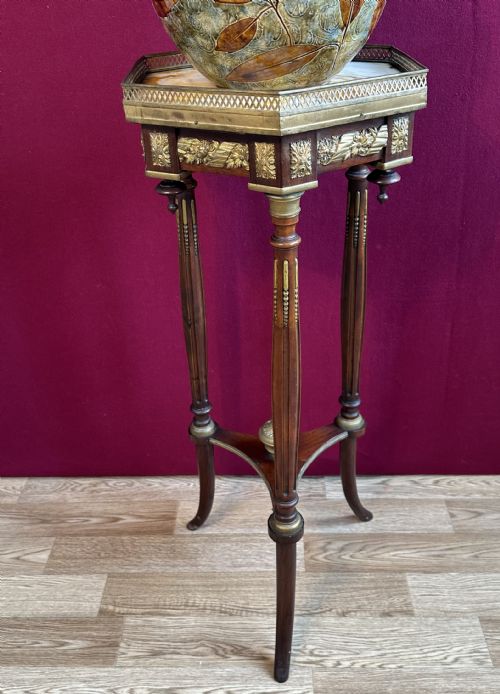


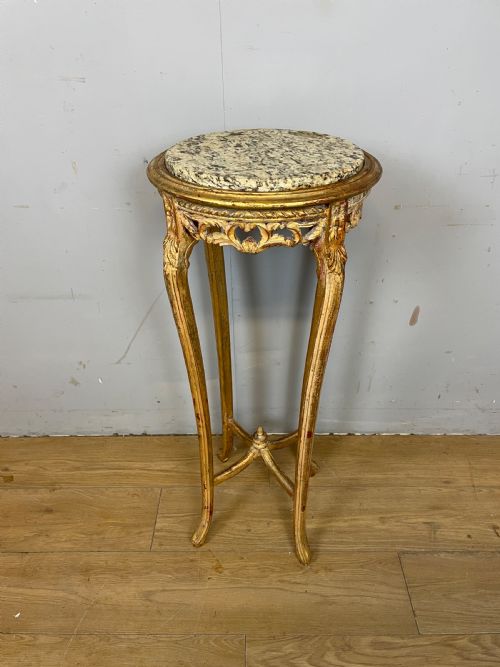


Carved Marble Torchere
A carved marble torchere is a striking sculptural pedestal or plant stand that elevates statuary, lamps or urns in a room.
Carved Marble Torchere
A carved marble torchere brings classical proportion and architectural weight to interior spaces, functioning primarily as a display surface for decorative objects, lamps or plants. When you search for a carved marble torchere, you encounter pieces originating from the eighteenth, nineteenth and early twentieth centuries, spanning periods from Georgian and Victorian to Edwardian.
The forms listed on this page vary from tall pedestals and columns to triform stands, plant stands and occasional tables. Many examples incorporate a solid marble top paired with carved wooden structures, whilst others present substantial stone construction.
Origins stretch across European traditions, with French Rococo, Louis XVI Revival, Italian Baroque and Neoclassical styles appearing frequently. These designs reflect the enduring popularity of classical antiquity in historic interior decoration.
Materials and construction
Makers constructed these pieces using heavy natural stone alongside traditional cabinet timbers such as kingwood and walnut. Giltwood, gesso and applied paint frequently enrich the wooden elements, creating dramatic contrast against the cool surface of the stone.
Carvers shaped the timber frames with ornate scrolling foliage, classical moulding and fluted columns characteristic of Italian Baroque and French revival aesthetics. Ormolu mounts and occasional glass components appear on select pieces, adding refined metallic detail to the structure.
Listings span the eighteenth, nineteenth and twentieth centuries, featuring materials from giltwood and kingwood to Carrara marble.
Assessing quality and execution
Quality in these stands resides in the depth and crispness of the hand-carving across the wood or stone, where sharper detail indicates greater sculptural skill. The selection of materials also dictates standing, with dense marbles and finely figured timbers representing the more ambitious workshops.
Proportion and structural balance separate standard production from exceptional examples, as successful classical revival pieces maintain architectural harmony even when heavily ornamented with giltwood or gesso.
The Carved Marble Torchere Glossary
- Torchere
- A tall ornamental stand originally designed to hold a torch or candle, later adapted as a plant stand or lamp pedestal. These pieces typically feature slender proportions and decorative bases.
- Giltwood
- Timber coated with a thin layer of gold leaf or gilt powder over a prepared gesso ground. This technique creates a brilliant reflective surface popular in Baroque and Rococo furniture.
- Triform
- A three-sided base or pedestal design offering distinct architectural stability. This configuration frequently appears in classical furniture and plant stands.
- Ormolu
- Gilded bronze or brass mounts applied to furniture and decorative objects. The technique involves mercury amalgamation to achieve a rich golden finish.
- Gesso
- A plaster-like mixture applied to wood surfaces as a smooth base for gilding or painting. It allows craftsmen to carve intricate relief details before applying gold leaf.
Carved Marble Torchere: Frequently Asked Questions
What is a carved marble torchere used for?
These pieces serve primarily as elevated display surfaces for heavy decorative items, bronze figures, urns or table lamps. Their height allows them to occupy corners or empty wall spaces without obstructing room circulation.
Historically, they illuminated dark corners when holding candles or oil lamps, but today they function as sculptural interior elements that add vertical interest to a room.
How do I identify a Victorian torchere?
Victorian examples often display heavier proportions and eclectic stylistic influences, drawing upon Gothic, Renaissance or Rococo revivals. Look for dense timbers, rich surface treatments like gesso and giltwood, and robust turning.
They frequently date from the mid to late nineteenth century and reflect the Victorian desire for ornate, highly decorated domestic interiors.
Are these stands suitable for modern homes?
Their classical proportions and neutral stone surfaces allow them to anchor contemporary minimalist spaces or complement traditional period rooms. They provide functional height for displaying modern sculptures or trailing house plants.
Placing them in hallways or living rooms introduces architectural structure and historic character without overwhelming the surrounding layout.
What distinguishes Neoclassical revival pieces?
Neoclassical revival stands draw strict inspiration from ancient Greek and Roman architecture, featuring straight lines, fluted columns and restrained geometric ornament. They often incorporate white marble tops and symmetrical carved wooden bases.
This style rejects the asymmetrical curves of the earlier Rococo period in favour of formal dignity and archaeological accuracy.