
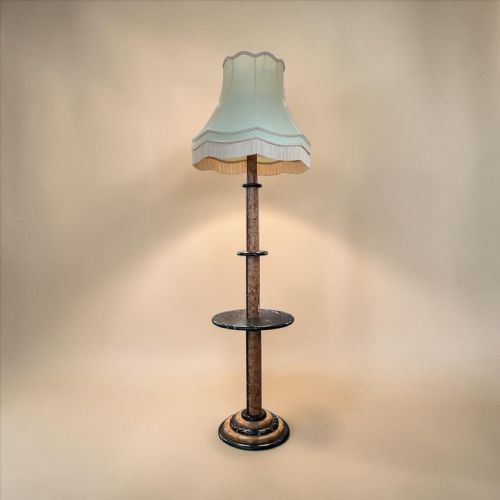
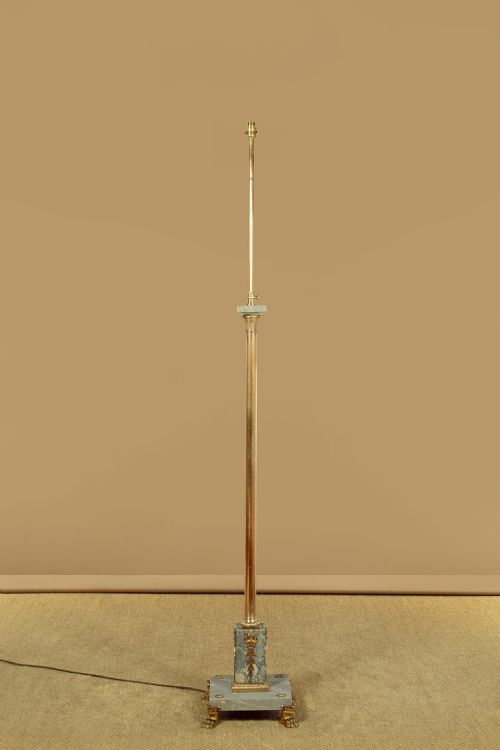


Marble Floor Standing Light
These marble floor standing light pieces combine stone and metal to illuminate a room with architectural presence.
Marble Floor Standing Light
A marble floor standing light provides substantial vertical illumination using heavy stone bases or columns combined with metal fittings. These objects function as primary room lighting while serving as sculptural furniture elements within a space.
The selections on this page span the nineteenth century through the mid twentieth century, drawing on Victorian, French Empire Revival, and Art Deco traditions. Forms range from simple solid marble standard lamp tables to adjustable brass and marble standards.
Makers utilised heavy materials to anchor tall shafts, creating stable fixtures designed to stand independently. Standard lamps and floor lamps appear frequently, often integrating side tables or extending mechanisms into the design.
How they were made
Artisans constructed these lights using turned marble, onyx, or alabaster paired with cast brass and ormolu mounts. The stone elements provide structural weight at the base or form the central column, requiring precise stonemasonry to ensure vertical stability.
Metal components including brass and gilded ormolu are fixed to the stone through threaded rods or collars. Wiring and electrical fittings were frequently added later to adapt these former oil or gas standards for modern use.
Listings feature periods from the nineteenth century up to 1960, utilising marble, brass, alabaster, onyx, and ormolu.
What varies in quality
The standard of a marble floor standing light depends upon the integration of the stone with the cast metal ornament. Finer examples display crisp chasing on the ormolu mounts and carefully matched mineral banding within the marble or onyx columns.
Proportion and mechanical execution separate standard production from superior pieces, particularly in adjustable models where sliding brass collars operate smoothly. The weight and purity of the alabaster or marble column determine the overall substance of the object.
The Marble Floor Standing Light Glossary
- Ormolu
- Gilded bronze or brass applied to decorative objects and furniture mounts. This technique involves applying a gold amalgam to a bronze base and heating it to drive off the mercury.
- Standard Lamp
- A tall floor-standing lamp designed to support a shade and illuminate a room from standing height. These fixtures typically feature a heavy base to prevent tipping.
- Alabaster
- A fine-grained, translucent stone used for carving decorative columns and lamps. Its softness allows for detailed turning and lets light diffuse gently through the material.
- Neoclassical Revival
- A style drawing inspiration from classical antiquity, featuring symmetrical forms and architectural motifs. This aesthetic often incorporates columns, urns, and foliate brass mounts.
Marble Floor Standing Light: Frequently Asked Questions
How do I wire a vintage floor lamp?
Vintage standards require modern flexible cord and compliant lamp holders to meet current safety standards. A qualified electrician should replace internal wiring while preserving original brass components.
Original switches and plugs can often be retained for display, provided the internal electrical path is entirely renewed.
What is the difference between alabaster and marble?
Alabaster is a softer, translucent stone that allows light to pass through its surface when illuminated. Marble is harder, more opaque, and valued for distinct mineral veining.
Both materials provide the heavy weight necessary to anchor tall floor standing lights safely.
Can these lamps support large shades?
The heavy stone bases and robust brass shafts are engineered to support substantial fabric shades without instability. The weight distribution prevents tipping even when extended.
Matching the shade proportion to the column height preserves the architectural balance of the piece.
How do I clean marble and brass lamp columns?
Marble surfaces require gentle dusting and cleaning with mild, pH-neutral soap to avoid damaging the polished finish. Acidic cleaners etch the stone surface immediately.
Brass and ormolu mounts should be cleaned with a dry cloth, avoiding abrasive polishes that remove gilding.