
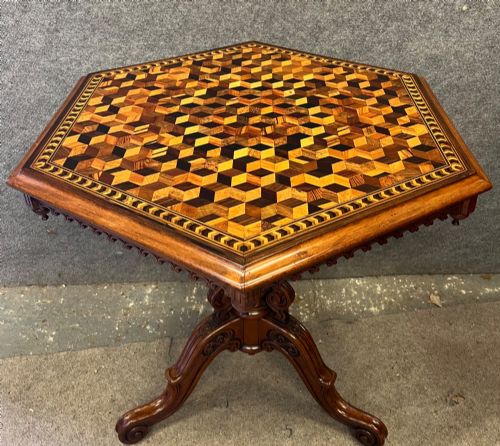
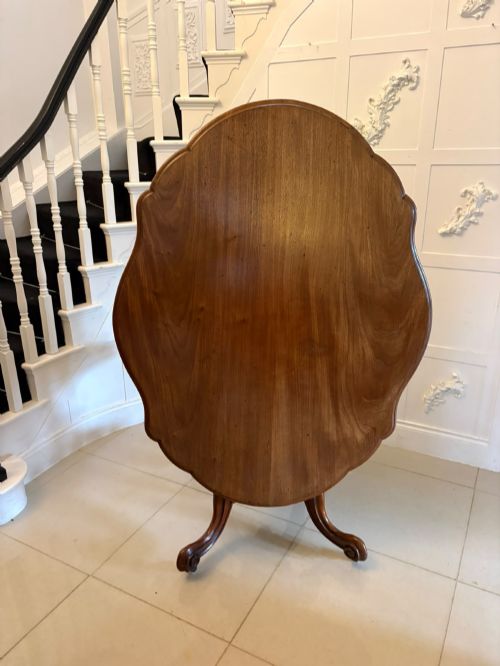
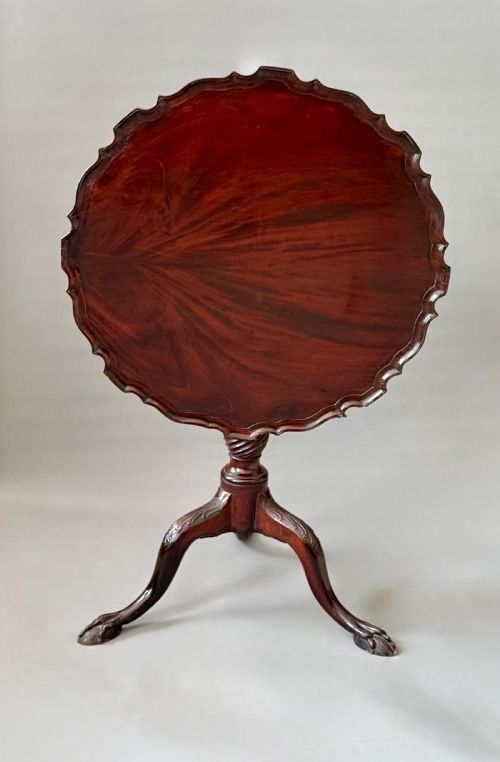
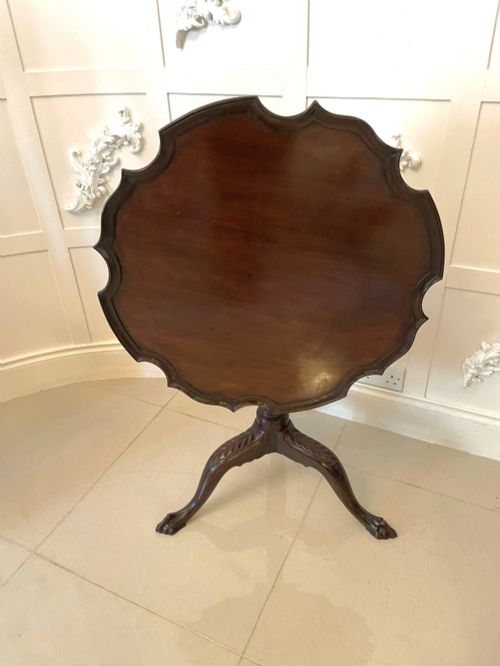

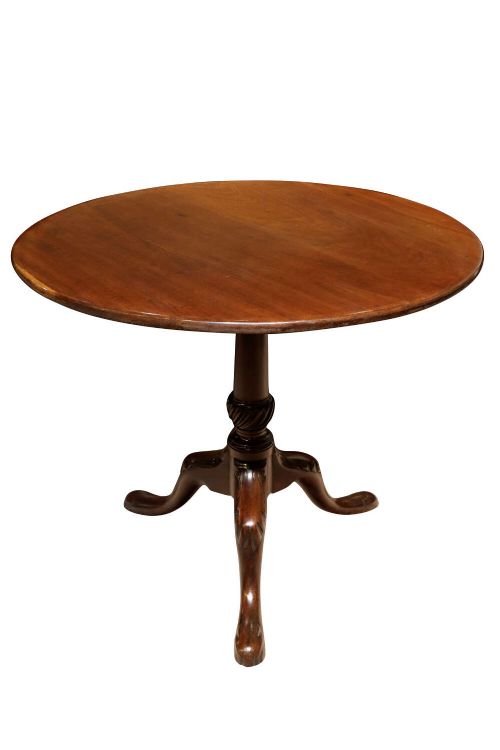
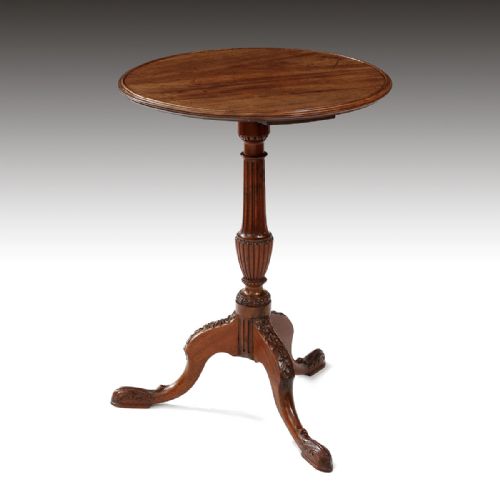
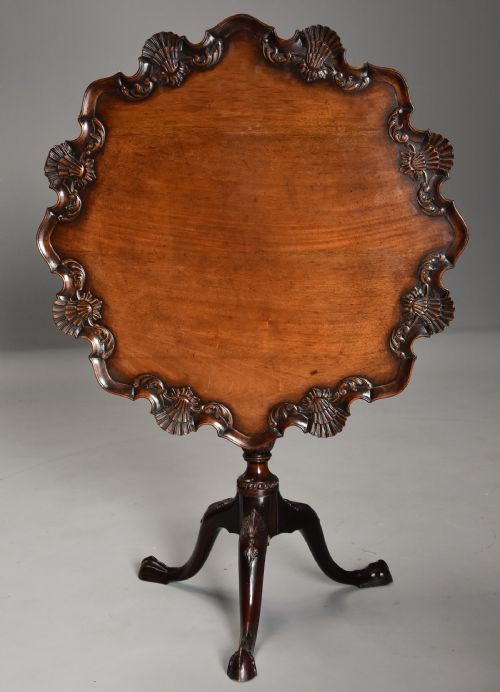
Carved Mahogany Tilt Table
A carved mahogany tilt table balances practical engineering with fluid carving, serving as a dining or display piece that pivots upright when space matters.
Carved Mahogany Tilt Table
A carved mahogany tilt table is a versatile piece designed with a top that hinges vertically, allowing the frame to store flat against a wall when not in service. These items emerge primarily from the eighteenth and nineteenth centuries, spanning Georgian, Regency, William IV, and Victorian eras.
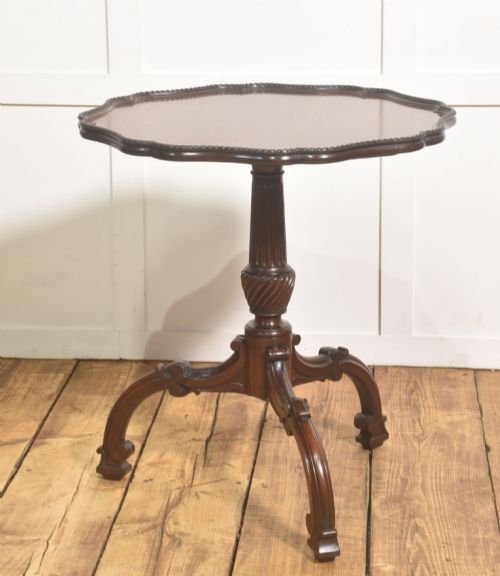
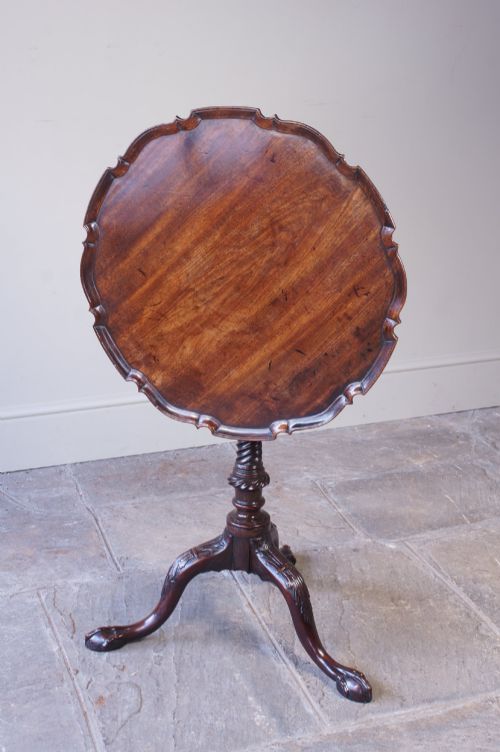
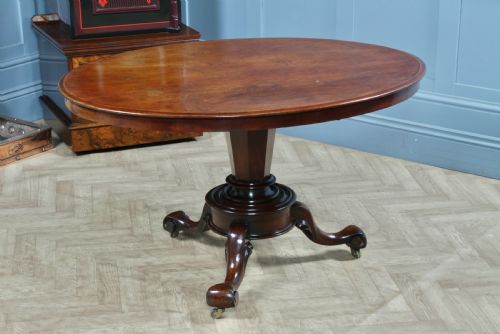
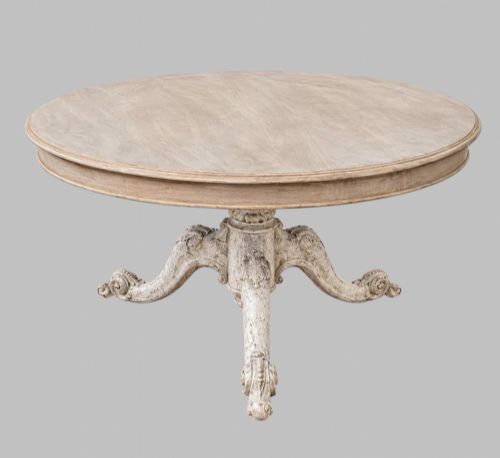
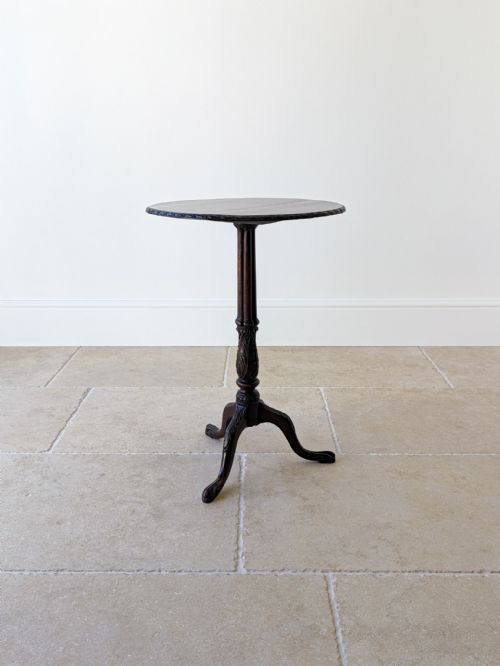
The selections on this page appear in various forms, including tripod wine tables, breakfast tables, dining centre tables, and occasional pieces. They range from compact occasional furniture to large circular and oval dining surfaces resting on central pedestals or tripod legs.
How they were made
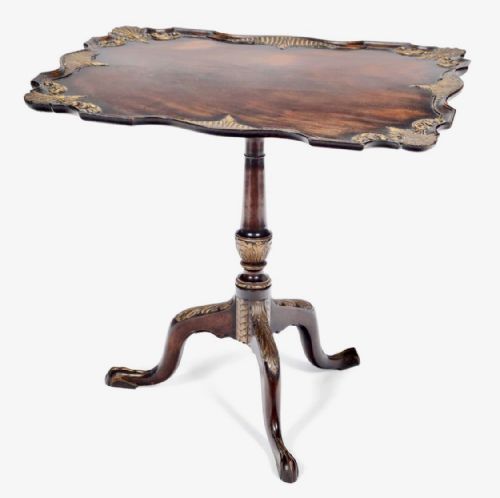
Cabinet makers utilised solid mahogany alongside flame mahogany veneer, often incorporating secondary timbers like rosewood and walnut, plus parcel gilt accents or bleached mahogany surfaces. Many examples feature detailed tripod bases, pedestals, and birdcage mechanisms that allow the top to rotate and tilt.
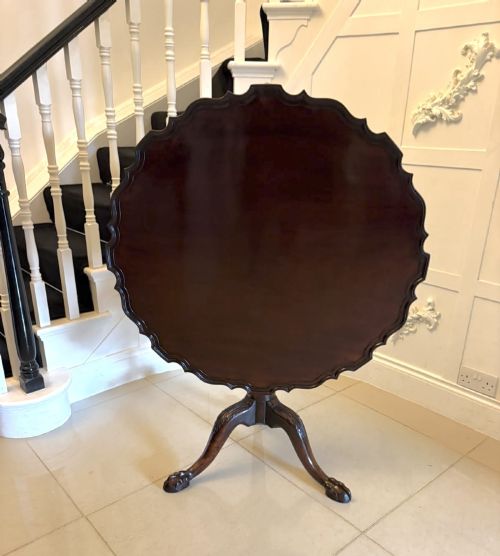
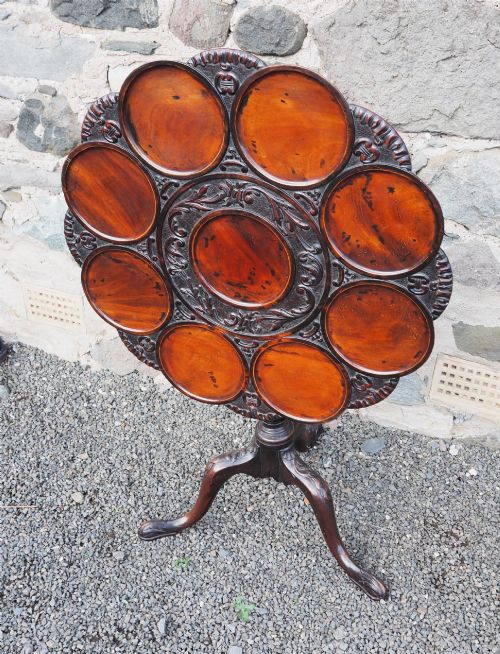
Carving defines the decorative vocabulary, visible in pie crust edges, dishtops, and serpentine contours executed in the Chippendale taste or later revival styles. Joinery relies on traditional turning, pegged tenons, and hinged catches to secure the heavy timber tops.
Some tables include removable tops, allowing owners to pack away the wooden surface like a tray while leaving the folding tripod frame by the hearth.
What varies in quality
Quality rests in the crispness of the hand carving along the pie crust edges and tripod knees, where sharp definition separates superior workshops from routine production. The timber selection itself dictates character, with dense flame mahogany grain and balanced figuring commanding attention.
The integrity of the tilting mechanism and the stability of the central column determine daily functionality. Well-executed pivot joints and robust birdcage assemblies ensure the heavy top rests flat without wobble or sag.
Ralph Turnbull·Gillow
The Carved Mahogany Tilt Table Glossary
- Tilt-top
- A tabletop mounted on a hinged mechanism that allows the surface to pivot into a vertical position for storage.
- Pie crust edge
- A raised, carved border shaped with subtle undulating curves resembling pastry work on fine dining tables.
- Tripod base
- A support structure featuring three legs radiating from a central pillar, common in nineteenth century occasional tables.
- Birdcage
- A timber framework beneath the tabletop that enables both rotation and pivoting functions on classical pedestals.
- Chippendale taste
- A decorative style inspired by eighteenth century cabinet making manuals, featuring bold carving and cabriole legs.
Carved Mahogany Tilt Table: Frequently Asked Questions
What is a tilt-top table?
A tilt-top table is a piece of furniture featuring a hinged mechanism beneath the surface that allows the top to be rotated and locked into a vertical position. This clever engineering enabled rooms to be cleared quickly when the furniture was not needed for dining or writing.
Most examples discovered here rest on central pedestals or three-legged tripod bases. The design balances domestic utility with decorative woodturning and carving.
How do I use a tilt table today?
These tables function well as wine tables, lamp stands, or occasional surfaces in living spaces and hallways. When tilted upright, they display the polished timber grain and carved underside as decorative wall art.
Their compact footprints make them suitable for smaller rooms where flexibility is required. Placing them away from direct heat sources helps preserve the antique timber and veneer.
How can I tell a Georgian table from a Victorian one?
Georgian tables, particularly those from the eighteenth century, often exhibit restrained proportions, crisp carving in the Chippendale style, and elegant tripod legs terminating in pad or claw and ball feet. The timber selection prioritises dense, dark mahogany with natural patination.
Victorian versions tend to be heavier, sometimes incorporating larger breakfast surfaces, elaborate oval shapes, and richer figured mahogany veneers. Mechanisms on nineteenth century pieces also reflect industrial improvements in iron catches and pivot pins.
What is a birdcage mechanism?
A birdcage is an ingenious wooden assembly situated between the tabletop and the central column, resembling a small slatted cage. It consists of two parallel discs connected by small vertical spindles that permit the table surface to spin horizontally.
In addition to rotation, the central pivot allows the entire top to tilt backwards for storage. This construction method appears primarily on higher-quality eighteenth and nineteenth century tripod tables.