


Mahogany Pedestal Wine Table
A mahogany pedestal wine table provides a compact, sturdy surface suited to holding glasses or lamps beside a chair.
Mahogany Pedestal Wine Table
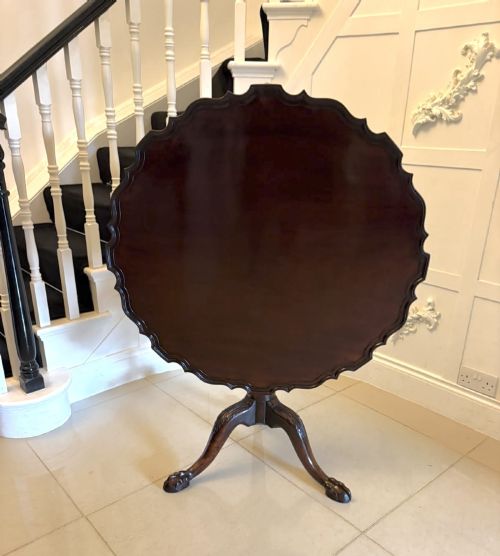
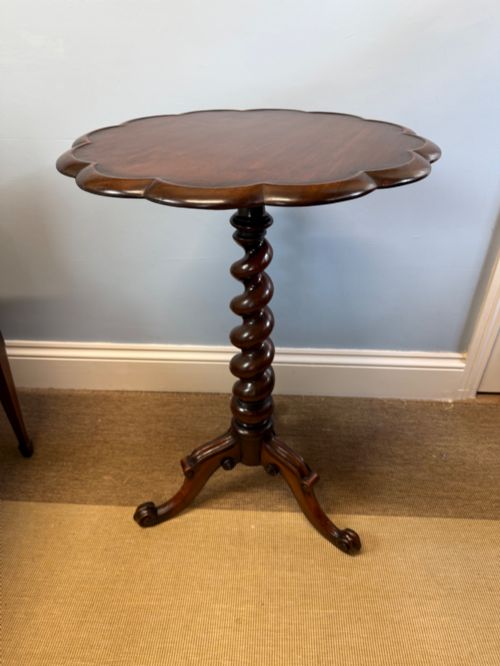
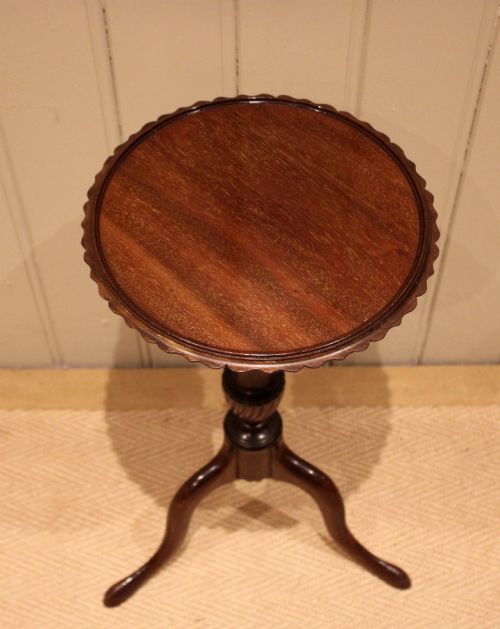
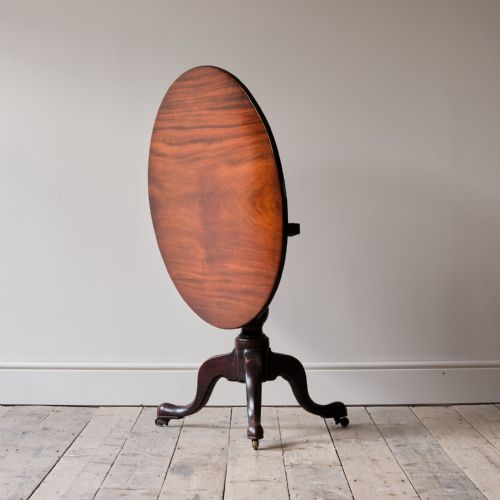
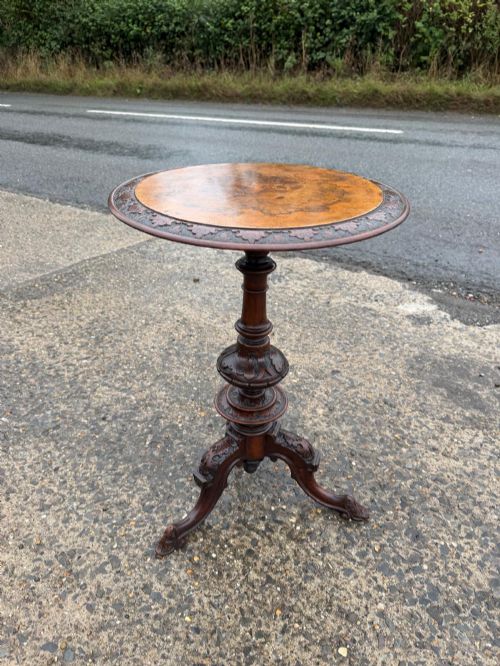
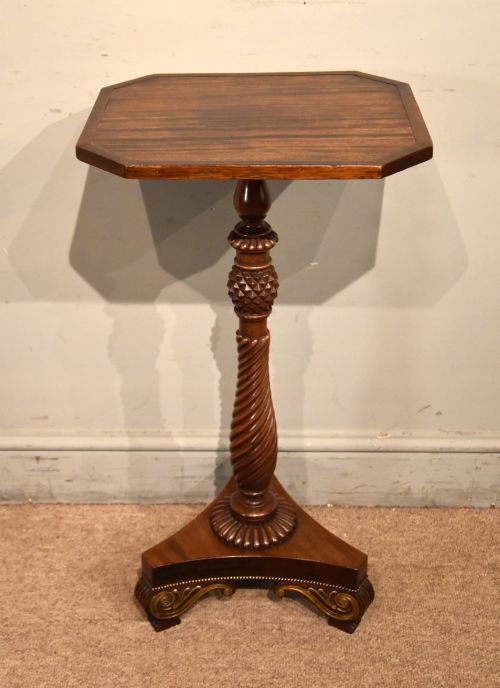
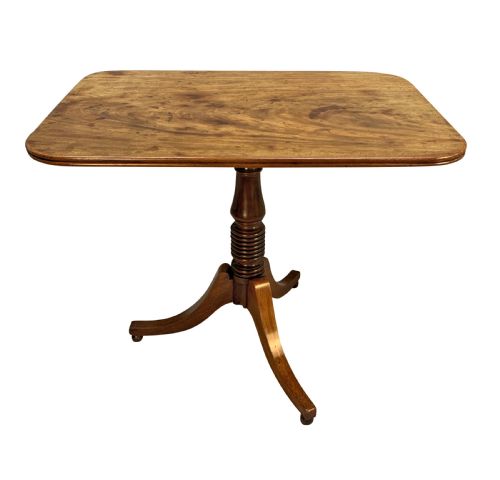
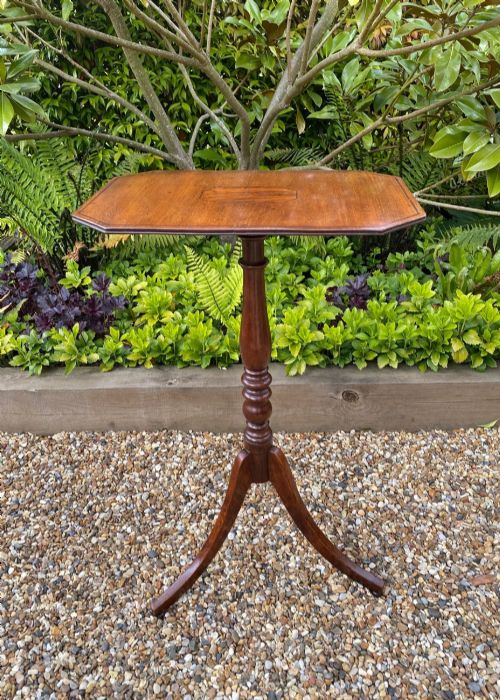
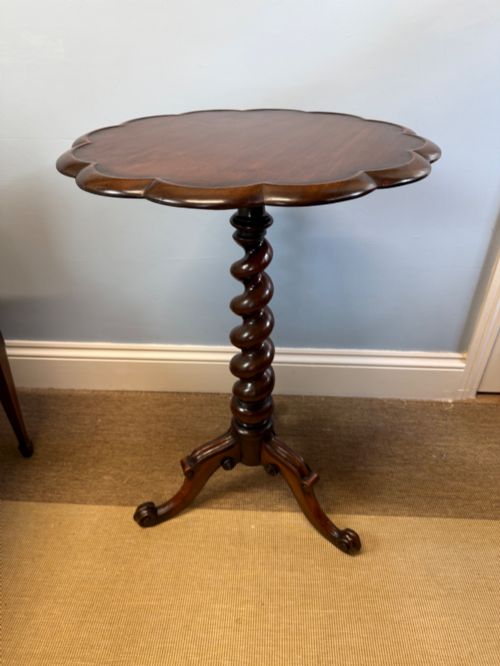
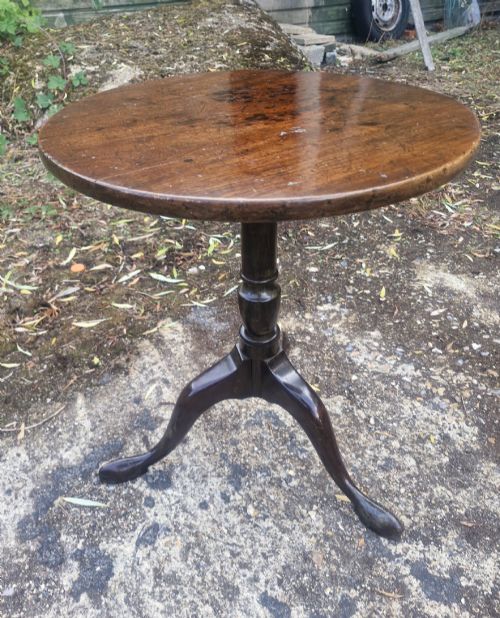
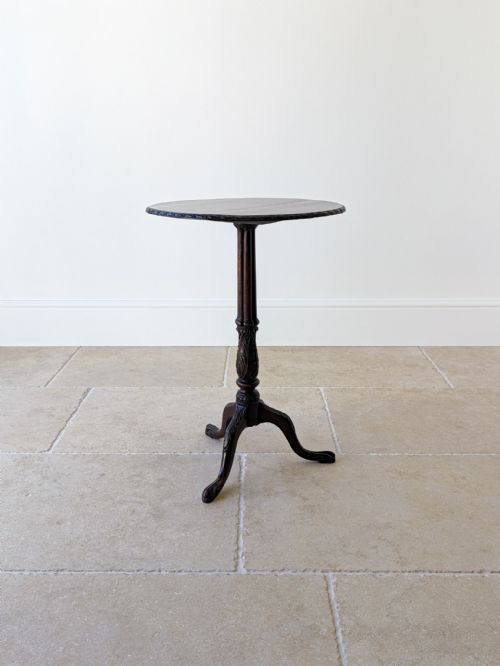
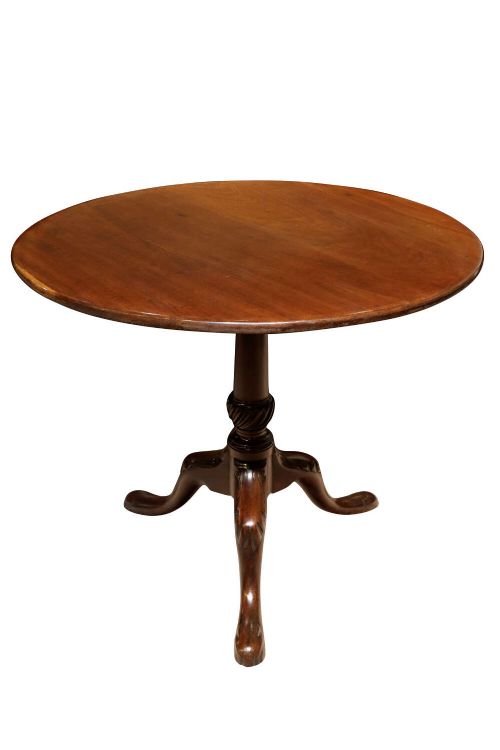
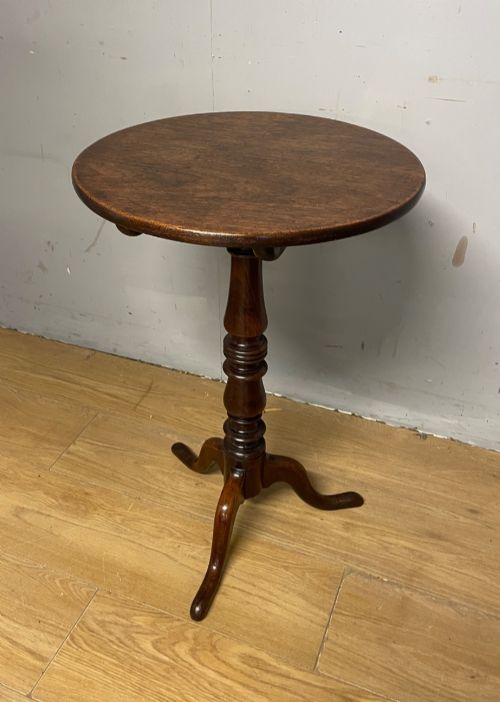
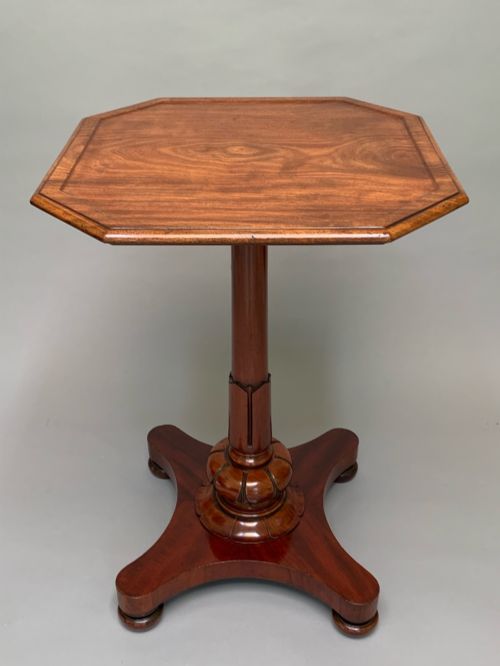
A mahogany pedestal wine table typically stands on a tripod base supporting a central column, frequently taking the form of a circular tilt-top design. These pieces appear across Georgian, Regency, and Victorian periods, reflecting shifting domestic habits in English homes.
Buyers commonly encounter forms that double as lamp tables, occasional tables, or candle stands. The smaller examples remain versatile enough to sit beside seating without crowding the room.
Materials and Construction
Cabinetmakers constructed these tables using solid mahogany or mahogany veneers, occasionally incorporating burr wood, cherry wood, or walnut to accent the tops. Brass fittings, leather inserts, and gold leaf sometimes appear on specific refined examples.
Many variants utilise a tilting mechanism on the central pillar, allowing the top to fold flat when not in use. Tripod legs terminate in plain or turned feet, sometimes supported by a birdcage mechanism beneath the surface.
Some tables include hidden catches designed to keep the top from tipping unexpectedly while holding the evening port.
Distinctions in Execution
The degree of refinement in the timber grain and the crispness of the turned pedestal separate standard pieces from finer examples. Subtle details like shaped pie crust edges or precise wood inlay require greater skill from the maker.
Structural stability in the tripod base and the snugness of the tilt mechanism indicate the original standard of joinery. Pieces maintaining their original surfaces without excessive restoration hold greater integrity.
Gillow
The Mahogany Pedestal Wine Table Glossary
- Tilt-top
- A hinged tabletop that pivots to a vertical position for storage against a wall when not in use. This mechanism saved valuable floor space in period drawing rooms.
- Tripod base
- A support structure featuring three legs radiating from a central pillar. It offered stability on uneven floors common in older houses.
- Pie crust edge
- A raised, decorative rim carved into a serpentine or scalloped outline around the tabletop. It prevented items from sliding off the surface.
- Birdcage
- A wooden framework beneath the tabletop that allows the surface to both rotate and tilt. This assembly is characteristic of higher-quality 18th-century tables.
Mahogany Pedestal Wine Table: Frequently Asked Questions
What were wine tables used for?
These small tables held decanters and glasses during evening gatherings, allowing guests to pour drinks without reaching for a larger dining surface.
Over time, their compact footprint made them practical for holding candles, lamps, or books in sitting rooms.
How do I identify a Georgian table?
Georgian pieces often feature dense Cuban mahogany, hand-turned tripod columns, and sometimes tilting tops with sophisticated birdcage mechanisms.
Proportions tend to be light and balanced, reflecting the cabinetmaking standards of the 18th and early 19th centuries.
Can I use a wine table daily?
The sturdy tripod construction makes these tables suitable for holding everyday items like cups or small lamps beside a chair.
Care should be taken with moisture and heat to protect the polished mahogany surface from rings and marks.
What is a tilt-top mechanism?
A pivot hinge connects the tabletop to the central pillar, held firmly in place by a brass catch or wooden wedge.
This allowed historical households to tuck the furniture neatly against the perimeter of a room when clearing space.