



Carved Mahogany Table Mirror
These carved mahogany table mirror examples bring solid timber and pivoting glass together for a practical dressing piece.
Carved Mahogany Table Mirror
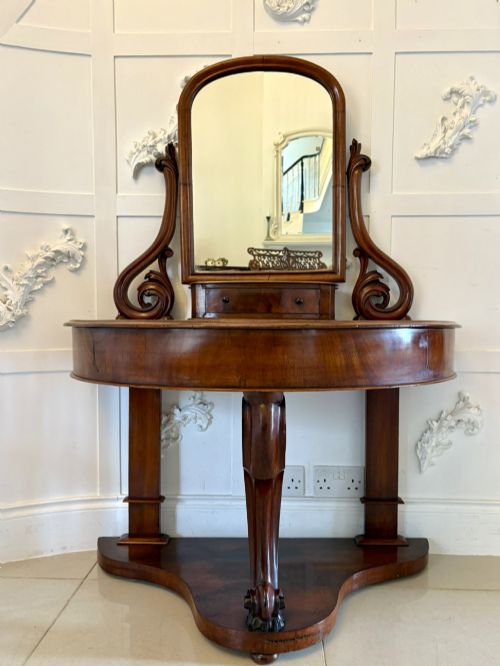
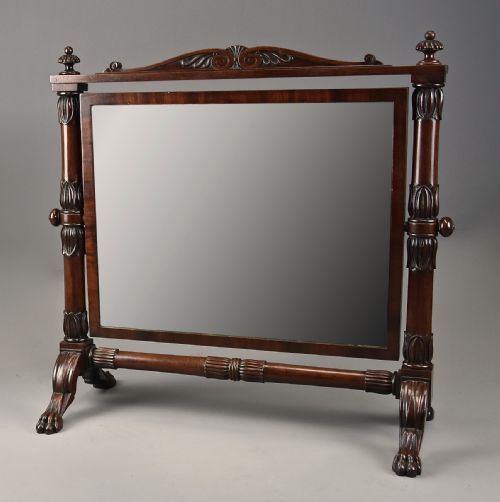
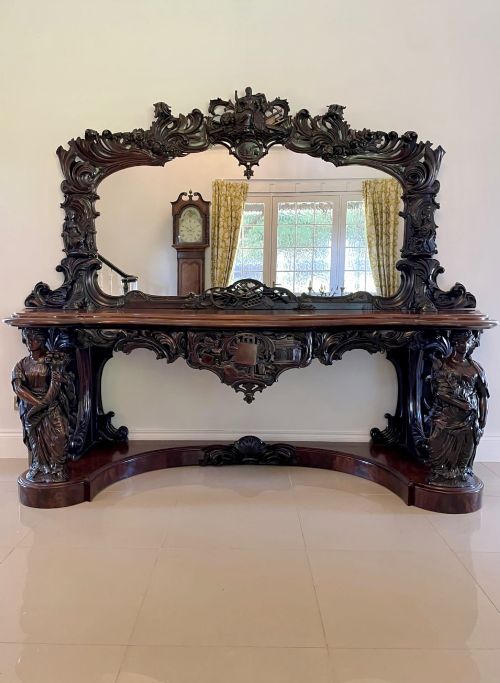
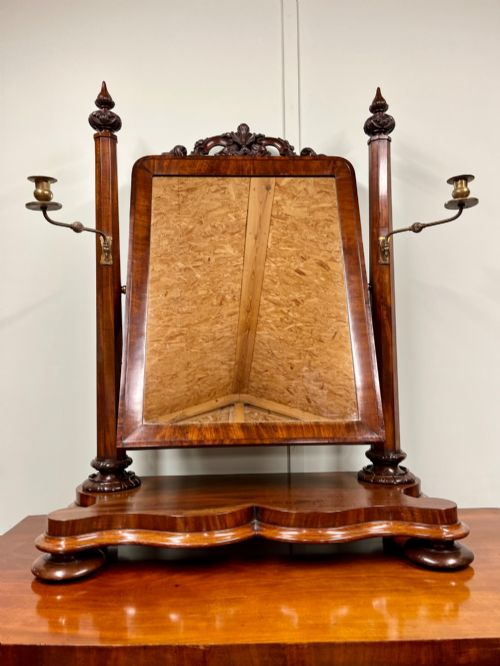
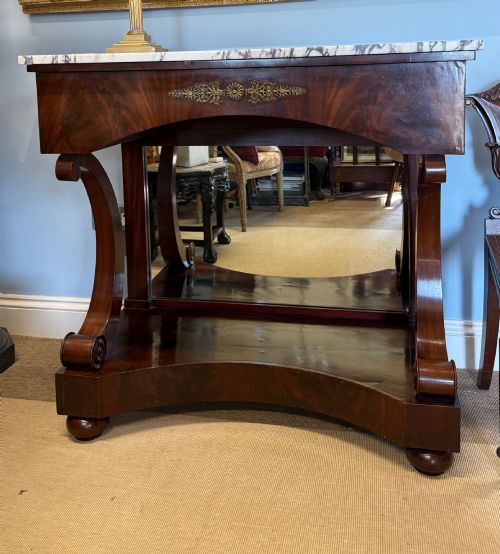
A carved mahogany table mirror sits upon chests, dressing tables, and washstands to provide an adjustable reflection for daily grooming. These items appear across Georgian, Regency, William IV, and Victorian periods, taking the form of swing mirrors and toilet mirrors mounted on supportive side uprights.
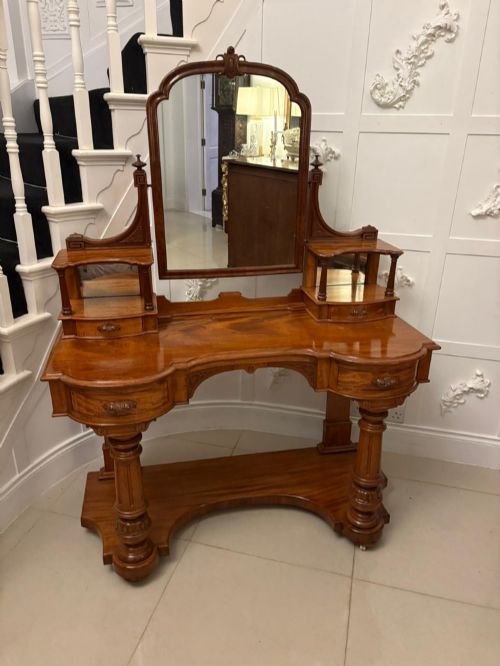
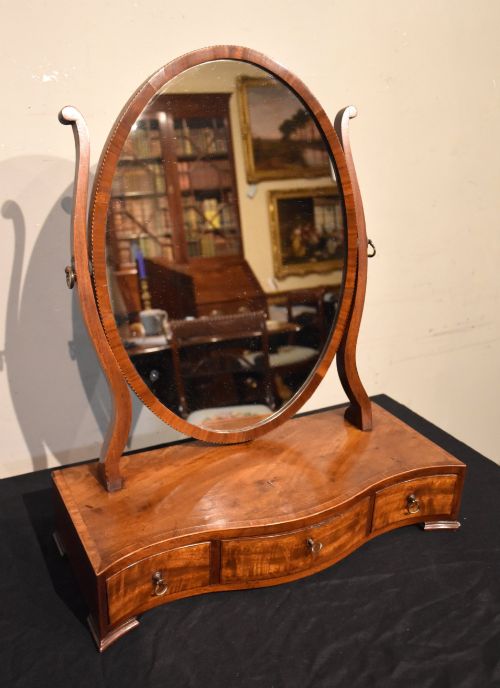
The most common formats on this page include Victorian and 19th-century swing mirrors alongside compact toilet mirrors. Many examples utilise traditional box bases fitted with small drawers, whilst others mount directly into larger dressing table superstructures.
How they were made
Cabinet makers constructed these frames from solid mahogany and flame mahogany veneers, applying carved details to the scrolled supports and base plinths. Brass pivot screws or wooden trunnions allowed the mirror plate to tilt forward and backward within its upright arms.
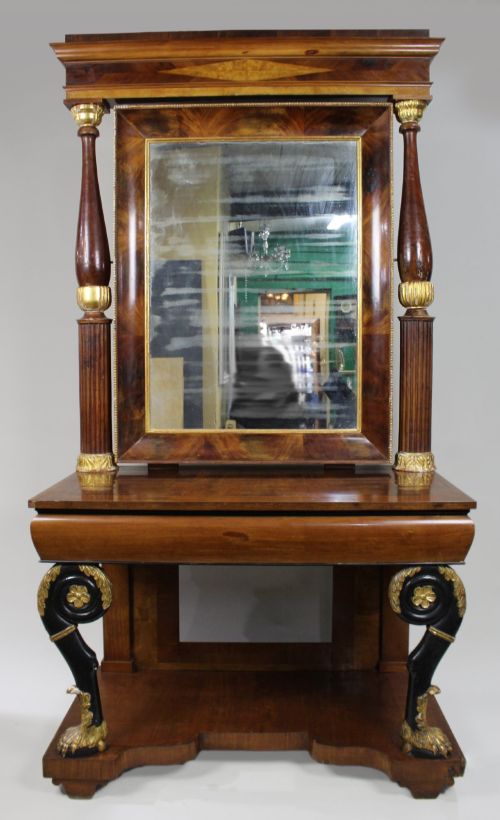
The glass panels rested securely within rebated wooden frames, backed with protective boards and held by internal pins. Secondary woods lined the small accessory drawers, whilst brass fixtures and occasional parcel gilt highlights completed the hardware.
Some Victorian gentleman's shaving stands include tiny integrated platforms designed precisely to hold a pocket watch whilst shaving.
What varies in quality
The depth and crispness of the carved ornamentation separate standard production pieces from exhibition grade examples. Smoother timber selection, particularly figured flame mahogany, yields a richer grain pattern across the base and frame.
Proportion and structural rigidity dictate the overall execution. Stronger joints prevent the upright arms from wobbling when the glass is adjusted, ensuring the mirror holds its position firmly over decades of use.
P & MA Nicholson
The Carved Mahogany Table Mirror Glossary
- Swing mirror
- A looking glass hung on pivots between two vertical upright posts, allowing it to rotate freely. This design sits on top of a table or chest.
- Toilet mirror
- A smaller version of a dressing mirror designed specifically for placement on a dressing table or washstand. These often feature miniature drawer compartments in the base.
- Flame mahogany
- A wood veneer showing a distinctive flickering flame-like grain pattern. Cabinet makers used this cut on prominent exterior surfaces for decorative effect.
- Parcel gilt
- A surface treatment where thin gold leaf is applied selectively to carved wooden details. This technique contrasts brightly against the dark reddish-brown mahogany.
Carved Mahogany Table Mirror: Frequently Asked Questions
How do I date a carved mahogany table mirror?
Dating relies upon construction methods, foot styles, and the shape of the mirror frame supports. Earlier Georgian and Regency models tend to show simpler box bases with bracket feet, whilst Victorian examples introduce heavier carved scrollwork and serpentine fronts.
Changes in mirror glass bevelling and screw fixings also offer clues. Original backboards and hand-cut screws point firmly toward nineteenth-century origins rather than later revival pieces.
Where should I place a table mirror?
These pieces sit securely on top of sturdy chests of drawers, console tables, or dedicated dressing surfaces. They require a flat, stable area that can support the weight of the solid timber frame and glass.
Placement near natural window light yields the best reflection for grooming. Ensure the supporting furniture matches the depth of the mirror base to prevent overhang.
Are the mirror plates original?
Many older pieces retain their original mercury or early silvered glass, which often displays minor foxing spots and subtle age blemishes. Replacement mirror plates appear frequently where the original glass deteriorated beyond practical use.
Examining the backboards and the way the glass is secured helps determine originality. Clear, unblemished glass in an antique frame usually indicates a later replacement.
How do I maintain the wood and glass?
Routine dusting with a dry, soft cloth prevents particle buildup on the carved mahogany and the glass surface. Avoid modern silicone sprays, opting instead for traditional beeswax applied sparingly to nourish the timber grain.
Glass cleaner should be sprayed onto the cloth rather than directly onto the mirror. This stops moisture from seeping behind the frame and damaging the silvered backing over time.