




Dark Wood Swing Glass
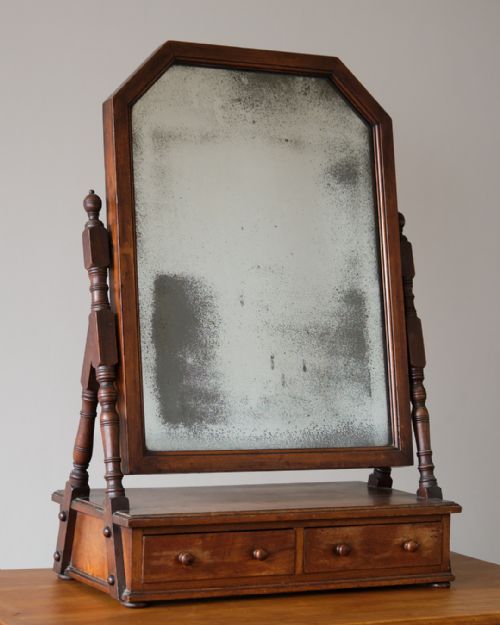
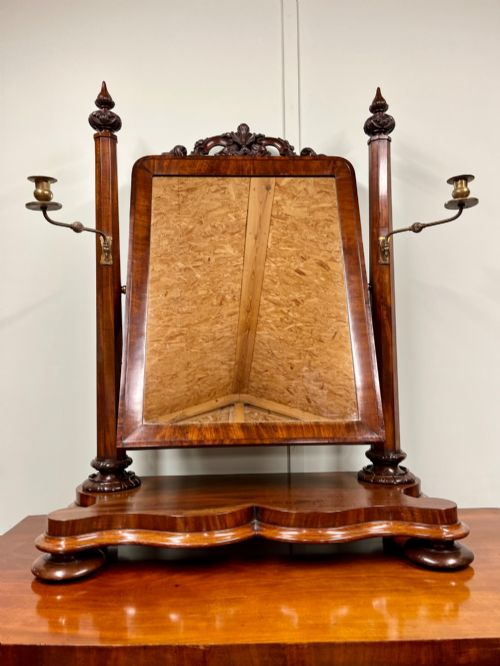
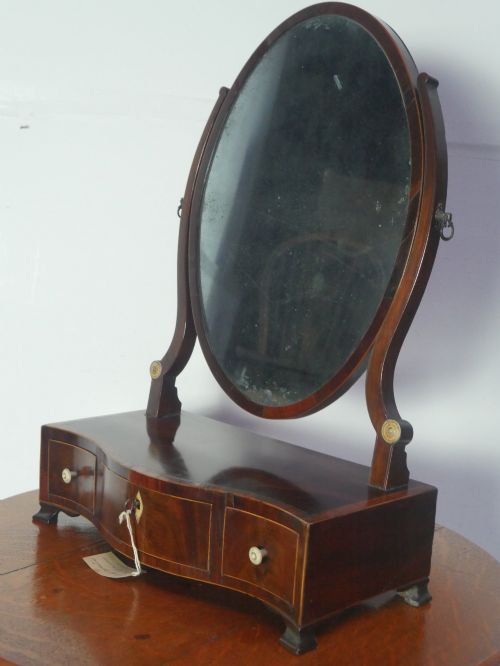
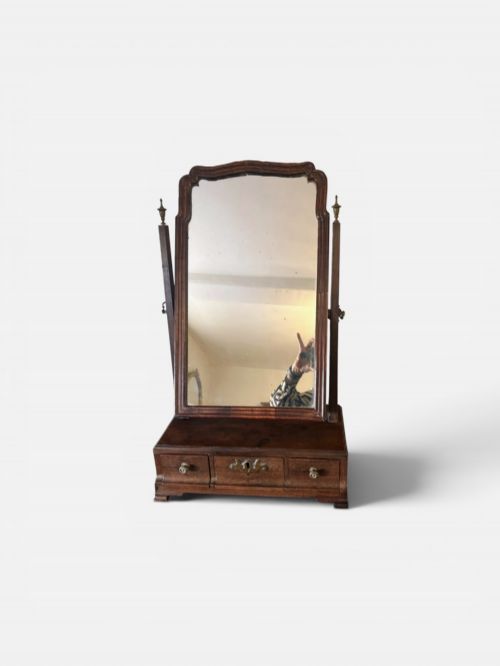
Dark wood swing glass mirrors are adjustable pivoting dressing glasses that bring warmth and functional elegance to any period interior.
Dark Wood Swing Glass
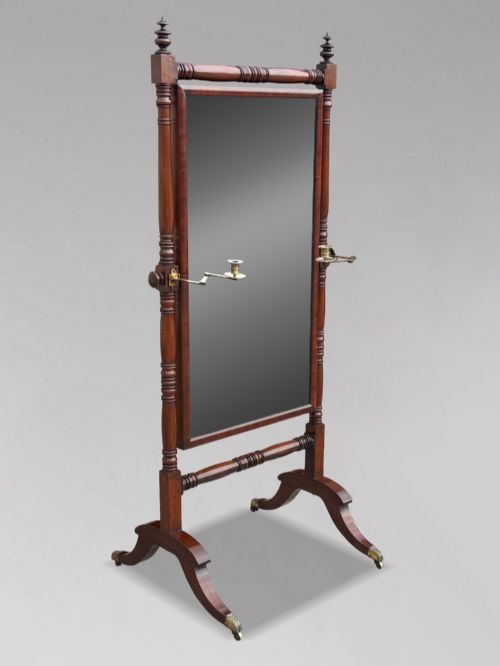
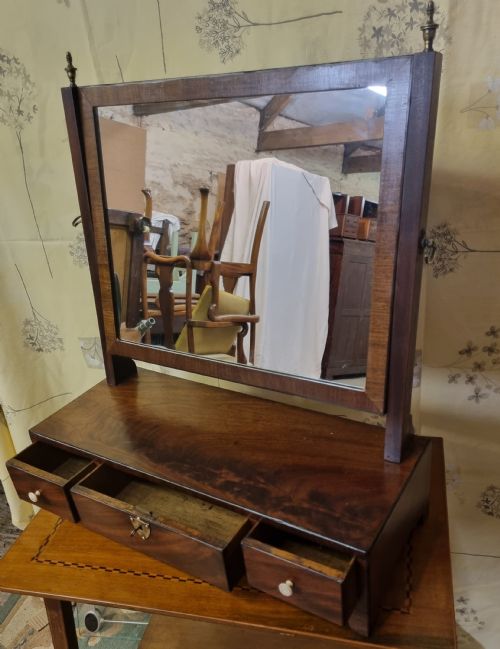
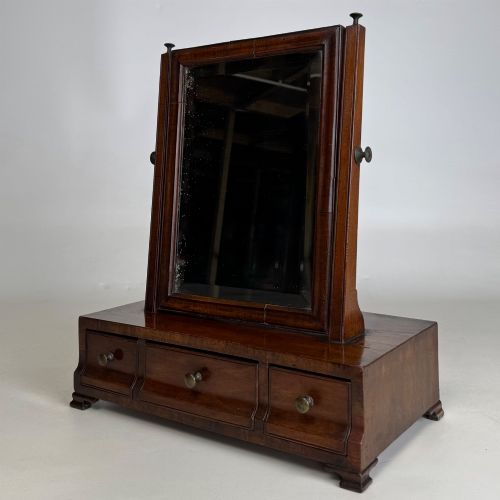
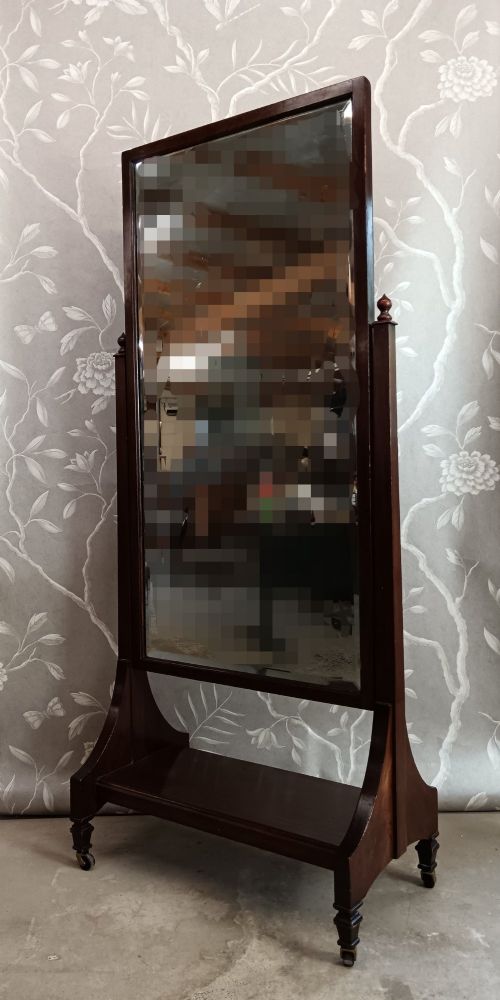
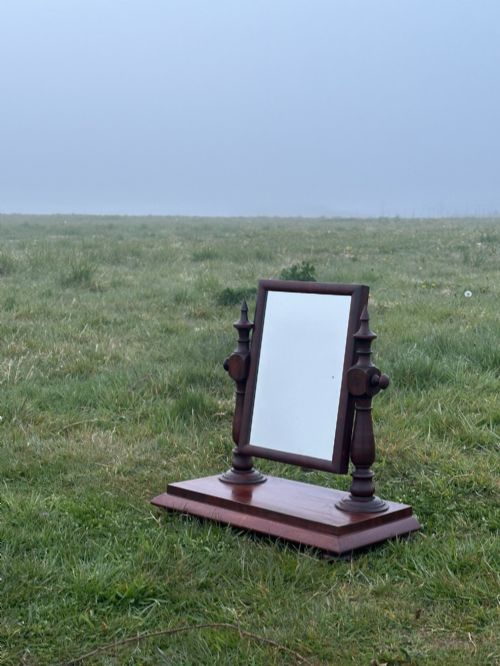
Smaller tabletop versions sit upon shaped box bases containing small drawers, whilst larger floor-standing cheval mirrors pivot entirely within upright frames. Examples range from simple domestic toilet glasses to inlaid specimens incorporating satinwood, ebony and bone.
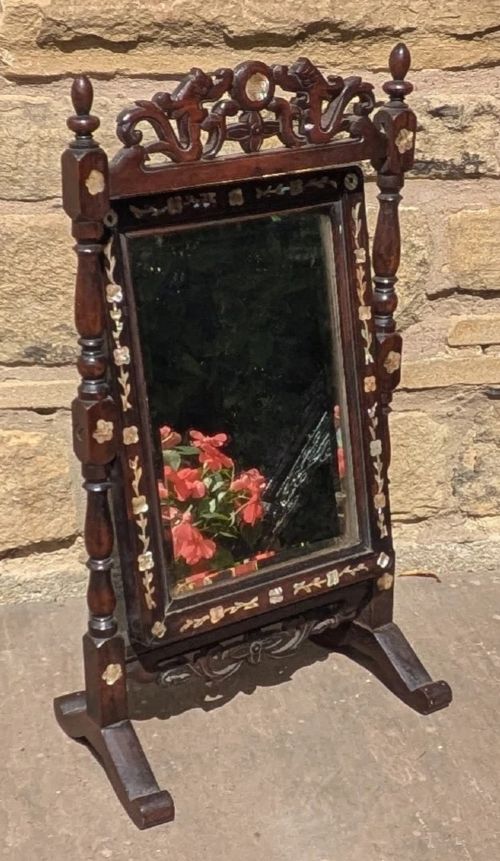
Origins span British workshops alongside occasional pieces from broader European and international traditions such as Dutch marquetry and Chinese Qing hardwood manufacture. Buyers encounter both compact bedroom pieces and substantial freestanding mirrors designed for full-length reflection.
How they were made
Joiners constructed the frames principally from solid mahogany and walnut, supported by secondary timbers like hardwood. Brass screw-pins, pivots and candle sconces allowed the glass plates to tilt smoothly to the desired angle.
Mirrors utilise genuine mirror glass or polished silvered plates retained within rebated wooden frames. Decoration relied upon fine veneers, marquetry inlay, satinwood banding and subtle bone or mother-of-pearl detailing rather than excessive carving.
Travelling swing mirrors allowed Georgian travellers to maintain their grooming standards whilst navigating bumpy eighteenth-century coach journeys.
What varies in quality
The standard of craftsmanship shows in the selection of timber figures, where rich flame mahogany veneer and tightly grained solid woods elevate a piece above utilitarian examples. Proportion and balance dictate the visual success of the frame, particularly in the curve of the upright arms and the stability of the supporting base.
Heal and Sons·Gillows
The Dark Wood Swing Glass Glossary
- Cheval mirror
- A large freestanding full-length dressing mirror mounted on a vertical frame with pivoting side pivots. It allows the glass to swing freely through a full arc.
- Toilet mirror
- A smaller tabletop dressing glass mounted on a box base or small frame designed to sit upon a chest of drawers or dressing table.
- Marquetry
- Decorative veneer work formed by fitting together contrasting pieces of wood, shell or bone to create pictorial or geometric patterns on the surface.
- Padouk
- A dense tropical hardwood displaying a deep reddish-brown colour, utilised by cabinetmakers for select high-quality furniture and mirrors.
- Satinwood
- A pale, lustrous exotic timber employed extensively for decorative stringing, banding and contrasting inlay on mahogany furniture.
Dark Wood Swing Glass: Frequently Asked Questions
What is a swing glass mirror?
A swing glass mirror is a pivoting looking glass mounted on vertical side supports that allows the user to adjust the angle of reflection.
These pieces typically sit on small box bases for tabletop use or stand independently upon floor frames as full-length cheval mirrors.
How do I date a mahogany mirror?
Dating relies on examining the timber species, construction methods, hardware types and overall stylistic proportions.
Georgian examples often display finer joinery and simpler box bases, whilst Victorian pieces tend toward heavier proportions and richer polished finishes.
Where should I place a toilet mirror?
Toilet mirrors function well placed upon heavy chests of drawers, sideboards or dedicated dressing tables in bedrooms.
Their adjustable frames make them practical for everyday grooming while adding traditional wooden warmth to interior spaces.
What is the difference between a toilet mirror and a cheval mirror?
A toilet mirror is compact and designed to rest on top of a piece of furniture for upper-body reflection.
A cheval mirror is a much taller freestanding floor model that permits full-length viewing within a pivoting frame.