


Antique Standing Vanity Glass
These antique standing vanity glass pieces range from Georgian walnut to Victorian mahogany, offering practical elegance for any dressing table.
Antique Standing Vanity Glass
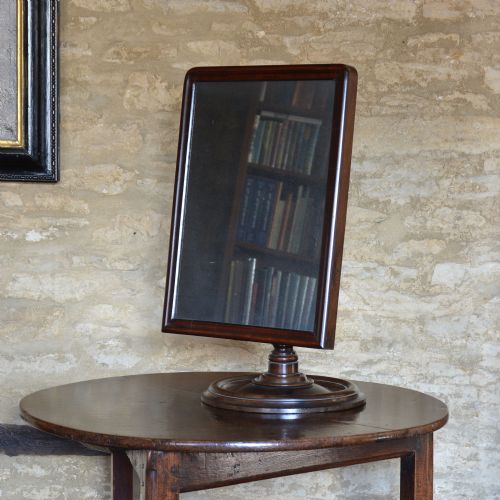
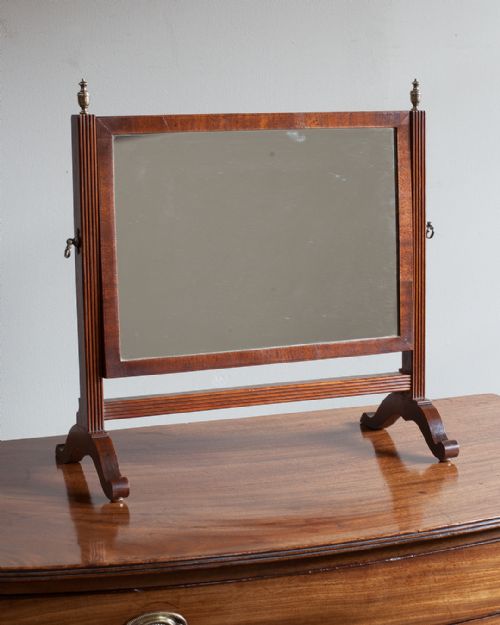
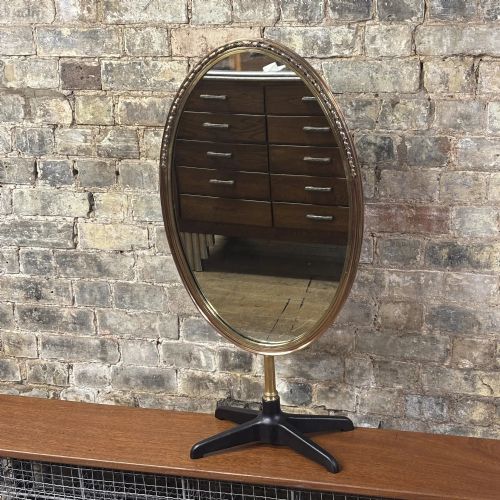
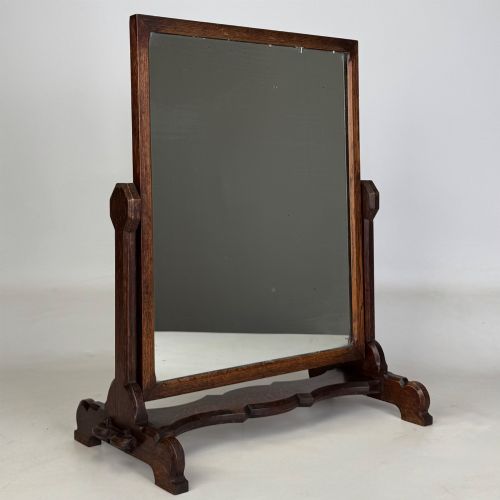
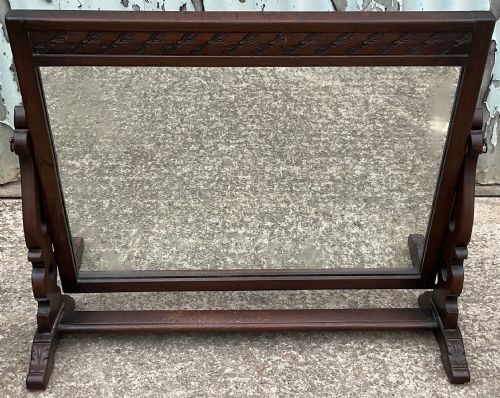
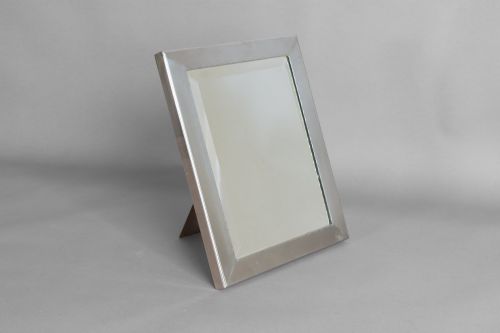
An antique standing vanity glass is a table mirror designed for dressing and grooming, often called a dressing glass, toilet mirror, or swing mirror. These pieces sit upon chests of drawers, dressing tables, or consoles, allowing the user to adjust the angle of the glass.
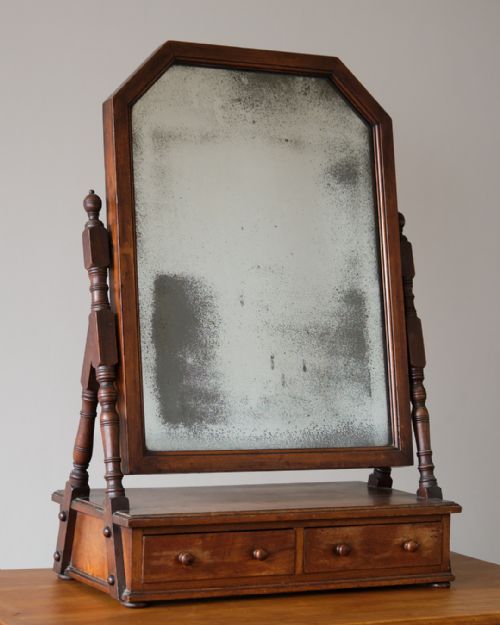
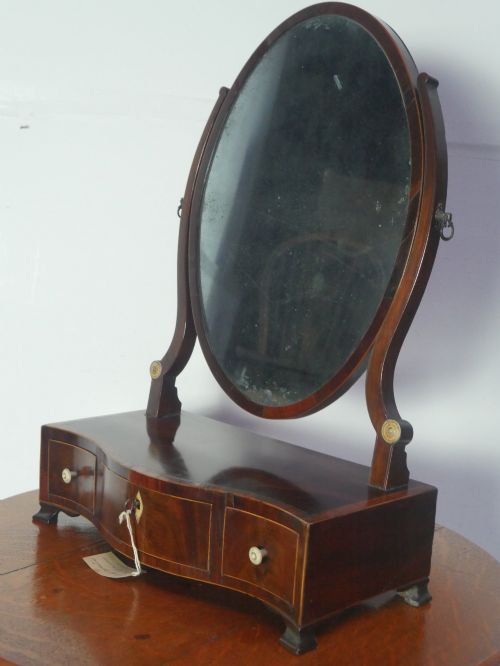
Most examples encountered here date from the eighteenth and nineteenth centuries, taking the form of compact mahogany or walnut table mirrors with fitted drawers in their bases. Larger cheval mirrors and floor-standing versions also appear, along with specialised shaving mirrors and occasional brass or bronze frames.
Originating in periods spanning the Georgian, Regency, and Victorian eras, these mirrors combine functional utility with cabinet-making flair. Regional variations, such as Scottish or Chinese export pieces, show how local tastes influenced the standard dressing mirror form.
Materials and construction methods
Makers utilised solid timbers such as mahogany, walnut, and oak to build the frames and box bases, frequently incorporating secondary woods like boxwood or satinwood for stringing and inlay. Brass hinges, brackets, and adjustable side screws allow the glass frame to tilt securely between upright supports.
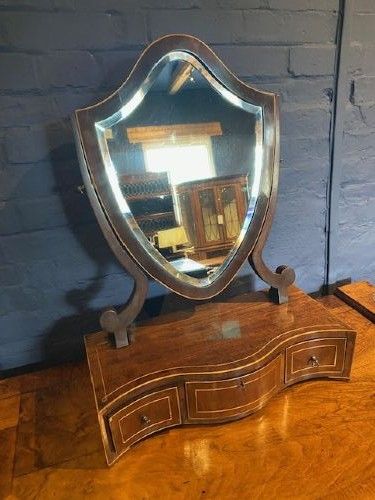
Mirror glass of the period was cast or blown and then silvered, often featuring bevelled edges on finer examples. Cabinet makers constructed the small drawers in the base using traditional dovetail joints, reflecting the standard joinery techniques of eighteenth and nineteenth century workshops.
Some travel mirrors folded neatly into wooden boxes so gentlemen could pack their vanity routine on the road.
Distinctions in quality
Quality rests primarily in the crispness of the cabinet work, the choice of figured timber such as flame mahogany or burr walnut, and the survival of original mirror glass and brass hardware. Superior pieces display finely dovetailed base drawers, well-proportioned upright standards, and delicate stringing or crossbanding.
Simpler versions use plain secondary timbers and straightforward joinery, while top-tier examples incorporate complex serpentine fronts, bone escutcheons, or specialised adjustable mechanisms. The harmony of the proportions between the mirror frame and its supporting base dictates the visual success of the piece.
Heal & Sons·Thomas Rubergall·Crisford & Norris·Gillows
The Antique Standing Vanity Glass Glossary
- Toilet mirror
- A small mirror designed to stand on a dressing table or chest. These often feature a box base fitted with small drawers for storing trinkets.
- Cheval mirror
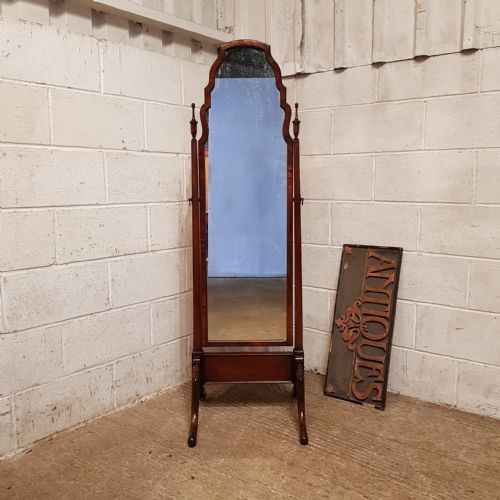
- A full-length standing mirror supported by a freestanding frame with four legs. The glass swings on vertical pivots between two upright posts.
- Swing mirror
- A mirror plate hung on horizontal pivots within a frame that tilts back and forth. This mechanism allows the user to adjust the angle of reflection.
- Stringing
- Thin inlay of a contrasting wood used to outline panels and drawer fronts. It adds subtle linear decoration to mahogany and walnut furniture.
- Bevelled glass
- Glass with an edge ground and polished to an angle thinner than the rest of the sheet. This technique creates a decorative light-refracting border.
Antique Standing Vanity Glass: Frequently Asked Questions
How do I date an antique standing vanity glass?
Dating relies on timber choices, construction techniques, and hardware styles. Eighteenth-century examples often feature walnut with candle slides or simple box bases, while Victorian pieces tend to use heavier mahogany and cast brass fittings.
Examining the mirror plate itself helps, as old glass frequently shows slight distortion, oxidation, or foxing around the edges that modern replacements lack.
Where were these mirrors placed in the home?
These mirrors were placed on top of chests of drawers, sideboards, or dedicated dressing tables in bedrooms and dressing rooms. Their primary purpose was to provide a portable reflection for personal grooming before built-in wardrobes with full-length mirrors became common.
Smaller table versions could easily be moved around the house to catch the best natural daylight near a window.
Are the mirror plates original?
Many antique mirrors retain their original glass, though replacement plates are common due to the fragile nature of old silvered glass. Original plates often display characteristic signs of age, such as tiny dark spots or slight ripples in the reflection.
A replacement glass does not necessarily diminish the decorative appeal of the frame, but it is an important detail for strict collectors.
What is the difference between a toilet mirror and a cheval mirror?
A toilet mirror is a tabletop piece, compact in size and usually incorporating a small drawer base to sit upon another piece of furniture. A cheval mirror is a much larger, floor-standing mirror that provides a full-length reflection.
Both types use pivoting frames, but their scale and placement in the room differ entirely.