



William IV Mahogany Mirror
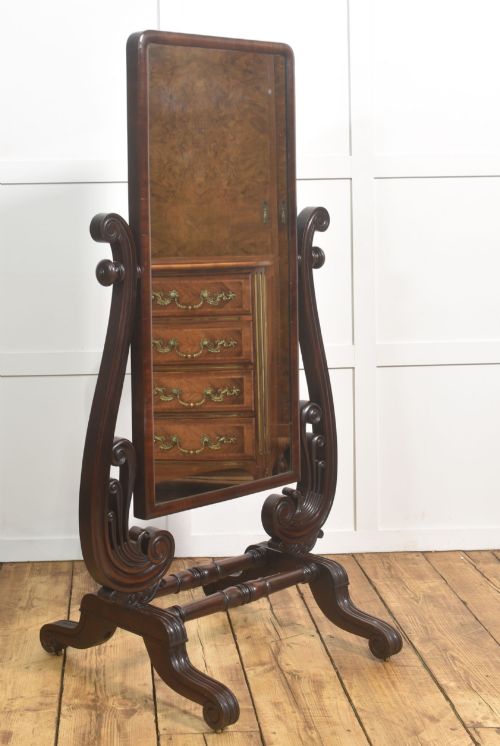
A william iv mahogany mirror brings warmth and strong grain to a room, whether chosen as a tall cheval piece or a compact dressing glass.
William IV Mahogany Mirror
A william iv mahogany mirror encompasses a variety of forms designed for reflection and display, with cheval mirrors and dressing table mirrors appearing frequently among the records. These pieces date principally from the nineteenth century, including the specific reign period and related Regency influences.
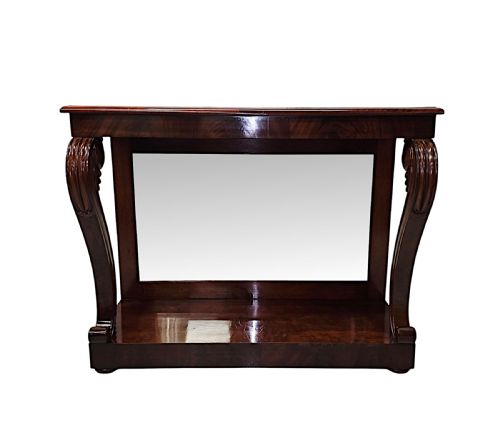
Buyers encounter floor-standing cheval glasses alongside smaller toilet mirrors intended for tabletops and dressing tables. Console tables and pier tables featuring integrated mirrors also emerge within this category.
The selection ranges from simple swing frames to large cheval mirrors supported by sabre legs with brass castors. Wall mirrors and overmantel mirrors further broaden the scope of available designs.
Materials and construction
Makers utilised solid mahogany and richly figured flame mahogany veneers over secondary timbers to construct the frames and stands. Brass hardware such as sabots, castors and pivoting arms appear regularly on floor-standing mirrors.
Reflecting surfaces rely upon glass and original mercury plate, whilst certain console and toilet mirrors incorporate marble tops. Parcel gilt accents occasionally complement the dark timber frames.
Early mirrors often capture reflections in original mercury plate, offering a softer, dimmer view than modern glass.
Distinctions in quality
The depth and figure of the mahogany veneer set examples apart, with highly figured flame timber indicating superior selection by the cabinetmaker. Subtlety in carved details and the weight of the brass mountings also distinguish finer pieces from simpler workshop production.
Structural integrity in the pivoting mechanisms of swing and cheval mirrors dictates the longevity of the piece. The preservation of original mercury glass plate adds historical weight to the physical object.
Gillows·Gillingtons of Dublin
The William IV Mahogany Mirror Glossary
- Cheval mirror
- A large floor-standing dressing mirror supported in a frame that allows it to swing. This form permits a full-length view of the user.
- Toilet mirror
- A smaller mirror designed to sit upon a dressing table or chest of drawers. These often feature small box bases fitted with drawers.
- Flame mahogany
- A veneer cut from timber where the branch meets the trunk, producing a distinctive fire-like pattern. Cabinetmakers utilised this to create striking visual effects on prominent surfaces.
- Sabot
- A metal sleeve fitted to the foot of a furniture leg for protection and decoration. Brass versions are typical on nineteenth-century cheval frames.
- Mercury plate
- An early type of mirror glass backed with a tin and mercury amalgam. This produces a warm, slightly uneven reflection compared to modern silvered glass.
William IV Mahogany Mirror: Frequently Asked Questions
Where should I place a cheval mirror?
A cheval mirror requires adequate floor space to allow the frame to stand securely without obstructing movement through a room. Placing the piece near a light source enhances the reflection and highlights the mahogany grain.
Because these mirrors are heavy and freestanding, steady flooring ensures the frame remains stable when adjusted. Bedrooms and dressing rooms remain the traditional locations for this form.
How do I care for antique mahogany frames?
Maintaining mahogany surfaces involves regular dusting with a soft, dry cloth to prevent the buildup of particles. Avoid placing the timber in direct sunlight or near heat sources to protect the polish and wood from drying out.
Applying wax polish sparingly preserves the lustre of the timber without building up a heavy residue. Gentle handling of brass fittings and mirror pivots prevents unnecessary strain on original joints.
What is the difference between a toilet mirror and a dressing mirror?
A toilet mirror typically rests upon a piece of furniture such as a dressing table or chest and often incorporates small drawers in its base. The term dressing mirror can apply to these smaller tabletop versions as well as larger cheval mirrors.
Both forms served the same personal grooming function in nineteenth-century interiors. Scale and placement remain the primary distinctions between the two designations.
How can I identify this period in mirrors?
Identifying this period involves looking at the proportion of the mahogany frame, the presence of specific leg forms like sabre supports, and brass castors. The weight and warmth of the timber provide further clues to the nineteenth-century origin.
Construction details, such as hand-cut screws and original backboards, help confirm the age of the piece. Comparing the design to documented examples narrows down the dating.