





Wooden Tabletop Mirror
A wooden tabletop mirror brings warmth and functional elegance to a dressing surface, making it an essential piece for daily grooming and period interior styling.
Wooden Tabletop Mirror
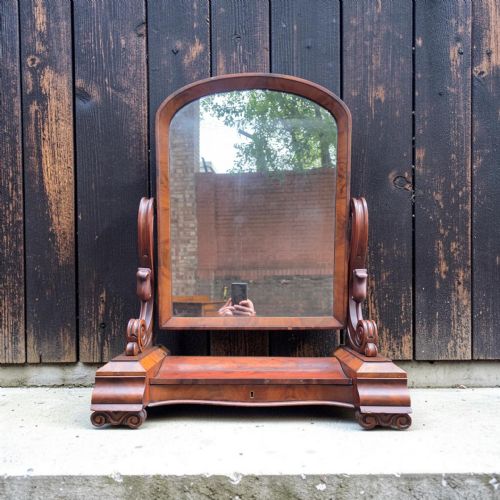
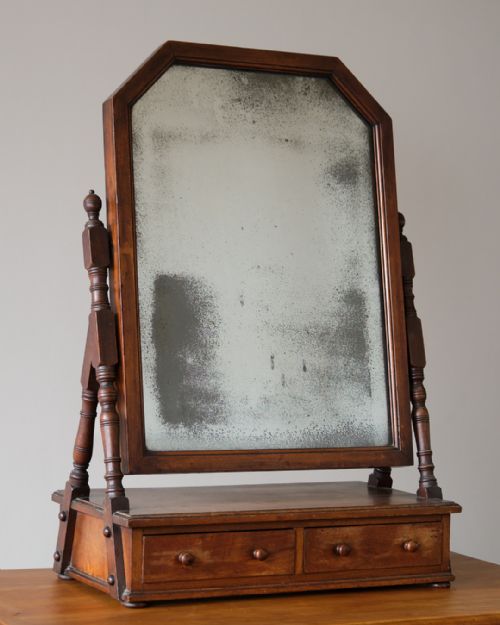
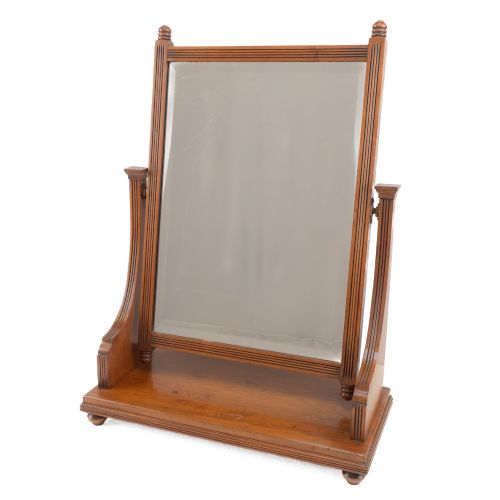
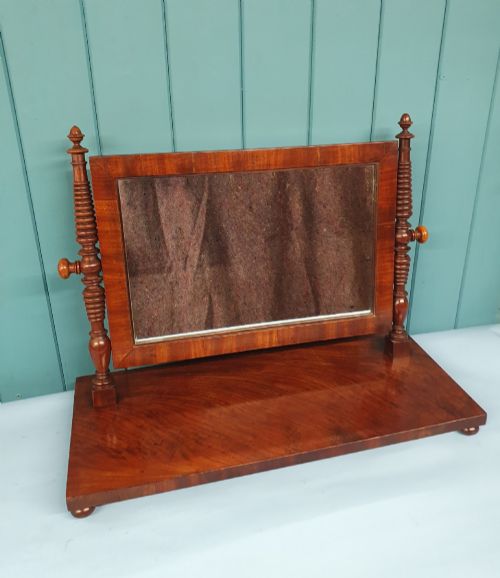
A wooden tabletop mirror provides a classic focal point on a dressing chest or table, originating across periods from the early eighteenth century through the Edwardian era. You will most frequently encounter mahogany examples styled in the Georgian and Regency fashions, often featuring integrated base drawers for small valuables.
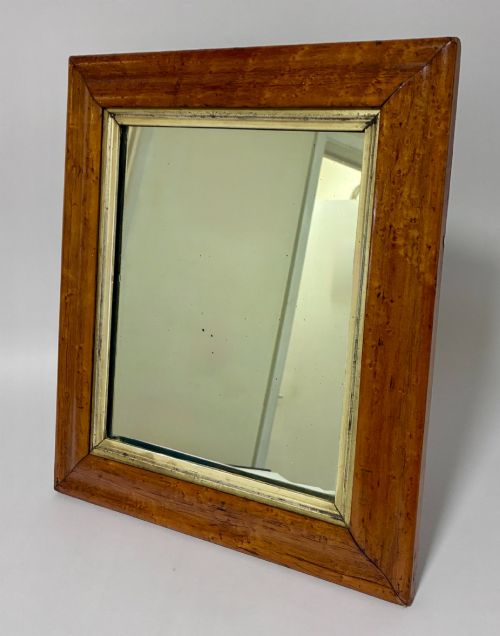
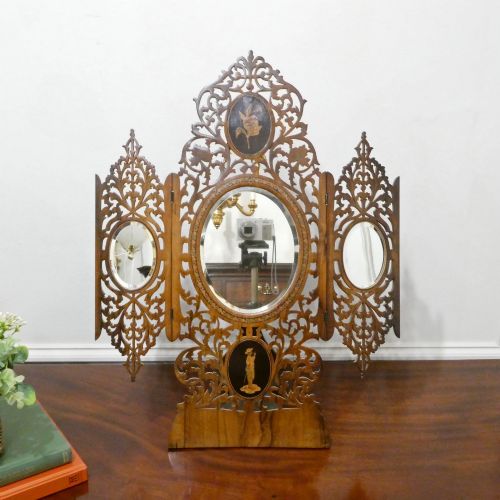
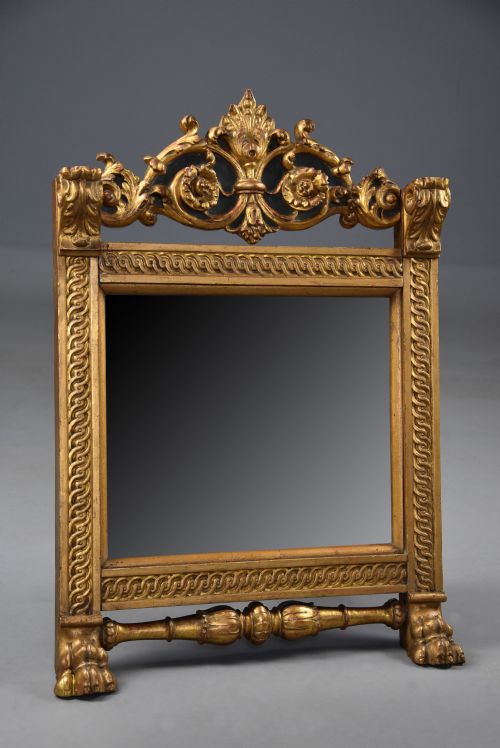
The form spans various historical iterations including toilet mirrors, swing mirrors, and portable campaign shaving kits. Makers produced these pieces in diverse timbers such as walnut, oak, satinwood, and rosewood, sometimes incorporating decorative marquetry or giltwood accents.
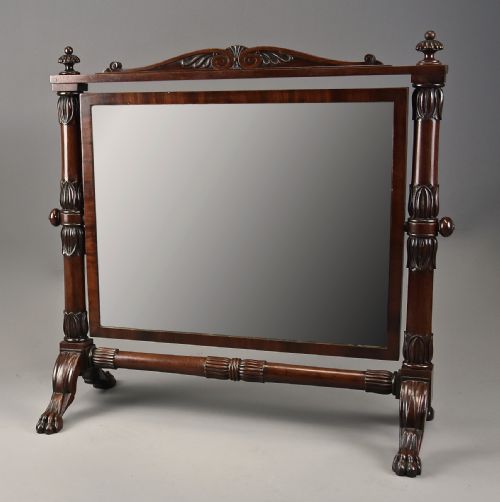
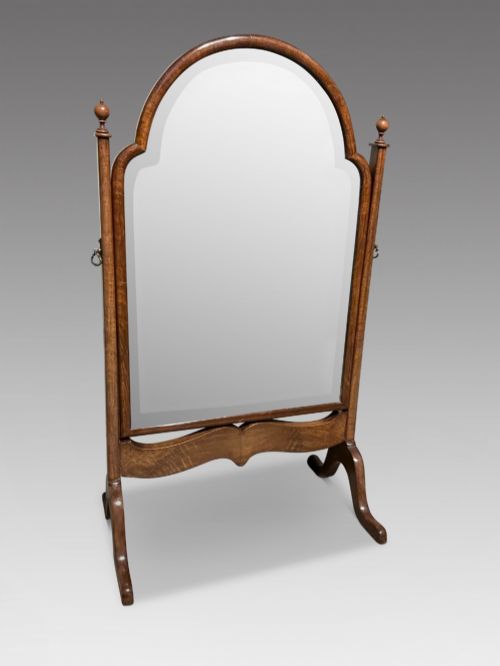
Alongside traditional dressing table mirrors, related forms such as cheval table top mirrors and easel mirrors appear within these periods. Their primary function has remained consistent across centuries: offering a portable, adjustable reflective surface for personal use.
Materials and Construction
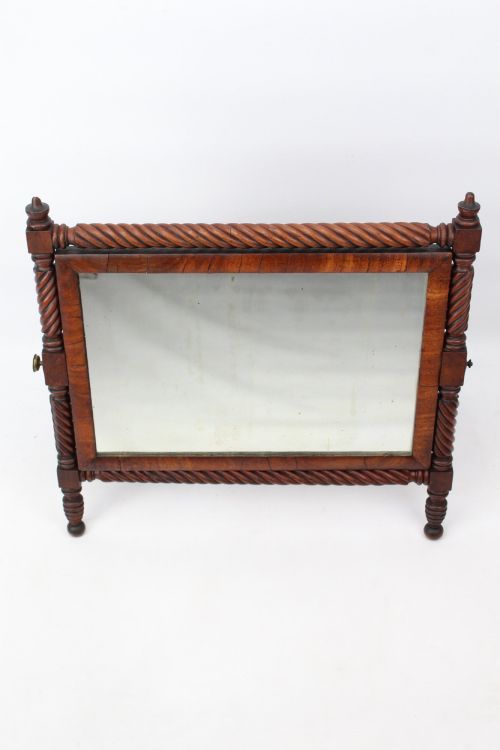
Cabinetmakers constructed these frames and stands using dense hardwoods like mahogany, walnut, and oak, frequently selecting figured veneers for visual depth. Brass hardware, including pivoting screw knobs, adjustable arm brackets, and small drawer pulls, typically complements the timber construction.
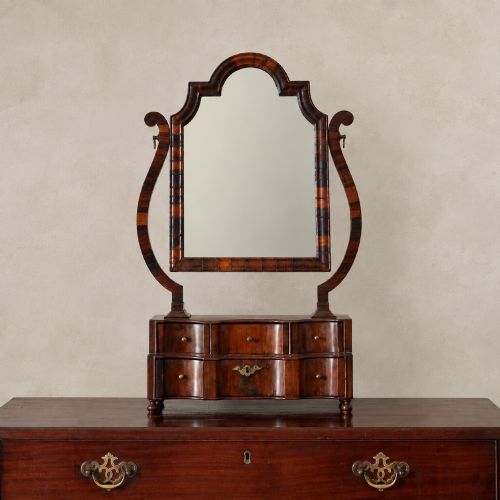
Mirrors utilise traditional glass plates set within rebated wooden frames, often supported by upright standards mounted on a box base or plinth. Specialised variants incorporate marquetry inlay, laburnum banding, or carved giltwood details to elevate the decorative finish.
Wooden Tabletop Mirror Retail Price Guide 2026
Typical asking prices for wooden tabletop mirror among the pieces listed under this phrase on Sellingantiques today, from the lower quarter to the upper quarter. They describe what is for sale here now, not the wider market.
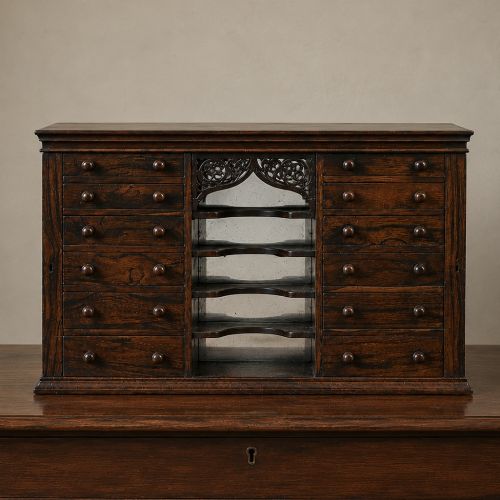
Several portable campaign shaving kits prove that historical travellers still insisted on perfect grooming.
Assessing Quality and Execution
Superior examples distinguish themselves through the choice of timber, displaying rich grain patterns in the mahogany or walnut veneers alongside precise joinery in the base drawers. The proportion between the glass frame and the supporting standards dictates the visual balance of the piece.
Refined craftsmanship shows in the subtlety of carved mouldings, the crispness of brass fittings, and the retention of the original mirror glass and backboards. Lesser pieces often exhibit simpler secondary timbers and heavier proportions lacking the elegance of the primary stylistic periods.
Heal & Sons·P & MA Nicholson
The Wooden Tabletop Mirror Glossary
- Toilet mirror
- A small mirror designed to sit upon a dressing table or chest, popular from the seventeenth century onwards. These typically feature a pivoting frame mounted above a small box base fitted with drawers.
- Cheval mirror
- A full-length or large mirror supported on a freestanding frame with four legs, or in tabletop versions, designed to tilt fully on vertical pivots.
- Marquetry
- The art of applying decorative veneer pieces of different woods and materials to a structure to create pictorial designs or geometric patterns. It appears frequently on Dutch-influenced pieces of the nineteenth century.
- Serpentine front
- A furniture front characterised by a convex centre flanked by concave curves, creating a gentle undulating shape. This contour adds considerable visual sophistication to the base drawers of dressing mirrors.
- Campaign mirror
- A portable mirror constructed for travel, often associated with military kits and fitted with protective wooden cases or folding stands for secure transport.
Wooden Tabletop Mirror: Frequently Asked Questions
What is a wooden tabletop mirror?
A wooden tabletop mirror is a portable looking glass set into a timber frame and stand, designed to rest on top of a chest of drawers or dressing table. These pieces allow the user to adjust the angle of reflection while providing a decorative addition to domestic furniture.
Originating in various forms across the eighteenth, nineteenth, and early twentieth centuries, they combine practical utility with the distinctive cabinetmaking styles of periods such as Georgian, Regency, and Edwardian.
How do I date a wooden tabletop mirror?
Dating relies on examining the timber species, construction techniques of the base drawers, and the overall style of the frame supports. For instance, walnut and laburnum are more common in earlier eighteenth-century pieces, while Cuban mahogany and rosewood frequently indicate Georgian or Regency origins.
Secondary indicators include the presence of hand-cut dovetails in the drawers, the type of brass hardware used for pivoting, and whether the mirror glass shows signs of historical manufacture or later replacement.
Where should I place a tabletop mirror?
These mirrors sit comfortably on dressing tables, chests of drawers, sideboards, or low cabinets where their height complements the surrounding furniture. Positioning them near a natural light source enhances their reflective utility while highlighting the figured grain of the wooden frame.
Because they are portable, you can move them easily between rooms to test different settings, though placing them on stable, flat surfaces ensures safety and balance.
What is a swing mirror?
A swing mirror refers to a glass frame hung on pivots between two upright arms, allowing it to tilt forward and backward. This mechanical flexibility is the defining feature of most traditional dressing table and toilet mirrors.
The friction of the brass screws or wooden pegs holds the glass at the desired angle, combining mobility with a secure mounting on the supporting base.