

Carved Mahogany Dining Table
A carved mahogany dining table anchors a room with rich timber and substantial weight, bringing centuries of craftsmanship directly to your dining space.
What these tables are
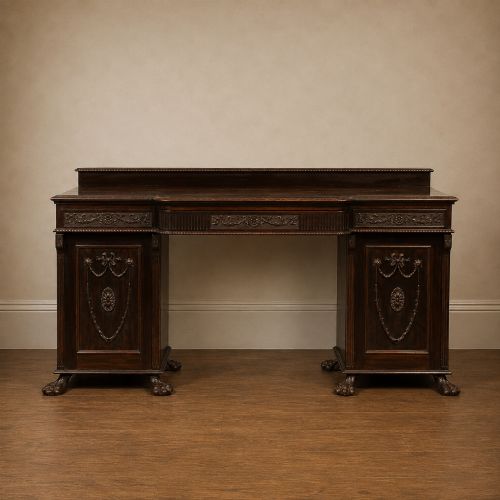
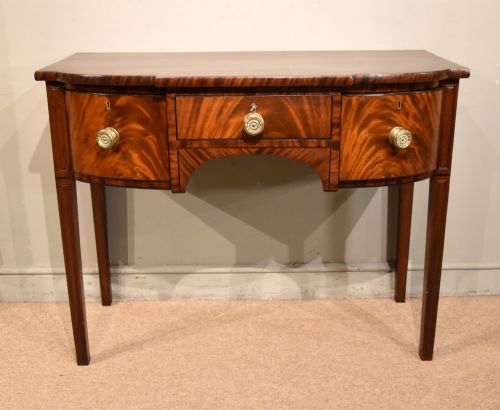
A carved mahogany dining table brings together dense tropical hardwood and formal carving spanning several centuries of British furniture making. Buyers seeking this search phrase encounter pieces originating from the eighteenth century through to the early twentieth century.
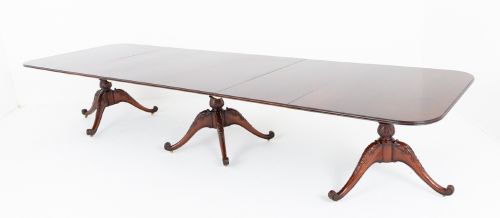
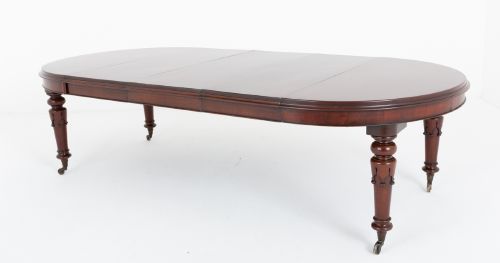
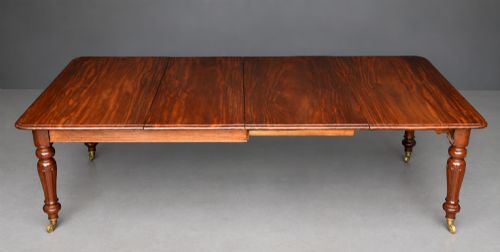
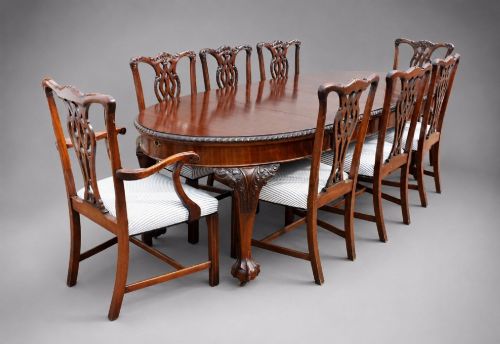
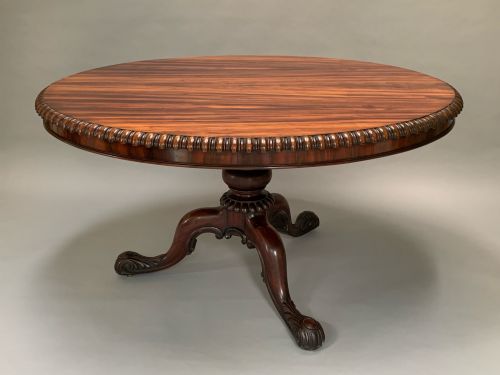
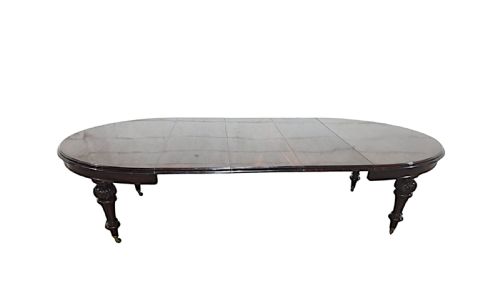
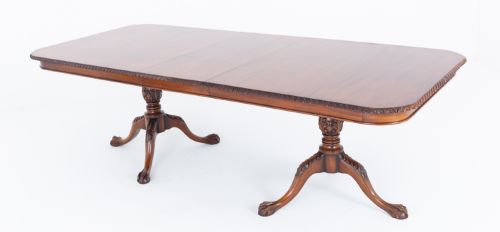
The selection here includes drop leaf tables from the eighteenth century alongside extensive Victorian extending mechanisms designed to seat large dinner parties. Robust pedestal bases, refectory formats and tilt top breakfast tables also appear across the inventory.
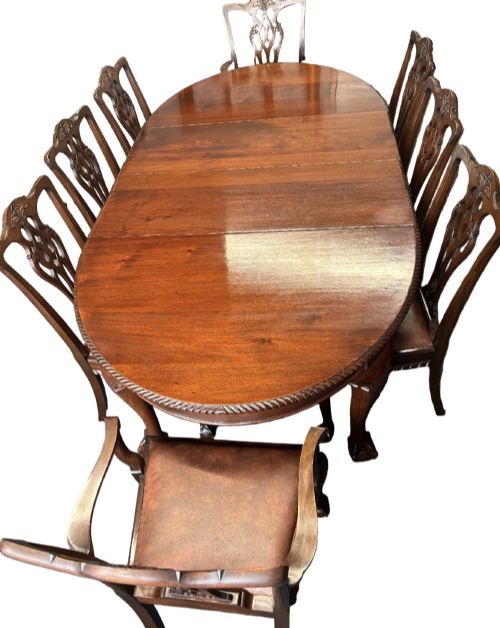
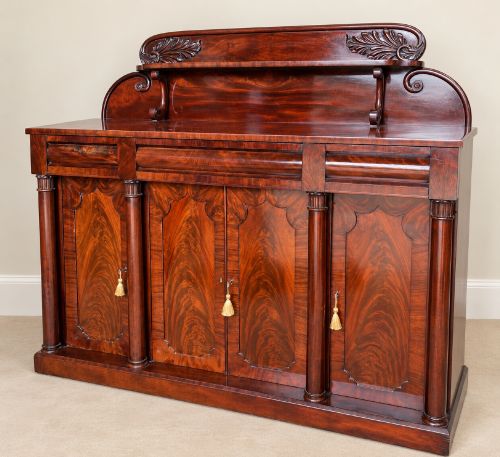
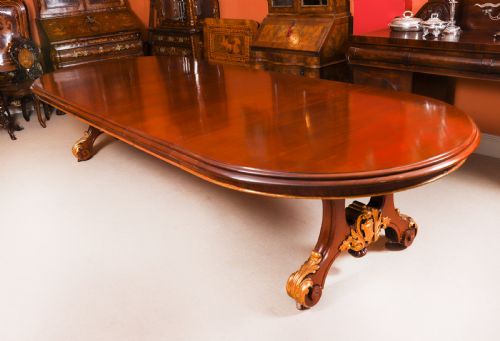
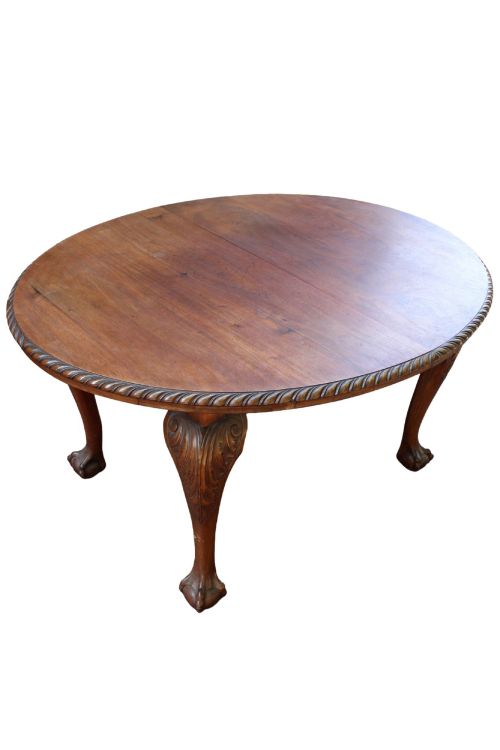
Victorian examples dominate the available styles, often featuring elaborate carving on pedestals or table borders. Georgian and Chippendale Revival pieces offer earlier design idioms characterised by solid proportions and refined detail.
How they were made
Makers utilised solid mahogany and mahogany veneers over secondary timbers, shaping the dense material with hand tools before applying traditional finishes. Brass components frequently appear on castors and extending hardware to facilitate movement and operation.
Carving was executed directly into the timber by hand, creating relief patterns along borders, pedestal bases and friezes. Extension systems incorporated internal runners and removable leaves to adjust the table length securely.
Retail Price Guide 2026
Typical UK retail prices for carved mahogany dining table, calculated from the Sellingantiques database of over a million retail prices indexed since 2003. This retail price guide relies exclusively on Sellingantiques data; no external sources or auction records are used, so the figures do not describe the wider market.
Listings span four distinct periods: the eighteenth century, 1850, 1910, and 1920, showcasing both solid mahogany and metal components.
What varies in quality
The standard of a carved mahogany dining table depends heavily on the depth and crispness of the hand carving rather than mechanical complexity alone. Superior examples display sharp relief work executed with control across the timber grain.
Proportion and scale dictate the success of the piece, with larger extending formats requiring robust internal engineering to support multiple leaves. Timber selection also defines value, with well-figured grain patterns elevating the visual impact.
The Carved Mahogany Dining Table Glossary
- Mahogany
- A durable tropical hardwood known for its rich reddish-brown colour and stable grain structure. It served as the primary material for formal British dining furniture from the eighteenth century onwards.
- Drop leaf table
- A table featuring fixed centre sections with hinged flaps on either side that fold down when not in use. This practical form allowed tables to sit compactly against walls in smaller rooms.
- Pedestal base
- A central column support resting on carved feet or legs that holds the table top. This design eliminates corner legs to maximise seating capacity around the perimeter.
- Refectory table
- A long, narrow dining table historically used for communal meals. Examples in this category utilise elongated timber planks supported by substantial framing.
Frequently Asked Questions
How do I care for mahogany?
Maintain the timber by keeping it away from direct heat sources and strong sunlight that can dry out the surface finish. Dust regularly with a soft cloth and apply traditional beeswax periodically to nourish the wood.
Avoid using silicone-based polishes or excessive water, which can damage the polished patina over time. Promptly wipe up any liquid spills to prevent staining the timber.
How do extending tables work?
Victorian extending models typically utilise a winding mechanism or simple draw-out runners to separate the table halves. Additional leaves are then inserted into the central gap and secured with brass clips.
Ensure the mechanism is operated smoothly without forcing the runners, and store separate leaves flat in a dry environment to prevent warping.
How do I identify a tilt top?
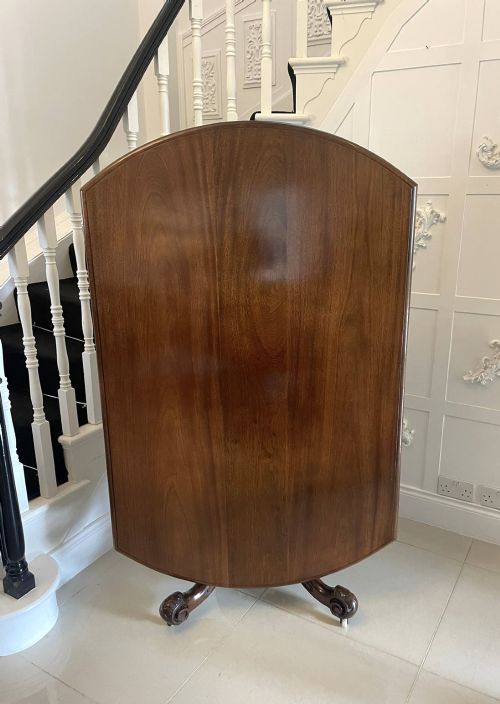
Tilt top tables feature a hinged block underneath the table surface that connects to the central pedestal. A brass or wooden catch releases the top so it can pivot upright.
Examine the pivot mechanism underneath to check for original iron or brass fixings that indicate the period of construction.
What distinguishes Victorian styles?
Victorian dining tables often showcase heavy proportions, oval pedestal bases, and elaborate carving influenced by Gothic Revival or Renaissance motifs. Many incorporate sophisticated extending frames designed to accommodate large families.
Earlier Georgian pieces lean towards simpler lines and lighter proportions, whilst Edwardian revivals draw closely on eighteenth-century Chippendale aesthetics.