
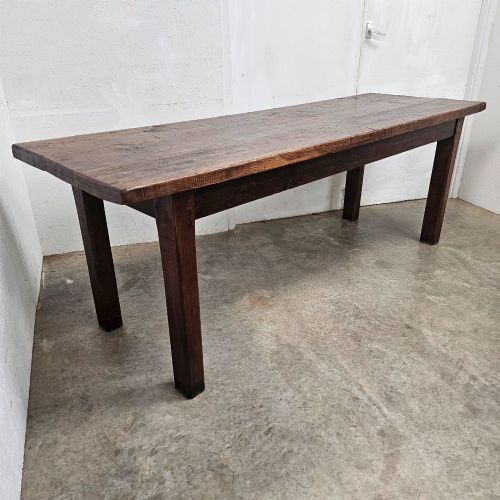
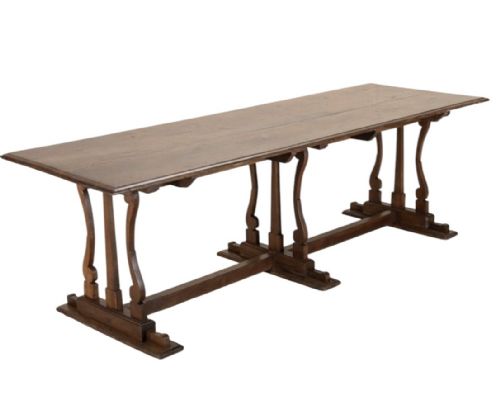
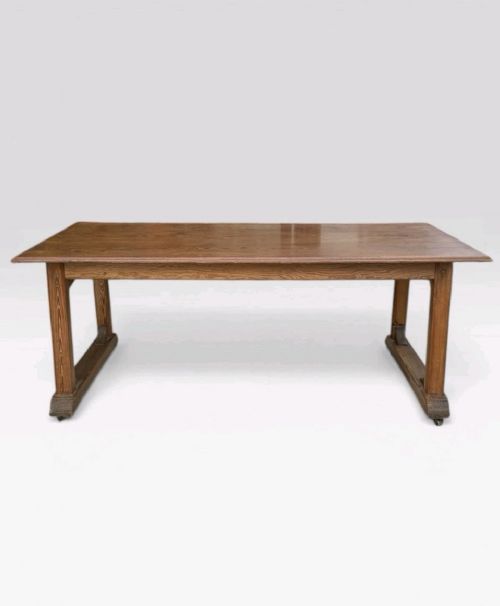


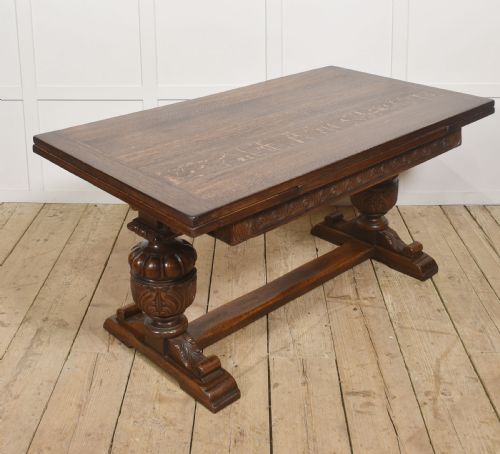
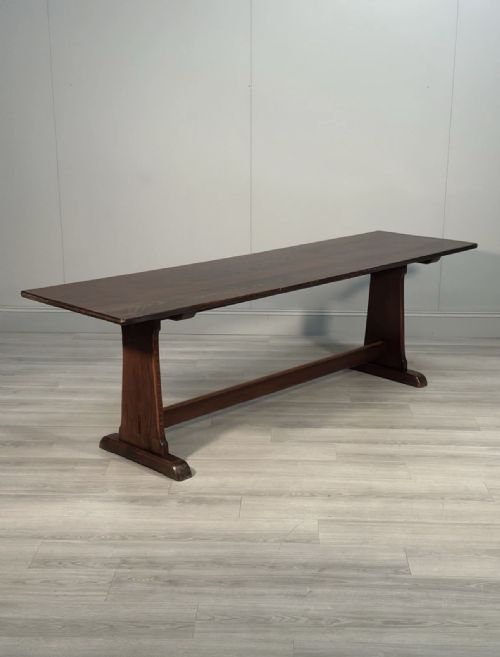
Dark Wood Refectory Table
These dark wood refectory table pieces deliver robust, communal dining presence with historic character drawn from oak, walnut, and mahogany.
What a dark wood refectory table is
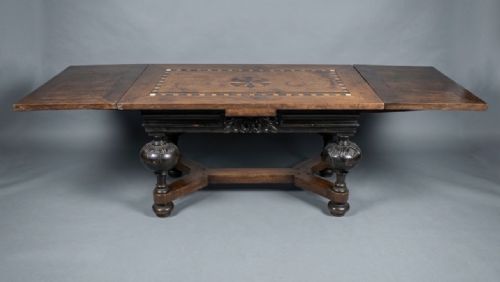
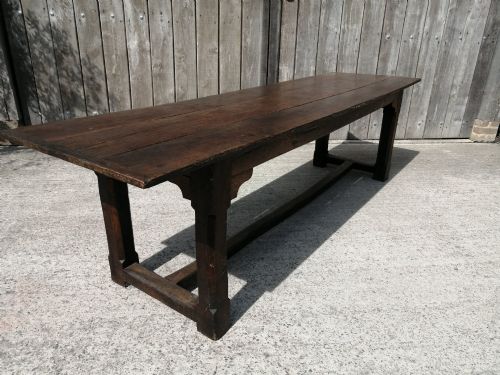
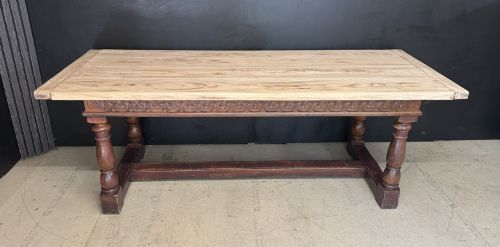
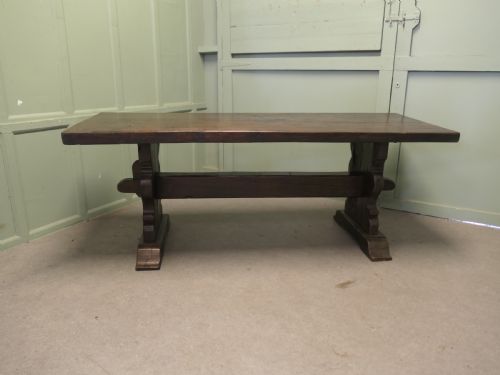
A dark wood refectory table provides a long, substantial surface originally designed for communal dining in monasteries and large halls. Buyers seeking this phrase encounter sturdy timber forms originating from the nineteenth and early twentieth centuries.
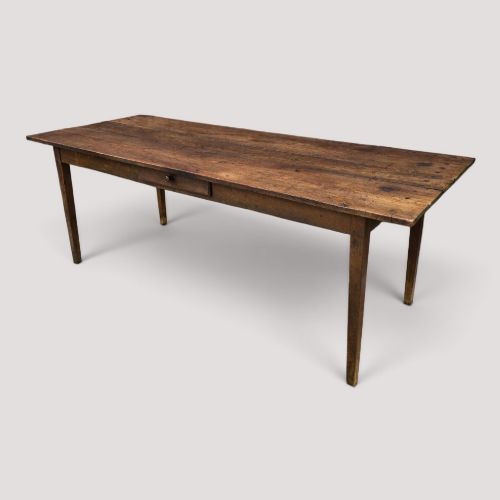
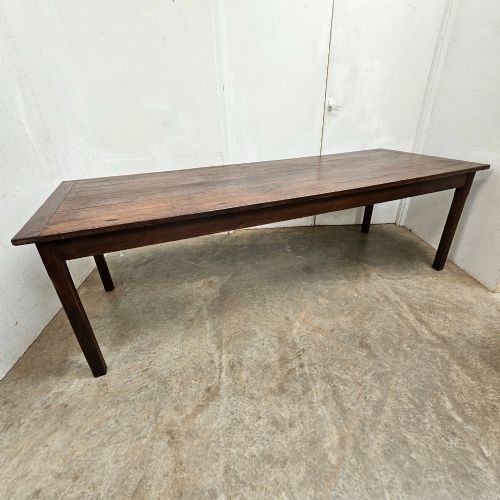
The selections available here lean heavily towards French country and farmhouse traditions alongside revivalist aesthetics. Pieces span diverse stylistic interpretations from French provincial designs to Jacobean and Arts and Crafts expressions.
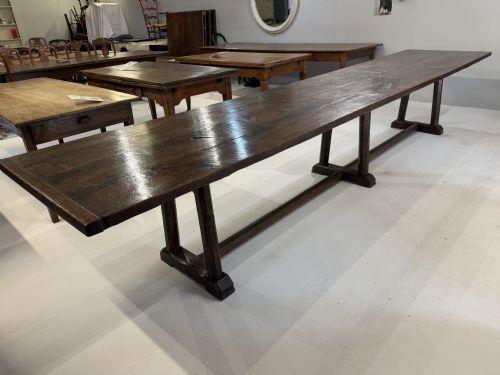
Dining tables dominate the types seen, featuring substantial timbers like oak and walnut built for daily use. Lengths vary significantly, accommodating substantial gatherings with proportions suited to generous rooms.
How they were made
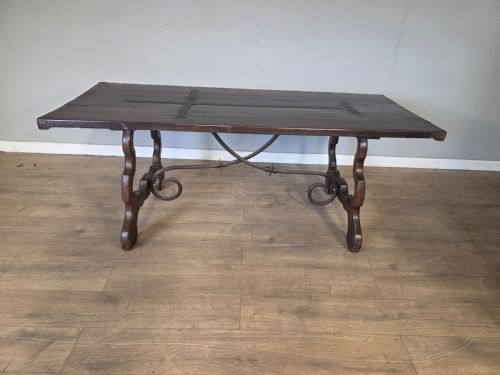
Construction relies primarily on heavy domestic hardwoods such as solid oak and walnut, occasionally supported by secondary pine or reinforced with iron and bronze components. Artisans selected timber for its structural density, ensuring the long tops remained stable across extended spans.
Joinery methods reflect traditional cabinet-making and carpentry techniques appropriate to the period, accommodating natural wood movement in long planks. Surface detailing ranges from carved elements to military-inspired reinforcement and pull-out extensions for added utility.
Retail Price Guide 2026
Typical UK retail prices for dark wood refectory table, calculated from the Sellingantiques database of over a million retail prices indexed since 2003. This retail price guide relies exclusively on Sellingantiques data; no external sources or auction records are used, so the figures do not describe the wider market.
One exceptional dining table carries an official Crown Estate Victorian ship stamp complete with sturdy bronze feet.
What varies in quality
Quality rests in the integrity of the primary timber selection and the weight of the underlying construction. Tables utilising thick, single-board top planks demonstrate superior material selection compared to multi-board assemblies.
The refinement of period detailing, such as hand-carved ornamentation or specialist metal fittings like bronze feet, elevates the stature of specific examples. Structural bracing and clever extension mechanisms also distinguish standard workshop output from exceptional furniture.
The Dark Wood Refectory Table Glossary
- Refectory table
- A long dining table historically used for communal meals in monastic refectories. These pieces are characterised by their elongated proportions and sturdy undercarriages.
- Arts and Crafts
- A design movement valuing honest construction and traditional handcraft methods over industrial output. Pieces often display straightforward joinery and solid timber construction.
- Pull-out extensions
- Integrated leaves sliding from beneath the main table top to increase surface length. This mechanism offers practical versatility for hosting larger gatherings.
- Farmhouse table
- A domestic dining table built for utility and hard daily use in rural kitchens. They usually feature thick timber tops and straightforward, robust legs.
Frequently Asked Questions
What is a dark wood refectory table?
A dark wood refectory table is a long, heavy dining table designed for large gatherings, drawing on historical monastic and farmhouse traditions.
Examples on this page utilise timbers such as oak, walnut, and mahogany, often featuring stylistic influences from the nineteenth and early twentieth centuries.
How do I care for a wooden dining table?
Maintaining these surfaces involves wiping spills promptly and avoiding excessive heat or direct sunlight to prevent timber warping.
Applying appropriate wax or polish periodically helps nourish the old wood and preserves the natural finish without building up heavy residue.
How long are these dining tables?
These tables are built for communal seating and often measure several feet in length to accommodate large dining spaces.
Certain models include mechanical pull-out extensions that allow the surface area to expand when additional seating is required.
What styles are available?
The selection includes various regional and revivalist aesthetics, ranging from French country farmhouse pieces to British Arts and Crafts designs.
Details span plain plank construction, carved oak panels, and distinct period elements like bronze feet or military-influenced hardware.