










Carved Hardwood Flower Stand
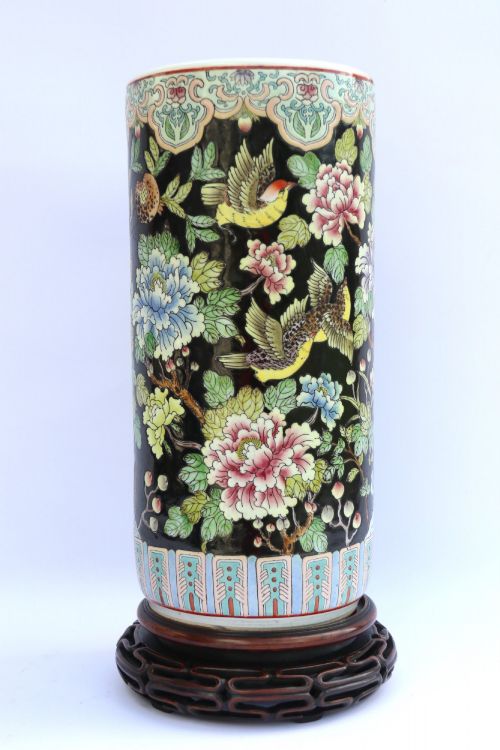
A carved hardwood flower stand holds heavy ceramic vessels and plants with low, sturdy dignity.
Carved Hardwood Flower Stand
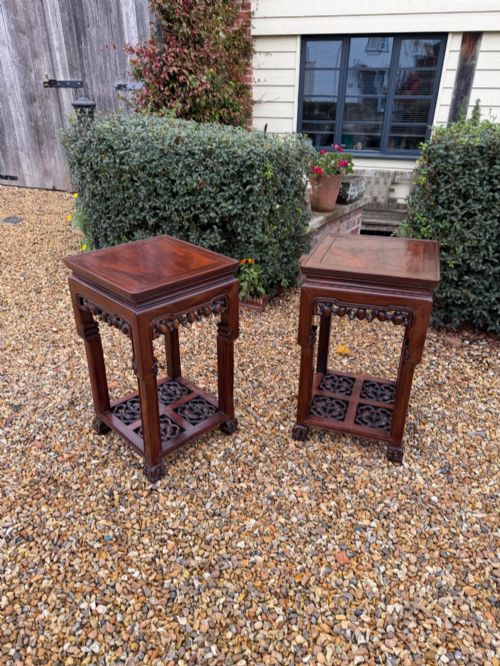
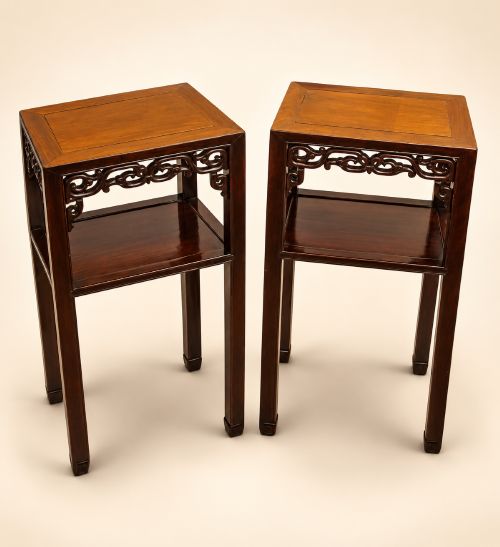
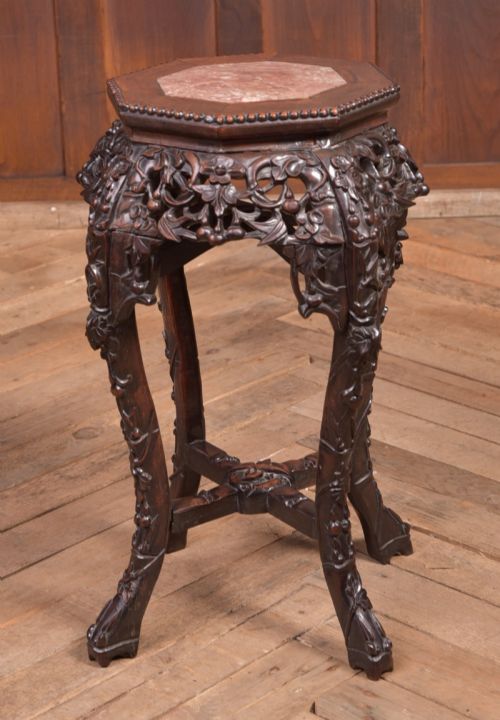
A carved hardwood flower stand provides an elevated platform for plants, urns, and decorative ceramics within domestic interiors. These pieces appear most frequently in nineteenth-century Victorian forms and Chinese export styles.
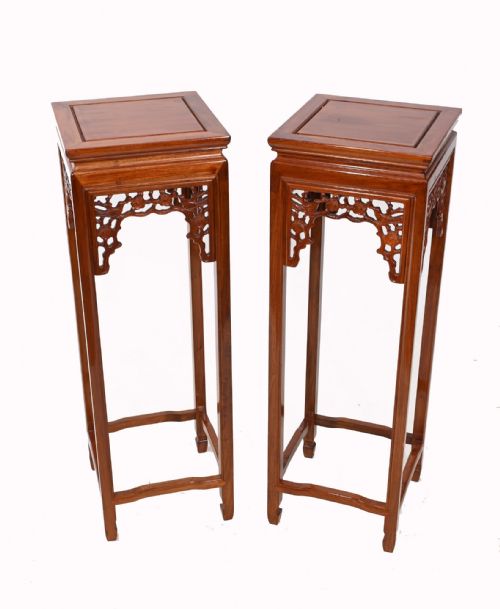
The inventory on this page consists predominantly of low tables, jardiniere stands, and tall pedestals designed to support heavy vessels. Makers constructed these items in shapes ranging from square and rectangular low forms to tall torchere stands.
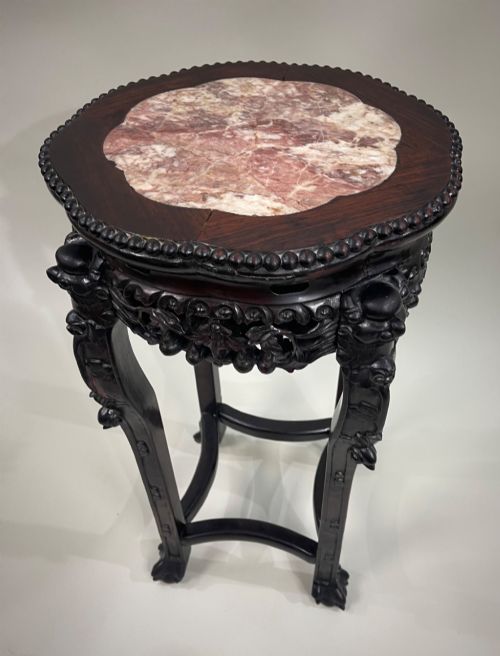
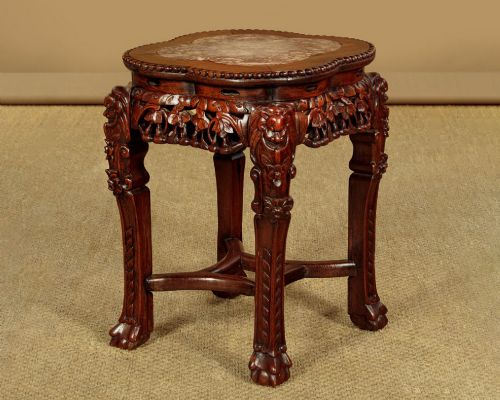
Chinese Qing Dynasty pieces dominate the selection, often combining dense exotic timbers with inset stone surfaces. Buyers encounter diverse proportions intended for specific display purposes in traditional and export settings.
Materials and construction methods
Craftsmen built these tables using dense timbers such as hongmu, padouk, and rosewood, which provide the structural strength needed to bear heavy stone and ceramic tops. Ebonised wood and amboyna also appear among the listed pieces.
Surfaces frequently incorporate inset panels of variegated rouge or white marble, fitted precisely into the wooden frame. Artisans applied deep relief carving and occasional mother-of-pearl inlay to skirtings and legs.
Carved Hardwood Flower Stand Retail Price Guide 2026
Typical asking prices for carved hardwood flower stand among the pieces listed under this phrase on Sellingantiques today, from the lower quarter to the upper quarter. They describe what is for sale here now, not the wider market.
The listings feature nineteenth-century and early twentieth-century items, with Victorian and Qing Dynasty periods strongly represented.
Distinctions in quality and execution
Quality rests primarily on the depth and crispness of the hand carving and the selection of the timber. Dense hongmu and heavy padouk demonstrate greater structural integrity than softer woods.
The integration of the marble top into the wooden framework distinguishes finer examples from simpler production. Well-executed joinery ensures stability under heavy weight without relying on metal fasteners.
Liberty of London
The Carved Hardwood Flower Stand Glossary
- Hongmu
- A dense, dark tropical hardwood traditionally used in Chinese furniture production. It translates literally as red wood.
- Padouk
- A heavy, durable timber prized for its reddish-brown colour and strength. Cabinet makers utilised it for structural stability in load-bearing stands.
- Jardiniere
- A large ornamental pot or container for plants and flowers. Stands built specifically for these vessels often feature low, broad platforms.
- Torchere
- A tall stand or pedestal originally designed to support a torch or candle lamp. In later periods, these accommodated large vases and urns.
- Qing Dynasty
- The final imperial dynasty of China, spanning from sixteen-forty-four to nineteen-twelve. Many export stands date from the later decades of this period.
Carved Hardwood Flower Stand: Frequently Asked Questions
What is a carved hardwood flower stand used for?
These pieces support heavy jardinieres, ceramic vessels, and potted plants above floor level. They also function as small side tables or lamp tables in reception rooms.
Their sturdy construction allows them to bear significant weight from stone and ceramic items safely. Historically, they elevated prized decorative objects to improve visibility within a room.
How do I identify a Qing Dynasty stand?
Qing Dynasty stands typically exhibit dense hardwoods like hongmu or padouk combined with inset marble tops. The carving often employs traditional motifs executed in deep relief.
Many examples date from the late nineteenth century during active periods of Chinese export trade. Examining the joinery and timber weight helps confirm the period.
How do I care for antique hardwood furniture?
Maintain these surfaces by dusting regularly with a dry, soft cloth to prevent particulate buildup. Avoid placing them near direct heat sources or in extreme humidity to protect the dense timber and inset marble.
Occasional treatment with appropriate wax preserves the natural finish of woods like rosewood and padouk. Lift rather than drag the stands when repositioning them to protect the joints.