


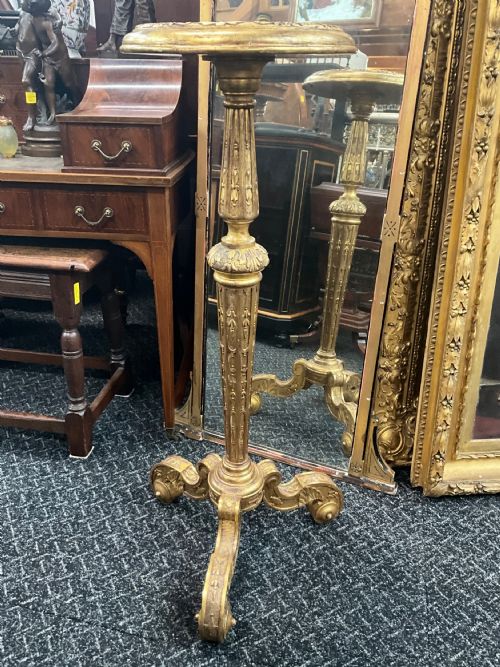
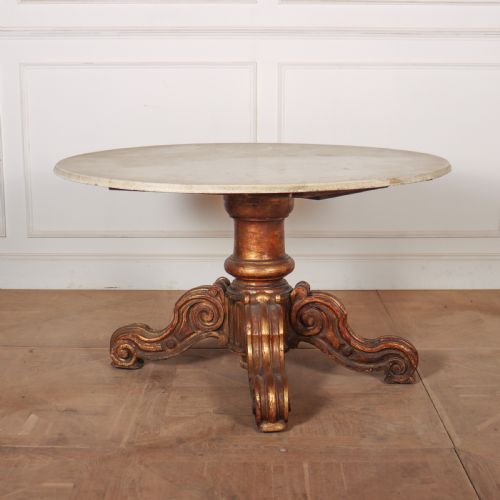
Carved Giltwood Pedestal
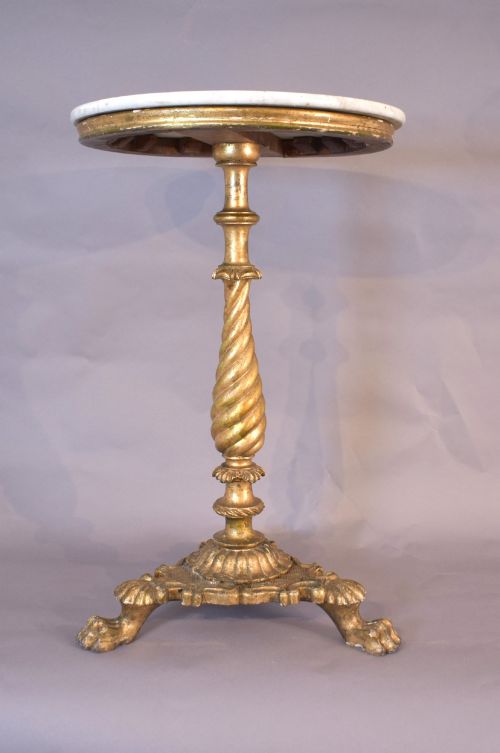
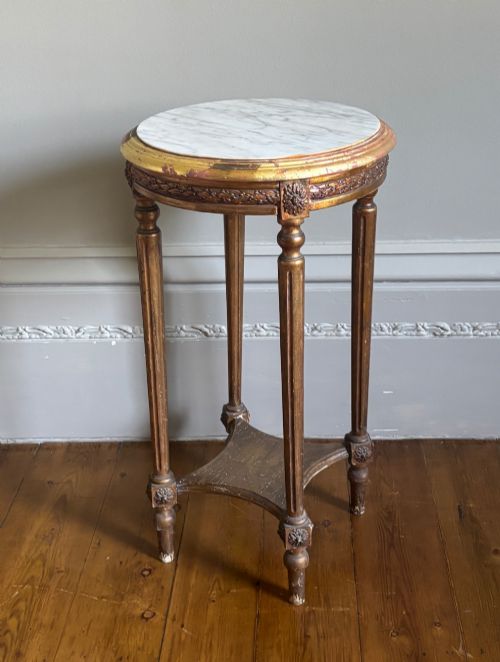
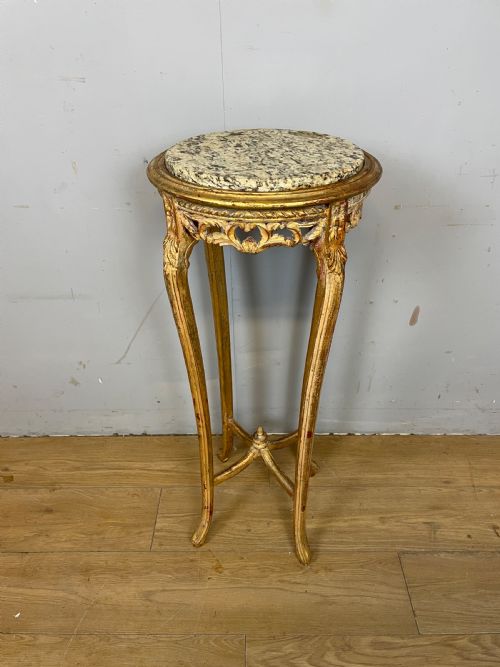
A carved giltwood pedestal offers a brilliant display surface, bringing classical presence and shimmering light to any room.
Carved Giltwood Pedestal
A carved giltwood pedestal serves primarily as a stand for urns, sculptures, or plants, elevating decorative objects to eye level. When searching for a carved giltwood pedestal, you encounter various forms including tall torcheres, tripod tables, and triform stands originating from the eighteenth, nineteenth, and early twentieth centuries.
The materials span carved wood, lime wood, and rosewood beneath layers of gold leaf and gesso, frequently topped with inset marble. Italian and French influences dominate the styles, ranging from Italian Baroque and Venetian figures to Regency and Louis XVI designs.
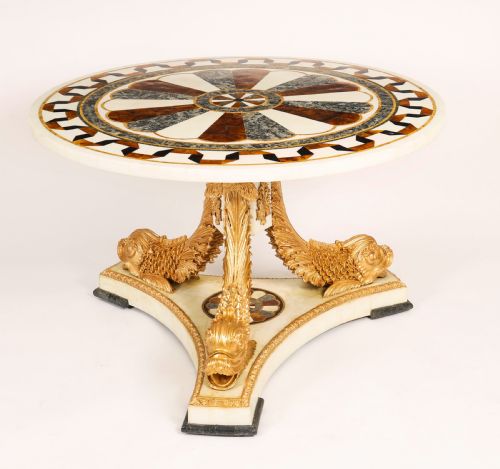
Many examples function as side tables or occasional tables with circular marble tops, while others take the shape of figures, dolphins, or swans supporting circular platforms. These pieces reflect periods of revivalism, incorporating classical motifs into domestic interiors from country houses to grand salons.
Materials and construction methods
Craftsmen shaped these supports from woods such as lime, rosewood, and pine, applying carved detail directly to the timber or building up intricate relief with gesso. Artisans then laid delicate sheets of gold leaf over a prepared base, burnishing the surface to achieve a brilliant metallic sheen.
Many tables and stands incorporate inset marble slabs upon their circular tops, supported by carved tripod bases or figural pedestals. Polychrome paint finishes occasionally complement the gold leaf, adding depth and contrast to Venetian and Italian works.
Venetian figures and carved swans bravely hold up marble tops, turning everyday furniture into an eccentric menagerie.
Distinctions in quality
The crispness of the hand-carved detail distinguishes superior examples from simpler production, particularly in the rendering of foliage, figures, or animal motifs such as dolphins and swans. Deeper undercut carving requires greater skill and time from the artisan, creating dynamic play of light across the gilded surface.
The application and preservation of the gold leaf and gesso affect the visual impact of the piece, with heavier, more durable gilding retaining its warmth over centuries. Furthermore, the inclusion of high-grade marble tops with natural veining elevates the substance and balance of the stand.
The Carved Giltwood Pedestal Glossary
- Giltwood
- Wood that has been coated with gold leaf or gold paint. This finish creates the characteristic bright metallic appearance found on classical furniture and decorative stands.
- Gesso
- A plaster mixture applied to wood surfaces as a base for gilding or painting. It allows craftsmen to model intricate low-relief ornamentation before applying gold leaf.
- Torchere
- A tall, slender stand designed to support a light or decorative object. These vertical pedestals frequently feature tripod bases and elaborate carved motifs.
- Triform
- Having three sides or a triangular plan. This configuration provides stable support for tripod tables and pedestals.
- Polychrome
- Decorated in multiple colours. This technique appears on Venetian figures and stands alongside gilt decoration.
Carved Giltwood Pedestal: Frequently Asked Questions
What is a torchere used for?
A torchere functions as a tall stand designed to hold an urn, lamp, or sculpture, elevating decorative items within a room.
Historically, these pieces also provided elevated illumination by supporting candles or oil lamps before electric lighting became common.
How do I identify a Regency pedestal?
Regency pieces often display classical architectural influences, incorporating dark woods like rosewood alongside parcel gilt highlights.
Look for clean geometric lines combined with restrained classical motifs that reflect early nineteenth-century English and French taste.
What distinguishes an Italian Baroque pedestal?
Italian Baroque stands show exuberant carved decoration, often featuring dynamic figures, dolphins, or heavy scrolling foliage.
They rely on dramatic form and rich surface textures to create a strong visual statement in an interior.