

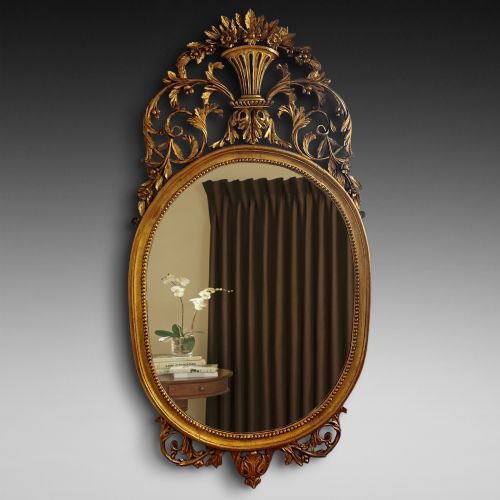
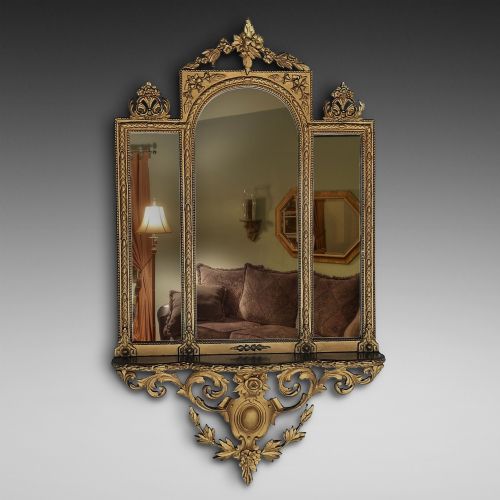
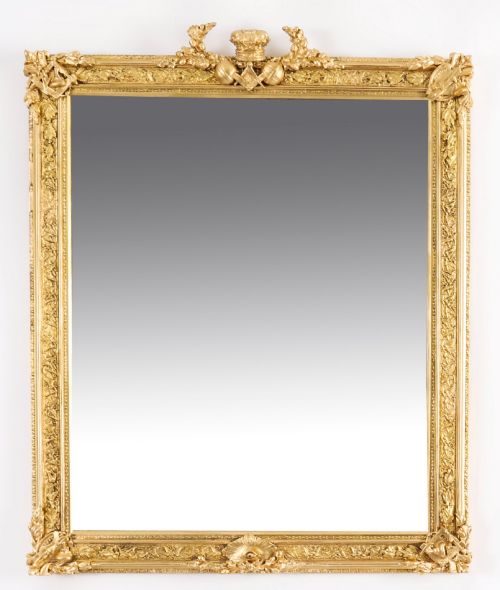
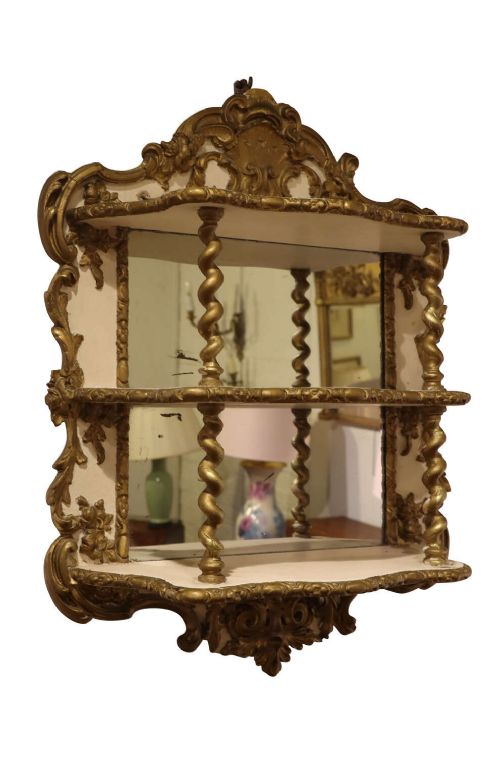
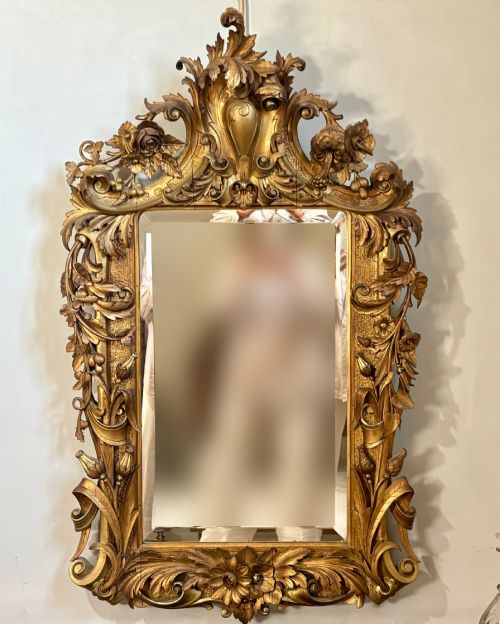
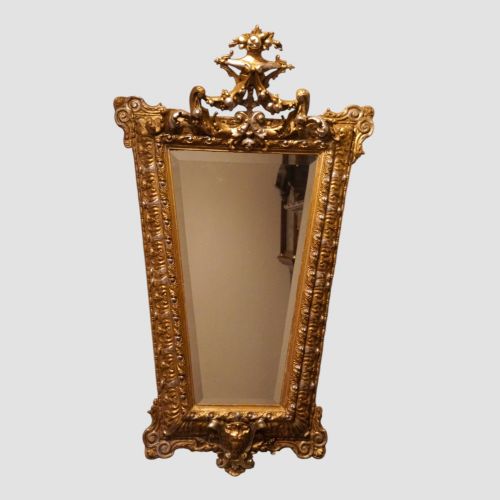
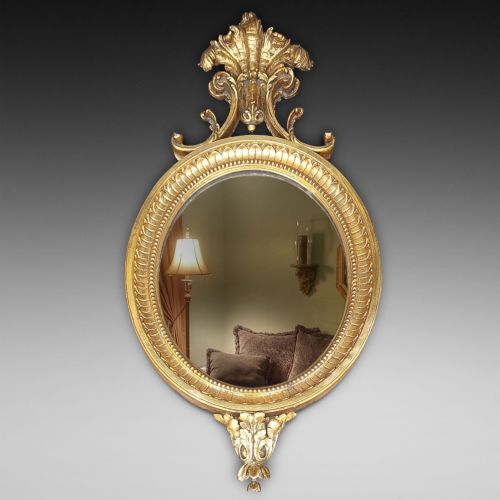
Carved Gilt Hanging Mirror
These pieces bring light and presence to a room, and a carved gilt hanging mirror offers centuries of craftsmanship in timber, gesso, and gold leaf.
Carved Gilt Hanging Mirror
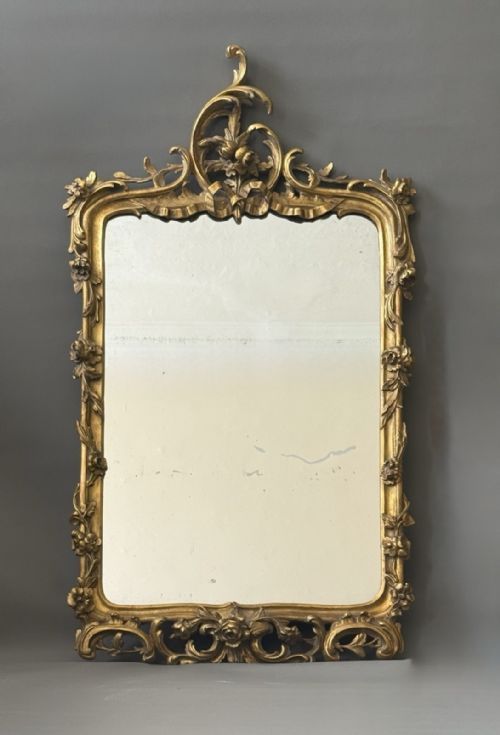
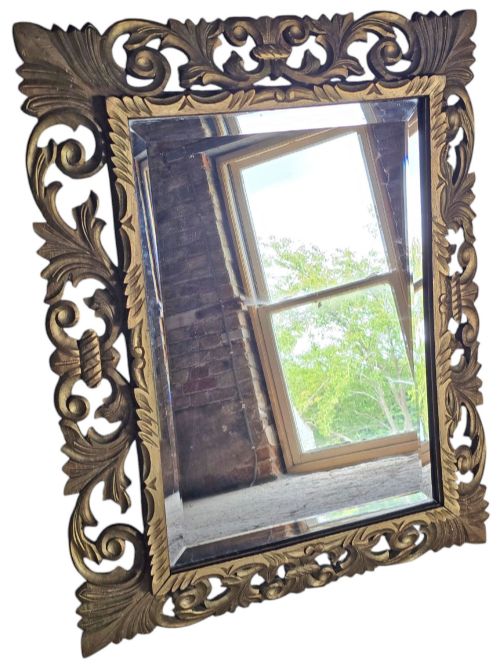
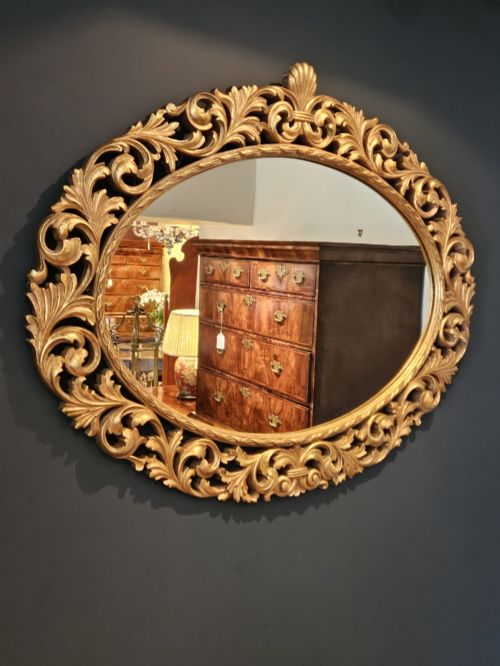
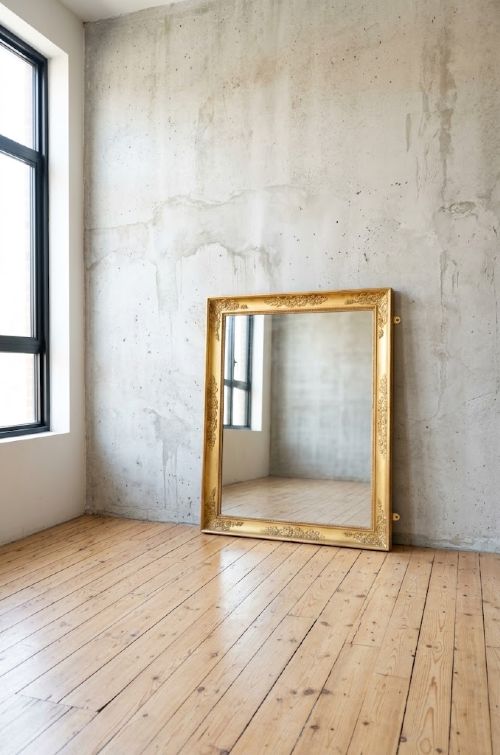
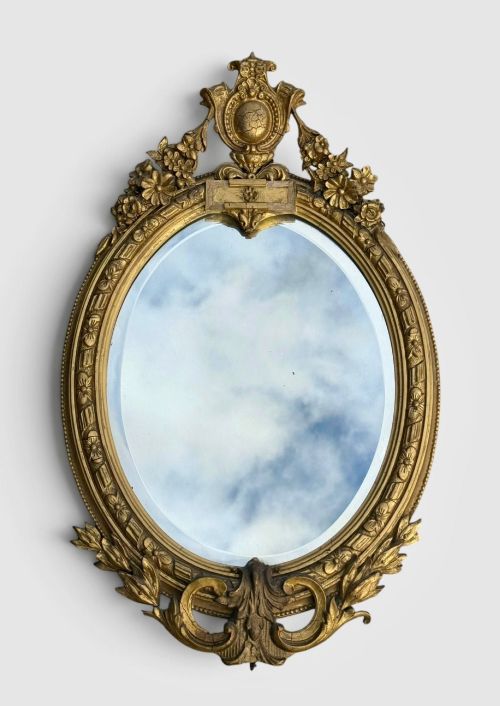
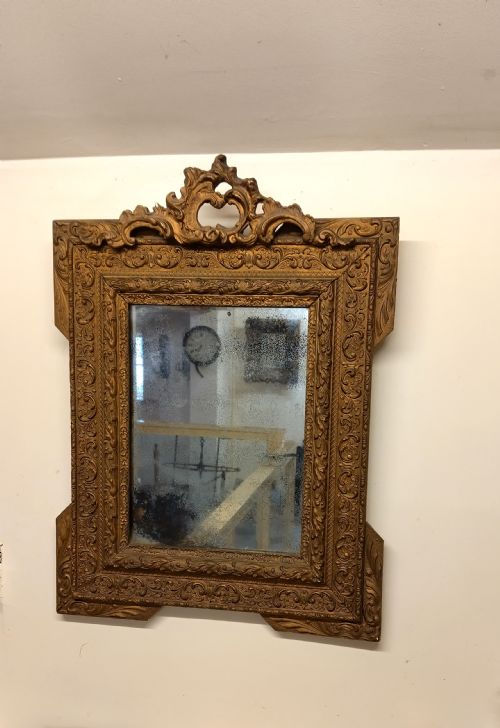
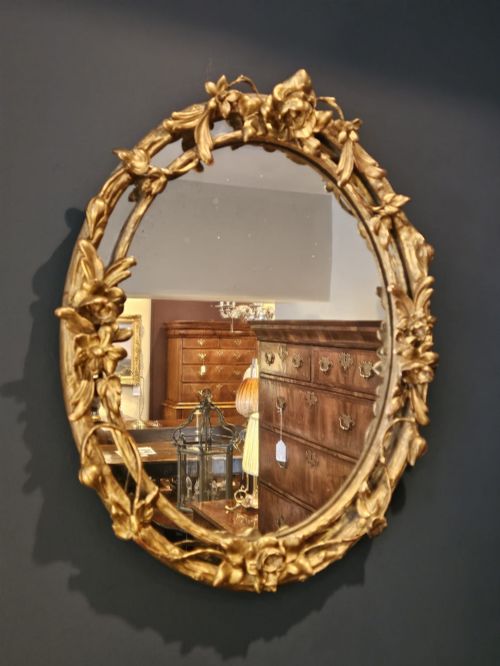
A carved gilt hanging mirror is a wall-mounted glass plate held within a decorated wooden or gesso frame finished in gold leaf or gilt paint. When searching this phrase, a buyer encounters wall mirrors and overmantles ranging from compact oval shapes to large architectural proportions.
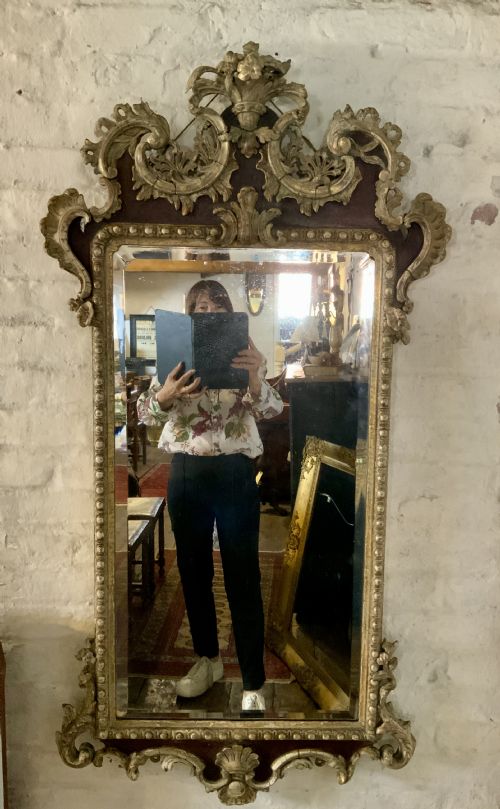
The pieces on this page span several centuries, with particular strength in 18th century Georgian examples alongside 19th century Victorian interpretations. French Rococo revival and Italian Florentine styles appear frequently alongside English walnut and mahogany frames.
Formats vary from simple fretwork plates to elaborate compositions featuring floral carvings, scrollwork, masks, and mythological details. Most examples hang vertically or horizontally in principal rooms, hallways, and above chimney pieces.
How they were made
Makers constructed the structural frames primarily from timber such as pine, oak, walnut, or mahogany, often applying a layer of gesso to build up intricate surface decoration. Carvers then shaped floral motifs, scrollwork, and architectural details directly into the wood or the gesso layer.
Workers applied gold leaf or metal gilt to the prepared surfaces, sometimes burnishing sections to create contrasting matte and bright finishes. Early examples feature silver-gilt or antique mirror plates set into the rabbet, while replacement glass appears on select later pieces.
Carved Gilt Hanging Mirror Retail Price Guide 2026
Typical asking prices for carved gilt hanging mirror among the pieces listed under this phrase on Sellingantiques today, from the lower quarter to the upper quarter. They describe what is for sale here now, not the wider market.
Keep an eye out for hidden Freemasonic symbols carved into the gesso, because secret societies needed well-reflected meeting rooms too.
What varies in quality
The depth and crispness of the carving distinguish finer examples from standard production, as skilled hands create undercut foliage and sharp detail rather than soft contours. The quality of the gilding itself, including the thickness of the leaf and the survival of the original preparation layers, shapes the visual impact.
The integrity of the frame construction and the character of the mirror plate, whether retaining its original foxing and antique plate or fitted with clear modern glass, influence the overall standard of the piece.
The Carved Gilt Hanging Mirror Glossary
- Giltwood
- Timber that has been decorated with gold leaf or metal leaf applied over a prepared ground.
- Gesso
- A mixture of chalk, gypsum, and glue used as a base for gilding and low-relief carving.
- Parcel Gilt
- Woodwork where only specific carved elements or details are gilt, leaving the natural wood grain visible elsewhere.
- Overmantle
- A large mirror designed specifically to hang on the wall directly above a fireplace mantelpiece.
- Rococo Revival
- A 19th century design style drawing on 18th century French motifs, featuring asymmetrical scrolls, shells, and naturalistic foliage.
- Pier Mirror
- A tall mirror traditionally hung on the wall space between two windows.
Carved Gilt Hanging Mirror: Frequently Asked Questions
How do I hang a heavy gilt mirror?
These substantial frames require secure fixing directly into wall studs or masonry using heavy-duty brackets suited to the weight of timber and gesso.
Professional mirror hangers often utilise a French cleat system to distribute the load evenly across the wall surface.
Are the mirror plates original?
Many 18th and 19th century pieces retain their original antique glass, which frequently exhibits light oxidation, foxing, and minor imperfections.
Some mirrors have received new glass plates over the decades to provide a clearer reflection for daily use.
How do I clean a gilt frame?
Dust the carved surfaces gently with a soft, dry brush to prevent accumulation in the recesses of the gesso work.
Avoid liquid cleaners, moisture, and abrasive cloths entirely, as these can strip the delicate gold leaf or gilt finish from the wood.
How do I date a gilt mirror?
Examine the construction of the wooden backing boards, joinery methods, and the composition of the gesso layer beneath the gilding.
Stylistic markers such as Rococo scrollwork or Georgian fretwork align the piece with specific periods of manufacture.