
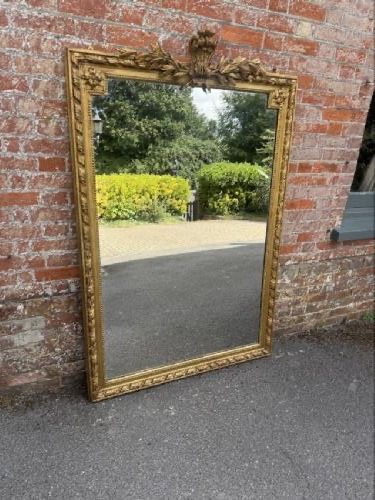
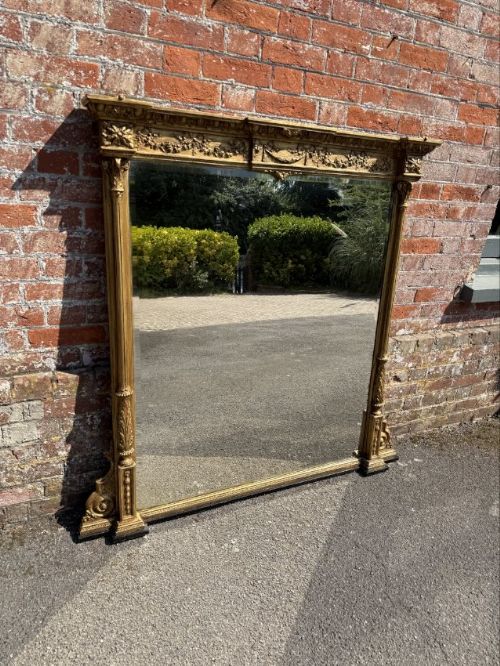
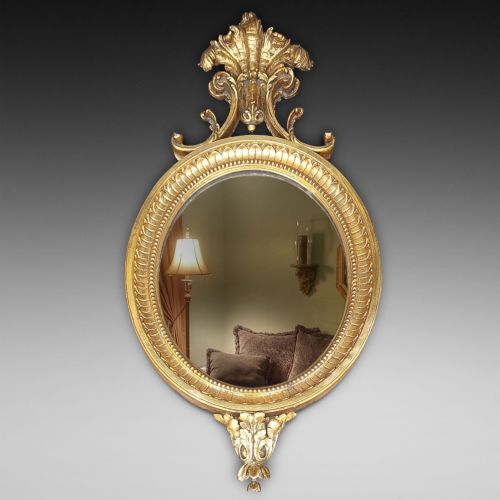
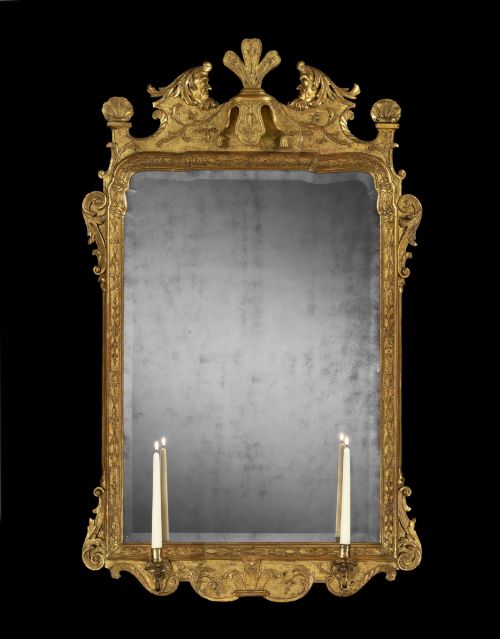

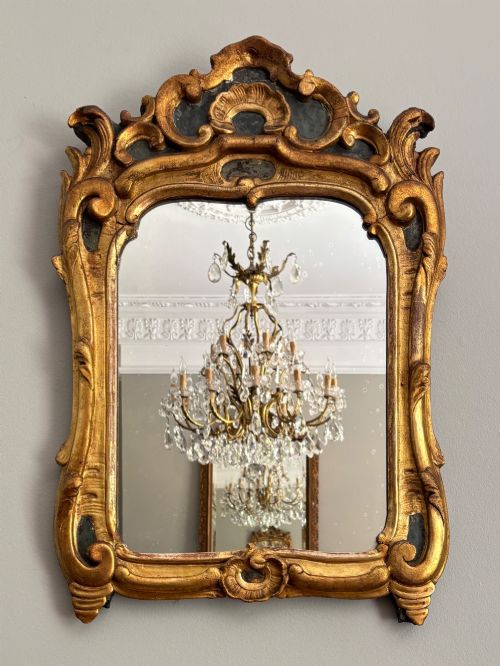
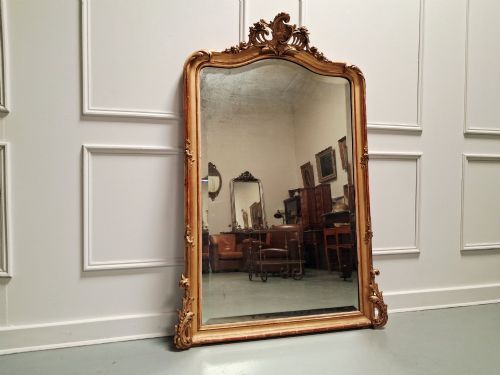

Carved Gesso Frame Mirror
A carved gesso frame mirror brings monumental scale, brilliant gilt surfaces, and dramatic architectural presence to any interior.
Carved Gesso Frame Mirror
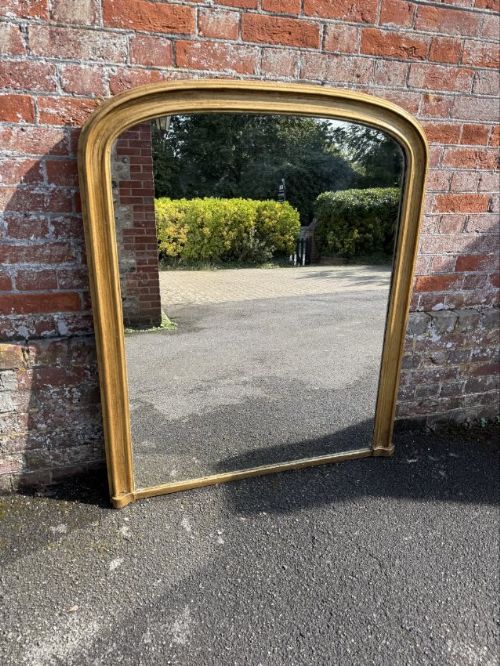
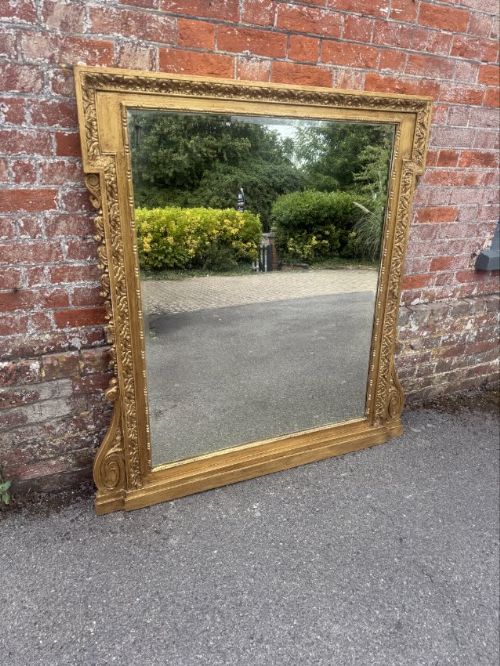
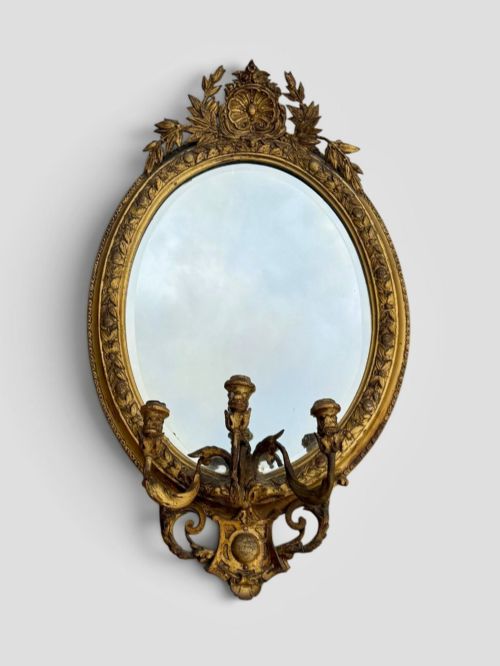
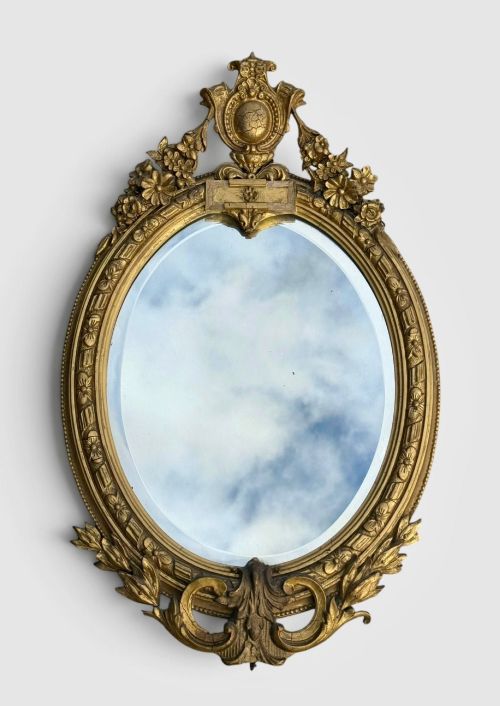
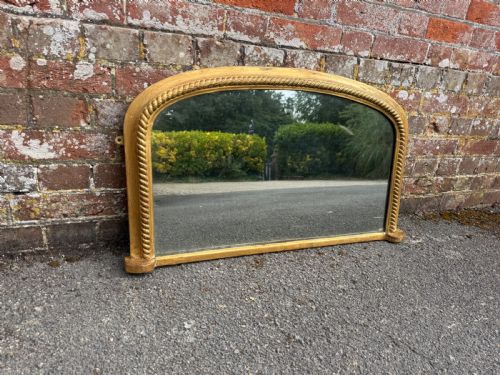
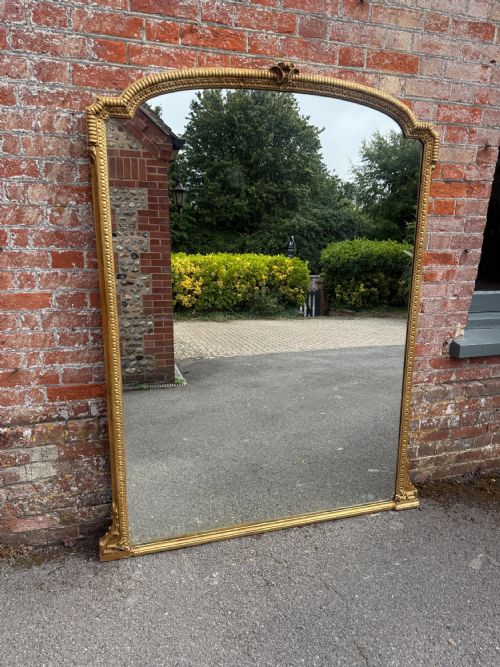
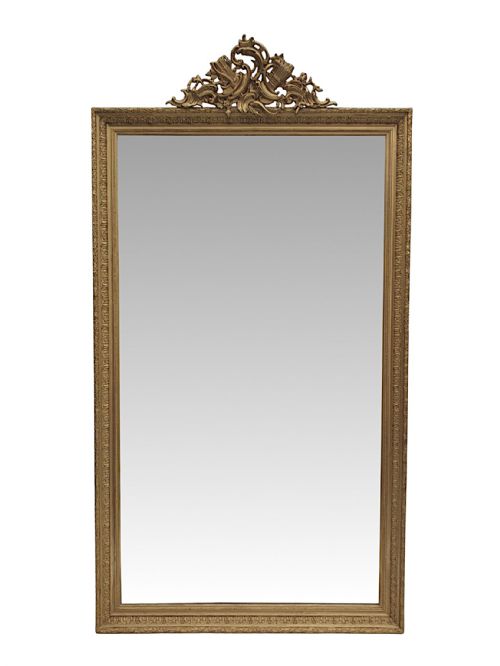
When searching for a carved gesso frame mirror, buyers encounter grand nineteenth-century English and French overmantels alongside smaller wall-hanging pieces. The selection spans arched tops, rectangular plates, and ornate decorative frames designed to anchor principal rooms.
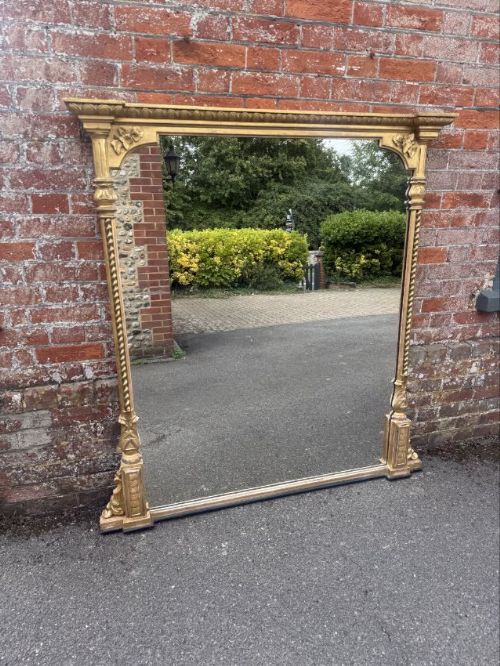
The most common examples on this page are nineteenth-century English overmantel mirrors featuring carved wood, applied gesso, and gilded finishes. These large mirrors were traditionally hung above mantelpieces to reflect light and expand the sense of interior space.
Earlier eighteenth-century periods and later twentieth-century interpretations also appear, showing influences from George I designs to French Rococo revivals. Forms range from simple beaded mouldings to elaborate rope twists, columns, and laurel leaf motifs.
How They Were Made
Craftsmen built the foundational structure from carved wood, typically pine or oak, shaping the structural elements before applying surface decoration. Timber carvers formed the structural profiles, architectural columns, and organic scrolls by hand.
Upon the carved wooden carcass, makers built up layers of gesso - a mixture of chalk and binder - which accepted crisp, deep relief modeling. This versatile compound allowed artisans to impress intricate patterns like rope twists, ribbed columns, and floral motifs directly onto the frame before gilding.
The finished gesso surface received gold leaf, metal leaf, or paint finishes, often combined with original mercury or silvered mirror glass plates. Artisans polished and burnished these metallic layers to achieve a brilliant reflective sheen.
Some nineteenth-century overmantels were so heavy that households required dedicated wall anchors to prevent entire mantel displays from shifting.
What Varies in Quality
The depth and crispness of the carved wood and moulded gesso ornamentation define the visual impact of each piece. Superior examples display sharp relief work where the gesso has not softened or filled in the underlying carved details.
The integrity of the original gilded or painted surface layer separates standard specimens from finer works. Original gold leaf or period paint showing untouched patination retains more character than later repainted surfaces.
The proportion between the mirror plate and the heavy frame dictates the architectural balance. Masterworks combine substantial timber and gesso mouldings with heavy, authentic mirror glass that complements the scale of the surround.
The Carved Gesso Frame Mirror Glossary
- Gesso
- A dense plaster-like mixture of chalk and glue applied to carved wooden frames. It provides a smooth, carvable surface for applying intricate decorative relief.
- Overmantel Mirror
- A wide horizontal mirror manufactured specifically to hang directly above a fireplace mantel. These large glasses dominated nineteenth-century drawing rooms.
- Giltwood
- Timber that has been coated in thin sheets of gold leaf or gold paint. This reflective finish catches candlelight and natural illumination.
- Rope Twist
- A carved architectural moulding that resembles interlaced rope strands. Artisans frequently applied this decorative motif to nineteenth-century frames.
- Pier Mirror
- A tall, narrow mirror designed to hang on the wall space between windows. These pieces maximised ambient light in darker period rooms.
- Mercury Plate
- Early mirror glass backed with an amalgam of tin and mercury. It creates a characteristic mottled, dark reflection known as foxing.
Carved Gesso Frame Mirror: Frequently Asked Questions
Where should I hang an overmantel mirror?
These large mirrors are traditionally mounted directly above a fireplace mantel to anchor the room's central focal point.
They also function effectively on principal living room walls where their reflective glass enhances light and creates an illusion of greater spatial depth.
How do I identify a nineteenth-century gesso mirror?
Examine the construction methods, looking for heavy carved wooden frames coated in thick, layered gesso that supports gilt or painted finishes.
Period indicators include traditional joinery, heavy weight, and authentic mirror plates showing natural age or foxing.
What is the difference between a pier mirror and an overmantel mirror?
Pier mirrors are typically tall and narrow, built to fit the specific wall partition situated between two windows.
Overmantel mirrors are proportioned wider than they are tall, designed specifically to span the horizontal width of a fireplace surround.
How do I care for antique giltwood and gesso frames?
Protect the delicate gilded and gesso surfaces by dusting them gently with a dry, soft brush rather than liquid cleaning agents.
Keep the mirrors away from direct sunlight and excessive moisture to preserve the original timber and metallic leaf layers.