





Carved Fretwork Mirror
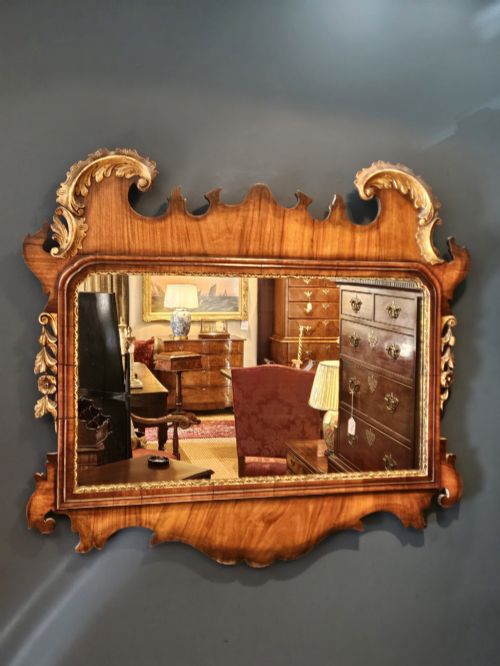
A carved fretwork mirror brings crisp silhouette and warm timber tone to a room, offering the refined proportions of the eighteenth century.
Carved Fretwork Mirror
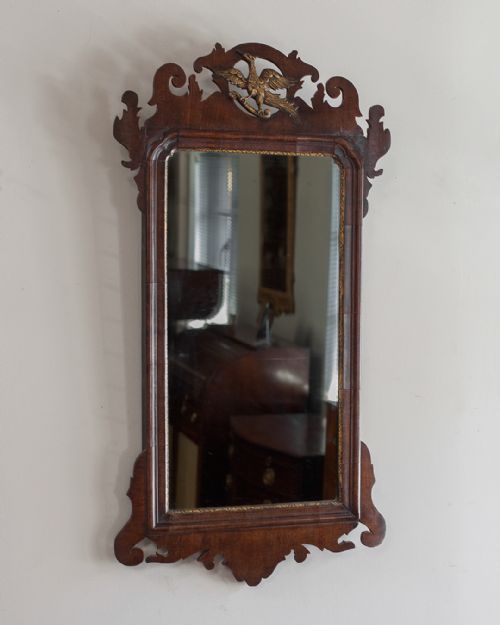
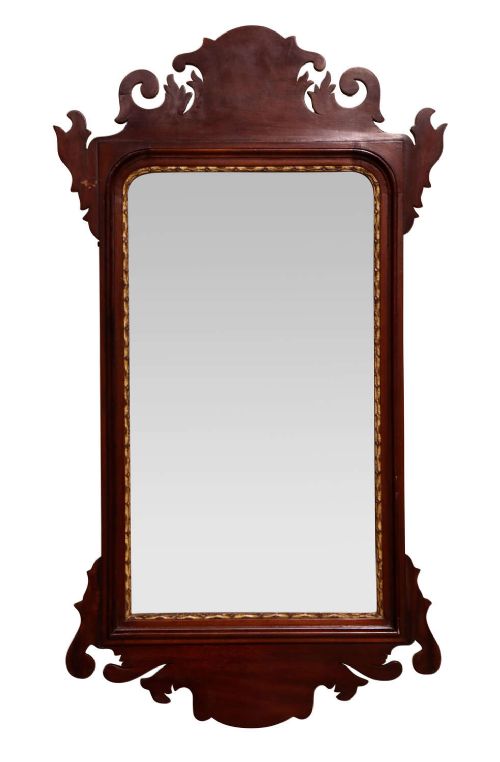
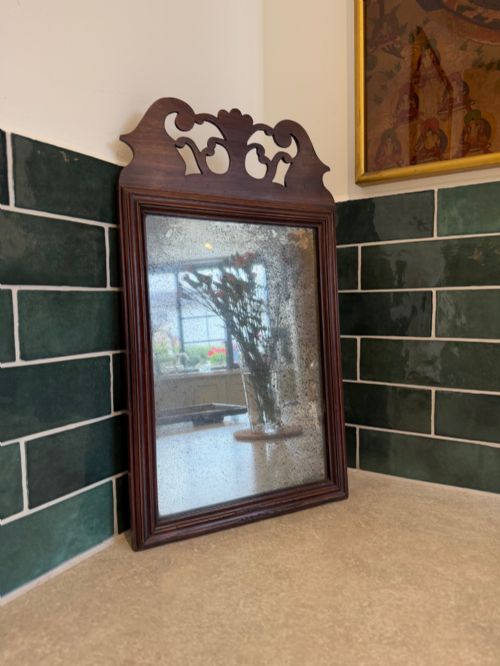
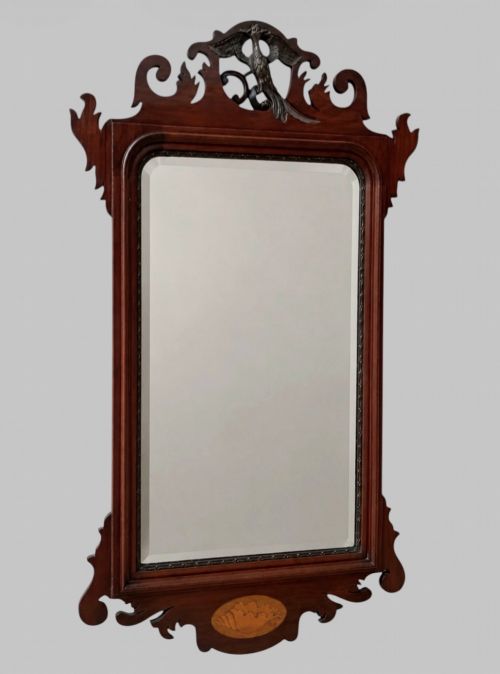
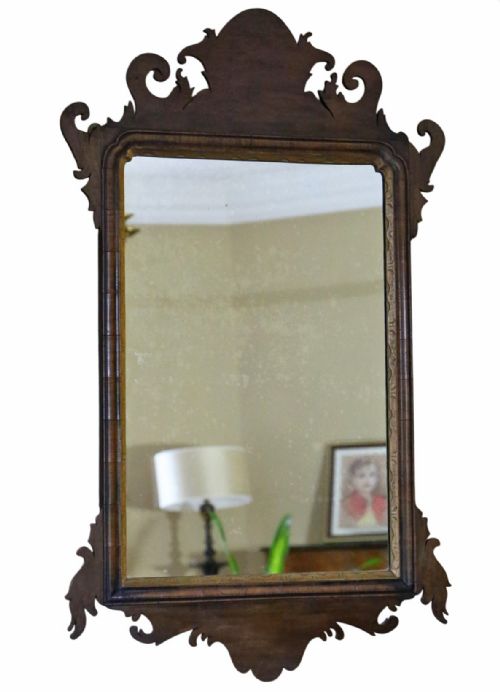
A carved fretwork mirror is a wall hanging defined by intricate pierced wooden frames, often featuring scrolled ears and gilded crests. Buyers seek these pieces to introduce architectural depth and historical character to traditional interiors. The selection spans authentic Georgian origins as well as later revival interpretations.
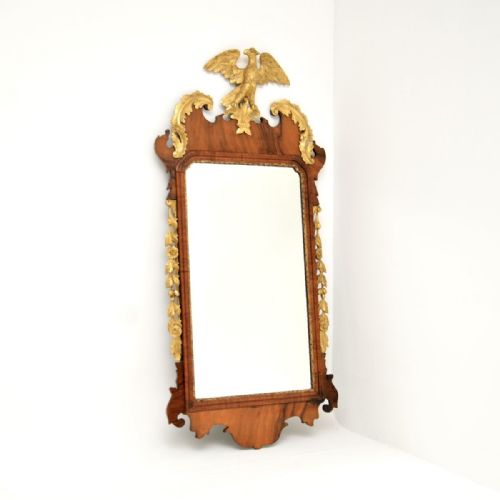
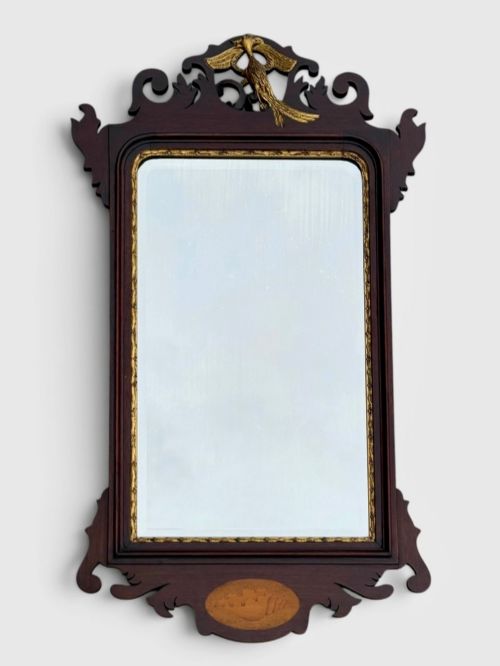
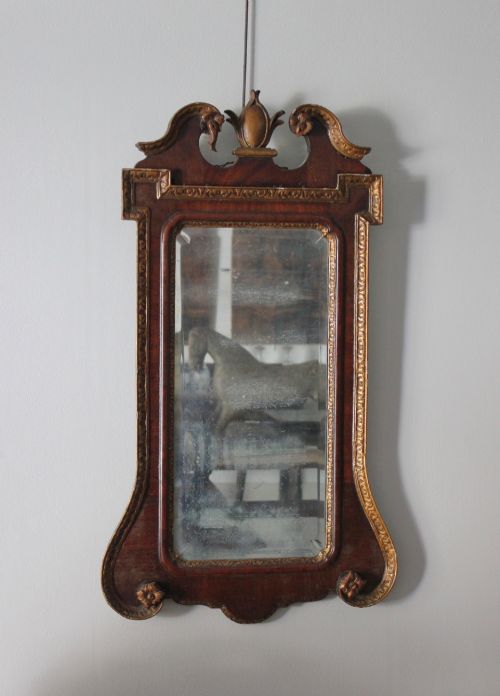
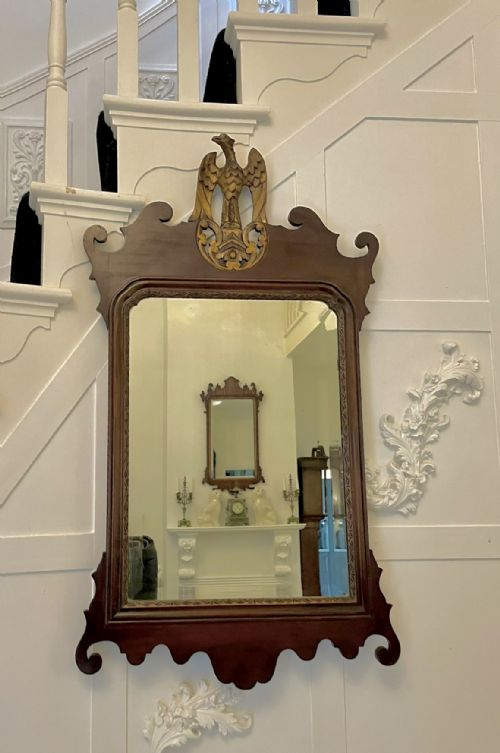
Most examples encountered on this page date from the Georgian period through to later Victorian and Edwardian revivals. Mahogany and walnut dominate the timber choices, frequently enhanced with parcel gilt details or carved motifs such as the traditional Ho-Ho bird.
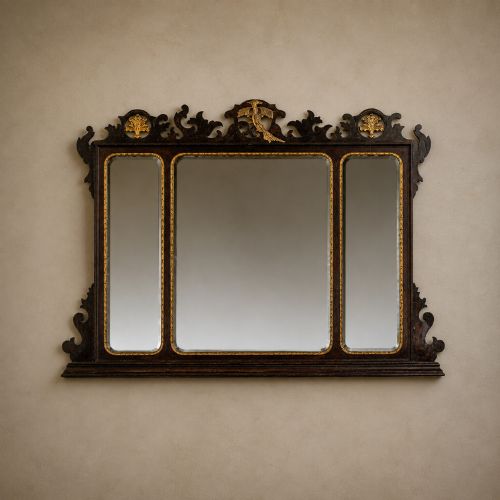
Wall mirrors and larger overmantel formats represent the principal shapes available to collectors. These pieces range from restrained rectangular plates to elaborate triptychs and oval frames designed to catch and reflect natural light.
Timbers and carving techniques
Craftsmen shaped these frames from dense hardwoods like mahogany and walnut, which accepted the precise cuts of the fretsaw without splitting. Timber veneers were often applied to underlying structural carcases to create rich grain patterns across the flat surfaces of the frame.
Gilding techniques involved the application of gold leaf or giltwood highlights to carved crests, slips, and ears, providing a sharp contrast against the dark polished wood. Pierced fretwork was laboriously hand-cut using fine blades to achieve intricate symmetrical or rococo scrolls.
Listings feature walnut and mahogany timbers alongside gilded wood elements across Georgian, Victorian, and Edwardian periods.
Distinguishing features of finer examples
The precision and depth of the hand-carved fretwork dictate the visual success of the frame, where sharper internal corners and well-defined mouldings signal superior handwork. The integration of parcel gilding and the retention of original glass or gilt slips further elevate the standing of an individual mirror.
Structural integrity rests on the preservation of the delicate scrolled ears and crestings, which are vulnerable to loss over centuries. Coherence between the timber frame, the original mirror plate, and secondary backboards indicates a well-preserved survival rather than a composite assembly.
The Carved Fretwork Mirror Glossary
- Fretwork
- Openwork ornamentation carved or pierced from a thin board of timber. This technique creates lightweight yet elaborate geometric or scroll patterns.
- Parcel Gilt
- Partial application of gold leaf to specific raised portions of a carved wooden object. It highlights particular decorative elements against a dark timber background.
- Ho-Ho Bird
- A stylized Chinese phoenix commonly carved onto the crests of eighteenth-century mirrors. It frequently appears atop architectural or rococo revival frames.
- Gilt Slip
- A narrow gilded wooden moulding set immediately inside the outer frame next to the mirror glass. This detail brightens the reflection and frames the glass plate.
- Triptych
- A mirror composed of three distinct panels placed side by side within a shared frame. Overmantel versions often utilise this format to span wide chimney breasts.
Carved Fretwork Mirror: Frequently Asked Questions
How do I date an antique carved fretwork mirror?
Dating relies on examining the timber species, construction joints, and edge bevels of the mirror glass. Eighteenth-century pieces typically display native walnut or early mahogany with hand-cut secondary framing.
Revival pieces from the Victorian and Edwardian eras often use machine-sawn fretwork and standardised backing boards. Comparing the carving style against known Georgian pattern books clarifies the period of manufacture.
Where should I hang a carved fretwork mirror?
These mirrors suit placement above a fireplace mantelpiece, a console table, or a principal chest of drawers. Their reflective glass brightens darker corners while the decorative frame acts as a focal point on a plain wall.
Because the scrolled ears and crests are delicate, select a wall location away from heavy foot traffic or swinging doors.
What is the difference between Georgian and revival mirrors?
Authentic Georgian mirrors date from the eighteenth century and show the tool marks of period joinery and hand-cut frets. The timber patination reflects centuries of exposure and gentle polishing.
Revival pieces produced during the Victorian and Edwardian periods replicate these earlier styles using contemporary machinery and sometimes display standardised construction methods.
How should I clean a vintage wood frame?
Dust the carved fretwork gently using a soft, dry brush to prevent debris accumulating in the pierced recesses. Avoid liquid polishes or moisture, which can damage aged timber and lift delicate gilding.
Glass plates can be cleaned sparingly with a cloth dampened with glass cleaner, ensuring no liquid seeps behind the frame edge.