



Carved Flower Top Table
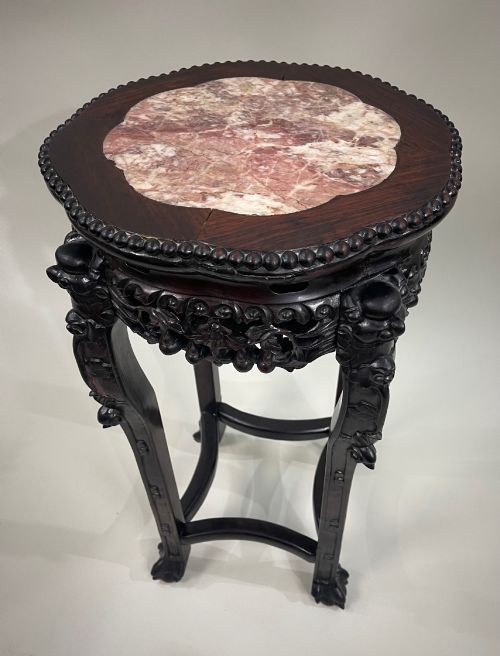
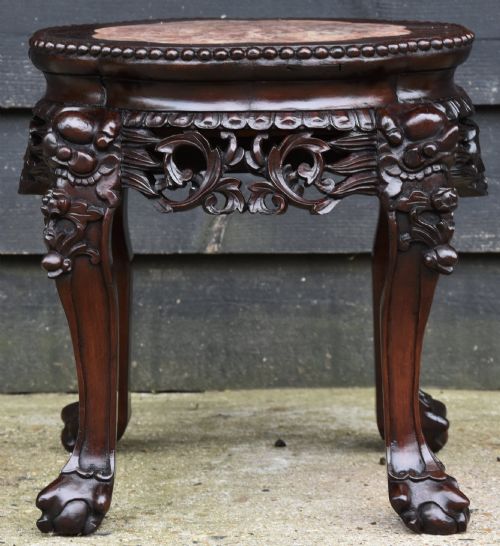
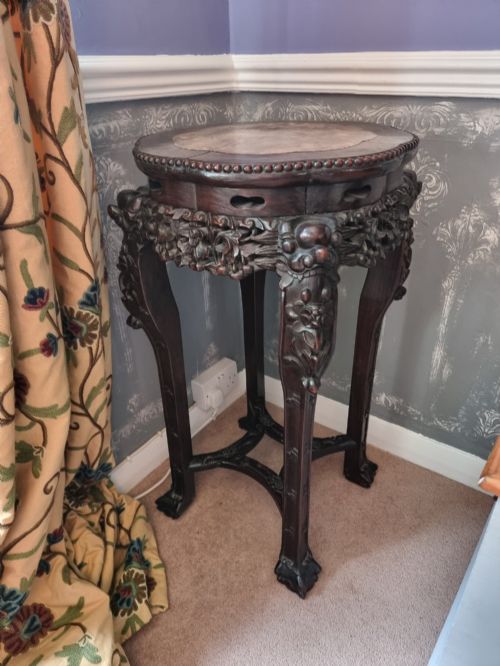
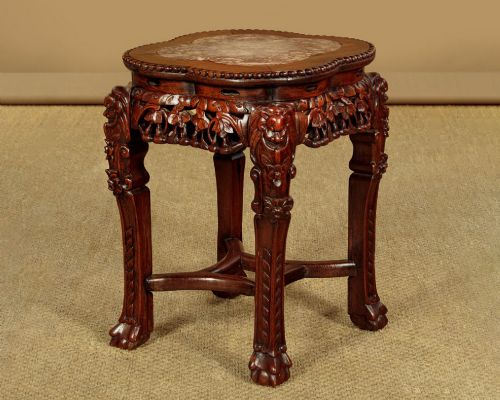
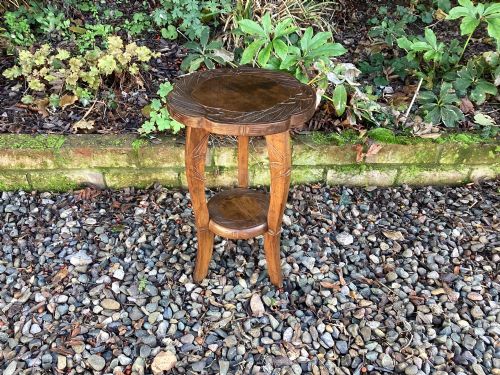
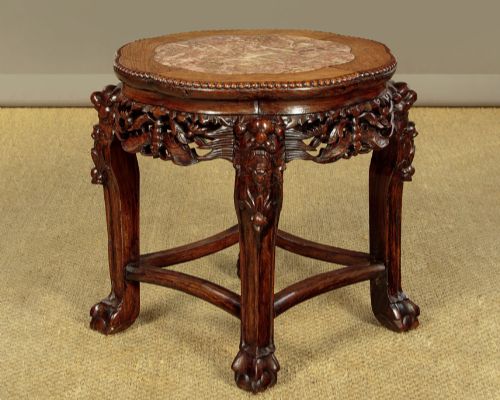
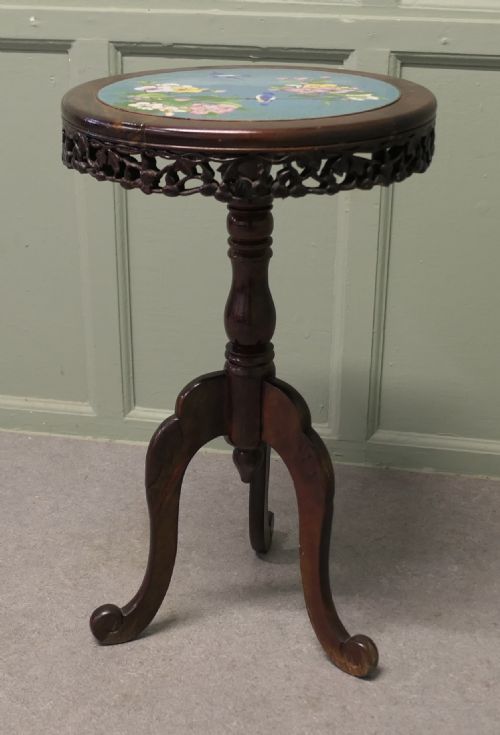
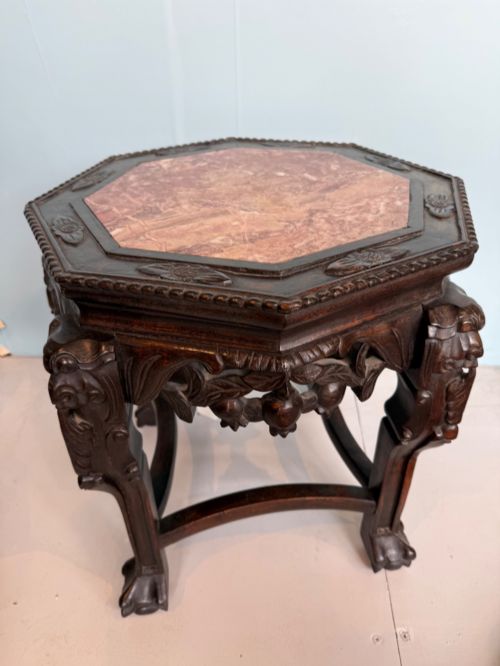
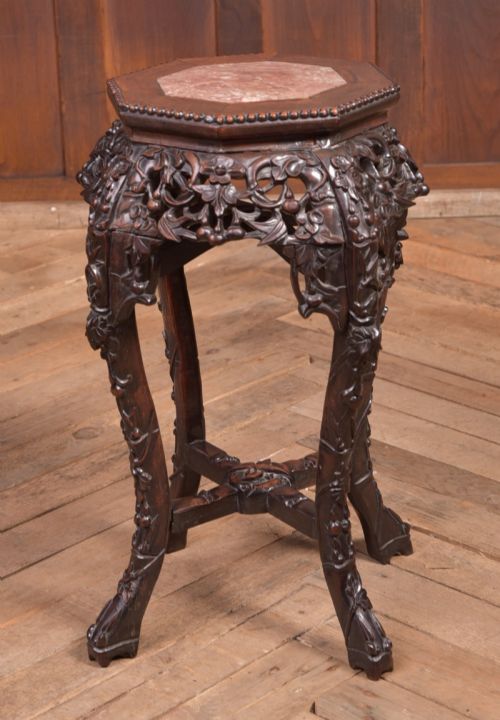
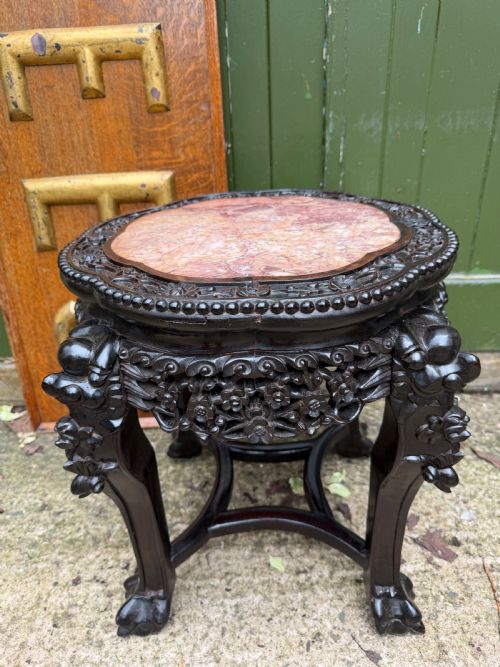
A carved flower top table is a sturdy timber and stone platform designed for display, bringing intricate oriental carving into the room.
Carved Flower Top Table
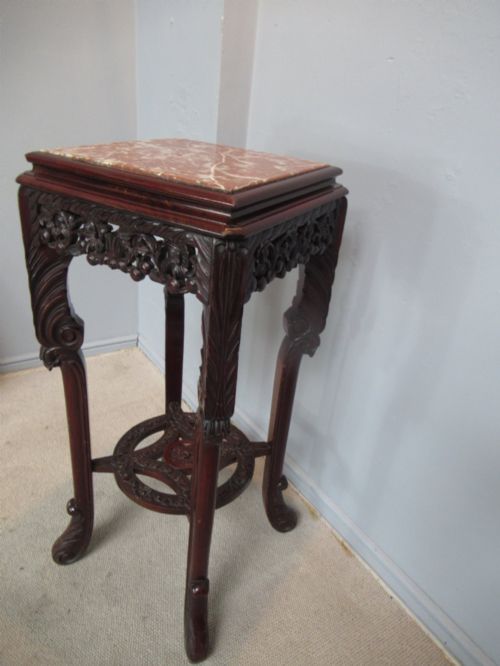
A carved flower top table encompasses low jardiniere stands, occasional tables, and tall plant pedestals originating largely from the nineteenth century and the Edwardian era. Buyers seeking these pieces will encounter sturdy hardwood structures designed to elevate ceramics, plants, or lamps within a room.
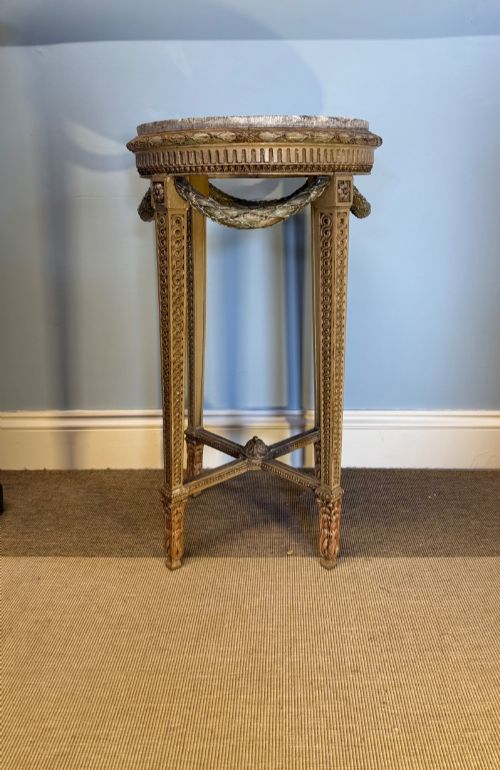
The prevailing examples on this page are Chinese export pieces, frequently associated with the Qing Dynasty or constructed in traditional Chinese styles featuring inset stone tops. Alongside these oriental works appear occasional European adaptations, such as French marble-top stands and Arts and Crafts designs.
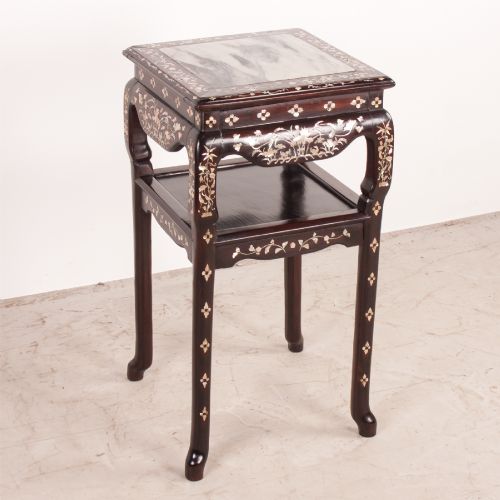
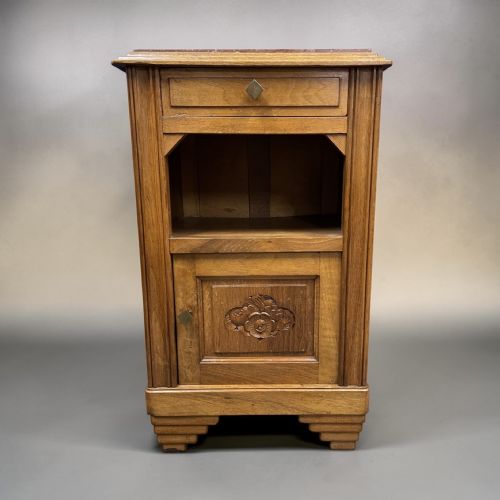
Forms vary from compact square bedside tables to grand multi-tiered stands and low vase tables. Most utilise circular or shaped tops inset with stone, supported by cabriole or straight carved legs.
Materials and construction
Makers utilised dense timbers such as padouk, rosewood, and hongmu, selecting them for their ability to hold deep, crisp relief carving without splintering. These heavy hardwoods provide the structural stability necessary to support weighty stone inserts.
Table tops frequently incorporate inset panels of smooth rouge or variegated marble, fitted precisely into the timber frame. Artisans employed traditional joinery alongside intricate hand-chiselled floral motifs, sometimes incorporating mother-of-pearl inlay or cloisonne elements.
Carved Flower Top Table Retail Price Guide 2026
Typical asking prices for carved flower top table among the pieces listed under this phrase on Sellingantiques today, from the lower quarter to the upper quarter. They describe what is for sale here now, not the wider market.
Listings feature nineteenth-century Chinese hardwood stands alongside Edwardian wine tables and Arts and Crafts pieces.
Assessing the craftsmanship
Quality rests primarily in the depth and crispness of the hand-carved floral details, where sharper undercut foliage distinguishes superior work from softer, shallower cutting. The selection and fit of the inset marble top also dictate grade, with tightly fitted, highly figured stone indicating finer workshops.
The weight and density of the chosen hardwood dictate the integrity of the piece, alongside the rigidity of the joints under load. Well-balanced proportions and symmetrical carving separate standard utility plant stands from exhibition-grade examples.
Liberty and Co
The Carved Flower Top Table Glossary
- Hongmu
- A traditional Chinese term for dense hardwoods, literally translating to red wood. It encompasses several heavy, durable timber species used for fine nineteenth-century furniture.
- Jardiniere stand
- A tall or low table specifically built to support a heavy ceramic plant pot or flower bowl. These stands usually feature moisture-resistant stone tops.
- Padouk
- A heavy, durable tropical hardwood with a reddish hue. It resists warping and takes fine, intricate hand-carved details exceptionally well.
- Cloisonne
- An ancient technique for decorating metalwork objects with coloured glass paste separated by thin strips of metal. It appears on select decorative table surfaces.
- Chinoiserie
- European artistic styles that reflect Chinese artistic influences. These designs interpret oriental motifs through Western decorative traditions.
Carved Flower Top Table: Frequently Asked Questions
What is a carved flower top table used for?
These tables serve primarily as pedestals for displaying heavy ceramic planters, vases, lamps, or decorative objects. Their sturdy hardwood frames and stone inserts protect the timber surface from moisture and weight.
Historically placed in corners or hallways, they elevate decorative items to eye level. Today they function equally well as bedside tables or compact occasional surfaces in living spaces.
How do I identify a nineteenth-century piece?
Nineteenth-century examples rely on dense tropical hardwoods like padouk and hongmu, assembled with traditional joinery rather than modern fasteners. The hand-carved floral motifs show deep, individual chisel work rather than uniform machine moulding.
Inspect the underside and joints for signs of age, such as oxidised timber colour and hand-cut elements. Inset marble slabs should sit flush within handmade wooden rebates.
Are marble tops original to these stands?
Most marble and rouge stone tops on nineteenth-century oriental stands are original to the piece. Makers deliberately paired heavy stone with dense hardwood to provide stable, water-resistant surfaces for damp plant pots.
Replacement stones generally reveal a looser fit within the timber channel or lack the appropriate weathering and edge profiling found on period examples.
How do I care for antique hardwood furniture?
Maintain these tables by dusting regularly with a dry, soft cloth to prevent grit from settling into the carved recesses. Avoid using modern silicone sprays or harsh chemical polishes that can degrade the historic finish.
Keep the timber away from direct heat sources and rapid humidity changes to prevent the dense hardwood from shrinking and putting pressure on the inset stone top.