
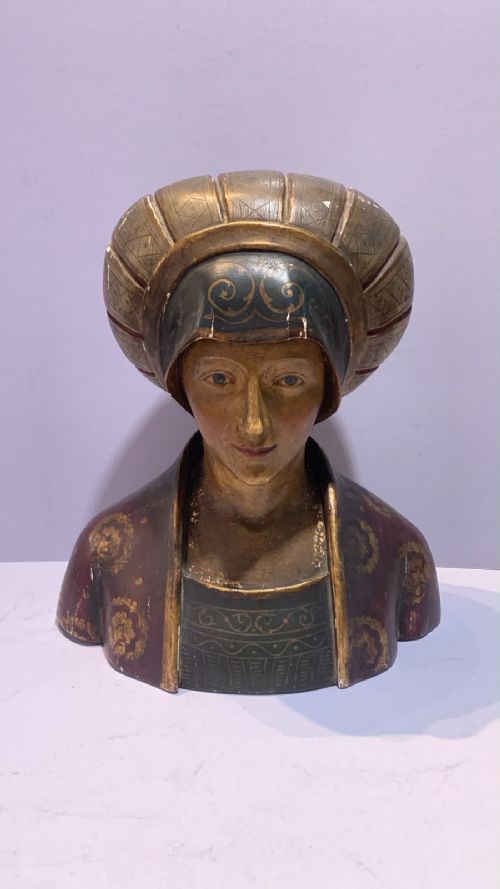
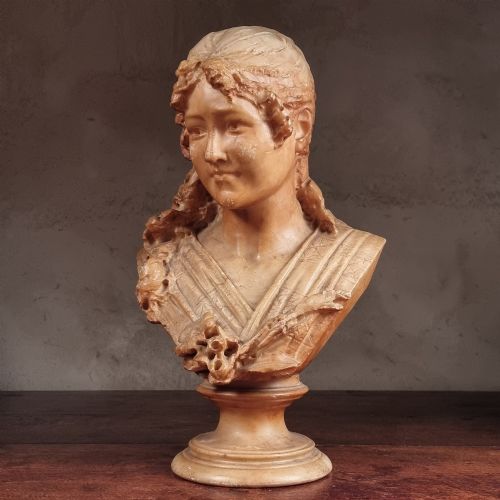
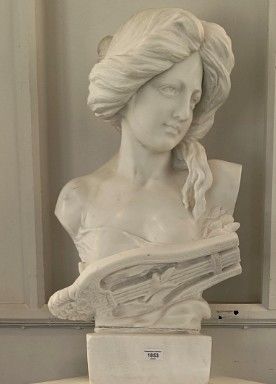
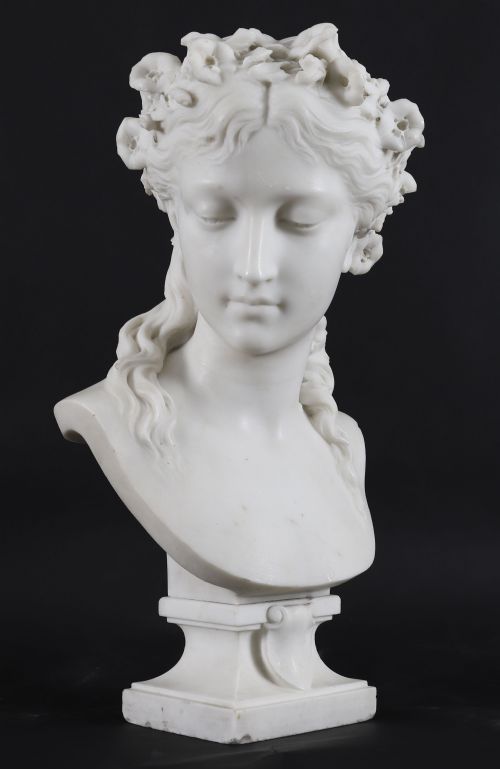

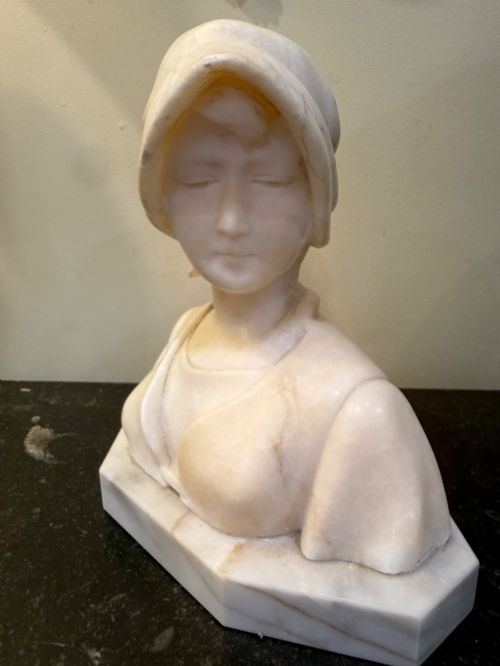

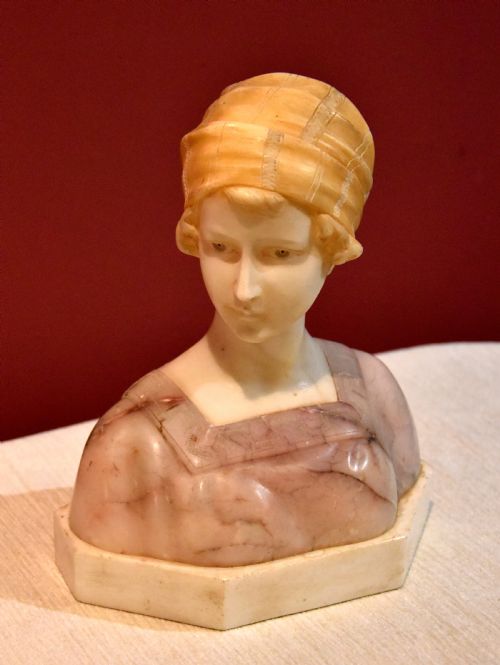
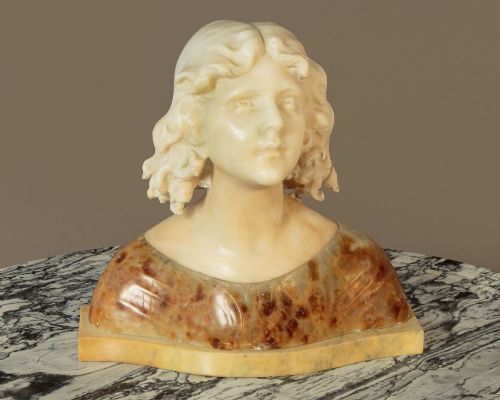
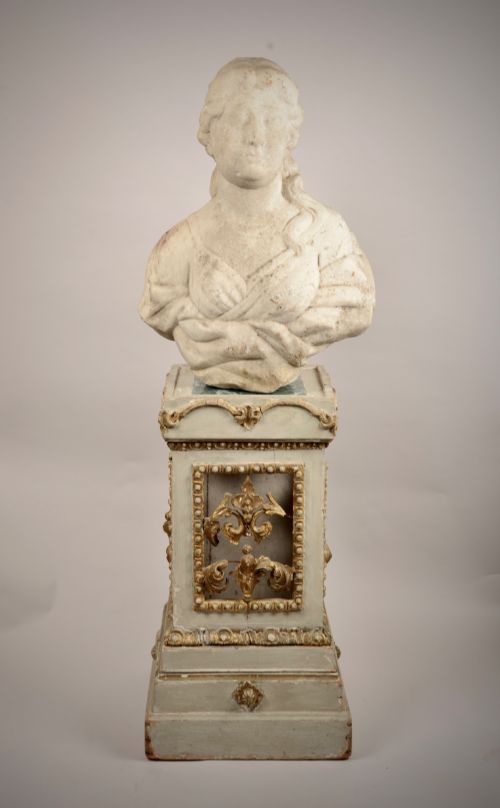


Carved Female Bust
When you search for a carved female bust, you are looking at centuries of sculptural portraiture in stone and timber.
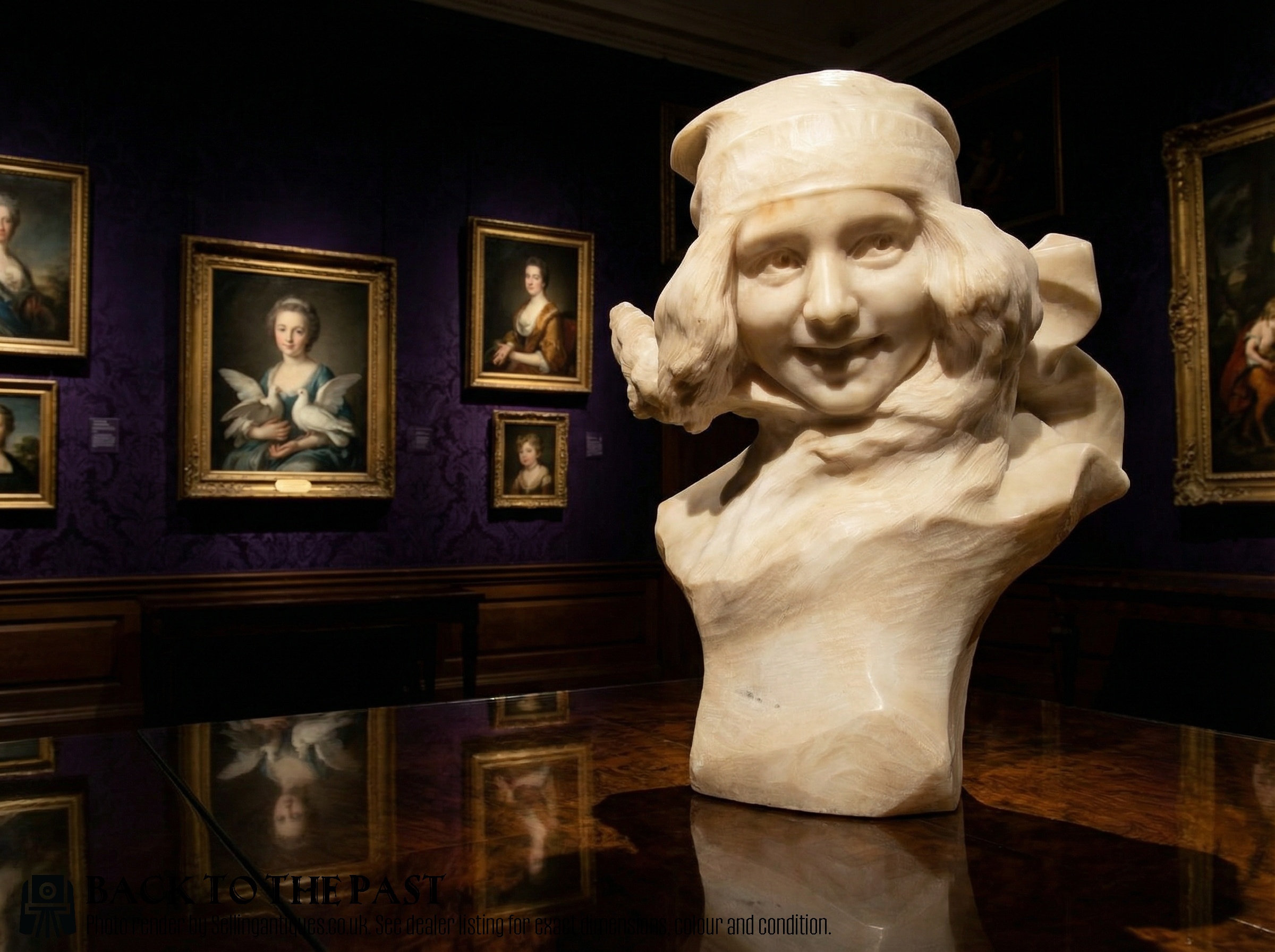
Carved Female Bust
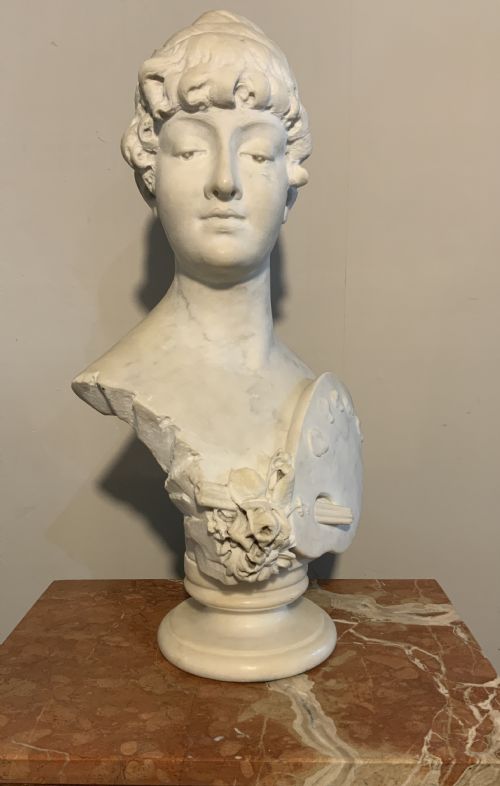
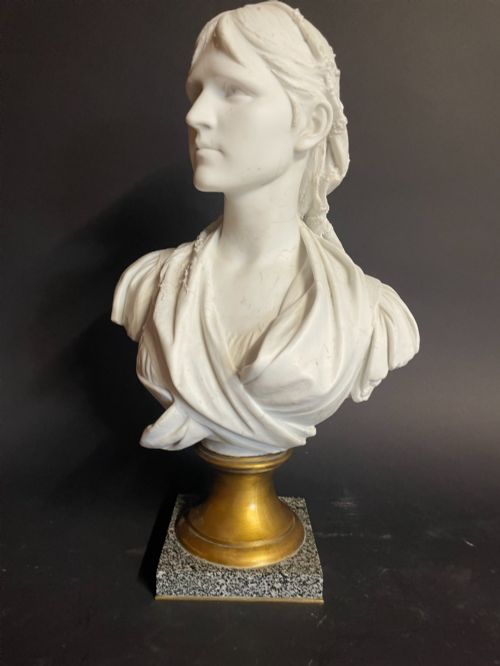
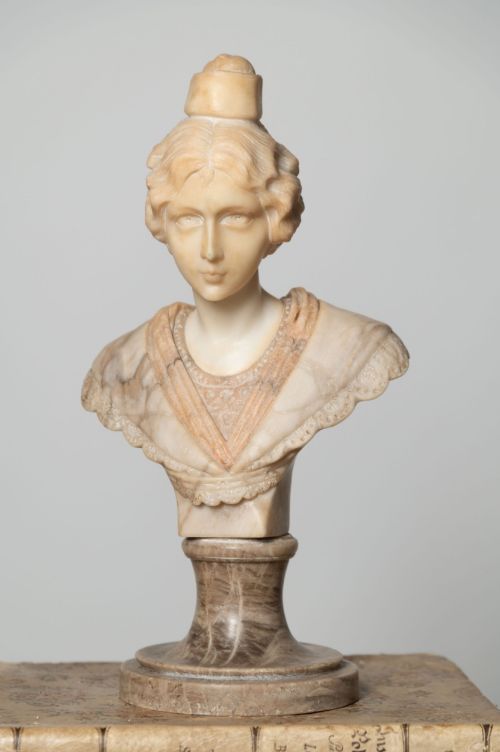
A carved female bust represents a sculpted study of a woman's head and shoulders, drawing from classical mythology, portraiture, and allegorical figures. The version you are most likely to meet on this page is a nineteenth-century Italian or French piece rendered in white marble or pale alabaster.
These works range from diminutive cabinet sculptures to life-size gallery pieces, occasionally paired with pedestals or mounted on contrasting mineral bases. Subjects span from mythological muses and noblewomen to regional studies and allegorical types.
Makers often drew inspiration from classical antiquities or Grand Tour souvenirs, producing works that reflect Neoclassical, Baroque, and Art Nouveau aesthetics. While some pieces remain anonymous studio productions, others bear the signatures of notable European sculptors.
Materials and carving techniques
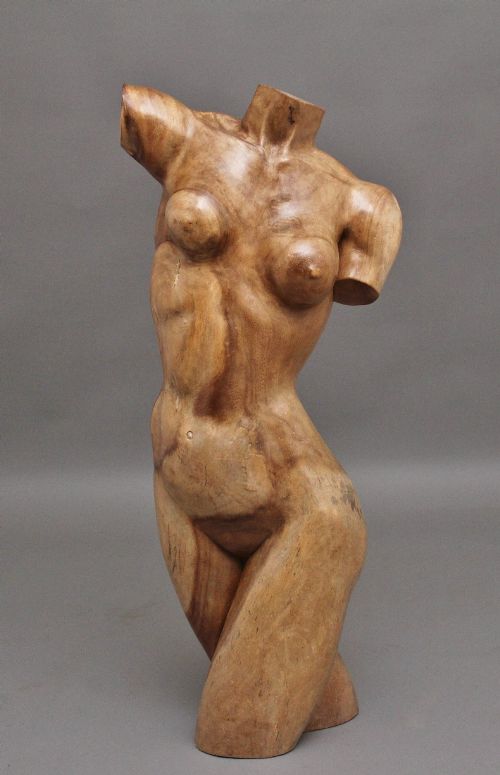
The primary materials recorded in these listings are Carrara marble, fine alabaster, and various woods including oak, chestnut, and ebony. Sculptors utilised traditional chisels, rasps, and drills to release the form from the block, finishing the surface with abrasive stones for smoothness.
Certain pieces incorporate mixed media, combining white marble with polychrome paint, gilded elements, bronze, ormolu, or contrasting bases made of Portoro and Vert de Mer marble. Wood carvings often rely on the natural grain of the timber to accentuate drapery and hair texture.
Listings span from the seventeenth century through to the early twentieth century, incorporating Neoclassical, Baroque, and Art Nouveau movements.
Assessing sculptural execution
Quality in a carved female bust rests upon the sensitivity of the chisel work, particularly in the rendering of facial expression, hair strands, and textile folds. Master carvers achieved a convincing softness in flesh and a crisp lightness in veils or lace that lesser workshops failed to capture.
The choice of raw material dictates the baseline quality, with flawless translucent alabaster and pure white Carrara marble holding higher regard than stone with heavy inclusions. Furthermore, the presence of a verified signature from an established nineteenth-century atelier distinguishes standard decorative items from collectible works of art.
Eugene Aizelin·Auguste Henri Carli·Boudewijn Tuerlinckx·Auguste Moreau·GORY
The Carved Female Bust Glossary
- Alabaster
- A soft, fine-grained stone prized for its translucency and ease of carving. It was frequently utilised for nineteenth-century portrait sculptures.
- Carrara Marble
- A type of white or blue-grey marble from the city of Carrara in Italy. Sculptors have favoured this material since antiquity for its fine crystalline structure.
- Caryatid
- A sculpted female figure serving as an architectural support taking the place of a column or a pillar. They often appear on pedestals and furniture mounts.
- Herm
- A carved bust or head atop a square pillar or tapering pedestal. This classical form originated in ancient Greece as boundary markers.
- Grand Tour
- A traditional trip of Europe undertaken by upper-class European young men of means in the seventeenth through nineteenth centuries. Travellers frequently acquired small marble and alabaster busts as souvenirs.
Carved Female Bust: Frequently Asked Questions
What is the difference between marble and alabaster busts?
Marble is a hard metamorphic rock formed from limestone, offering high durability and a crisp, opaque white finish. Alabaster is a softer mineral that allows light to penetrate slightly beneath the surface, giving it a warm, waxy translucence.
Alabaster pieces generally require more careful handling because the stone scratches easily compared to marble. Both materials were widely used across nineteenth-century European sculpture studios.
Where were these sculptures displayed historically?
Sculptural busts typically graced libraries, drawing rooms, and hallways of grand homes during the eighteenth and nineteenth centuries. They sat atop specialised pedestals, mantelpieces, or heavy wooden bookcases as statements of classical taste.
Today, they adapt easily to modern interiors as focal points on side tables or deep windowsills.
How can I tell a nineteenth-century bust from a modern copy?
Examine the tooling marks and the natural ageing of the stone or wood surface. Nineteenth-century pieces often show hand-finishing with abrasives rather than uniform mechanical milling.
Patina, minor historical wear, and the construction methods of the base or mounting pins help confirm period authenticity.
Did all period busts have signatures?
Many fine period sculptures remain unsigned because they were produced by anonymous artisans in large Italian or French workshops. Sculptors who exhibited at official salons or ran prominent ateliers were more likely to sign their work on the reverse or base edge.
An unsigned piece can still possess exceptional artistic quality and age.