




Carved Eagle Gilt Mirror
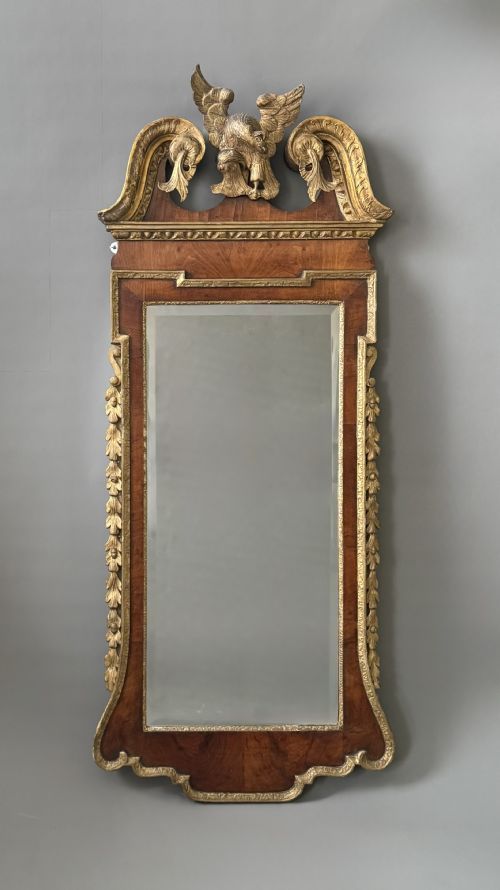
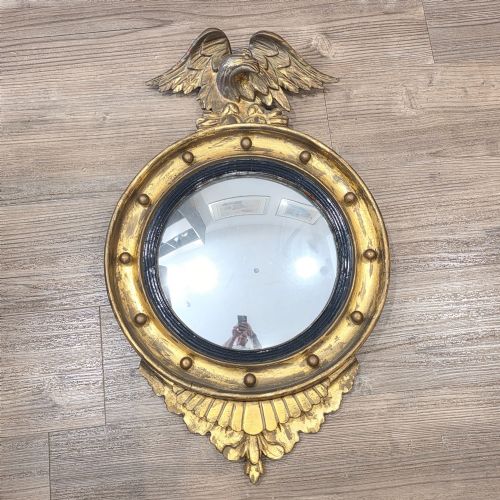
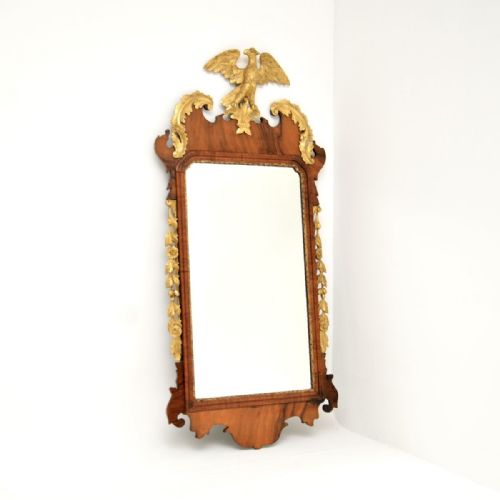
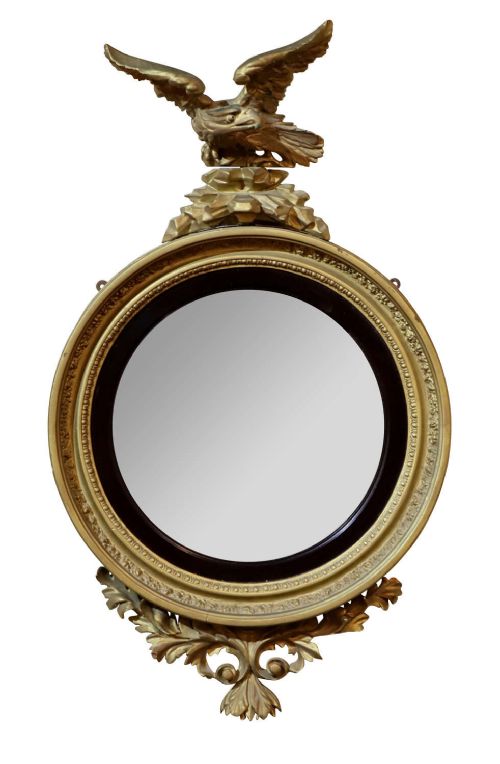
A carved eagle gilt mirror brings powerful presence to a room, combining classic convex glass with bold bird crests.
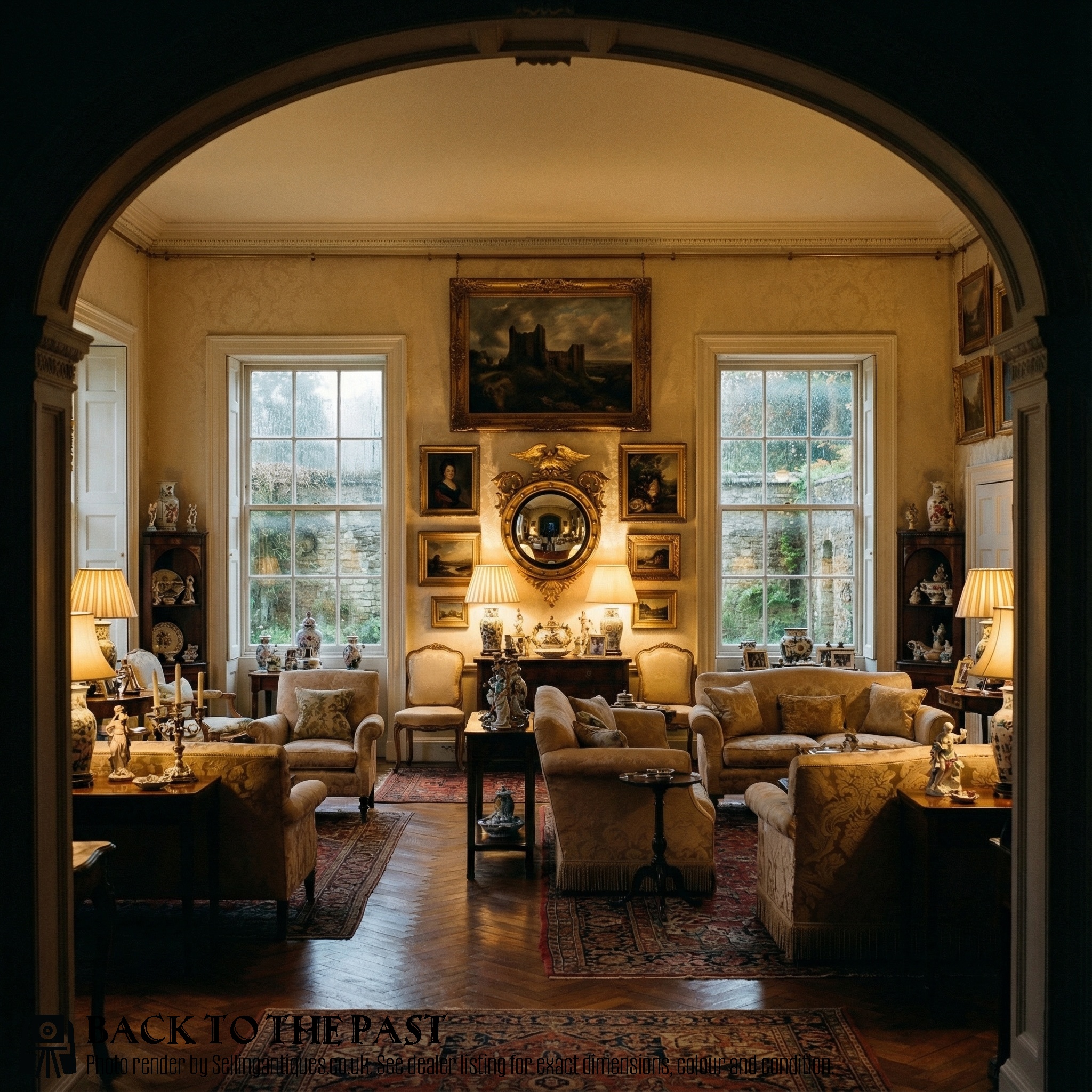
Carved Eagle Gilt Mirror
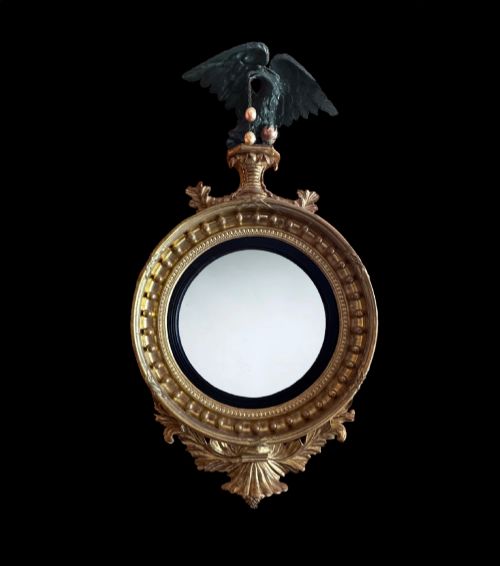
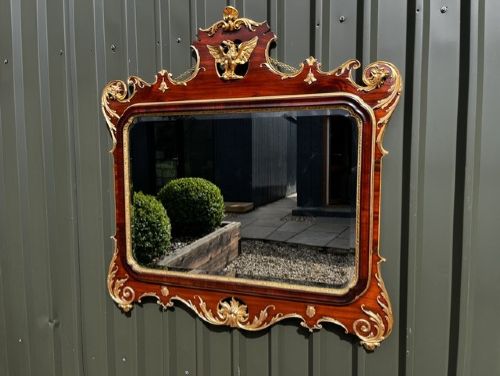
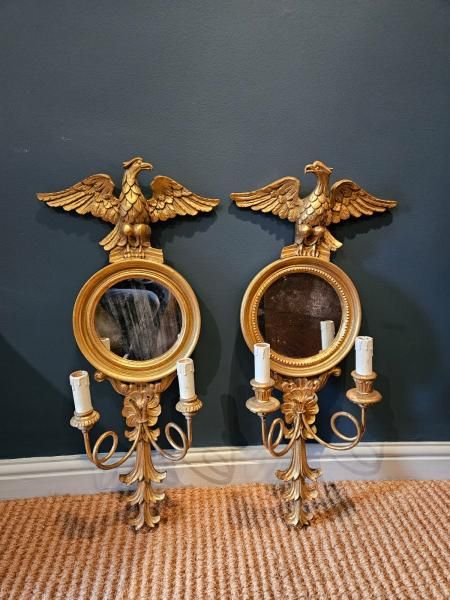
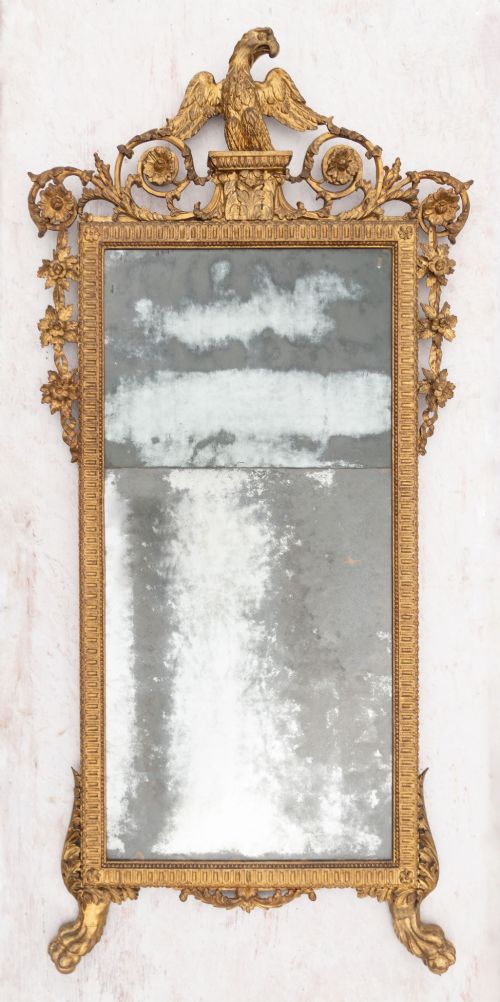
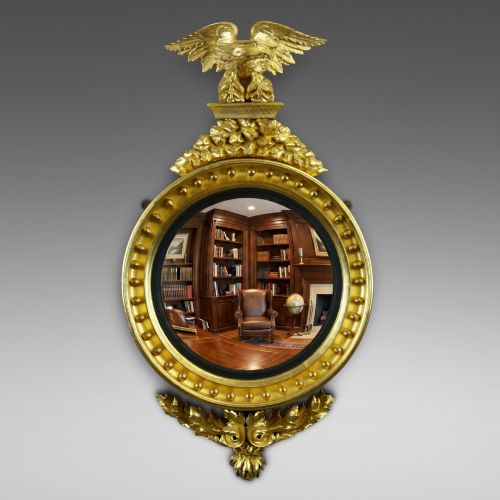
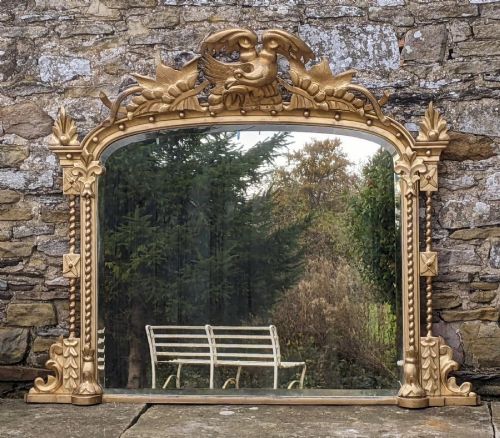
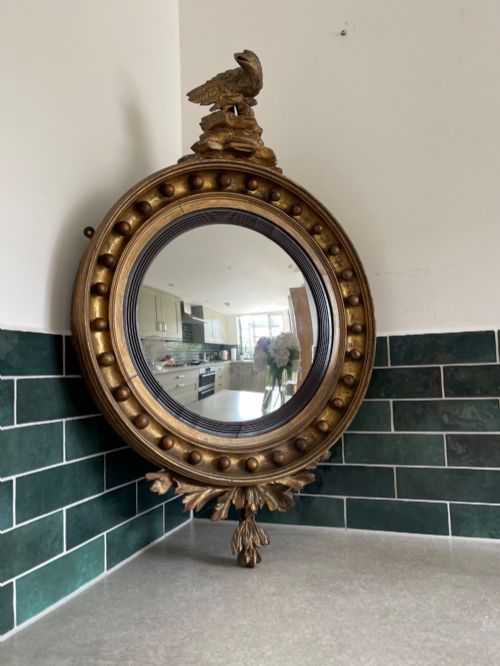
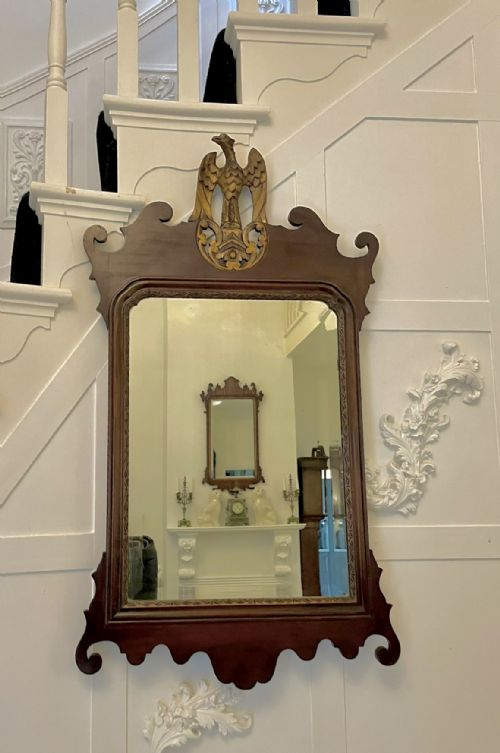
A carved eagle gilt mirror is a statement wall piece that draws the eye, most commonly seen in circular convex formats from the Regency period or earlier Georgian eras. These round glasses often feature a prominent spread eagle perched on top, sometimes accompanied by candle arms or girandole branches. Overmantel mirrors and rectangular pier styles also appear across the listings, showing the breadth of formats available to collectors.
The materials span traditional giltwood, gesso, ebonised wood, walnut and mahogany, with glass plates ranging from simple mirror glass to older Vauxhall plates. Surviving examples date from the eighteenth century through to the Edwardian period and later revivals, reflecting enduring popularity across several interior design movements. Buyers encounter everything from compact wall sconces to large overmantel frames designed to dominate a chimney breast.
How they were made
Makers shaped these frames from dense hardwoods like mahogany and walnut, or softer timbers built up with gesso layers ready for gilding. Carvers worked the wood by hand to create intricate crests, fretwork panels and the signature spread eagle surmounts that crown the top of the glass.
Gilding involved applying thin metal leaf over prepared grounds, sometimes burnished to a high shine or left with matte finishes. Convex mirror plates were blown or cast before silvering, creating the curved distortion characteristic of butler's mirrors that allowed a wider field of vision in a room.
Carved Eagle Gilt Mirror Retail Price Guide 2026
Typical asking prices for carved eagle gilt mirror among the pieces listed under this phrase on Sellingantiques today, from the lower quarter to the upper quarter. They describe what is for sale here now, not the wider market.
Perched above the glass, the carved eagle watches over the room with fierce intensity, doubling as a noble guardian and a functional optical device.
What varies in quality
The definition and depth of the woodcarving set finer pieces apart, particularly in the feather detail of the eagle and the crispness of the gilt mouldings. Superior examples show confident handling by the maker, where proportions remain balanced and the crest integrates harmoniously with the frame.
The preservation of the original surface finish and the quality of the glass plate dictate overall desirability. Original convex mirror glass with soft foxing holds greater appeal than modern replacements, just as untouched period gilding outshines heavy modern regilding.
The Carved Eagle Gilt Mirror Glossary
- Convex mirror
- A round mirror with an outward-curving glass plate that reflects a wide panoramic view of the interior. These pieces were often called butler's mirrors.
- Surmount
- An ornamental feature placed at the very top of a frame, such as the carved eagle or hoho bird seen on these wall mirrors.
- Girandole
- A wall mirror fitted with attached candle sconces or arms that project from the frame to reflect candlelight. They add functional illumination to the reflective surface.
- Parcel gilt
- A decoration method where only specific carved details or mouldings are highlighted in gold leaf against a contrasting wood background like walnut or mahogany.
- Gesso
- A plaster-like mixture applied to wooden frames as a smooth base for subsequent gilding. Its thickness allowed artisans to carve intricate relief details directly into the surface.
Carved Eagle Gilt Mirror: Frequently Asked Questions
Where should I hang a convex mirror?
These mirrors work best opposite a window or in a hallway where the curved glass can capture and reflect maximum light across the space. Their wide field of view helps open up smaller rooms.
Because they project visually from the wall, ensure they hang at a comfortable eye level where the detail of the eagle crest can be appreciated.
How do I date a giltwood mirror?
Dating relies on examining the construction timbers, the composition of the gesso, and the style of the carving. Eighteenth-century pieces often show older pine or hardwood bases beneath hand-applied gesso.
Later Victorian and Edwardian revivals tend to use machine-prepared components or different backing boards, helping differentiate period originals from subsequent copies.
Why does the glass look curved?
The curved surface is a defining characteristic of convex mirrors, historically produced to give servants a wide view of a dining room or drawing room. This optical curve gathers light from all corners.
Original glass often shows subtle distortions, waviness, or light foxing that confirms its age and authenticity.