


Carved Camphor Wood Chest
These carved camphor wood chest pieces offer aromatic storage and traditional craftsmanship, bringing historical utility and deep relief carving into modern rooms.
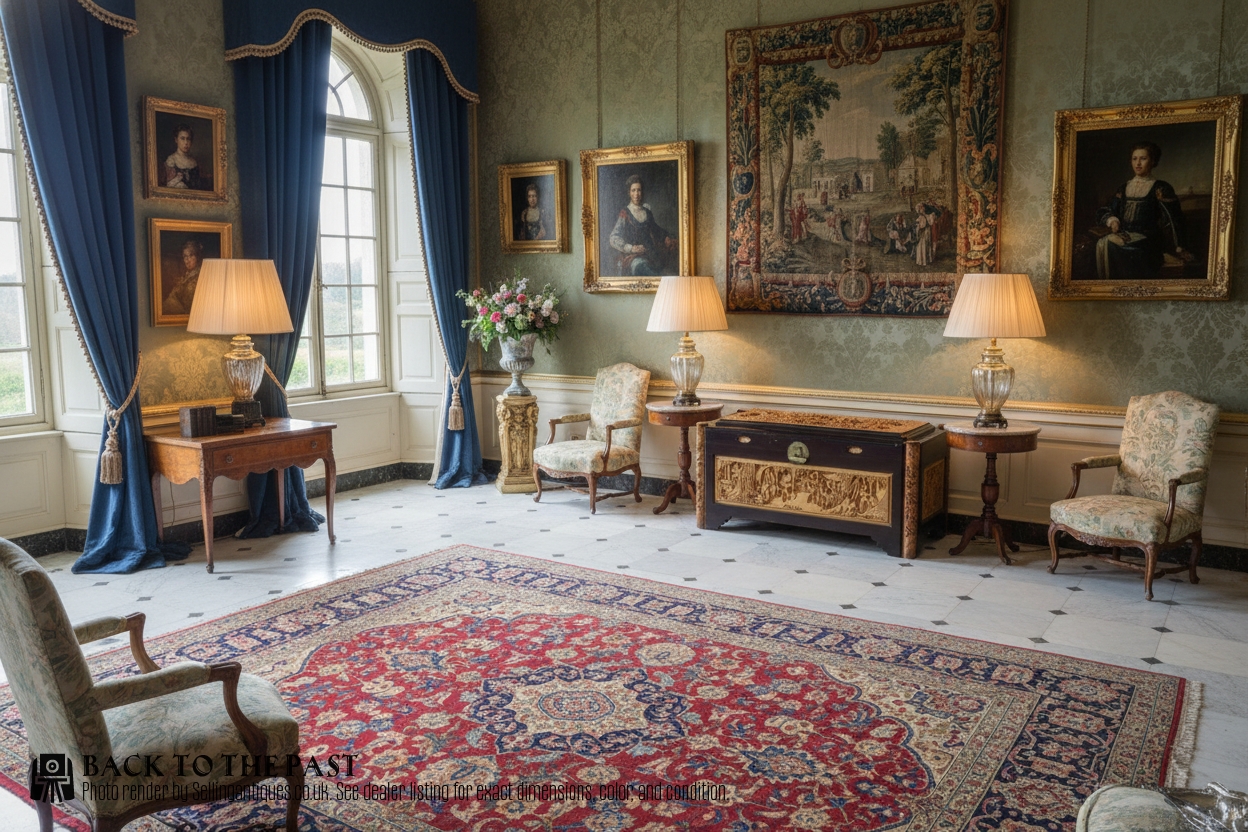
Carved Camphor Wood Chest
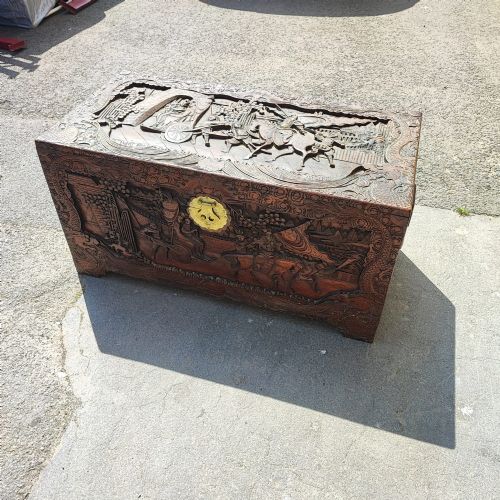
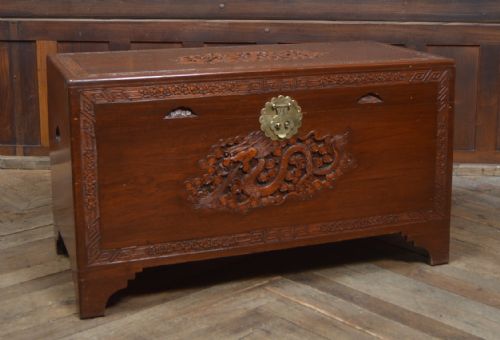
A carved camphor wood chest serves primarily as a blanket box, storage trunk, or luggage container, designed for protection against moths and dampness. The versions met most frequently on this page originate from Chinese Export workshops and date from the nineteenth century through the early twentieth century.
Beyond standard blanket boxes, the selection includes campaign chests fitted with brass hardware, cabinets on chests, and forms adapted for use as coffee tables. Regional variations span from traditional Chinese carving to Ceylonese and Anglo-Indian colonial designs incorporating contrasting timbers.
The architectural language ranges from heavily carved Oriental motifs to restrained Art Deco interpretations featuring limed oak. Buyers encounter pieces varying from utilitarian military containers to decorative domestic storage chests meant to be seen.
Materials and Technique
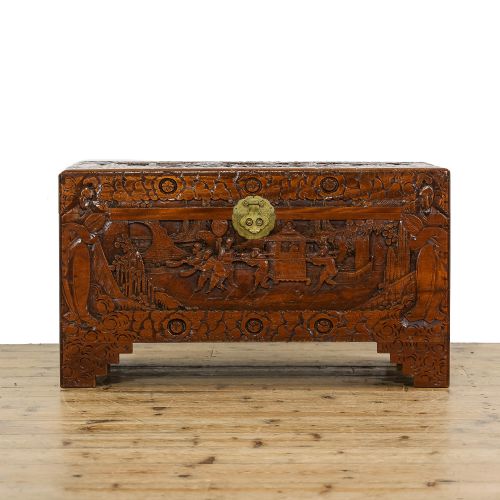
The foundational timber is camphor wood, valued for its distinct insect-repelling scent and dimensional stability, often paired with secondary hardwoods like teak, maple, or ebony. Construction techniques frequently include hand-carved exterior panels displaying deep relief work depicting traditional landscapes, figures, and foliage.
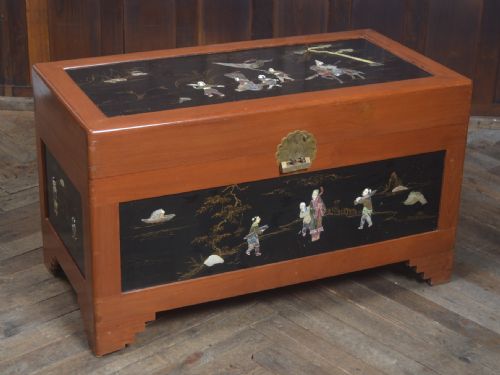
Metal hardware plays a functional and structural role, with brass corners, strapwork, and carrying handles reinforcing the joints for travel or campaign use. Certain examples integrate lacquer, mother of pearl inlay, or specialised brass coverings to enhance the surface appearance.
Carved Camphor Wood Chest Retail Price Guide 2026
Typical asking prices for carved camphor wood chest among the pieces listed under this phrase on Sellingantiques today, from the lower quarter to the upper quarter. They describe what is for sale here now, not the wider market.
The documented periods span from the Georgian era and the nineteenth century through the 1850s, 1880s, 1900s, 1920s, and 1930s.
Distinction in Craft
The depth and clarity of the hand-carved relief work distinguish standard trunk production from exceptional examples, where undercut detailing creates significant shadow and dimension. Crisp execution in the floral or figural panels points directly to skilled workshop output.
Structural integrity rests on the quality of the timber selection and the precision of the joinery, particularly where brass mounts and corner brackets integrate with the solid camphor wood boards. Well-preserved interior cedar scent and intact hinges complete the measure of a superior piece.
The Carved Camphor Wood Chest Glossary
- Camphor wood
- A fragrant timber native to Asia, utilised for furniture and trunks because its natural oils repel insects and preserve textiles.
- Campaign chest
- Portable military furniture designed in modular sections with recessed brass handles and corner brackets for ease of transport during travel.
- Chinese Export
- Decorative items and furniture manufactured in China specifically for Western markets, blending traditional Eastern forms with European tastes.
- Relief carving
- A sculptural technique where figures and motifs project from a flat background surface, defining the primary decoration on these trunks.
Carved Camphor Wood Chest: Frequently Asked Questions
What is a carved camphor wood chest used for?
These trunks function primarily as storage boxes for blankets, linens, and garments. The natural aromatic properties of the timber protect stored fabrics from moths and mildew.
Beyond utilitarian storage, many examples serve dual purposes in contemporary interiors as low coffee tables or decorative freestanding accent furniture.
How do I identify the age of these chests?
Dating relies on examining the construction methods, hardware styles, and carving depth. Nineteenth-century examples often feature heavy brass strapping and hand-cut dovetail joints.
Pieces from the early twentieth century frequently display standardised brass fittings and distinct regional export styles, while Art Deco influences appear in later variants.
Why do these chests smell so strong?
The distinct aroma comes from the natural volatile oils locked within the cellular structure of Cinnamomum camphora. This scent is the primary mechanism that deters insects.
Over decades, the intensity can soften, but lightly sanding the interior wood surfaces will often renew the characteristic fragrance.
Are all carved chests from China?
While the majority originate from Chinese Export workshops, the tradition extends across broader trade routes. Evidence includes Ceylonese and Anglo-Indian colonial productions.
These regional pieces often incorporate local secondary timbers such as ebony or teak alongside the primary camphor wood construction.