




Carved Black Desk Chair
A carved black desk chair brings structural gravity and historic presence to a study, uniting dark timber and skilled carving in seating designed for utility.
Carved Black Desk Chair
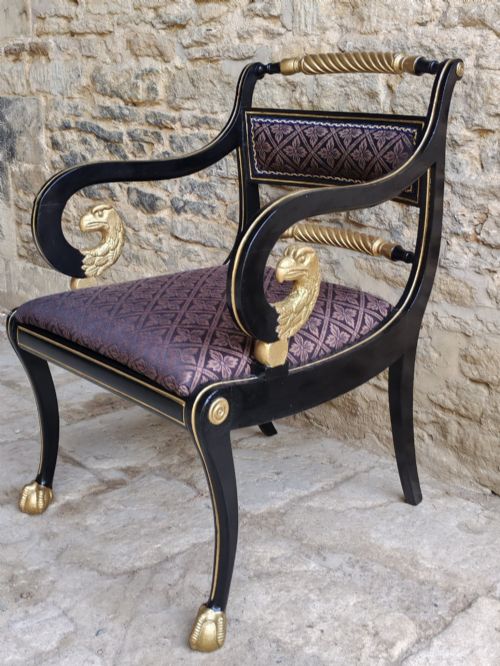
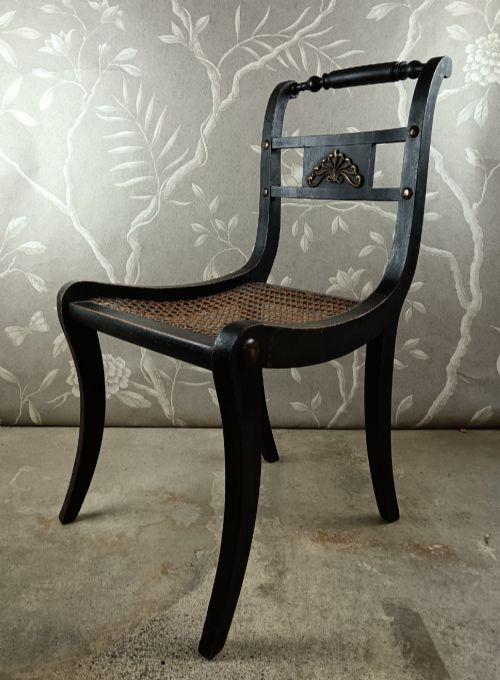
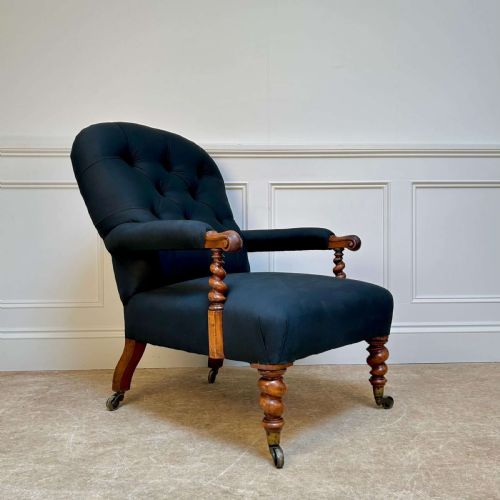
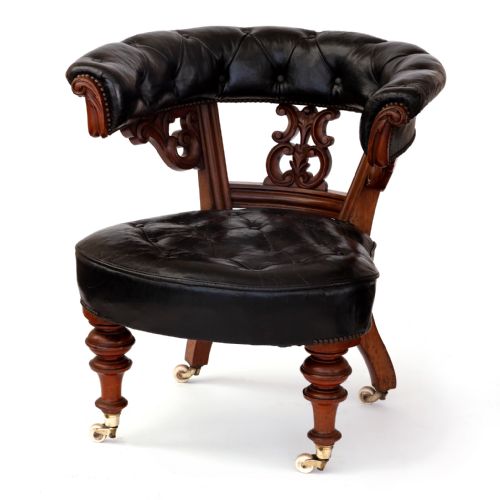
When you search for a carved black desk chair, you encounter seating solutions spanning the Georgian, Regency, and Victorian periods, alongside specific regional interpretations such as Chinese export and Ceylonese pieces. These items serve functional workspace requirements through forms like library armchairs, side chairs, and open-arm seating.
The selection on this page relies heavily on ebonised wood and dark hardwoods, ranging from standard Victorian oak and mahogany models to specialised Anglo-Indian solid ebony and French boudoir pieces. Many examples incorporate traditional seating surfaces including original cane, leather, and fabric coverings.
Stylistic variation is wide, drawing on Gothic Revival, Grand Regency, and Chinese aesthetics to shape the carved details of each frame. Buyers find that pieces often bridge the gap between formal library seating and decorative accent furniture.
Construction and Materials
Construction relies upon dense hardwoods such as oak, mahogany, walnut, and elm, alongside timber treated with ebonising techniques to achieve a dark, uniform surface finish. Artisans utilised traditional joinery methods to secure heavy frames designed for regular use in studies and libraries.
Carving is executed directly into the solid timber framework, producing relief patterns, gothic motifs, and structural elements like sabre legs or shield backs. Brass fixtures and upholstered inserts in leather or fabric complete the assembly of the more complex library and desk chairs.
A solitary Black Forest prayer chair waits patiently to hear your secrets, carved from solid oak with silent devotion.
Assessing Quality and Finish
Quality rests upon the crispness and depth of the carved ornamentation, distinguishing deeply worked solid timber from simpler surface decoration. The integrity of the underlying ebonising or natural dark grain dictates the visual cohesion of the piece.
The retention of original materials, such as early leather upholstery or cane seats, elevates the standing of an item. Structural stability in weight-bearing joints and arm supports also separates standard utility seating from master-grade library chairs.
Hindley & Sons
The Carved Black Desk Chair Glossary
- Ebonised wood
- Timber treated with stain, dye, or paint to imitate the dark, dense appearance of ebony. This finish gained popularity during the Victorian era for formal and decorative seating.
- Sabre leg
- A concave-curving furniture leg that tapers toward the foot, commonly found on Regency period chairs. The profile echoes the shape of a cavalry sabre.
- Library armchair
- A sturdy, upholstered seating option designed for extended periods of reading and study. These pieces typically feature broad armrests and durable leather coverings.
- Gothic Revival
- A design movement drawing inspiration from medieval architecture and ornamentation. Chairs in this style incorporate pointed arches, heavy tracery, and dense oak carvings.
Carved Black Desk Chair: Frequently Asked Questions
Are these chairs comfortable for daily work?
Most historic library and desk chairs were built with upright postures in mind, reflecting the seating ergonomics of the nineteenth century.
While upholstered models with leather pads offer adequate support, they lack the adjustable mechanisms found in modern office seating.
How do I identify a Regency period chair?
Regency pieces often display classical influences, featuring elements like sabre legs, reeded frames, and restrained carved details.
Timbers are frequently mahogany or ebonised wood, emphasising clean structural lines rather than heavy ornamentation.
What is ebonised wood?
Ebonising is a chemical or pigment-based treatment applied to timbers such as beech, oak, or fruitwood to turn them black.
This technique allowed makers to achieve the look of expensive solid ebony using more readily available domestic woods.
How should I care for original leather?
Original leather upholstery requires gentle cleaning with a soft cloth and occasional treatment with appropriate conservation-grade balms.
Avoid direct sunlight and excessive heat to prevent the historic hide from drying out and cracking.