


Carved Ebonised Bedroom Seat
These carved ebonised bedroom seat examples are dark, finely turned timber chairs designed for private rooms, offering striking contrast and period character.
Carved Ebonised Bedroom Seat
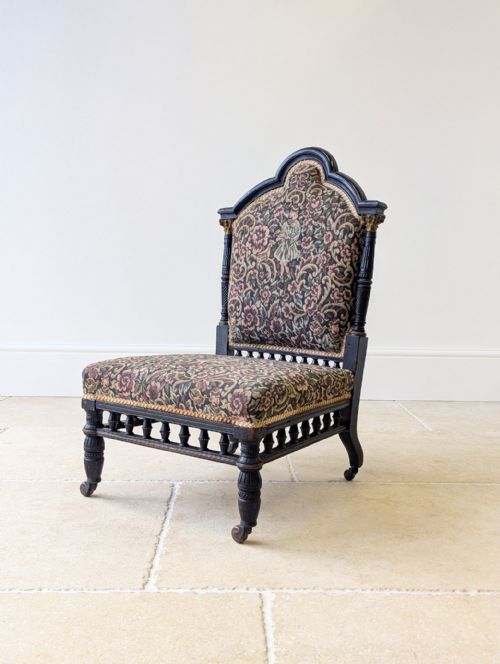
A carved ebonised bedroom seat brings dark, dramatic timberwork to private spaces, often taking the form of low salon chairs, slipper chairs, or nursing chairs. These seating options emerge primarily across the Victorian and Regency periods, spanning from the early nineteenth century to the late Victorian era.
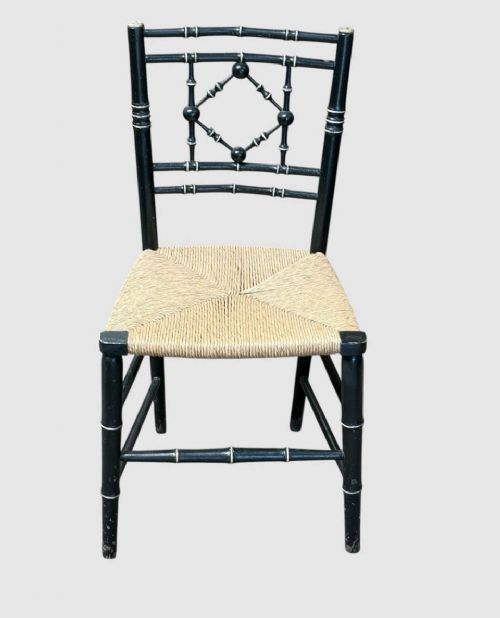
Buyers encounter various seating formats on this page, including side chairs, hall chairs, and accented bedroom forms. Many examples reflect the distinctive tastes of the Aesthetic Movement, whilst others show French nineteenth-century influence or Regency Trafalgar designs.
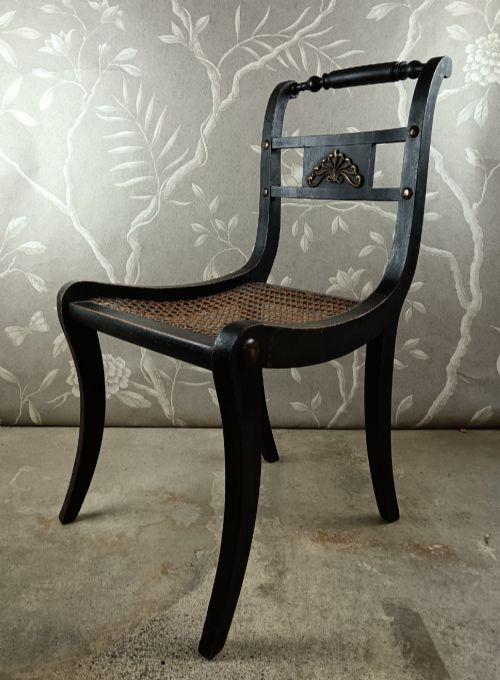
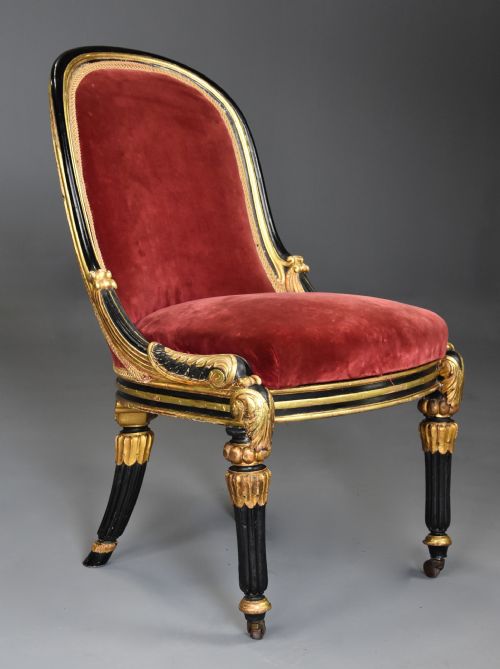
Makers often utilised contrasting details alongside the blacked wood, incorporating original cane seats, rush, or rich upholstery fabrics like velvet. The forms range from compact low seats intended for dressing rooms to grander parlour and side chairs.
How they were made
Craftsmen built these chairs using hardwoods treated with an ebonised finish to imitate costly ebony, frequently highlighting carved details with gold leaf or brass mounts. The structural joinery relies on traditional framing methods suited to the demands of nineteenth-century domestic use.
Seating surfaces often feature woven cane or rush integrated directly into the timber frame, while other frames remain bare or ready for modern upholstery fabric and velvet. Turned components and sabre legs demonstrate the specialised carpentry typical of Regency and Victorian workshops.
Listings feature ebonised wood, brass, fabric, cane, velvet, upholstery fabric, gold leaf, and rush across Victorian and Regency periods.
What varies in quality
Quality in a carved ebonised bedroom seat rests upon the crispness of the timber carving and the depth of the ebonised finish. Superior examples display refined proportions and hand-carved motifs that remain sharp rather than softened by wear or later refinishing.
The choice of secondary materials also separates standard production from finer work, seen in the retention of original canework or the presence of gilding and brass details. Maker attribution, such as connections to known firms, elevates the standing of an individual chair within its period.
Bruce J. Talbert·Maple & Co
The Carved Ebonised Bedroom Seat Glossary
- Ebonised wood
- Timber treated with a dark stain or finish to simulate expensive ebony wood. This technique was especially popular during the nineteenth century for furniture requiring a dramatic, uniform dark surface.
- Cane
- Woven material made from stripped rattan used for lightweight, resilient seat panels. Original cane seating adds considerable interest for collectors.
- Slipper chair
- A low-seated bedroom chair traditionally used by ladies while putting on shoes or garments. These compact seats sit close to the floor.
- Sabre leg
- A concave, outwardly curved chair leg tapering towards the foot, characteristic of Regency design. This form borrows from ancient Greek and Roman furniture archetypes.
Carved Ebonised Bedroom Seat: Frequently Asked Questions
What is a carved ebonised bedroom seat?
A carved ebonised bedroom seat is a nineteenth-century chair finished in black to imitate ebony, featuring carved wooden details intended for private rooms or parlours.
These pieces include low salon chairs, slipper chairs, and nursing chairs that combine decorative timberwork with practical seating.
How do I identify Regency from Victorian chairs?
Regency chairs typically exhibit neoclassical lines, such as sabre legs and restrained classical carving, dating from the early nineteenth century.
Victorian and late Victorian pieces often display heavier proportions, revival styles, or the distinct geometric and stylised motifs of the Aesthetic Movement.
Were these chairs always used in bedrooms?
While many low forms served dressing rooms and bedchambers, similar ebonised chairs functioned as salon, side, and hall seating.
Their decorative dark finishes made them suitable for public entertaining spaces as well as private rooms.
What materials should I expect to find?
The primary structure consists of ebonised wood, sometimes enhanced with gold leaf accents or brass fittings.
Seats frequently feature woven cane, rush, or are prepared for upholstery in fabrics such as velvet.