
Carved Bedside Cupboard
When you seek a carved bedside cupboard, you look at compact bedside storage uniting utility with decorative hand-carving across Victorian, Edwardian and earlier periods.

Carved Bedside Cupboard
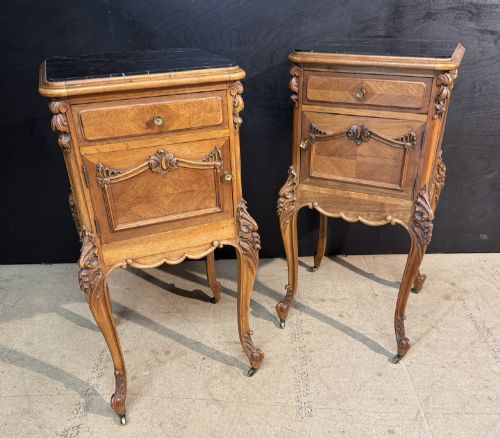
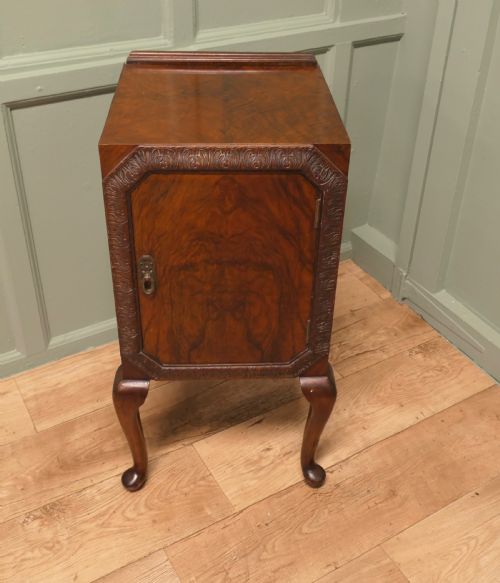
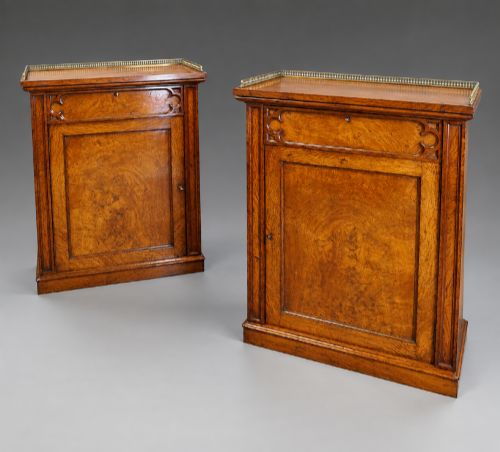
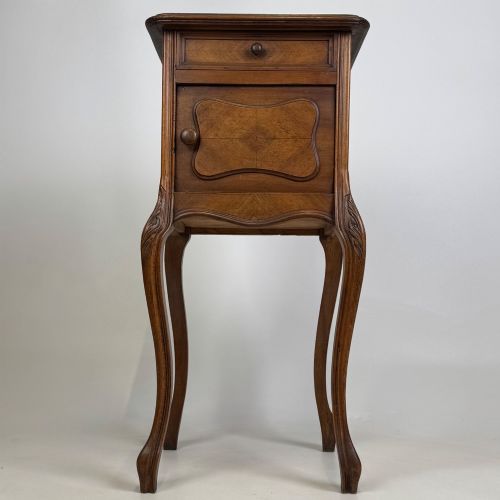
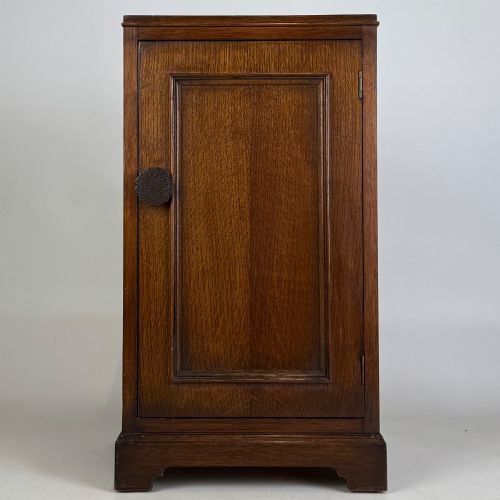
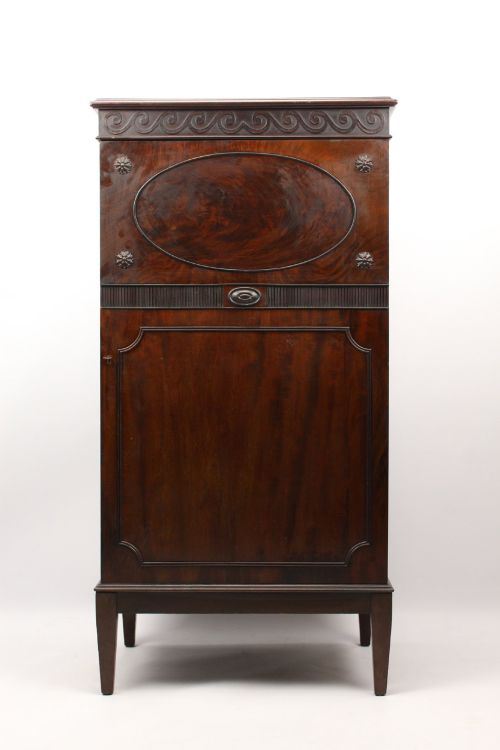
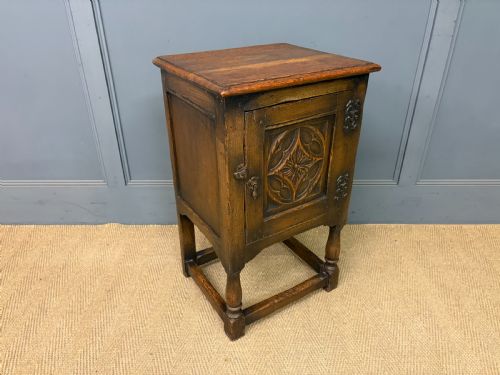
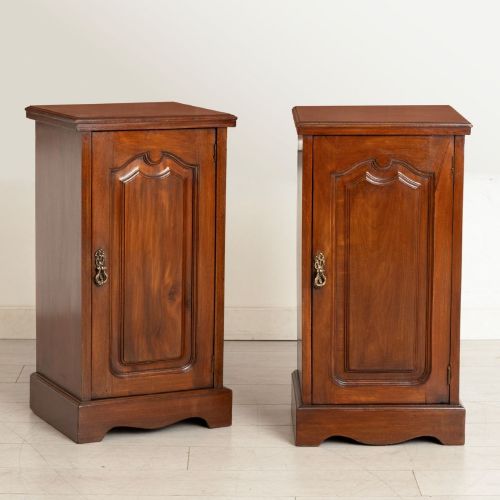
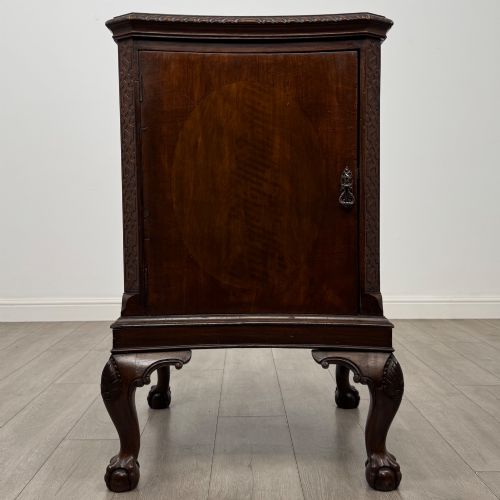
A carved bedside cupboard functions as a small enclosed storage unit placed beside a bed, housing a single cupboard door above or below a drawer. The listings show forms ranging from plain oak or mahogany to ornate French Provincial and Gothic Revival styles.
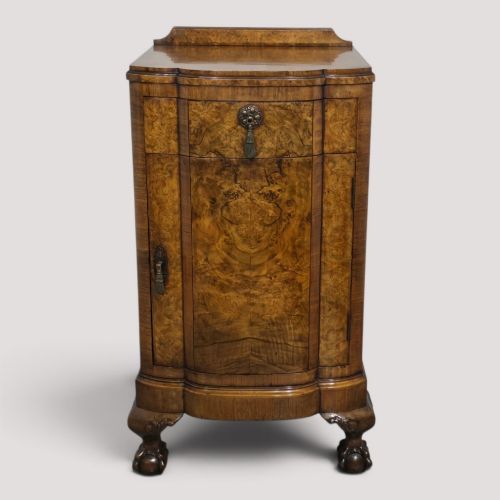
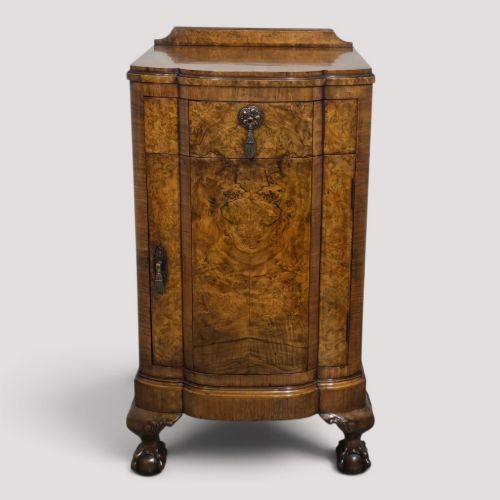
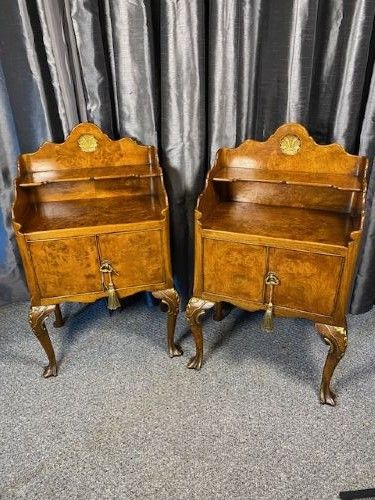
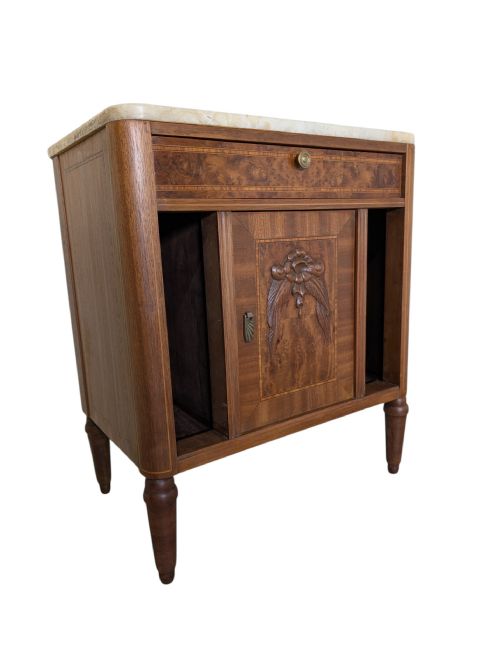
Buyers meet Edwardian and Victorian examples most frequently on this page, alongside twentieth-century iterations in burr walnut and oak. These pieces span pedestal cabinets, pot cupboards and night tables designed to hold chamber pots or personal items.
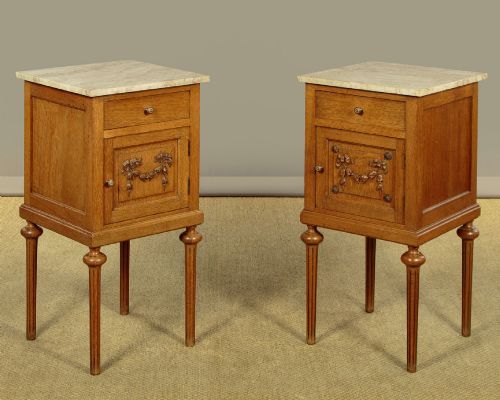
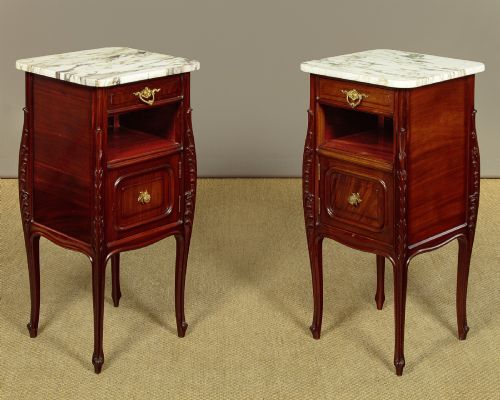
Origins vary from English workshops to French provincial makers and Italian studios. The inventory includes single items as well as matching pairs in various timbers.
How They Were Made
Cabinet makers utilised solid timbers such as oak, mahogany, walnut and burr walnut, often mounting heavy marble tops onto the wooden frames. Metal hardware including brass handles and hinges completed the functional construction.
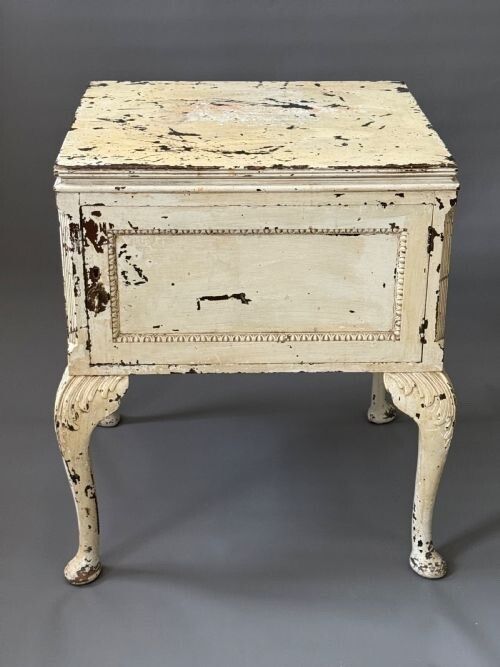
Decoration relied heavily on manual woodworking techniques, producing floral relief carvings, geometric panels and linenfold details. Waxed finishes, paint and parcel-gilt highlights protected the surfaces while accentuating the carved grain.
Listings span the eighteenth century to the 1930s, featuring oak, mahogany, walnut, marble and brass across Gothic Revival, French Provincial and Art Deco styles.
What Varies in Quality
Quality rests on the depth and crispness of the hand-carving, distinguishing fluid floral or Gothic motifs from shallow, mechanical incisions. The choice of timber also dictates the tier, with figured burr walnut and dense solid oak sitting above standard pine.
Construction integrity defines the upper range, seen in tight joinery, matching timber grains across paired pieces, and original heavy marble slabs. Retained brass hardware and intact interior shelving further separate standard utility items from finer chamber furniture.
Denby & Spinks·Maples·Alfred Cox
The Carved Bedside Cupboard Glossary
- Pot cupboard
- A small enclosed bedside cabinet historically designed to conceal a chamber pot behind a single door. These pieces often feature an enclosed compartment above or below a small drawer.
- Pedestal cabinet
- A tall, narrow freestanding cupboard constructed with a vertical orientation. These units maximise floor space while providing deep enclosed storage.
- Burr walnut
- A prized timber veneer sourced from the deformed growths of walnut trees, displaying intricate, swirling grain patterns. Cabinet makers utilised this material on high-end Victorian and Edwardian furniture facades.
- Gothic Revival
- An architectural and decorative style popular during the nineteenth century, mimicking medieval cathedral ornamentation. Pieces in this style feature pointed arches, heavy tracery and robust carved mouldings.
- Parcel-gilt
- A decorative technique applying thin gold leaf selectively to carved highlights or specific architectural details on a painted or wooden surface. This finish draws the eye to specific areas of craftsmanship.
Carved Bedside Cupboard: Frequently Asked Questions
What is a pot cupboard?
A pot cupboard is a small bedside cabinet featuring a single door designed to conceal a chamber pot. These pieces usually include a marble or wooden top alongside a small drawer.
Over time, these cabinets transitioned into general bedside storage for books and personal items while retaining their compact vertical proportions.
Are these cupboards sold as pairs?
Many listings feature matching pairs of bedside cabinets, though single pieces also appear regularly. Pairs often command higher interest for symmetrical bedroom placement.
Makers frequently produced these in matching sets during the Victorian and Edwardian eras to flank double beds.
How do I identify an Edwardian piece?
Edwardian bedside cabinets typically date from the late nineteenth century up to the First World War, displaying lighter timbers like mahogany and inlaid veneers. They often reflect simplified Georgian or Sheraton revival influences.
Construction methods from this era utilise machine assistance alongside hand-finishing, resulting in clean lines and lighter proportions than heavy Victorian oak.
What timber was used most?
Oak and mahogany dominate the older listings, supplemented by walnut, burr walnut and pine. French and Italian examples frequently utilise walnut or fruitwoods.
Cabinet makers selected these hardwoods for their durability and ability to hold intricate hand-carved details without splitting.