




Carved Alabaster Figure
Every carved alabaster figure carries the soft translucency and delicate detail that made these stone sculptures prized across European drawing rooms.

Carved Alabaster Figure
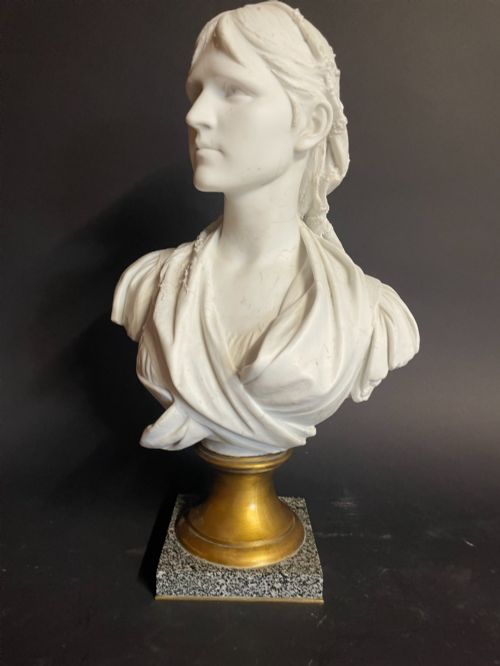
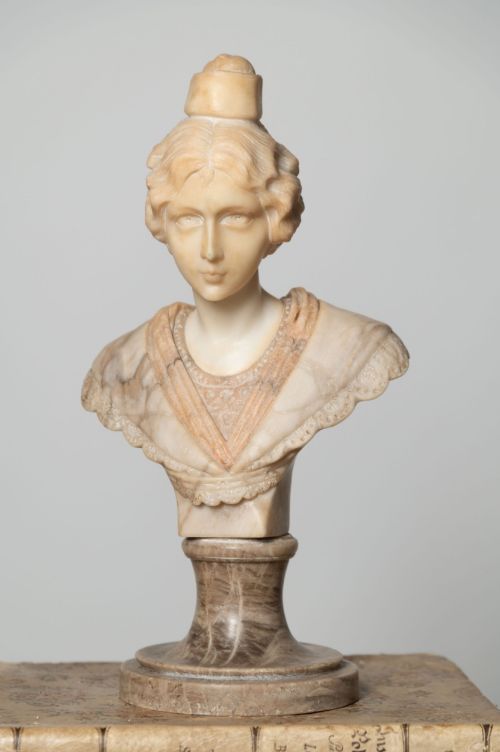
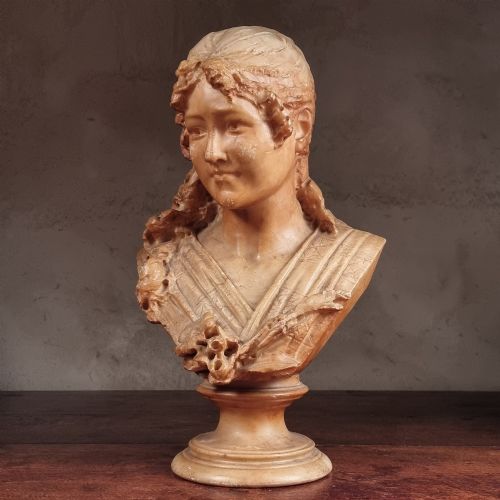
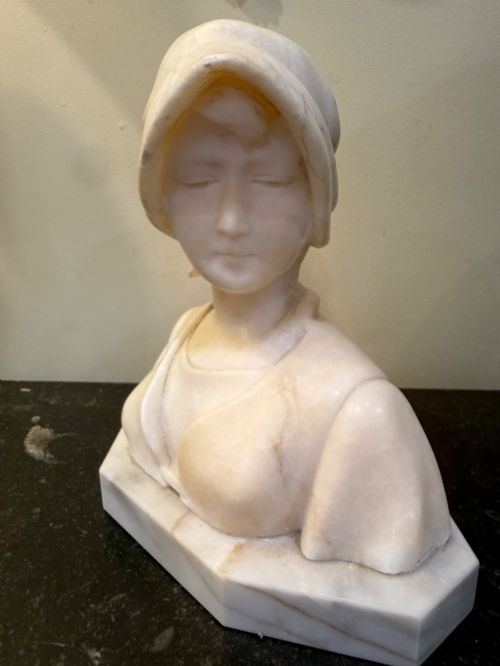
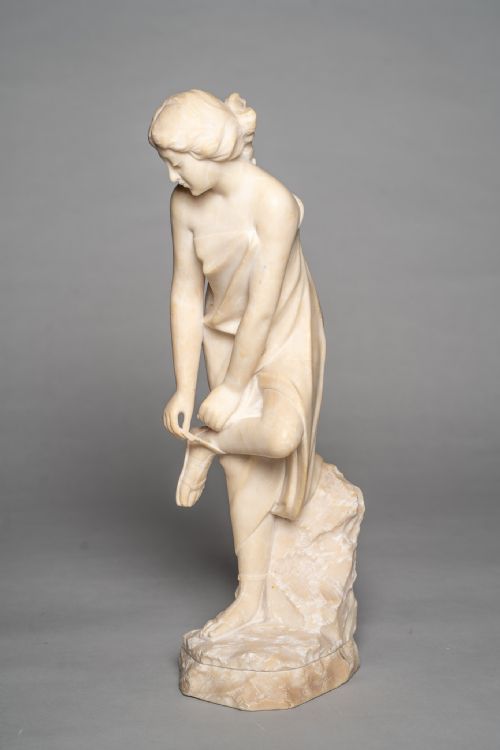
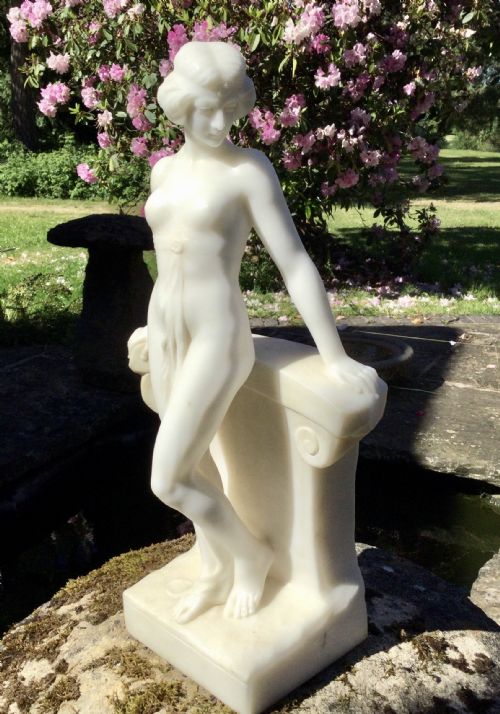
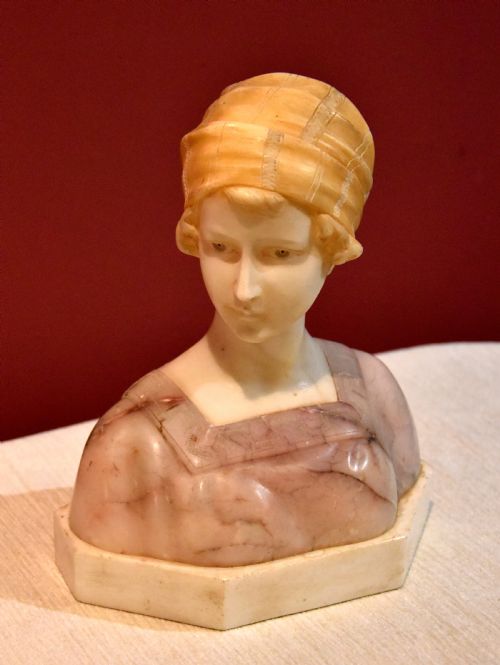
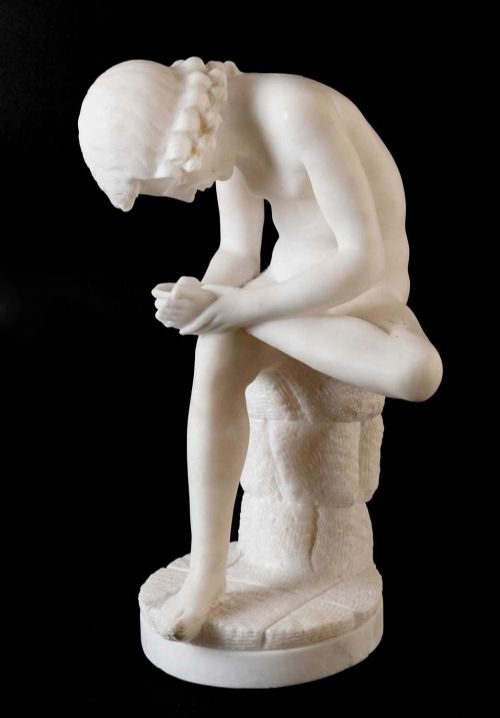
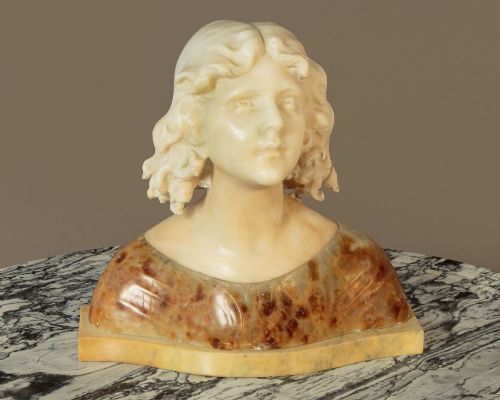
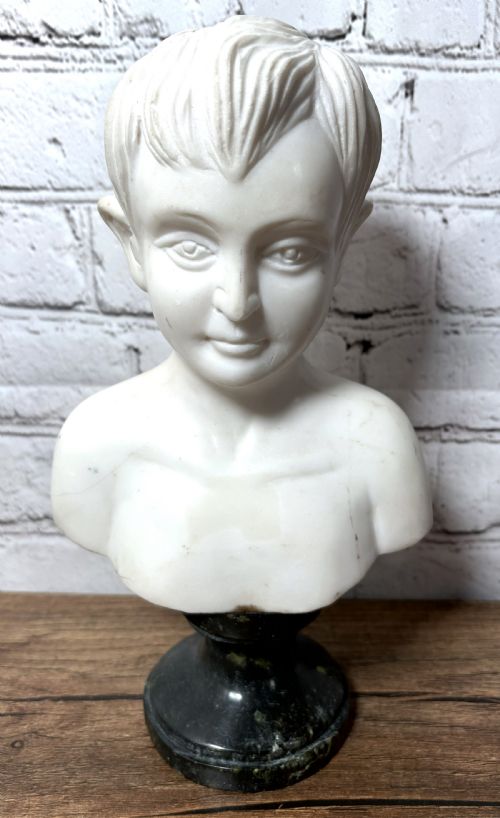
A carved alabaster figure takes many physical forms, most commonly appearing as portrait busts of young women, full-length classical figures, and animals such as dogs or lions. The selection spans distinct aesthetic movements, ranging from Neoclassical Grand Tour souvenirs to flowing Art Nouveau studies and geometric Art Deco designs.
The objects originate primarily from Italian and French workshops active throughout the nineteenth century and into the early twentieth century. Buyers encounter both small cabinet pieces and substantial sculptures supported by marble or metal bases.
How they were made
Sculptors carved these pieces primarily from soft gypsum alabaster and various types of marble, occasionally combining stone with ormolu mounts, brass, or glass elements. Artisans worked the fine-grained material using chisels and rasps to achieve smooth flesh tones and intricate drapery.
Many Italian and French pieces integrated contrasting stone varieties, pairing white or tinted alabaster with dark marble blocks or veined Carrara marble to enhance the visual depth of the subject.
Carved Alabaster Figure Retail Price Guide 2026
Typical asking prices for carved alabaster figure among the pieces listed under this phrase on Sellingantiques today, from the lower quarter to the upper quarter. They describe what is for sale here now, not the wider market.
The documented object types include portrait busts, bookends, decorative bowls, and full-length classical sculptures.
What varies in quality
The choice of stone influences the piece, as highly figured alabaster and intricate two-tone effects require superior raw material selection and expert positioning by the artisan.
A.Gamay·Auguste Henri Carli·Bright And Sons·Fritz Kochendorfer·Antonio Frilli·Pugi·Cipriani·G.V. Vaerenbergh·Gugielmo Pugi
The Carved Alabaster Figure Glossary
- Alabaster
- A soft, fine-grained stone that allows light to penetrate slightly beneath the surface, giving carved figures a lifelike, luminous quality. Sculptors favoured this material for interior decorative items and portrait busts.
- Grand Tour
- A traditional trip through Europe undertaken by upper-class travellers who collected local souvenirs, including miniature marble and alabaster sculptures of antique monuments and figures. These pieces were typically acquired in Italy and France.
- Tazza
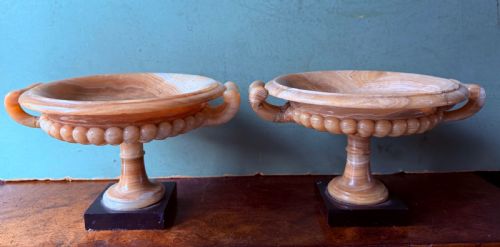
- A shallow ornamental cup or vase mounted on a stem and foot, often carved from alabaster or marble and displayed on decorative bases. They frequently appeared in pairs during the nineteenth century.
- Spinario
- A Hellenistic Roman bronze or marble sculpture depicting a boy pulling a thorn from his foot, which was widely replicated in later alabaster and marble versions. This subject remained a popular nineteenth-century studio study.
- Ormolu
- Gilded bronze used as an accent mount on nineteenth-century stone sculptures and busts. It provides a metallic contrast to the pale alabaster surface.
Carved Alabaster Figure: Frequently Asked Questions
Where were these sculptures made?
The majority of these decorative figures originated in specialised workshops across Italy and France, particularly during the nineteenth and early twentieth centuries. Italian carvers in centres like Florence and Volterra produced many of the portrait busts and Grand Tour souvenirs.
French studios also generated significant quantities of figurative sculpture, often incorporating local aesthetic preferences such as Art Nouveau and Art Deco styling into the traditional stone medium.
How can I tell the period?
Stylistic markers offer the clearest indication of date, aligning closely with Neoclassical, Victorian, Art Nouveau, and Art Deco movements. Hairdos, costume details, and the presence of artist signatures or foundry marks help narrow down the production decade.
The base material and mounting style also provide clues, as nineteenth-century Grand Tour pieces often sit on simple black marble blocks while later twentieth-century works adopt geometric pedestals.
Are these figures fragile?
The gypsum composition of alabaster makes it softer than marble, rendering protruding elements like fingers, noses, and drapery edges vulnerable to chipping upon impact. Even minor bumps can cause noticeable damage to fine carving details.
Displaying these pieces away from high-traffic zones and unstable surfaces protects them from accidental knocks. Careful handling during relocation is essential for preservation.