

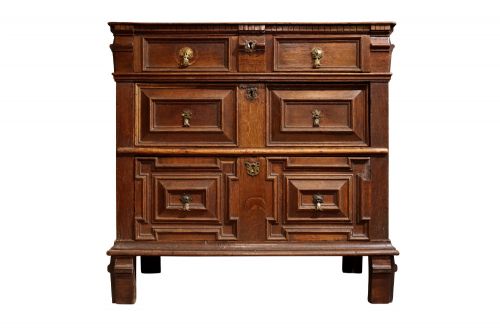


Carolean Oak Chest Drawers
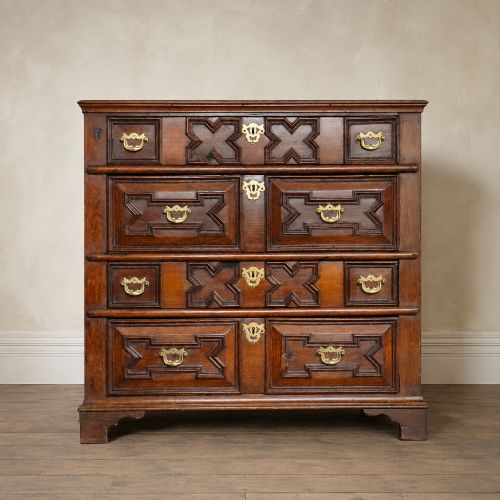
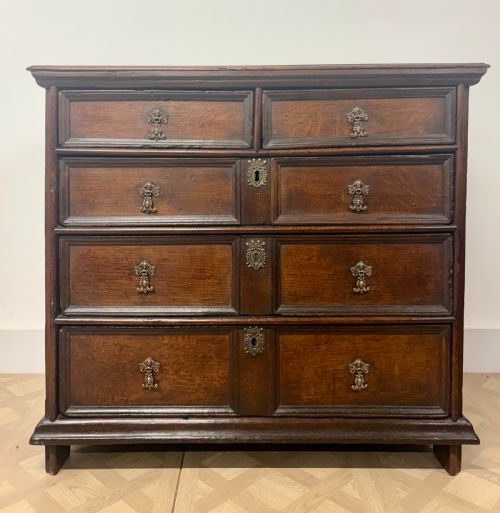
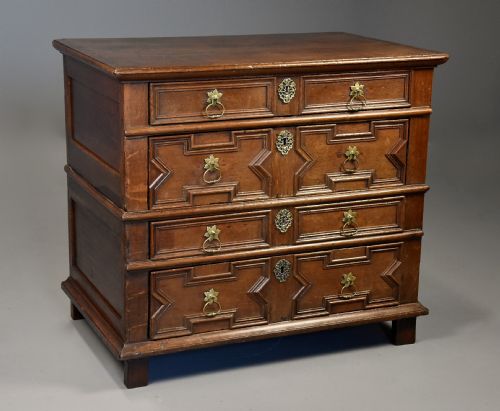
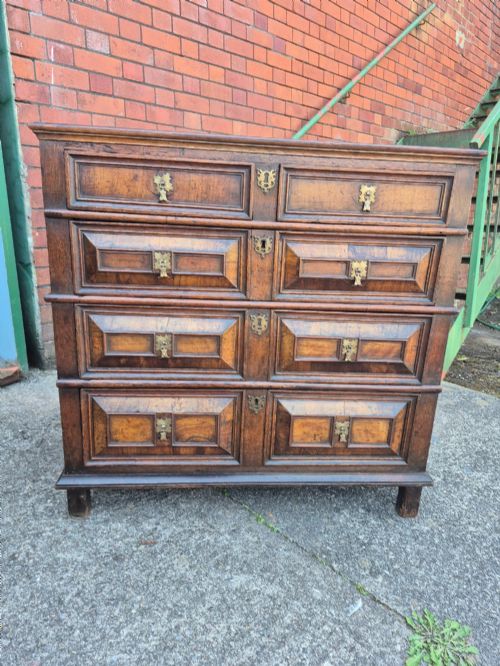
These carolean oak chest drawers bring seventeenth-century joinery into a modern interior through sturdy timber and geometric drawer fronts.
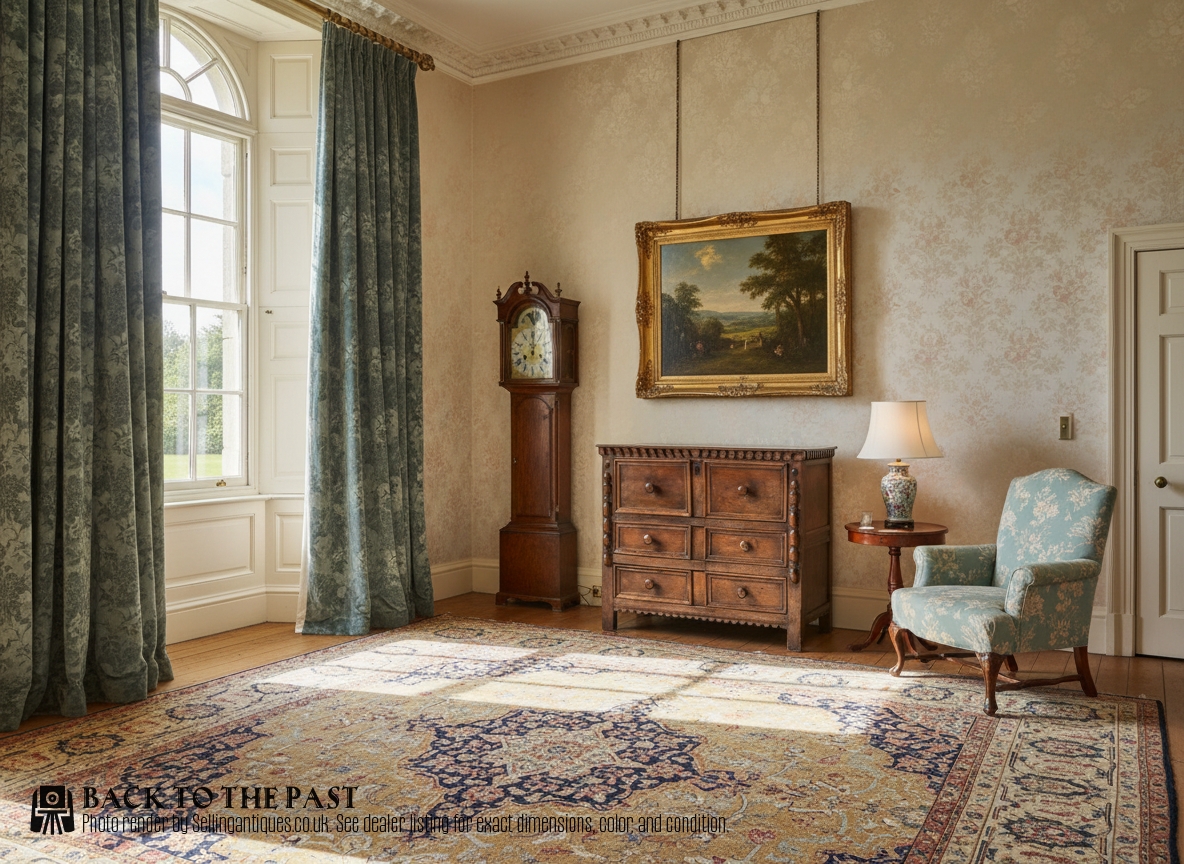
Carolean Oak Chest Drawers
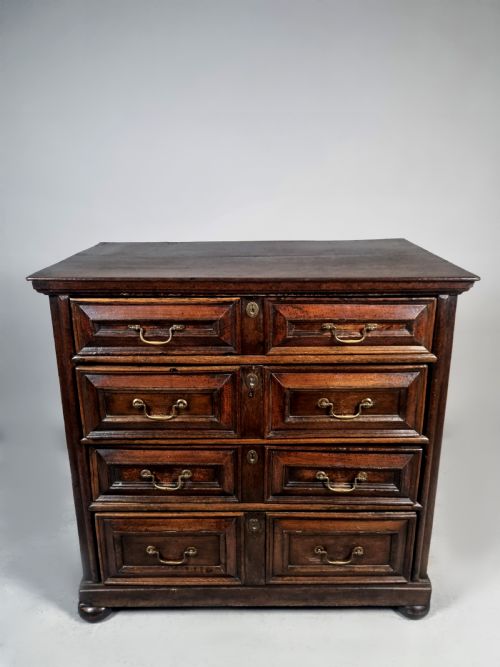
When searching for carolean oak chest drawers, collectors encounter substantial seventeenth-century pieces built during the reigns of Charles the Second. Most examples on this page date from the late seventeenth century, often showing the sturdy proportions typical of the period.
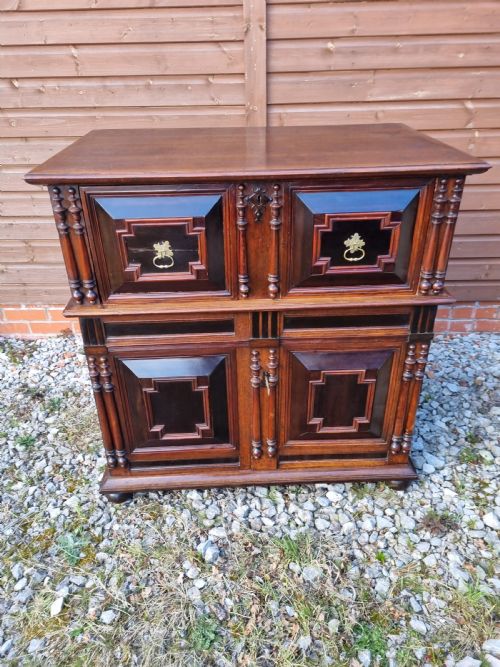
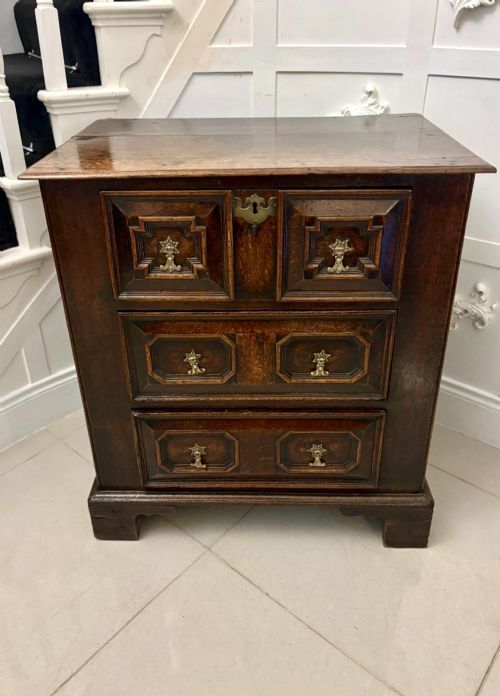
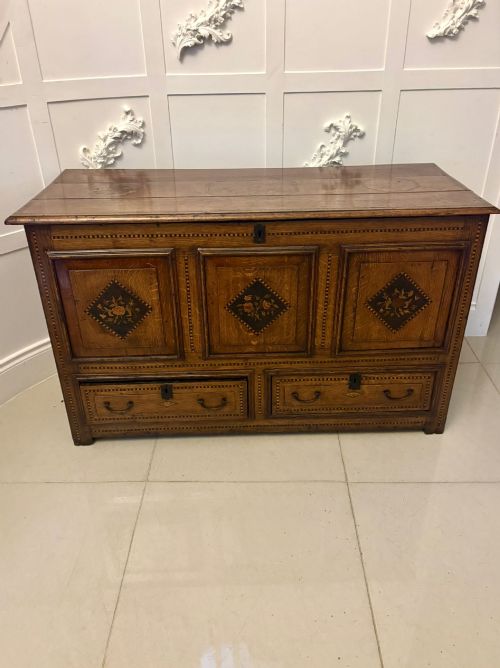
The core form is typically a chest of drawers or a two-part chest, alongside occasional mule chests from the same era. These pieces combine utilitarian storage with decorative fronts, often displaying geometric mouldings across the drawer faces.
Origins span English workshops of the seventeen-hundreds, utilising native timber alongside imported decorative elements. Buyers meet pieces reflecting Jacobean and William and Mary design vocabularies alongside straightforward Carolean joinery.
Materials and construction methods
Makers relied primarily on solid oak for the structural carcase and drawer frames, chosen for its strength and availability. Secondary woods and decorative veneers such as walnut, fruitwood, and snakewood added contrast to the primary timber.
Surfaces frequently showcase geometric moulding built up from planted wooden strips, alongside intricate marquetry inlay. Brass drop handles and iron hardware secure the drawers and doors, mounted directly onto the timber.
Carolean Oak Chest Drawers Retail Price Guide 2026
Typical asking prices for carolean oak chest drawers among the pieces listed under this phrase on Sellingantiques today, from the lower quarter to the upper quarter. They describe what is for sale here now, not the wider market.
Listings feature seventeenth-century and eighteenth-century pieces utilising oak, walnut, fruitwood, snakewood, brass, and iron.
Assessing quality in seventeenth-century furniture
Quality rests in the crispness of the geometric mouldings and the complexity of the wood selection on the drawer fronts. Finer examples integrate contrasting veneers like oyster-cut walnut or fruitwood with precise alignment.
The integrity of the timber surface and the presence of a natural faded patina distinguish superior survivals from heavily restored items. Original brass and iron hardware further elevates the standing of a piece.
The Carolean Oak Chest Drawers Glossary
- Carolean
- The period spanning the reign of Charles the Second, noted for rich decoration and baroque influences in English furniture. It follows the Jacobean era and precedes the William and Mary style.
- Geometric moulding
- Raised wooden patterns applied to drawer fronts in rectilinear or octagonal designs. This technique defined late seventeenth-century cabinet making.
- Oyster veneer
- Thin circular slices cut across small branches to create concentric ring patterns on furniture surfaces. Craftsmen used walnut and other timbers for this decorative effect.
- Mule chest
- A storage chest featuring one or more drawers at the base beneath a hinged lid compartment. These hybrid pieces bridge the gap between traditional coffers and modern chests of drawers.
- Patina
- The surface sheen and colour developed by timber through age, handling, and light exposure over centuries. A good surface shows depth without modern chemical interference.
Carolean Oak Chest Drawers: Frequently Asked Questions
How do I date a carolean chest?
Dating relies on construction methods, timber choice, and decorative details like geometric mouldings or oyster veneers. Seventeenth-century pieces typically feature hand-cut joints and native oak frames.
Hardware placement and the presence of original fixings also help determine whether a piece belongs to the Carolean period or later revivals.
Where should I place an oak chest?
These robust chests suit hallways, living rooms, or bedrooms where their deep drawers provide practical storage. Keep them away from direct heat sources and strong sunlight to protect the aged timber.
Allowing sufficient space around the piece ensures the geometric fronts and moulded details remain visible focal points in the room.
Are these chests made of solid oak?
The main structural carcases and drawer linings are built from solid oak, which provides the necessary strength for daily use. Decorative elements often incorporate veneers of walnut, fruitwood, or snakewood.
This combination of structural oak and decorative surface woods was standard practice for high-status cabinet makers of the seventeenth century.
What is a two part chest?
A two-part chest consists of an upper and a lower section stacked together to form a tall storage unit. This construction made transportation easier in seventeenth-century households.
Such pieces often display matching geometric mouldings across both sections, maintaining a unified facade despite the split carcase.