



Campana Porcelain Vase
A campana porcelain vase brings classical urn shapes into the room, offering an enduring centrepiece shaped by Georgian and Victorian hands.
Campana Porcelain Vase
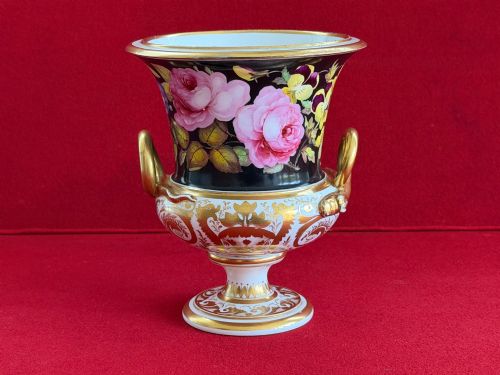
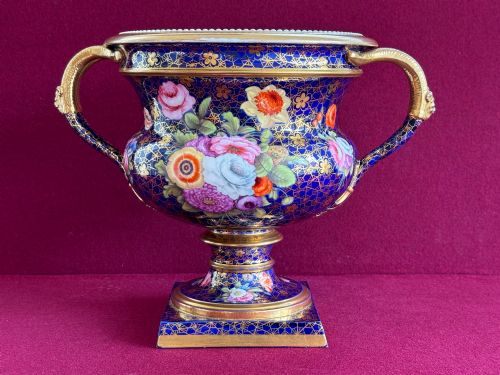
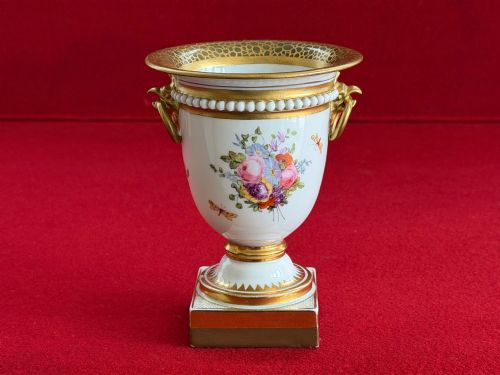
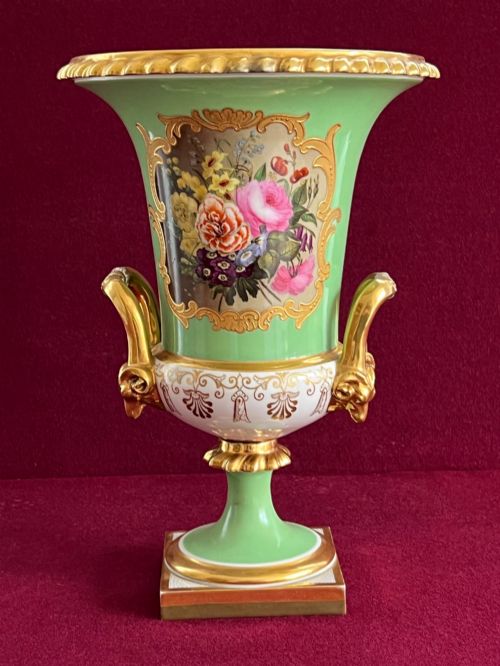
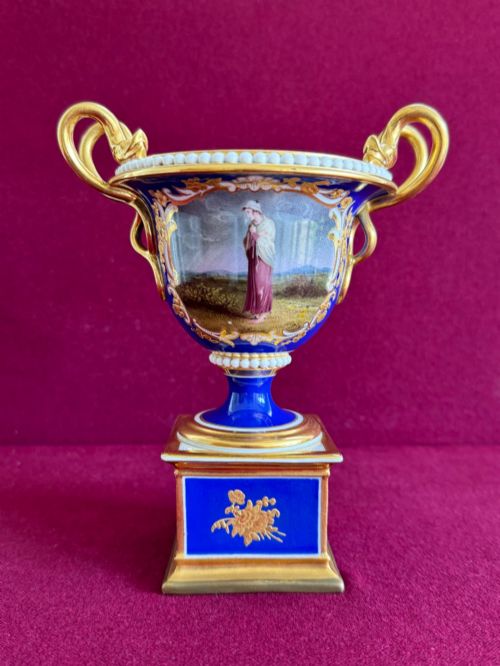
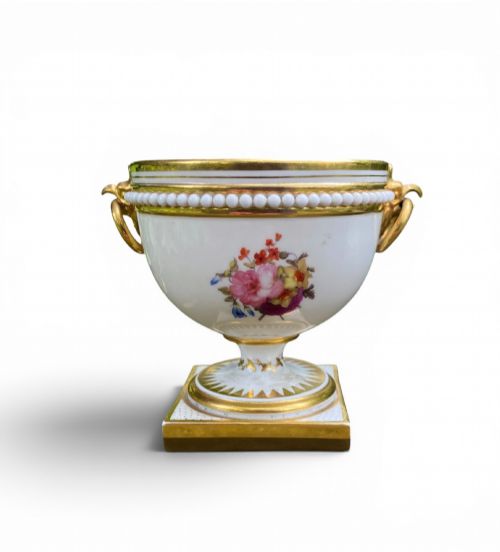
A campana porcelain vase follows the classical inverted bell silhouette derived from ancient Roman pottery. These pieces emerge chiefly across the Georgian, Regency, and Victorian periods, often taking the form of decorative urns or topographical vessels.
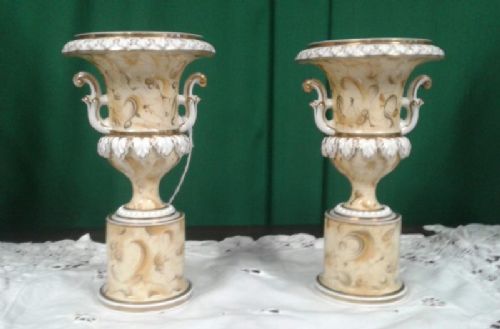
The versions most commonly met on this page include Regency-era Worcester productions and nineteenth-century French and English pairs. Makers such as Flight, Barr and Barr and BFB Worcester dominate the earlier examples, while Wedgwood and Ridgeways represent later output.
Forms range from simple cabinet vases to grand pairs set on pedestals with armorial decoration or white bas-reliefs. Buyers encounter both traditional campana profiles and closely related Medici or Warwick shapes within these listings.
Materials and manufacture
Makers utilised hard-paste porcelain and stoneware, shaping the clay into flared bodies with handles and stepped foot rims. Wedgwood examples employ blue jasperware with applied white bas-reliefs, creating a stark contrast in texture.
Decoration relied heavily on hand-painted enamels, topographical scenes, and extensive gilding with gold leaf. Gilt highlights accentuate the rims, handles, and foot bases of Regency and Victorian pieces.
Campana Porcelain Vase Retail Price Guide 2026
Typical asking prices for campana porcelain vase among the pieces listed under this phrase on Sellingantiques today, from the lower quarter to the upper quarter. They describe what is for sale here now, not the wider market.
Listings feature four distinct historical periods: Georgian, Regency, 19th Century, and Victorian.
Judging quality in porcelain urns
Quality rests upon the crispness of the porcelain moulding and the precision of the hand-painted details. Top-tier pieces display finely rendered topographical scenes or intricate armorial work executed by skilled hands.
The presence of rich, burnished gold leaf and well-preserved enamel colours elevates a piece above standard factory output. Pairs that remain together with matching pedestals command greater interest than single, mismatched items.
BFB Worcester·Ridgeways·Coalport·Samson·Wedgwood·Flight Barr and Barr·Spode
The Campana Porcelain Vase Glossary
- Campana
- A bell-shaped vessel with a flared rim and foot, originating from ancient Roman bronze and marble prototypes. This shape defines the classic urn silhouette found in Georgian and Victorian ceramics.
- Jasperware
- A type of unglazed vitreous stoneware developed by Wedgwood, usually featuring a coloured background with contrasting white applied reliefs. It provides a matte finish distinct from glossy porcelain.
- Gilding
- The application of gold leaf or powdered gold to the surface of porcelain to highlight rims, handles, and decorative borders. This technique adds metallic brilliance to the ceramic body.
- Bas-relief
- A sculptural technique where figures or ornaments project only slightly from the flat background. On these vases, white ceramic reliefs stand out sharply against blue jasperware bodies.
- Armorial
- Decorated with coats of arms, crests, or heraldic shields. Such ornamentation often marks bespoke commissions for landed families during the Georgian and Regency eras.
Campana Porcelain Vase: Frequently Asked Questions
What is a campana vase?
A campana vase is an ornamental vessel shaped like an inverted bell, mounted on a pedestal foot with distinct flared rims. These pieces draw directly from classical antiquity and were used primarily as decorative display items in grand interiors.
Potteries across Britain and France adopted the form during the Georgian and Victorian periods, rendering them in porcelain, jasperware, and stoneware for wealthy patrons.
How were these urns displayed?
In period interiors, these urns stood on mantelpieces, console tables, or dedicated pedestals as focal points of decorative schemes. Pairs were frequently arranged symmetrically to frame mirrors or fireplace openings.
Their robust porcelain and stoneware construction allowed them to remain functional as decorative centerpieces without needing to hold cut flowers.
How do I tell Regency from Victorian pieces?
Regency vessels often feature hand-painted topographical scenes and fine gilding associated with factories like Worcester and Spode. They exhibit classical restraint in their Neoclassical painting and clean profiles.
Victorian examples frequently display bolder relief work, such as Wedgwood jasperware, or heavier polychrome enamels and armorial motifs. The paste and the style of the hand-painted reserves shift perceptibly between the eras.
Are these vases functional?
While technically capable of holding water, these urns served primarily as decorative objects of status and artistic display. Their intricate gilding, delicate enamel work, and applied bas-reliefs mean they are treated today as cabinet pieces rather than utility items.
Handling them requires care to protect the gold leaf and painted surfaces from unnecessary wear.