


Cabriole Leg Vitrine Table
A cabriole leg vitrine table marries display with timberwork, offering a glass-topped stage for curiosities that rests upon curving supports.
Cabriole Leg Vitrine Table
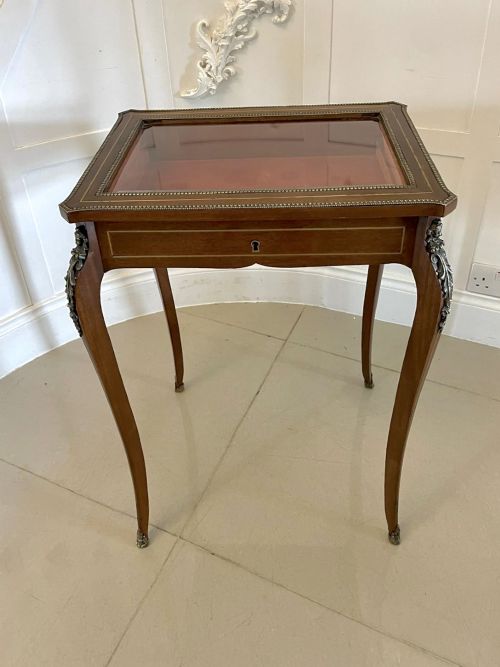
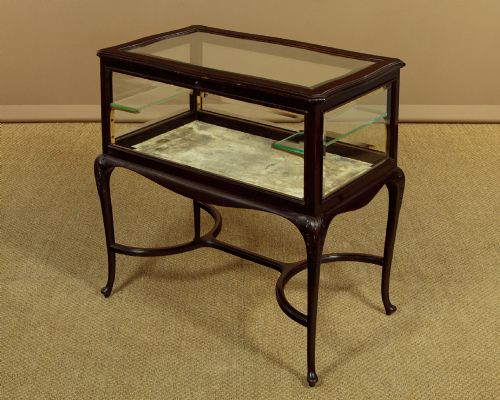
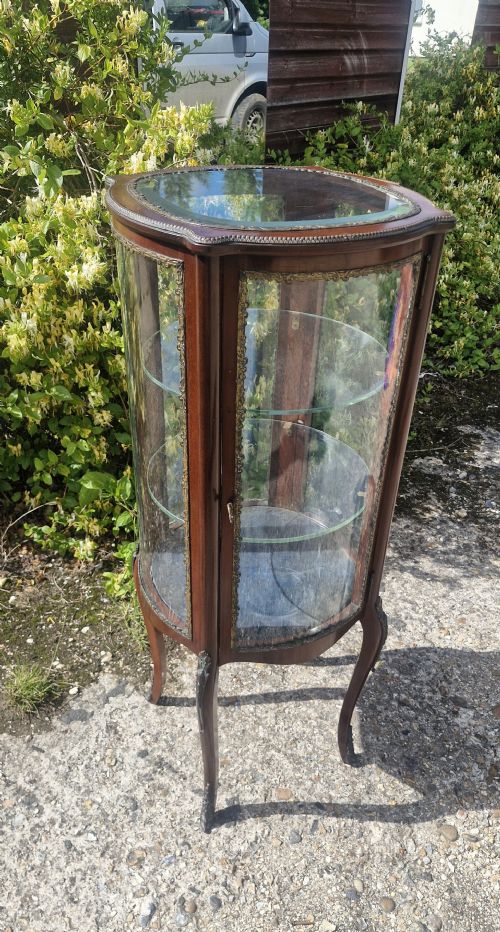
A cabriole leg vitrine table takes the form of a display table or bijouterie case raised on sinuous supports, designed to showcase small treasures beneath a glazed lid. These pieces emerge in various iterations across the Victorian, Edwardian, and early twentieth century eras.
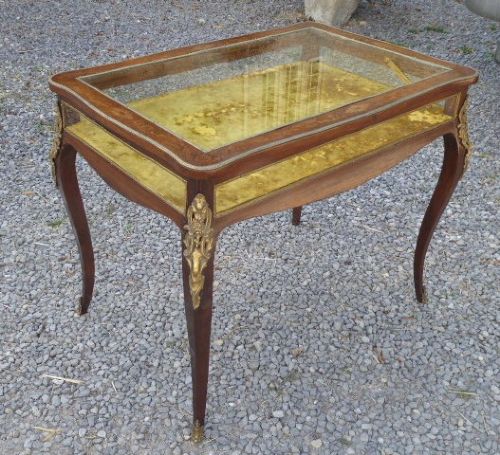
The versions most commonly met on this page are mahogany or rosewood display tables from the Edwardian period and the late nineteenth century. Alongside these, continental French models appear with gilt-bronze or ormolu mounts and serpentine or heart-shaped outlines.
Makers of the period utilised styles ranging from French Rococo Revival and Louis XV Revival to Queen Anne influence. The primary object types span bijouterie tables, display cabinets, and occasional whatnot hybrids.
How they were made
Cabinet makers constructed these tables using dense timbers such as mahogany, rosewood, and kingwood, frequently applying intricate marquetry or wood veneers. Glass panels formed the display surfaces, held within glazed frames and occasionally lined with velvet or fabric interior bases.
Metalwork played a structural and decorative role, with brass, ormolu, and gilt-bronze mounts fixed to corners, legs, and hinges. Ormolu details and gilt metal mounts reflect the French Revival influences popular during the nineteenth century.
A couple of vintage display tables carry later sign-written details advertising Breitling watches, hinting at past commercial shop windows.
What varies in quality
The standard of timber selection and veneer work sets apart the finer examples, particularly where kingwood, rosewood, or detailed marquetry inlay is employed. Crispness in the casting and gilding of ormolu or gilt-bronze mounts similarly elevates a piece above standard production.
Proportion and the fluidity of the curving supports dictate the visual balance of the table. Examples with refined serpentine shaping, original glass, and integrated velvet linings demonstrate superior craftsmanship.
The Cabriole Leg Vitrine Table Glossary
- Cabriole leg
- A furniture support that curves outward at the knee and tapers inward to an ankle, mimicking an animal limb. This form appears frequently in revival furniture styles.
- Vitrine
- A glass-fronted or glass-topped cabinet designed for displaying objects of curiosity. These enclosures protect delicate items from dust while permitting all-around visibility.
- Bijouterie table
- A specialised display table with a glazed compartment beneath the top for holding small valuables or jewellery. They typically feature hinged or lift-off glass lids.
- Ormolu
- Gilded bronze applied to furniture mounts and decorative hardware. The technique involves treating metal with a mercury and gold amalgam.
- Marquetry
- Decorative veneer work arranged in pictorial or geometric patterns using various coloured woods. It requires precise cutting and fitting of thin timber sections.
Cabriole Leg Vitrine Table: Frequently Asked Questions
What is a cabriole leg vitrine table used for?
These tables served primarily to display small decorative items, medals, or jewellery while keeping them secure beneath glass. The glazed top allowed drawing-room guests to inspect personal collections without handling individual pieces.
Today, they function in domestic settings to exhibit similar small collections, blending surface display space with enclosed storage.
How do I date a glass display table?
Dating relies on timber choices, construction methods, and stylistic cues such as revival motifs. Pieces from the mid nineteenth century often utilise rosewood and heavy ormolu mounts, whereas Edwardian examples frequently feature inlaid mahogany.
Examining the internal fixings, timber shrinkage, and secondary woods provides further clues to the manufacturing decade.
Are these tables French or English?
The listings include both English workshops and continental French makers. French pieces often display ormolu mounts, kingwood veneers, and Louis XV Revival or Rococo forms.
English variants frequently employ solid mahogany or rosewood with subtler inlay, aligning with Edwardian or Victorian domestic tastes.
What woods are typical for these cabinets?
Mahogany is the most frequent timber found across the listings, appearing in both Edwardian and Victorian pieces. Rosewood and kingwood also feature prominently, particularly on pieces with French stylistic influences.
Exotic veneers and marquetry inlay frequently embellish the primary structural timbers.