




Inlaid Wood Vitrine Table
These inlaid wood vitrine table pieces combine glazed display cases with decorative marquetry, offering a clever way to exhibit small treasures in a drawing room.
Inlaid Wood Vitrine Table
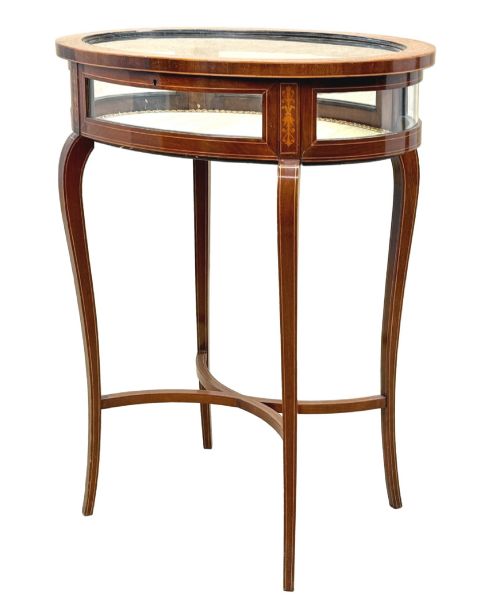
An inlaid wood vitrine table serves as both a functional piece of furniture and a personal museum case, designed to hold curiosities, jewellery and small collections beneath a glazed top. When searching for an inlaid wood vitrine table, a buyer typically encounters sophisticated display surfaces supported by slender legs and framed with fine wood veneers.
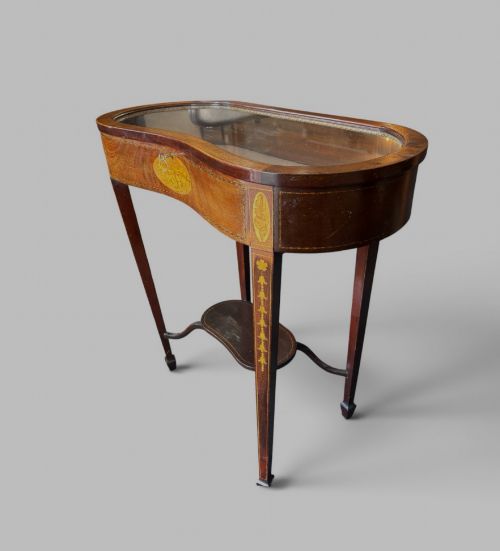
The pieces appearing on this page span several distinct periods, with Edwardian and Victorian examples forming the majority of the selection. These take various physical forms, ranging from oval and octagonal display tables to kidney-shaped surfaces and occasional side tables.
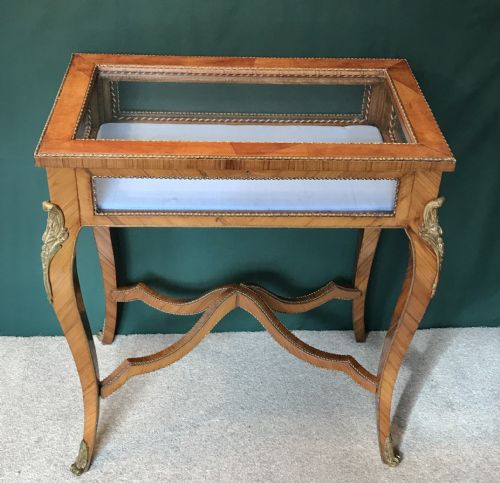
Makers and workshops of the nineteenth and early twentieth centuries produced these items in revival styles such as Sheraton Revival and French Louis XV Revival. A buyer is most likely to meet mahogany and satinwood structures accented with delicate marquetry and brass mounts.
How they were made
Cabinet makers constructed the foundational carcass using timber such as mahogany, walnut or satinwood, often applying contrasting veneers to create detailed marquetry panels. The characteristic display section utilises fitted glass panels set into hinged or lifting frames to protect the contents while permitting all-round visibility.
Surface ornamentation relies heavily on precise wood inlay, combining lighter and darker timbers to form geometric motifs, floral swags or classical urns. Brass details, such as decorative mouldings, hinges and key escutchets, complete the construction alongside fitted interiors lined in velvet or fabric.
Some tables hide their treasures so well guests might mistake them for ordinary desks until the hinged glass reveals a velvet bed.
What varies in quality
The refinement of the marquetry and the choice of secondary timbers distinguish standard production from superior work. Crispness in the brass mounts and the smooth operation of the glazed compartment indicate the original maker's investment of time and skill.
Proportion and the integration of the display well into the overall table design separate ordinary pieces from exceptional ones. Well-executed pieces display balanced grain patterns across the satinwood or mahogany surfaces without jarring transitions in the timber.
Edwards and Roberts
The Inlaid Wood Vitrine Table Glossary
- Bijouterie table
- A small display table with a glazed compartment specifically designed for showing jewellery, medals and small ornaments. These pieces typically feature hinged lids.
- Marquetry
- Decorative patterns formed by fitting together thin veneers of various coloured woods, applied to the main carcass of the furniture.
- Vitrine
- A glass-fronted or glass-topped cabinet or display case intended for protecting and exhibiting delicate objects.
- Satinwood
- A lustrous, hard timber of a yellowish colour, frequently used as a veneer in fine cabinet work during the eighteenth and nineteenth centuries.
- Kidney shape
- A curved, asymmetrical furniture top resembling the outline of a kidney, popular in writing desks and display tables of the Edwardian era.
Inlaid Wood Vitrine Table: Frequently Asked Questions
What were inlaid wood vitrine tables used for?
These tables served as fashionable drawing-room furniture where hosts could display their collection of small valuables, fans, or portrait miniatures to visitors.
The glass top kept delicate objects free from dust while allowing guests to admire them from a standing position without handling the items directly.
How do I care for the fabric lining?
The velvet or fabric interiors lining the display well benefit from gentle vacuuming with a soft brush attachment to remove accumulated dust.
Keep the table away from direct sunlight to prevent the lining materials and the surrounding wood veneers from fading over time.
Are these tables sturdy enough for daily use?
While structurally sound, the slender legs and decorative frames mean these pieces suit lighter duties as display surfaces rather than heavy everyday use.
Placing heavy lamps or large objects on the glazed top risks damaging the hinges and straining the delicate framework.
How do I distinguish Edwardian from Victorian examples?
Victorian pieces tend to use darker timbers such as solid mahogany and feature heavier proportions with deeper carving or bolder brass mounts.
Edwardian examples often embrace lighter satinwood veneers, marquetry inspired by the Sheraton style, and much more slender, refined silhouettes.