



Brass Mounted Display Table
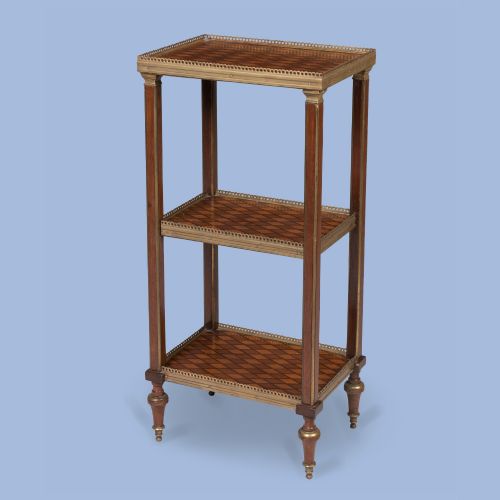
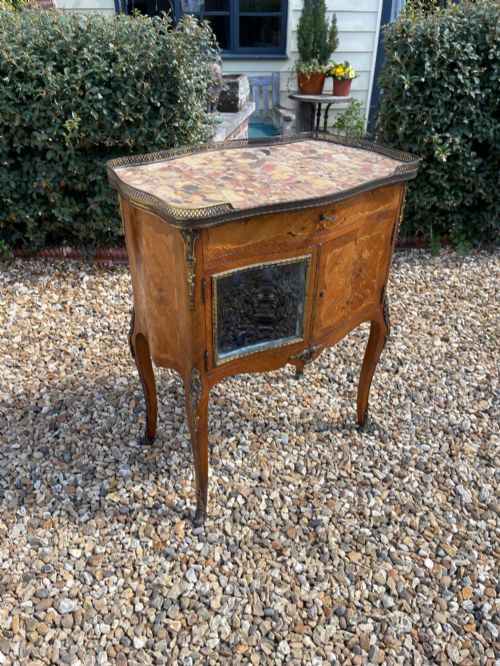
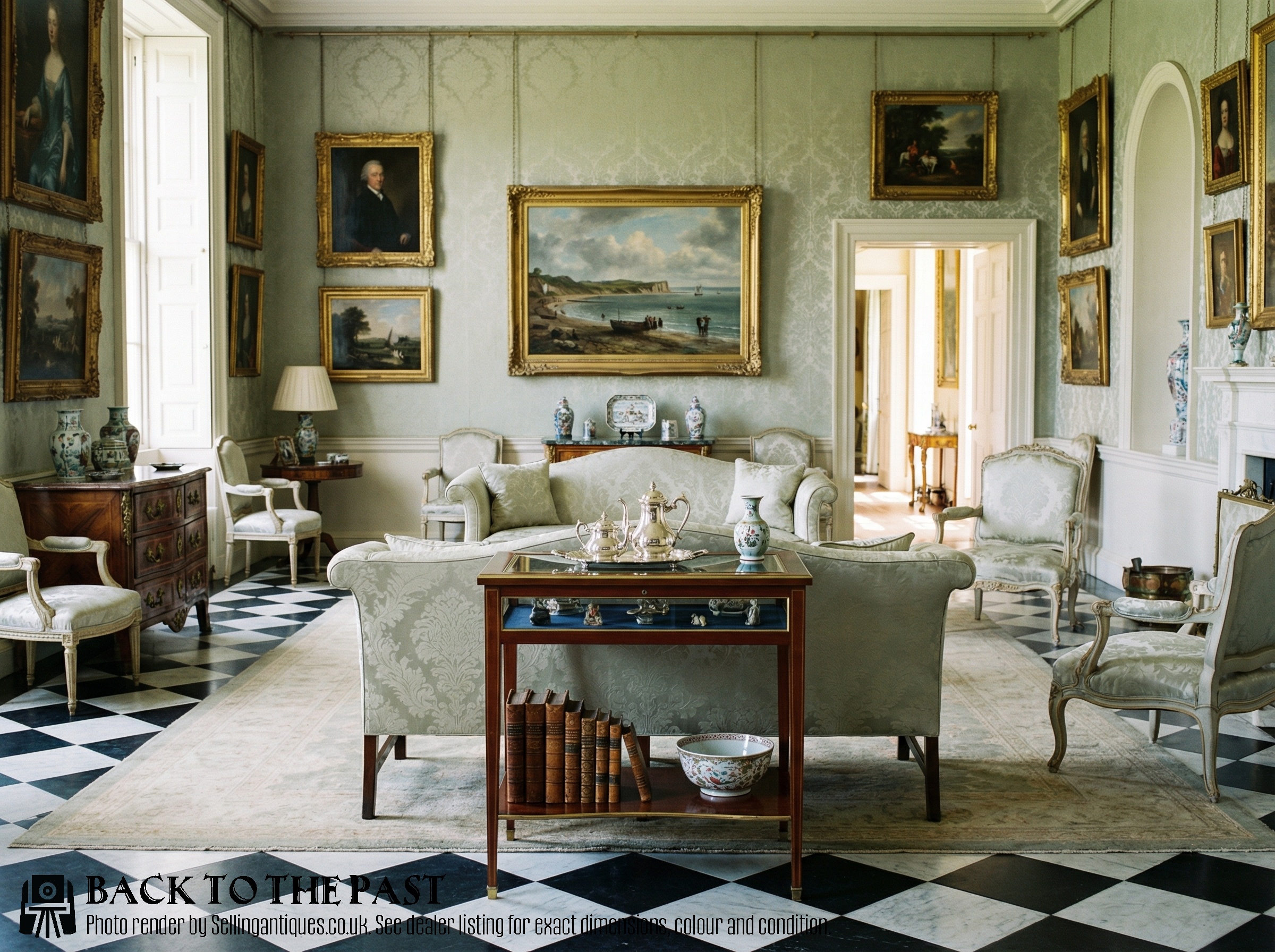
A brass mounted display table brings objects of curiosity into view through glass and polished timber.
Brass Mounted Display Table
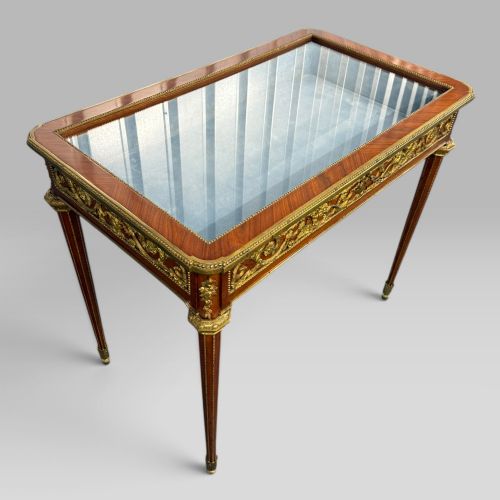
A brass mounted display table combines a glazed compartment for showing small treasures with the sturdy frame of an occasional table or etagere. Buyers exploring this phrase encounter pieces designed primarily for the Victorian and Edwardian drawing room, often drawing inspiration from French styles like Louis XV and Louis XVI.
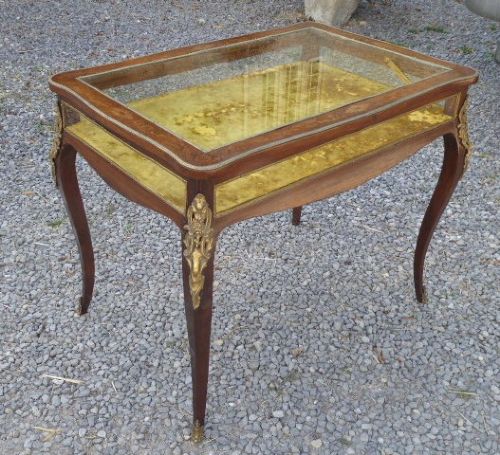
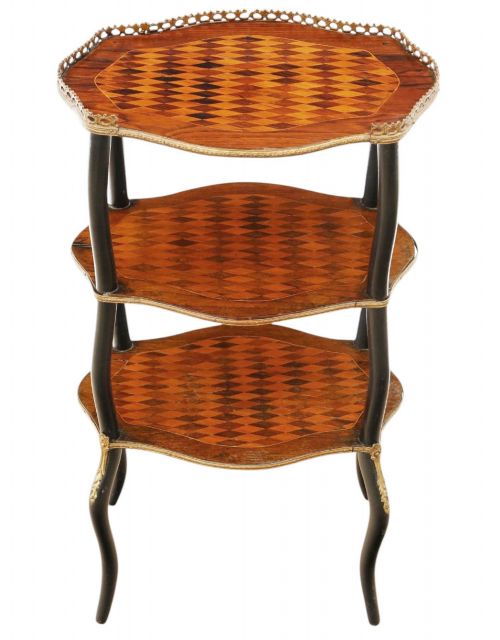
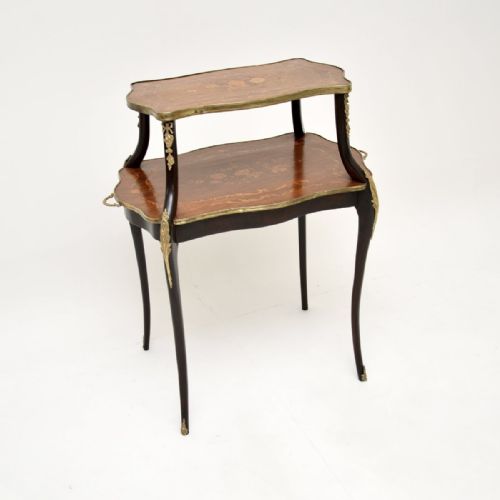
The form appears most frequently as a bijouterie table with a glazed top and hinged lid, though multi-tiered etageres and side cabinets also meet the search. These tables serve to protect precious items while keeping them visible from every angle in a room.
Originating predominantly from nineteenth-century French and English workshops, these furnishings span several decades of revivalist taste. Walnut, mahogany, and exotic veneers provide the foundation for delicate brass mounts and ormolu details.

Materials and construction
Craftsmen built these tables using dense hardwoods such as mahogany, rosewood, kingwood, and walnut as a structural base for intricate marquetry and parquetry veneers. Floral patterns and geometric designs take shape through contrasting timbers laid into the surface.
Cast brass and ormolu mounts frame the glass panels, edge the tabletops, and protect the slender legs. Bevelled glass fits snugly into hinged doors or lift-up lids, supported internally by velvet or fabric linings tailored for jewellery and trinkets.
Brass Mounted Display Table Retail Price Guide 2026
Typical asking prices for brass mounted display table among the pieces listed under this phrase on Sellingantiques today, from the lower quarter to the upper quarter. They describe what is for sale here now, not the wider market.
The listings show a prevalence of nineteenth-century French influence, with mahogany and kingwood dominating the timber selection alongside brass and glass.
What separates the finest examples
Quality rests on the crispness of the bronze or brass casting and the precision of the veneer work across the timber frame. Superior pieces display finely chased ormolu mounts that fit the contours of the wood seamlessly without visible gaps.
The choice of secondary woods and the weight of the glass indicate the standard of production in the workshop. Well-executed tables maintain structural rigidity in their slender legs despite the heavy weight of glass and metal components.
François Linke·Donald Ross
The Brass Mounted Display Table Glossary
- Bijouterie table
- A specialised display table featuring a glazed compartment beneath the surface for showing jewellery, medals, and small collectors items. The hinged lid allows easy access to the velvet-lined interior.
- Ormolu
- Gilded bronze mounts applied to the corners, legs, and edges of furniture. This technique adds metallic highlights and decorative relief to the wooden frame.
- Etagere
- An open tiered piece of furniture designed for displaying ornaments and small objects. Multiple shelves provide graduated space for ornaments.
- Marquetry
- The art of applying pieces of veneer to a structure to form decorative patterns and pictures. Craftsmen use contrasting woods to create detailed floral motifs.
Brass Mounted Display Table: Frequently Asked Questions
How were brass mounted display tables used originally?
These tables occupied the Victorian and Edwardian drawing room as a focal point for social conversation. Guests gathered around them to inspect family heirlooms, imported trinkets, and natural history specimens.
The glass top protected delicate items from dust while offering an uninterrupted view from above. Owners curated changing selections of jewellery, coins, and miniatures inside the velvet-lined compartments.
Where should I place a display table at home?
A display table works well in a sitting room or hallway where natural light highlights the glass top and metallic mounts. Positioning the piece away from direct sunlight protects vulnerable interior fabrics and wooden veneers from fading.
Interior spaces benefit from pairing these tables with traditional seating or placing them beneath a wall mirror. The reflective glass and brass elements catch ambient light throughout the day.
How do I care for the wood and glass?
Maintenance requires soft cloths for dusting the glass panels and polished timber surfaces without abrasive cleaners. Natural beeswax applied sparingly keeps the mahogany or rosewood nourished.
Brass mounts and ormolu details should remain unpolished to preserve their historic patination. Cleaning the interior velvet lining calls for gentle brush attachments on a vacuum.
How can I tell the period of a table?
Dating relies upon examining construction methods, screw types, and timber choices underneath the chassis. Mid-nineteenth-century pieces often display heavier proportions and French revival marquetry.
Later Victorian and Edwardian examples incorporate refined parquetry and ebonised details. Comparing the hardware and locking mechanisms helps narrow down the decade of production.