




Rococo Style Display Table
These rococo style display table pieces bring organic curves and decorative glass tops into the room.
Rococo Style Display Table
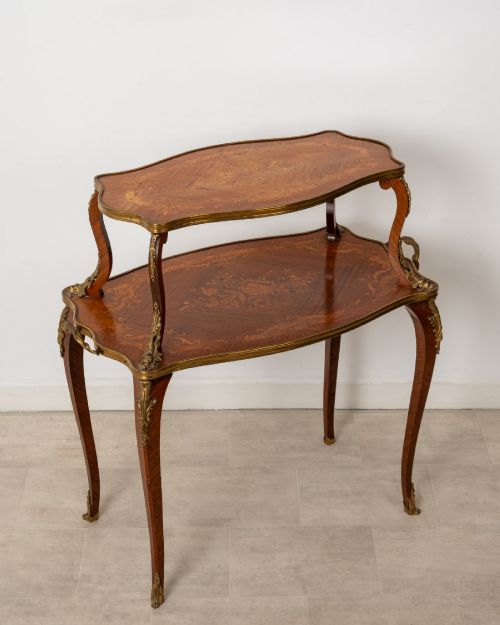
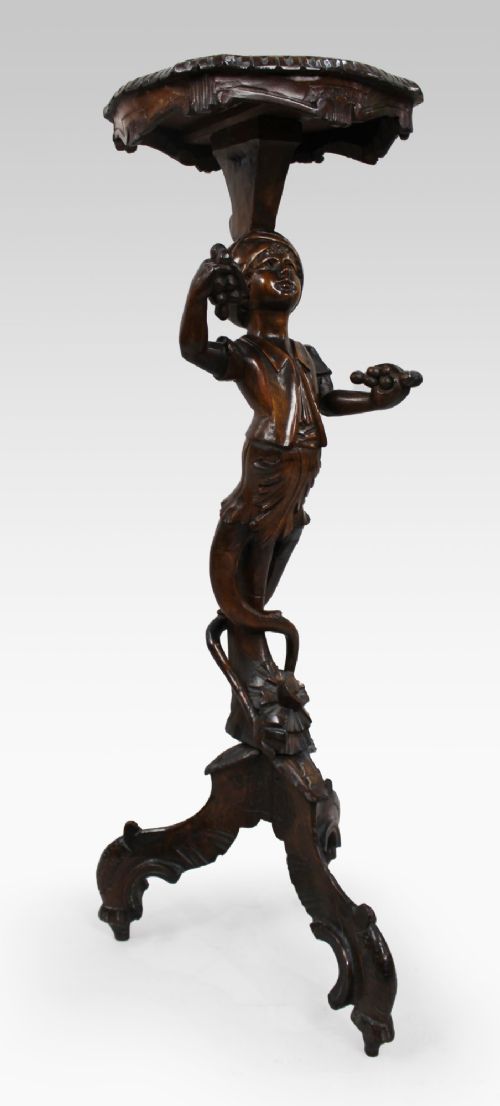
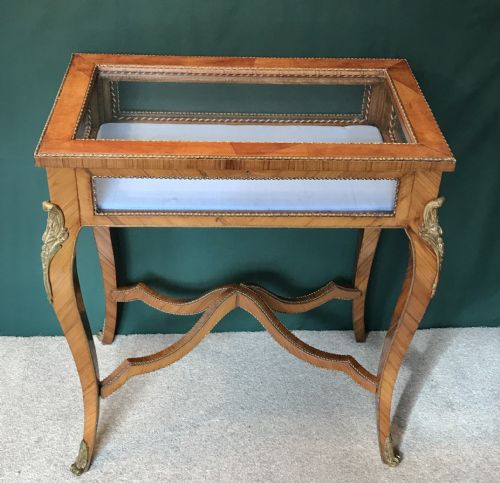
A rococo style display table spans multi-tiered etageres, bijouterie tables with glass panels, and carved pedestals. These items originate across the nineteenth and twentieth centuries, drawing on French and Italian revival designs.
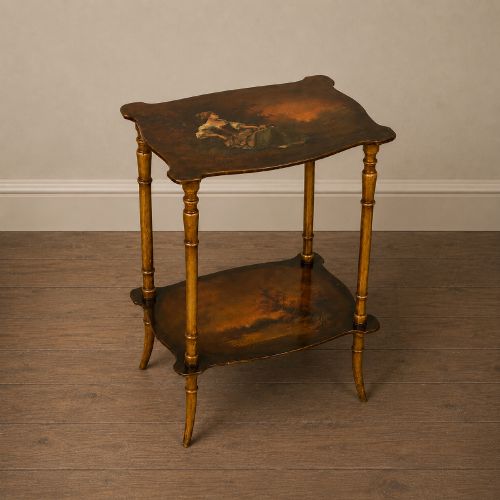
The versions most common here include serpentine-shaped side tables and two-tier étagères inlaid with marquetry. Makers utilise rich timbers and gilt mounts to capture the ornate movement characteristic of the style.
How they were made
Cabinet makers construct these structures from hardwoods such as kingwood, rosewood, and walnut, often applying intricate marquetry inlays. Gilded bronze and ormolu mounts accentuate the flowing contours of the woodwork.
Surface decoration relies on gesso and gold leaf applied to carved frames and pedestals. Brass elements, whether chiseled or cast, provide structural support and ornamental trim.
Tables designed to hold pocket watches and rings still carry the faint, quiet ghost of Victorian collecting habits.
What varies in quality
The distinction between tiers of quality rests in the execution of the carving and the precision of the marquetry inlay. Skilled workshops achieve sharper relief in gilded wood and tighter joints in multi-tier assemblies.
Materials dictate the upper range, where genuine ormolu mounts and heavy marble or glass components replace simpler brass and painted finishes. The depth of historical influence, from Louis XV revival to Venetian baroque, shapes the character of the piece.
Edwards & Roberts
The Rococo Style Display Table Glossary
- Etagere
- A set of open shelves for displaying small objects or ornaments. These tiers are often supported by slender legs and finished with marquetry.
- Bijouterie table
- A display table featuring a glazed compartment designed for showing jewellery and trinkets. The glass top protects the contents while offering a clear view.
- Ormolu
- Gilded bronze applied as mountings on furniture and decorative objects. This technique adds metallic highlights to wood surfaces.
- Marquetry
- Decorative veneer patterns assembled from thin pieces of wood. Artisans create floral or geometric designs across tabletop surfaces.
- Gesso
- A plaster mixture applied to wood as a base for painting and gilding. It provides a smooth ground for gold leaf application.
Rococo Style Display Table: Frequently Asked Questions
What is a bijouterie table used for?
These tables provide a secure, glass-enclosed surface for displaying collections of small valuables, medals, or trinkets. The glazed top allows items to be viewed from above while keeping them protected from dust.
In period interiors, they served as drawing room conversation pieces where hosts could exhibit curiosities to guests.
How do I style an etagere?
An etagere works well in a corner or alongside seating to hold books, small ceramics, or decorative objects across multiple levels. Balance heavier items on the lower shelves to maintain visual stability.
Keep the arrangement uncluttered to let the marquetry and gilt woodwork remain visible.
How do I identify French rococo revival?
Look for asymmetrical C-scrolls, floral motifs, and serpentine lines derived from eighteenth-century designs. Ormolu mounts and rich wood veneers are typical markers of this revival period.
Construction details and wood ageing help distinguish nineteenth-century interpretations from earlier originals.
Where should I place a pedestal table?
Pedestal tables and plant stands suit entrance halls or empty wall spaces where they can display a single sculpture or urn. Their compact footprint allows them to occupy narrow areas without crowding the room.
Ensure the floor is level so that tall, slender stands remain steady.