



French Glazed Cabinet Table
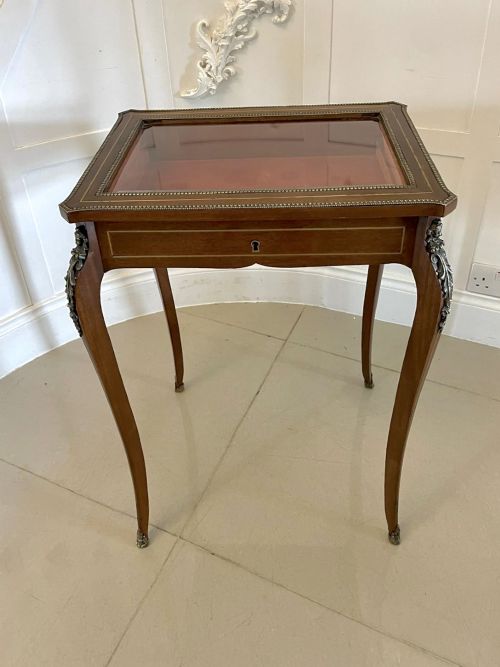
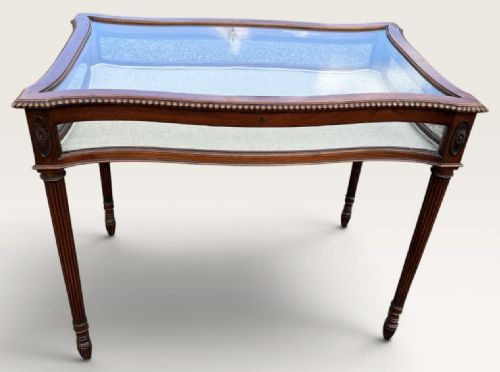
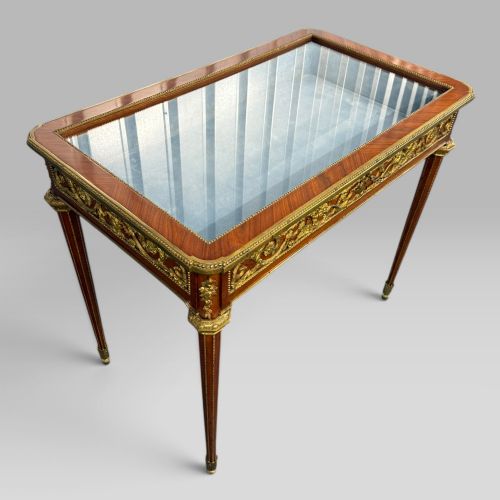
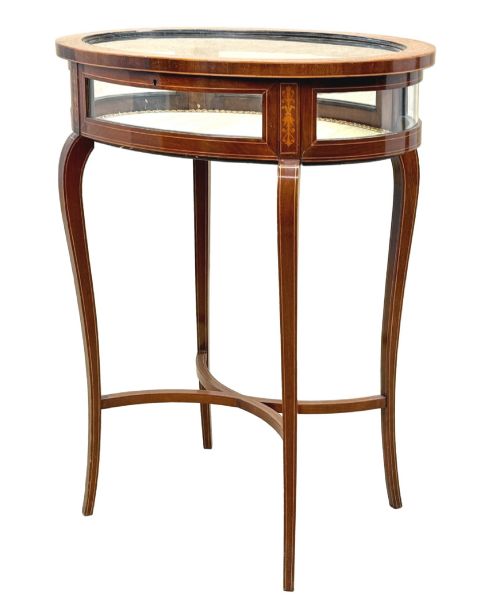
These french glazed cabinet table pieces combine display and surface utility, offering glazed compartments designed to showcase small collections whilst serving as functional furniture.
French Glazed Cabinet Table
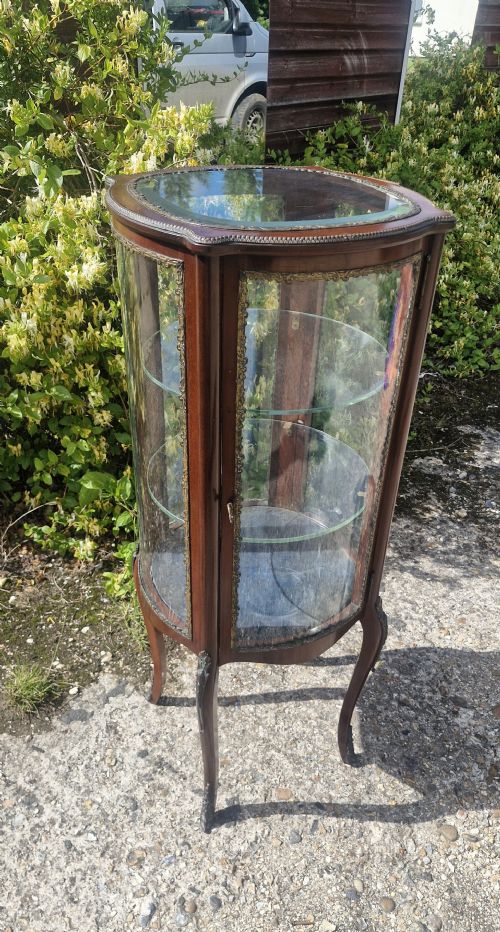
A french glazed cabinet table functions primarily as a vitrine or bijouterie table, bringing together a display surface for small treasures and the form of a freestanding table or cabinet. Pieces carrying this description span various periods including the nineteenth century, Victorian era, and Edwardian period.
The most common formats on this page are serpentine or oval bijouterie display tables and table top vitrines, constructed to house precious items beneath glass tops or behind glazed panels. Makers adopted distinct revivalist aesthetics, producing pieces in Louis XV and Louis XVI styles.
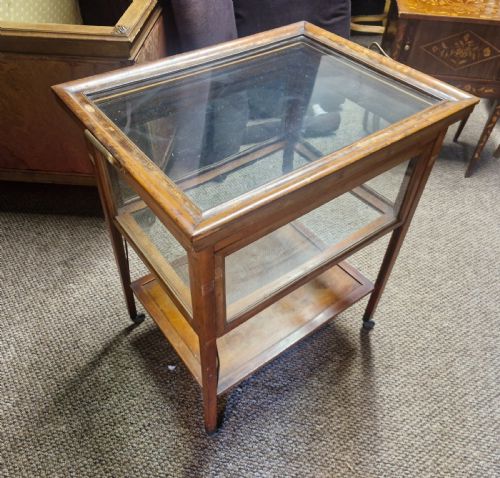
Originating largely from nineteenth-century workshops and later revival periods, these items include specialised forms such as tea trolleys, writing desks, and heart-shaped or serpentine vitrines. They provide visible storage for collectors whilst operating as decorative centrepieces.
Materials and construction methods
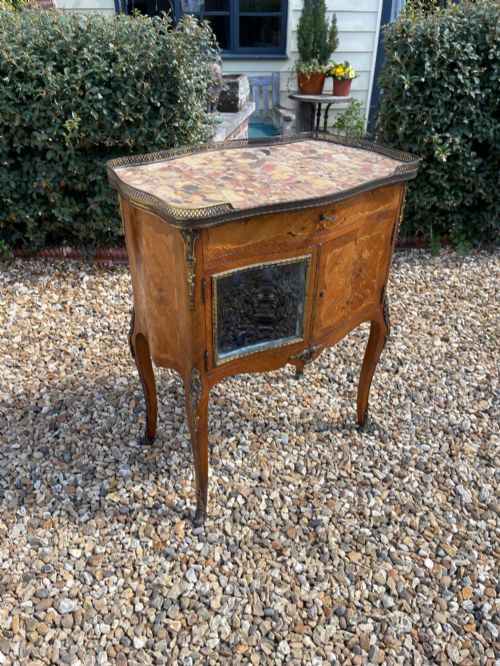
Carpenters utilised primary timbers such as mahogany, kingwood, walnut, and rosewood, frequently applying fine veneers and marquetry inlay to enhance the surface appearance. These foundational woods provided the structural integrity required for glazed compartments and hinged lids.
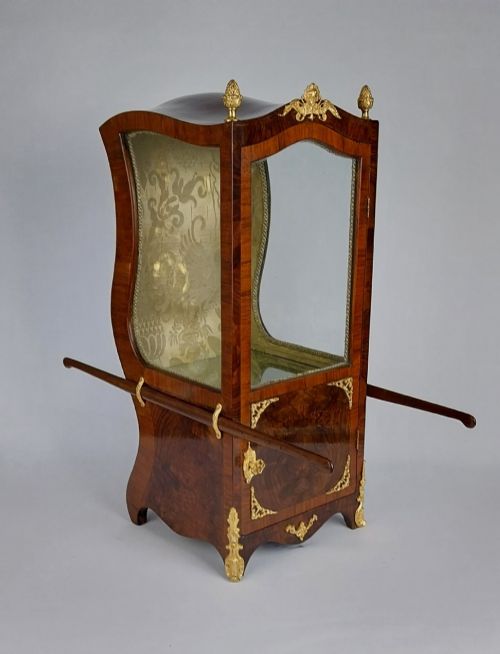
Metal ornamentation played a crucial role in finishing these items, employing cast brass and ormolu mounts to edge glass panels, frame table borders, and articulate cabriole or tapered legs. Interior surfaces were often lined with velvet or fabric to cushion displayed objects.
Glass was precisely cut and fitted to form transparent lids and side panels, allowing light to illuminate the interior contents from multiple angles while protecting items from dust.
A heart-shaped bijouterie table offers a romantic twist on standard display furniture, keeping small treasures safely under glass.
Distinguishing factors in manufacture
The sophistication of the ormolu and brass mounts dictates much of the visual distinction between standard pieces and exceptional examples, with chased metalwork showing far greater depth than mass-produced alternatives. Finely cast mounts align precisely with the timber contours and glass edges.
Timber selection and veneer matching determine the underlying elegance of the chassis, particularly on curved serpentine and heart-shaped forms where grain continuity requires considerable skill. Subtle details in marquetry and inlaid brass wire separate basic construction from master cabinet work.
The integration of the glazed viewing section, including the smoothness of hinged mechanisms and the snugness of the glass fitting within its wooden rebate, marks the difference in daily utility and execution.
François Linke
The French Glazed Cabinet Table Glossary
- Bijouterie table
- A specialised display table with a glass-topped compartment designed for exhibiting small ornaments, jewellery, or collections. These tables typically feature hinged lids for interior access.
- Ormolu
- Gilded bronze or brass mounts applied to furniture for decorative effect. This technique was widely utilised in French cabinet making during revival periods.
- Vitrine
- A glass-sided cabinet or display case intended for showing porcelain, curiosities, or precious items. They appear in both freestanding and table-top configurations.
- Marquetry
- Decorative veneer work arranged in geometric or pictorial patterns using various coloured woods. Artisans applied this technique to tabletop surfaces and friezes.
- Kingwood
- A dense, richly figured exotic timber favored for high-end cabinet making. It displays dark violet-brown contrasting grain patterns.
French Glazed Cabinet Table: Frequently Asked Questions
What is a french glazed cabinet table used for?
These pieces serve as dual-purpose furniture items, providing a flat working or serving surface combined with a secure, glass-enclosed compartment beneath. They were traditionally utilised for exhibiting delicate trinkets, jewellery, and collectors' items.
The transparent top or sides allow natural light to illuminate the contents, turning stored collections into a decorative display element within a drawing room or boudoir.
How do I identify the period of a bijouterie table?
Dating relies on examining the timber selection, the style of the brass or ormolu mounts, and the overall aesthetic movement reflected in the design. Pieces associated with nineteenth-century revival styles often feature distinct Louis XV or Louis XVI decorative motifs.
Later Edwardian examples tend to display lighter mahogany frames with subtle marquetry, whereas mid-nineteenth-century items frequently employ heavier timbers like rosewood and kingwood alongside robust gilt mounts.
Are interior linings original in these display cabinets?
Many surviving examples retain period fabric or velvet linings inside the glazed display well, though textile replacement is common due to natural wear over time. Examining the condition of the interior fabric helps determine whether the lining has been refreshed.
Original textiles often show fading or wear consistent with the age of the timber frame, whilst newly applied fabric appears clean and tightly fitted.
How should I care for a glass-topped vitrine table?
Maintenance involves gentle cleaning of the glass panels using non-abrasive solutions to prevent damage to the surrounding timber or gilt mounts. Care must be taken to avoid letting moisture seep beneath the metal bezels or veneer joints.
Polishing the mahogany, walnut, or kingwood chassis with appropriate wax preserves the timber grain, while the internal fabric lining benefits from careful, low-suction dusting.