


French Glass Jewellery Table
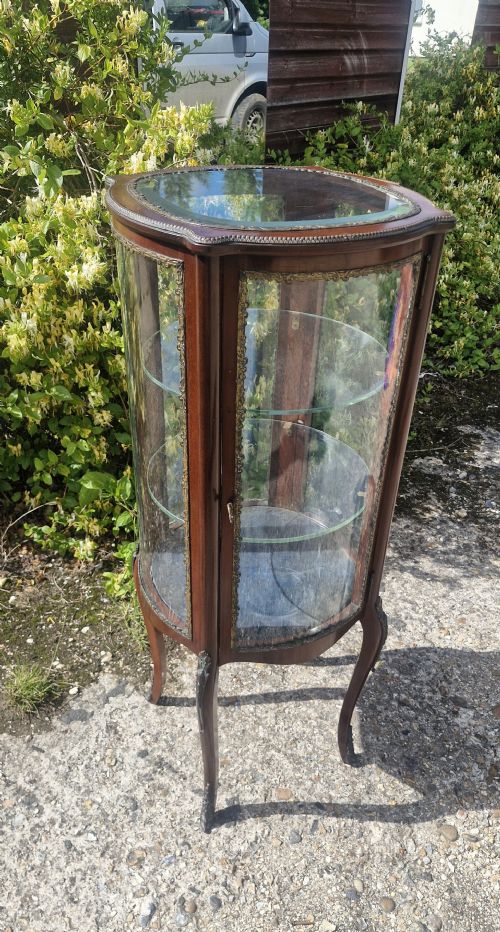
These french glass jewellery table pieces range from 19th-century mahogany display cabinets to Edwardian vitrines designed to show precious small items under glass.
French Glass Jewellery Table
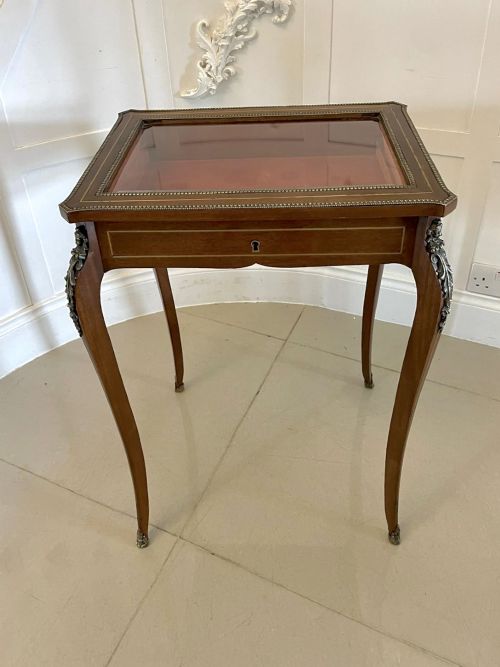
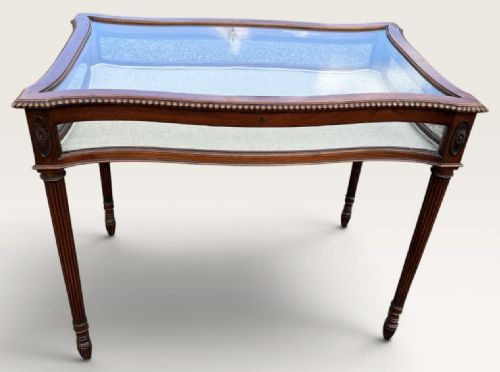
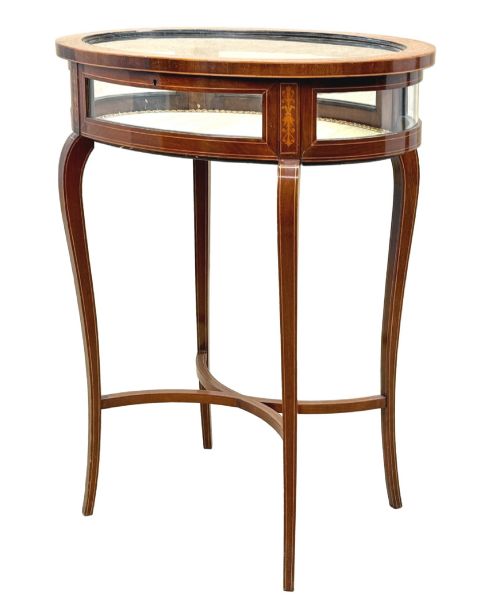
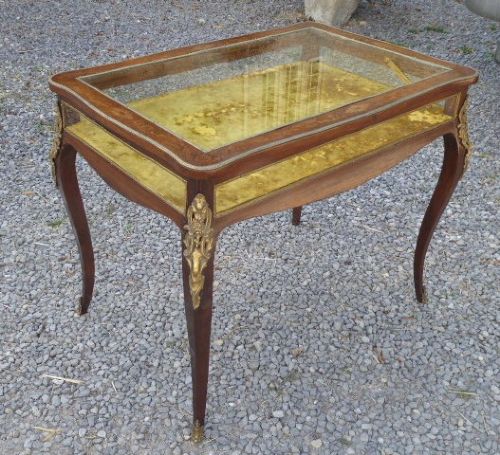
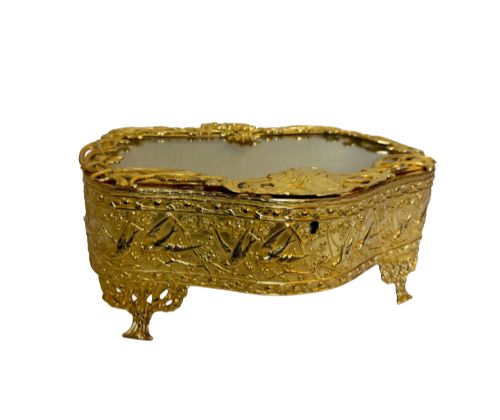
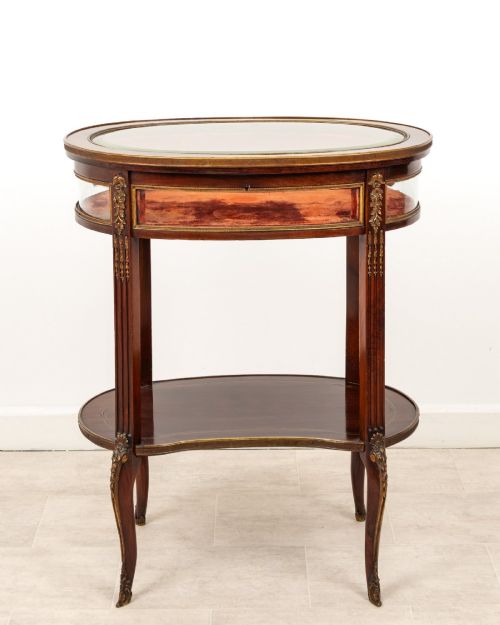
A french glass jewellery table functions primarily as a glazed display surface for holding personal ornaments, small collections and portable treasures. These pieces appear in forms such as serpentine bijouterie tables, oval display cabinets, heart-shaped kingwood boxes and raised glass vitrines.
The objects stem predominantly from the Victorian, Edwardian and 19th-century periods, capturing revival styles including Louis XV, Louis XVI and French Rococo. Walnut, mahogany, rosewood and kingwood provide the structural timber framework for these glazed showcases.
Most examples rely on a hinged or lifting glass top that permits direct viewing of velvet or fabric-lined interiors. Buyers frequently encounter variations in timber framing, metal mounts and tabletop geometry across the current selection.
Materials and construction methods
Cabinetmakers utilised hardwoods such as mahogany, rosewood and kingwood, often applying marquetry or brass inlay to the outer carcase. Glazed panels are fitted within shaped wooden frames or secured beneath bevelled glass lids.
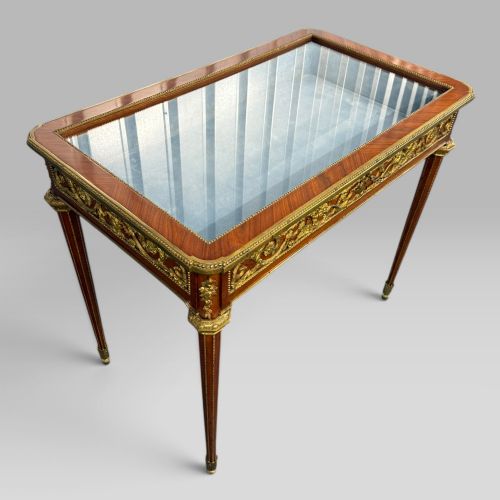
Gilt bronze, ormolu, brass and gilt metal mounts decorate the corners, legs and borders of the tables, echoing French revival aesthetics. Interiors are commonly lined with textile materials such as velvet to cushion placed items.
Materials across the selection include mahogany, rosewood, kingwood, ormolu, brass, velvet and crystal.
Distinctions in craftsmanship
The standard of a french glass jewellery table depends on the precision of the timber joinery and the crispness of the cast ormolu mounts. Finer examples display detailed marquetry patterns, substantial bronze hardware and well-fitted glazed lids that operate smoothly on their hinges.
Simpler versions rely on plain mahogany or rosewood frames with minimal brass stringing and standard glass panes. The choice of underlying timber, from basic hardwoods to figured kingwood, marks the division between standard production and exceptional workshop output.
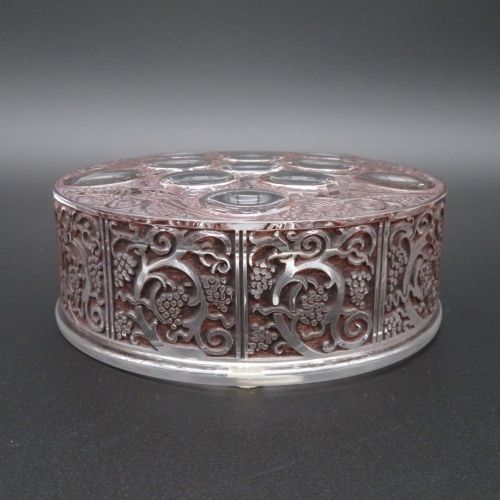
François Linke·Lalique
The French Glass Jewellery Table Glossary
- Bijouterie table
- A glazed display table designed specifically for showcasing small valuables, medals and trinkets. These pieces typically feature a glass top and upper sides.
- Ormolu
- Gilded bronze mounts applied to furniture woodwork for decorative accent. The technique involves mercury amalgamation or modern electroplating to achieve a gold finish.
- Vitrine
- A glass-fronted cabinet or display case used for showing ornaments and porcelain. They appear in freestanding formats or table-height variations.
- Marquetry
- Decorative veneer patterns assembled from thin pieces of wood, shell or metal to form pictorial or geometric designs on furniture surfaces.
- Serpentine
- A furniture outline characterised by a double-curved edge that bends inward centrally and outward at the ends.
French Glass Jewellery Table: Frequently Asked Questions
What is a french glass jewellery table used for?
These tables were originally manufactured to display small valuable items, personal jewellery, portrait miniatures and collection pieces under a protective glass cover.
Today, they serve a similar purpose in domestic interiors, offering a visible surface for curated objects while keeping dust away from delicate pieces.
How do I identify the period of a bijouterie table?
Dating relies on examining the timber species, construction joints, mount styling and overall silhouette. Pieces from the 19th century often feature heavy mahogany or rosewood with cast ormolu mounts.
Later Edwardian versions tend to display lighter marquetry inlay and refined brass stringing, reflecting the tastes of the early 20th century.
Are these tables suitable for everyday use?
The glass tops and delicate timber legs require careful placement away from heavy traffic areas and direct sunlight, which can fade interior fabrics. Opening mechanisms on older hinges should be handled gently during cleaning or rearrangement.
Interior velvet and fabric linings can be brushed or vacuumed carefully with a low-suction attachment to maintain their condition.
What is the difference between a vitrine and a bijouterie table?
A vitrine generally refers to a taller cabinet with vertical glass doors and multiple internal shelves for displaying larger ornaments and porcelain. A bijouterie table specifically positions the glazed display area at table height, viewed primarily from above through a horizontal or slightly sloped lid.
Both forms utilise glass and metal mounts but serve distinct spatial arrangements within a room.