
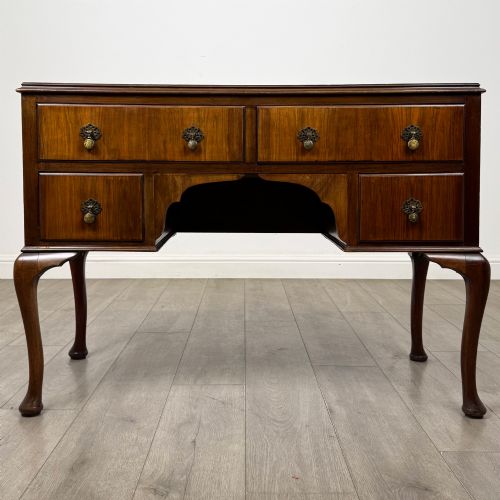
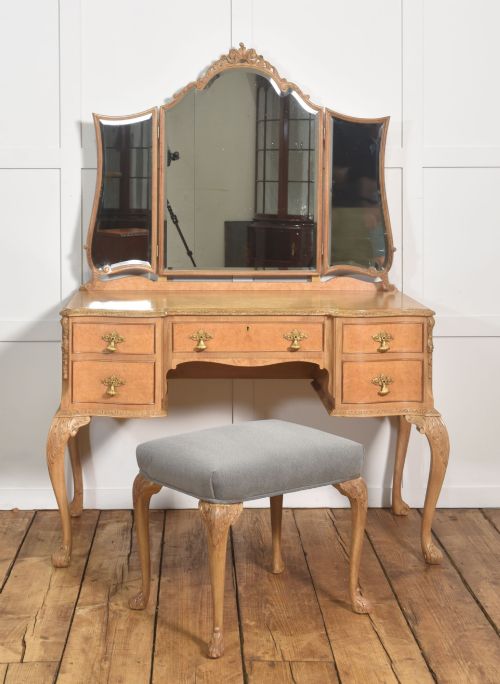
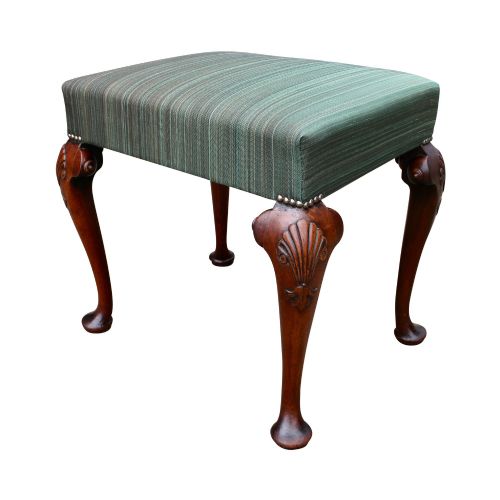
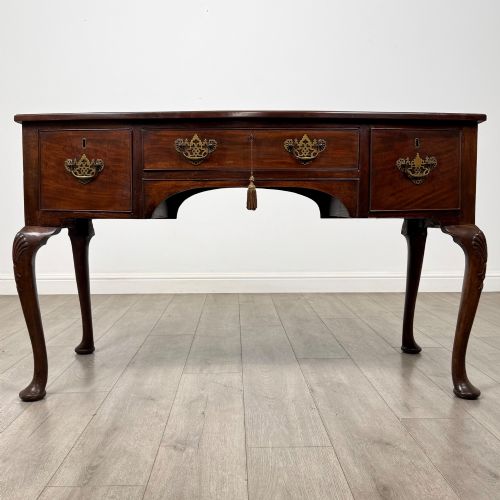
Cabriole Leg Vanity Table
A cabriole leg vanity table brings together curved timber supports and dedicated surface space for grooming, drawing on centuries of historical design traditions.
Cabriole Leg Vanity Table
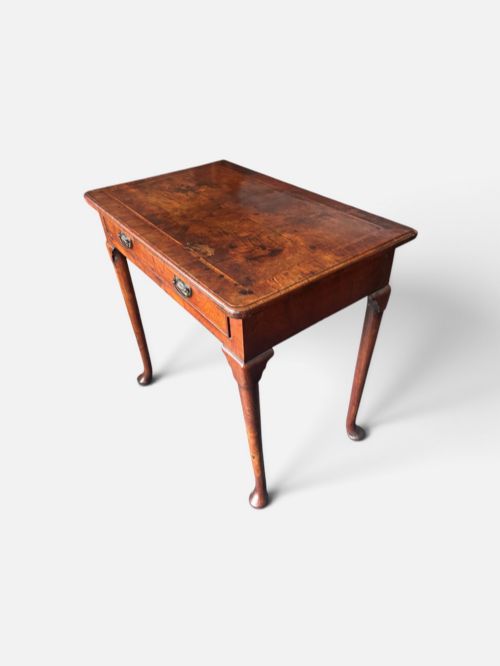
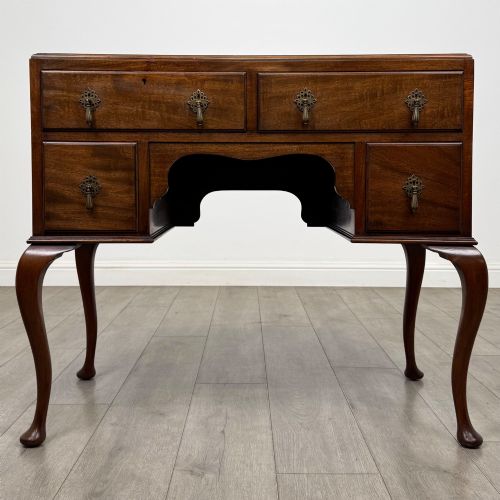
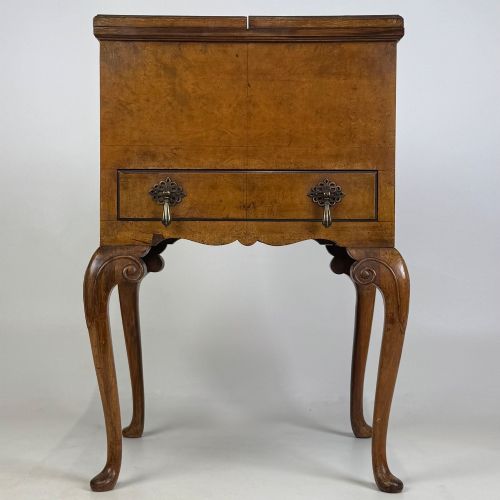
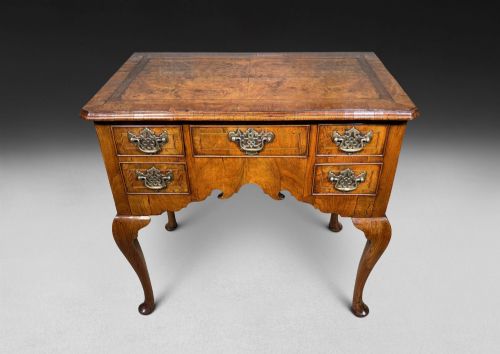
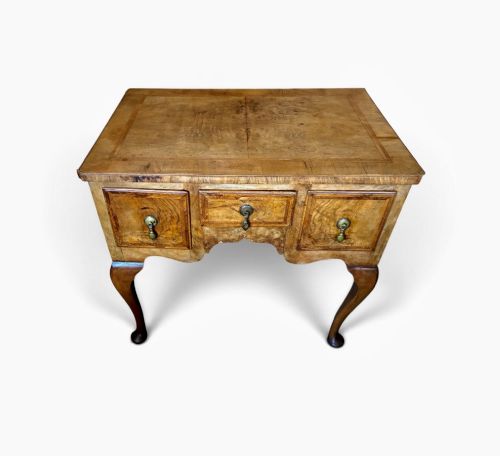
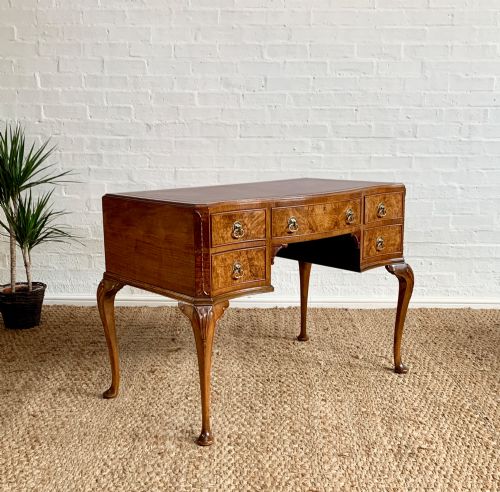
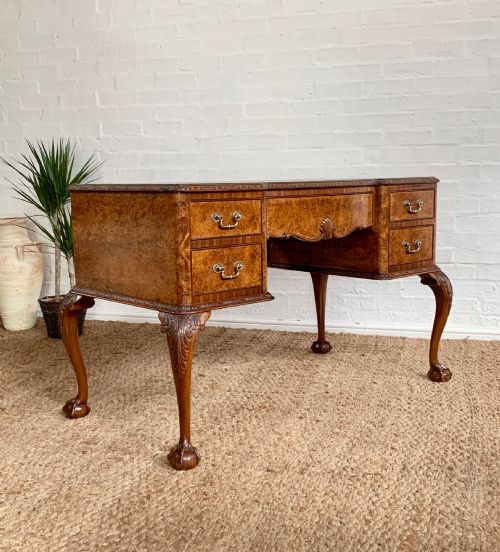
A cabriole leg vanity table combines functional surface space for personal preparation with the distinctive S-curved legs that define its silhouette. Buyers seeking this form encounter examples spanning from the eighteenth century through the Victorian, Edwardian, and 1930s periods, reflecting sustained popularity across multiple design eras.
The listings on this page demonstrate that these pieces frequently appear alongside related forms such as dressing tables, lowboys, writing desks, and matching stools. Walnut, burr walnut, and mahogany dominate the timber selection, occasionally accompanied by specialist touches like triple mirrors or leather writing surfaces.
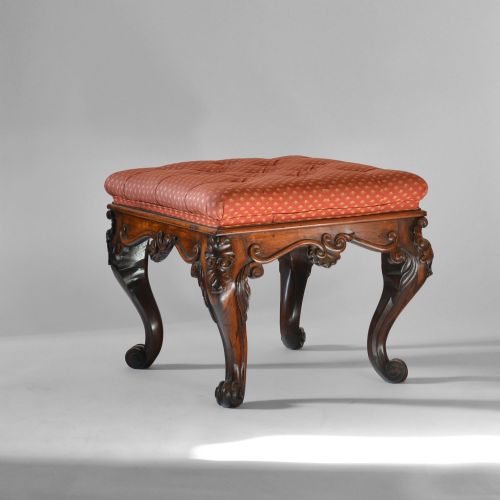
Originating in earlier classical revivals, the pieces available today lean heavily into Queen Anne style, Georgian, and Rococo revival aesthetics. These historical influences dictate the proportions of the frame, the presence of drawer arrangements, and the specific curvature of the leg.
Materials and construction methods
Makers utilised dense hardwoods such as walnut, mahogany, and oak to construct the structural frames and tabletops, often selecting burr walnut veneers for rich grain patterns. Secondary woods provided internal stability for drawer linings and framing components hidden from view.
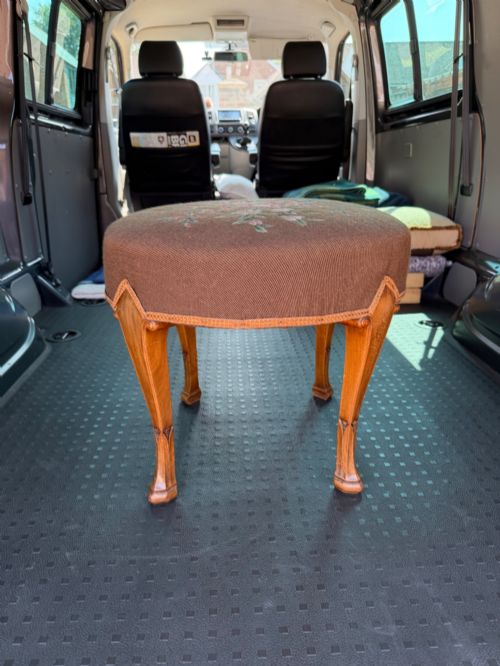
The characteristic legs were shaped through targeted carving and woodworking techniques, translating the S-curve into solid timber while maintaining load-bearing strength. Brass hardware, leather inserts, and textile or needlepoint upholstery on associated seating completed the construction.
Listings feature walnut, burr walnut, mahogany, and oak across styles ranging from Queen Anne revival to Rococo.
Assessing craftsmanship and finish
The sophistication of the timber figuring and the precision of the joinery distinguish higher-tier examples from simpler workshop output. Grain matching across drawer fronts and tabletops indicates greater attention to visual harmony during assembly.
Carved details on the knees and feet of the cabriole supports reveal the maker's hand, where crisp execution elevates the piece above standard production. The preservation of original surface finishes, hardware, and associated seating further influences the standing of an individual table.
Wylie & Lochhead Glasgow·maples of London
The Cabriole Leg Vanity Table Glossary
- Cabriole leg
- A furniture leg featuring a double curve, typically arching outward at the knee and inward at the ankle to mimic an animal's leg. This form became central to eighteenth-century design and subsequent revival styles.
- Lowboy
- A small table with drawers, typically raised on four tall legs, used historically for personal grooming or writing. The form frequently shares aesthetic traits with dressing and vanity furniture.
- Burr walnut
- A specialised wood veneer harvested from the growth excrescences on walnut trees. It yields intricate, swirling grain patterns prized for decorative surfaces on cabinet furniture.
- Poudreuse
- A French-style dressing table equipped with folding lids and internal compartments for cosmetics and grooming implements. These pieces often incorporate elaborate veneers and mounts.
- Kneehole desk
- A form of writing table featuring a recessed central space for the user's legs, flanked by pedestals of drawers. They provide compact workspace combined with storage.
Cabriole Leg Vanity Table: Frequently Asked Questions
What periods do these vanity tables come from?
The pieces span a broad chronological range, including eighteenth-century Georgian origins, nineteenth-century Victorian interpretations, and early twentieth-century revivals up to the 1930s.
Design characteristics often blend historical revival styles, such as Queen Anne and Rococo, with the manufacturing techniques of the era in which the piece was constructed.
How were these tables used historically?
These pieces served as dedicated stations for personal grooming, dressing, and correspondence, often paired with matching stools or incorporating mirrors and compartments.
The inclusion of drawers and specialised top surfaces allowed users to store cosmetics, brushes, and writing implements close at hand.
Are matching stools usually included?
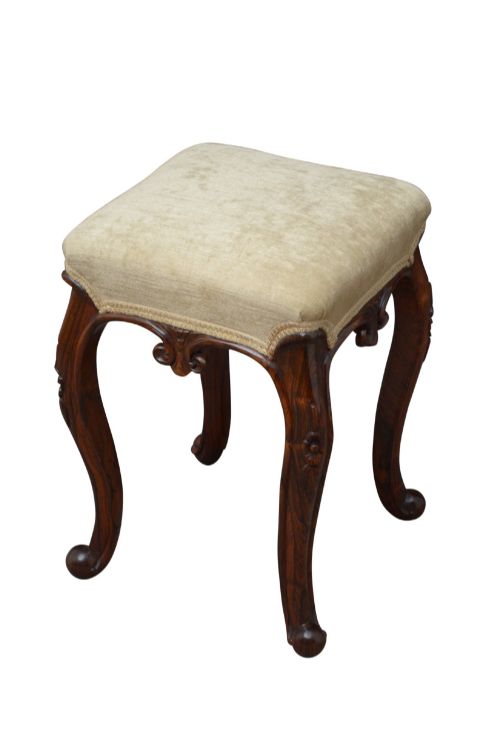
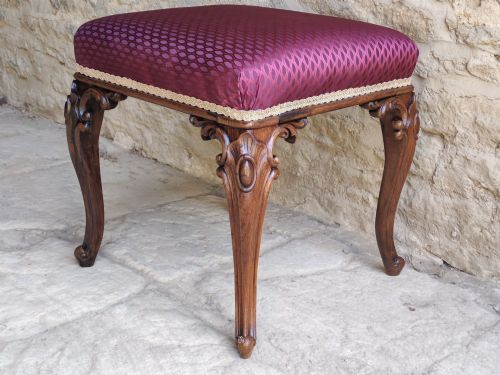
Some listings pair the table directly with a contemporary stool featuring matching wood and leg styles, while other pieces are offered independently.
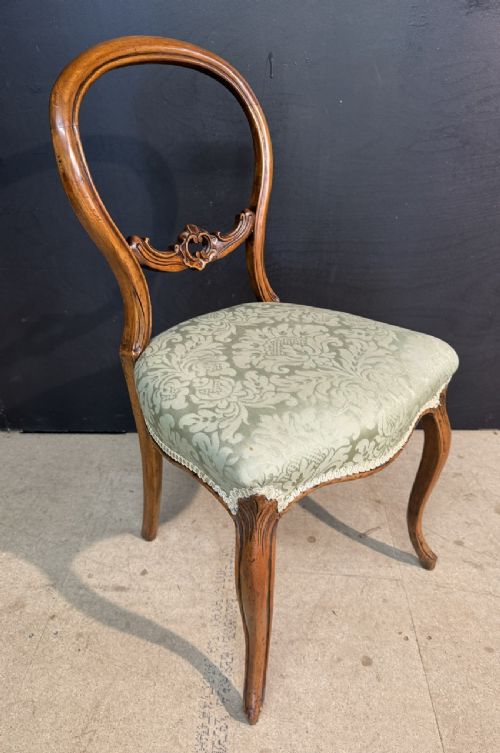
Upholstered seats in fabric, leather, or needlepoint frequently accompany the surviving tables, reflecting the original intended use as a seated vanity station.
How do I identify a cabriole leg?
A cabriole leg is defined by its distinct double-curved profile, swelling outward near the top at the knee and tapering inward toward the foot.
This classical shape appears across multiple centuries of furniture making, frequently terminating in pad, claw-and-ball, or simple scroll feet depending on the period.