




Mahogany Duchess Dressing Table
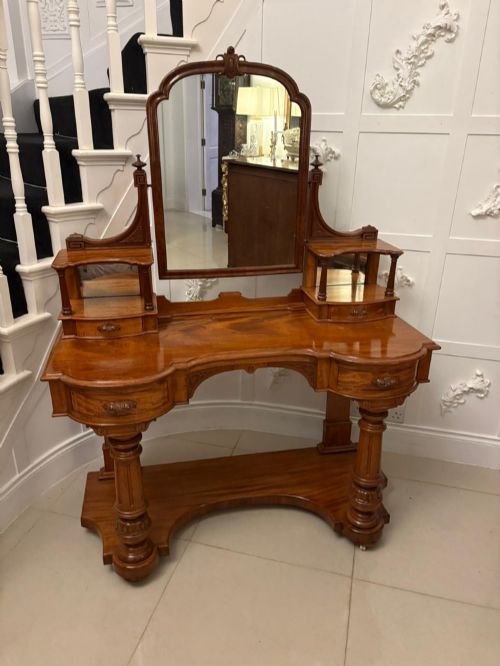
A mahogany duchess dressing table brings grand nineteenth-century elegance to a bedroom with its characteristic large swing mirror and generous tiered surface.
Mahogany Duchess Dressing Table
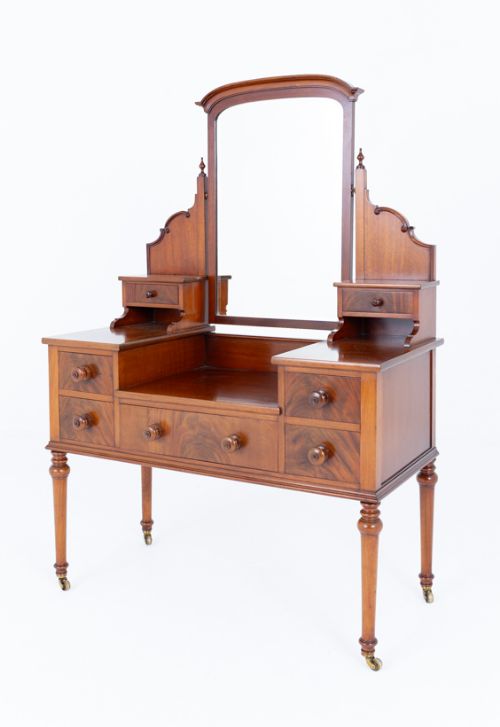
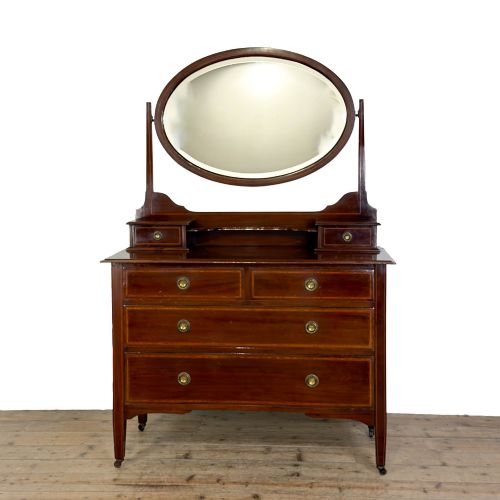
A mahogany duchess dressing table is a substantial bedroom vanity piece defined by a large central mirror, often flanked by smaller drawers or trinket compartments, resting upon a tiered or serpentine base. These pieces emerged strongly during the Victorian and Edwardian eras, combining practical storage with elaborate display surfaces for toiletries and cosmetics.
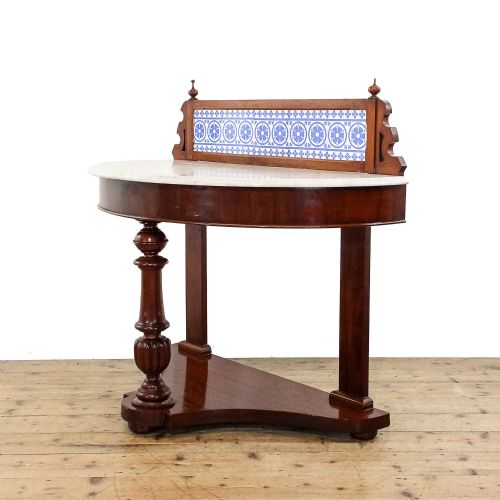
Most examples encountered on this page date from the nineteenth century, particularly the middle and later decades, spanning periods such as the 1850s through to the 1890s. Alongside standard dressing tables, variations include demi lune shapes, twin pedestals, and related forms like washstands and toilet mirrors.
The dominant material throughout these listings is mahogany, frequently selected for its rich grain and warm tone, sometimes supplemented by contrasting woods like satinwood or burr walnut. Styles range from plain Victorian utility through to ornate carved pieces influenced by Rococo Revival and Gothic Revival tastes.
How they were made
Cabinet makers constructed these dressing tables primarily from solid mahogany and selected veneers, applying brass hardware for drawer pulls and mounts on specific revival styles. Glass was silvered for the prominent swing mirrors, while certain washstand iterations incorporated marble tops for durability against water.
Construction techniques relied on traditional joinery, dovetailing drawer carcases to withstand daily use over generations. Carved details on scrolls, mirror supports, and legs were executed by hand, matching the stylistic shifts from mid-century curves to later Edwardian inlay work.
The listings here span the Victorian and Edwardian periods, showcasing materials including mahogany, marble, brass, and glass.
What varies in quality
Quality in a mahogany duchess dressing table rests upon the choice of timber figure, such as flame mahogany, and the crispness of hand-carved scrollwork around the mirror supports. Superior examples display balanced proportions across the multi-tiered superstructure and the lower drawers, maintaining structural integrity without clumsy additions.
The integration of the mirror mechanism and the clarity of the original glass also separate finer pieces from standard utilitarian examples. Better workshops utilised heavier timber scantlings and sophisticated internal drawer linings, ensuring the piece maintains its presence and stability.
The Mahogany Duchess Dressing Table Glossary
- Duchess dressing table
- A grand nineteenth-century vanity featuring a large attached mirror, small accessory drawers, and a tiered surface. It served as a primary dressing station in Victorian and Edwardian bedrooms.
- Swing mirror
- An adjustable looking glass mounted on vertical pivots or scroll supports above the tabletop. This allows the user to alter the angle of reflection.
- Flame mahogany
- A decorative veneer cut from where a branch joins the main tree trunk, producing a distinctive flickering flame pattern. Cabinet makers reserved this timber for primary display surfaces.
- Demi lune
- A half-moon shape used for the footprint and top of certain dressing tables. This curved profile softens the silhouette in tighter spaces.
- Washstand
- A related bedroom piece designed to hold a basin and jug, sometimes sharing the marble tops and mahogany construction seen on dressing tables.
Mahogany Duchess Dressing Table: Frequently Asked Questions
How do I date a mahogany duchess dressing table?
Dating relies on observing stylistic markers, construction methods, and secondary woods used within the drawers. Mid-nineteenth-century pieces often display heavier proportions and rich flame veneers, whereas later Victorian and Edwardian examples lean toward lighter inlays or distinct revival motifs.
Examining the mirror frame and the brass hardware provides further clues. Earlier mirrors feature distinct scroll supports, while late-century iterations incorporate more linear framing or ceramic elements.
What rooms suit a duchess dressing table today?
These tables find natural placement in bedrooms as functional dressing stations or vanity units. Their large mirrors and generous surfaces also make them effective console or display pieces in spacious hallways.
Because they offer substantial surface area and drawer storage, they help organise modern spaces while introducing nineteenth-century character. Placing one against a neutral wall allows the rich mahogany grain and carved details to stand out.
Are the mirrors original to these tables?
Many surviving dressing tables retain their original glass and support frames, often showing subtle signs of age such as minor foxing in the silvering. Because mirrors are vulnerable to breakage during moves, replacement glass appears on some examples.
Checking the fit within the original wooden frame and inspecting the pivot hardware helps determine whether the mirror has survived intact. Original glass adds considerable character to a nineteenth-century piece.
How should I care for antique mahogany wood?
Maintaining mahogany requires keeping the timber away from direct heat sources and strong sunlight, which can dry out the wood or fade the polish. Regular dusting with a soft, dry cloth prevents particle build-up on carved scrollwork and polished surfaces.
Occasional application of a suitable beeswax polish nourishes the grain without leaving heavy silicone residues. Avoiding excess moisture near joints and mirror plates preserves the structural stability of the table.