




Mahogany Duchess Vanity
These mahogany duchess vanity pieces bring grand Victorian and Edwardian dressing room elegance to modern bedrooms through substantial timber and adjustable mirrors.
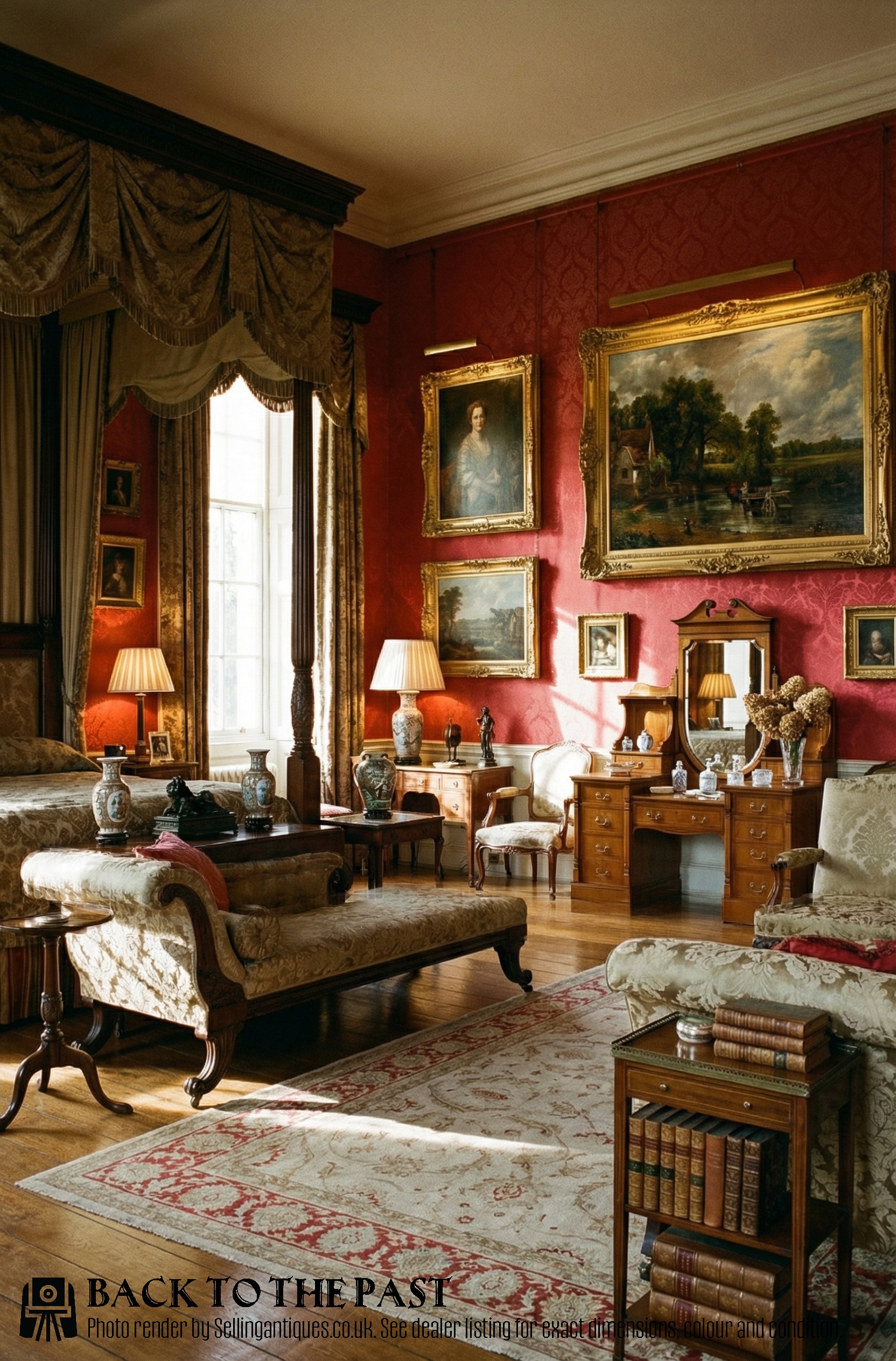
Mahogany Duchess Vanity
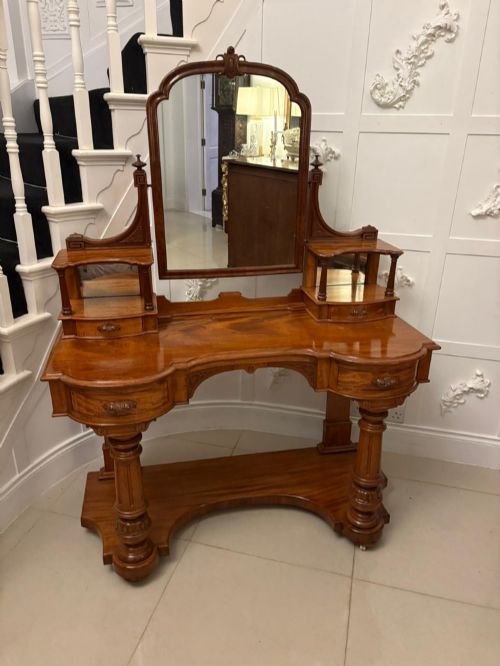
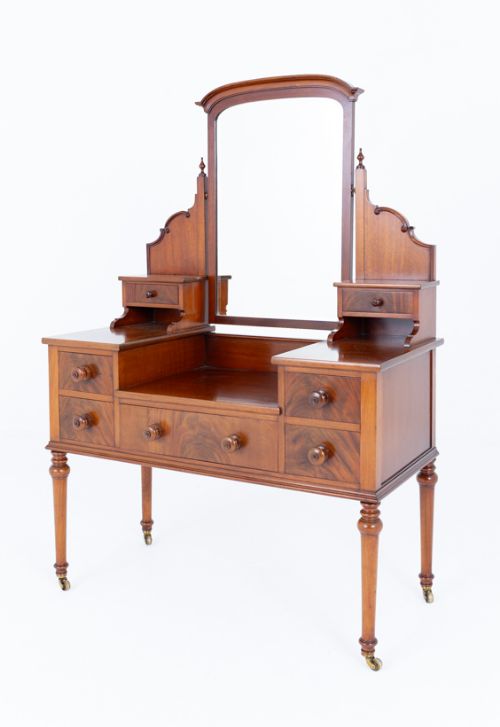
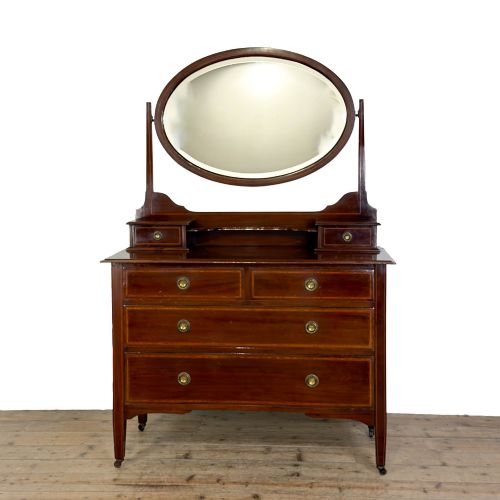
When you search for mahogany duchess vanity, you encounter large dressing tables and washstands dating from the Victorian and Edwardian eras, predominantly spanning the mid to late nineteenth century. These pieces typically combine a spacious timber carcase with an arrangement of smaller trinket drawers and a central pivoting mirror.
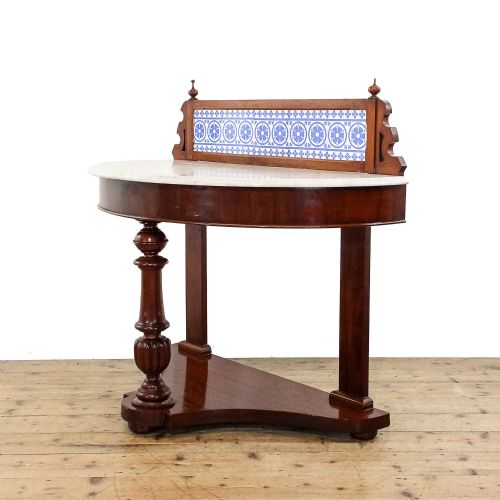
The most common form on this page is the Victorian mahogany dressing table, often featuring carved scrollwork, swing mirrors, and polished mahogany surfaces. Examples range from simple nineteenth century tables to elaborate duchess and demi lune variations equipped with marble tops or cheval mirrors.
How they were made
Construction relies heavily on solid mahogany and mahogany veneers applied to secondary timbers, providing the deep reddish brown grain characteristic of the period. Workshops integrated glass mirror plates and brass hardware, while select pieces incorporate marble tops and contrasting satinwood or burr walnut inlays.
Cabinetmakers shaped the wood using period joinery techniques, adding hand carved details for styles such as Victorian Rococo Revival and Gothic Revival. Mirrors were mounted on swing frames supported by carved arms or pedestals, allowing the user to adjust the angle.
The listings span Victorian, Edwardian, and nineteenth century periods, utilising mahogany, marble, brass, and burr walnut across dressing tables and washstands.
What varies in quality
The calibre of a piece depends on the depth of the mahogany timber, the crispness of any hand carved embellishments, and the preservation of the original glass mirror plate. Superior examples display balanced proportions, finely figured veneers, and intact brass or ceramic fittings.
Construction methods and secondary details also dictate the tier of the piece, from standard utility dressing tables to grander versions with elaborate superstructure drawer arrangements and marble washstand surfaces.
The Mahogany Duchess Vanity Glossary
- Duchess dressing table
- A large nineteenth century vanity featuring a central swing mirror set above a tier of small trinket drawers and a main desk surface. These pieces often include supportive pedestals and a lower shelf.
- Cheval mirror
- A full length floor mirror mounted in a frame that pivots on vertical pins or pivots, allowing the glass to tilt. This form appears frequently on larger Victorian dressing tables.
- Demi lune
- A half moon or semi circular shape used for the footprint and top of specific dressing tables and washstands. This curved design softens the heavy timber presence.
- Ormolu
- Gilt bronze mounts applied to furniture, seen on French influenced pieces. The technique provides a metallic decorative contrast to the dark mahogany wood.
- Trinket drawer
- A small drawer positioned around the base of the mirror for storing jewellery and cosmetics. They define the upper superstructure of duchess vanities.
Mahogany Duchess Vanity: Frequently Asked Questions
What is a duchess dressing table?
A duchess dressing table is a substantial nineteenth century vanity featuring an attached swing mirror and a tiered arrangement of small storage drawers. These pieces served as the centrepiece for Victorian and Edwardian dressing rooms.
They combine a writing or grooming surface with display space for perfume bottles and small accessories, often supported by twin pedestals or turned legs.
How do I date a mahogany vanity?
Dating relies on examining the timber, construction methods, hardware, and stylistic revival cues visible in the design. Victorian pieces often display heavier proportions and rich mahogany veneers.
Later Edwardian examples tend to introduce lighter inlays, satinwood accents, or simpler geometric lines while retaining the traditional timber carcase.
Where were these pieces used?
These dressing tables were designed for the bedrooms and dressing rooms of nineteenth century townhouses and country estates. They provided a dedicated private space for morning grooming and hair styling.
Today, they function as practical bedroom dressing tables or statement console furniture in period and contemporary homes alike.
What is the difference between a washstand and a dressing table?
Washstands were built with water resistant surfaces such as marble to accommodate basins, ewers, and morning washing routines. Dressing tables focused purely on personal grooming, cosmetics, and mirror use.
While both utilise mahogany and share nineteenth century stylistic periods, their top surfaces and internal drawer configurations reflect their distinct domestic purposes.