
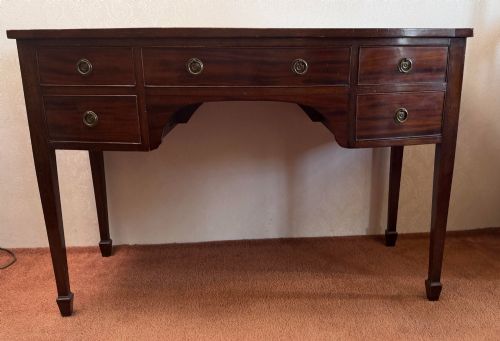
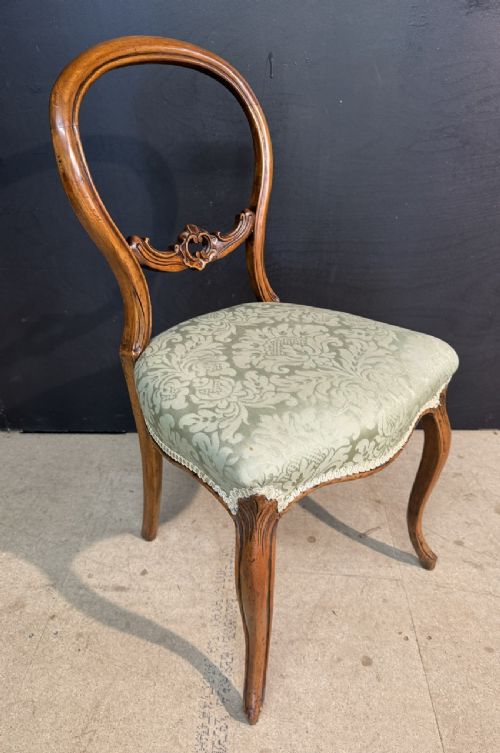
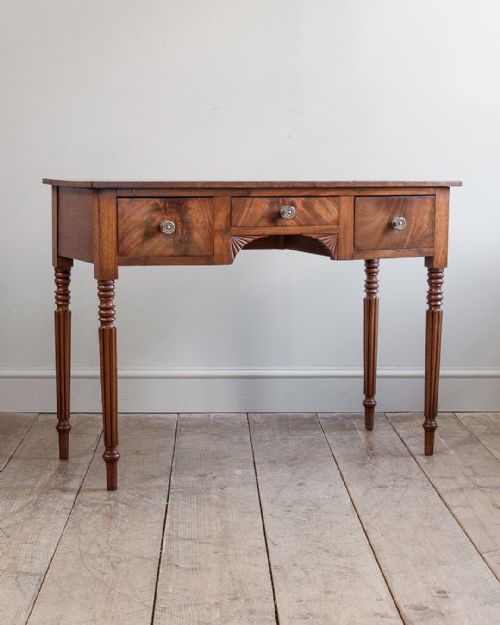
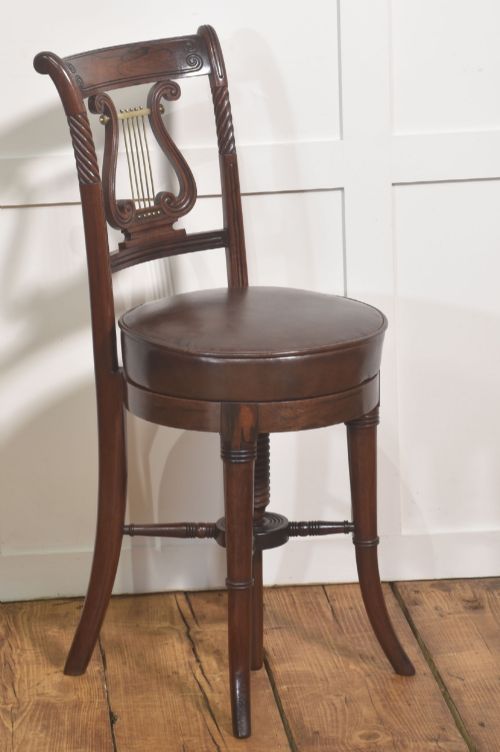



Victorian Mahogany Vanity Desk
A victorian mahogany vanity desk brings together practical workspace and refined bedroom elegance in one solid timber form.
Victorian Mahogany Vanity Desk
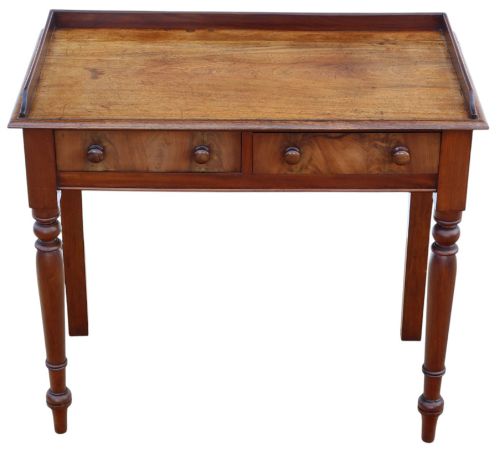
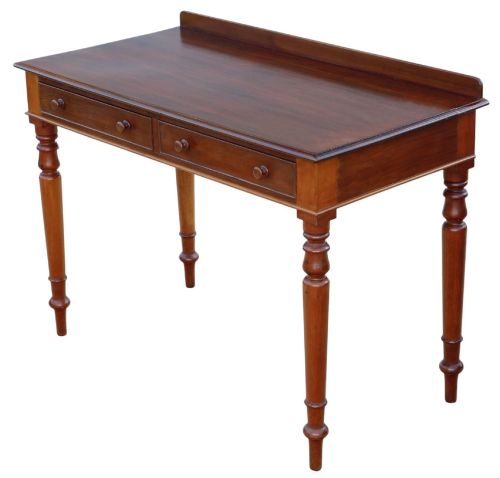
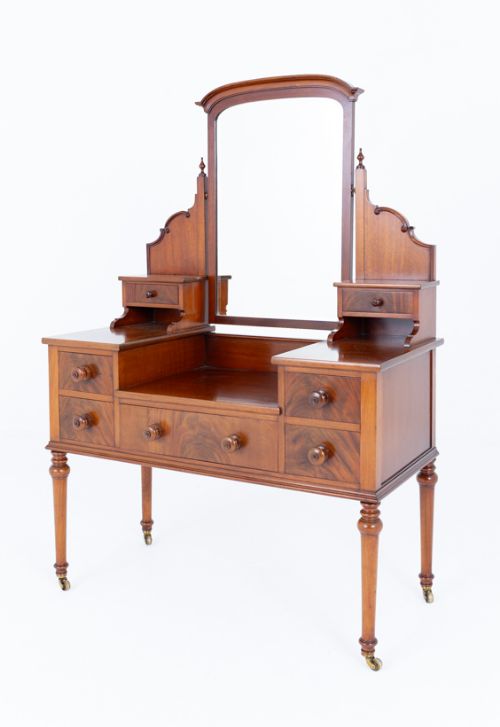
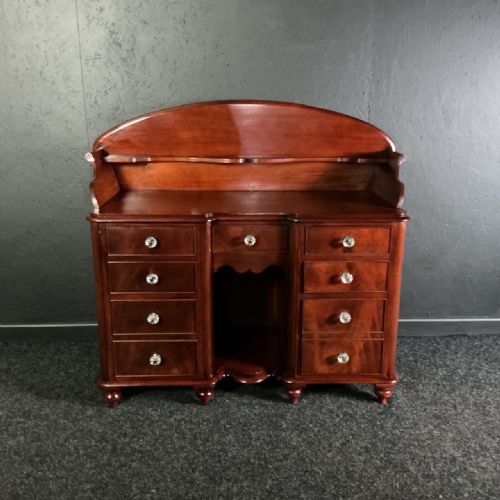
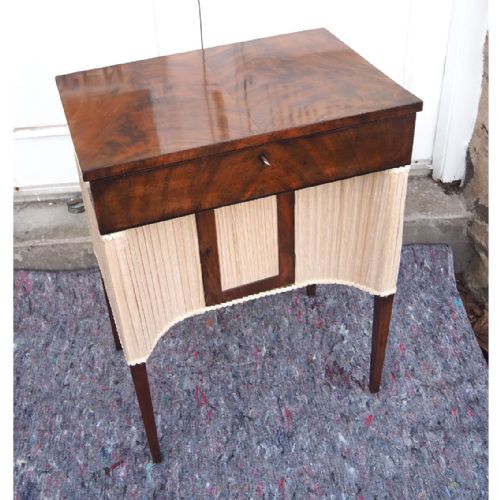
A victorian mahogany vanity desk combines the functions of a dressing table and a writing desk, emerging in various forms across the nineteenth century. Buyers encounter pieces equipped with multiple drawers, built-in mirrors, and accompanying chairs designed for daily toilette and correspondence.
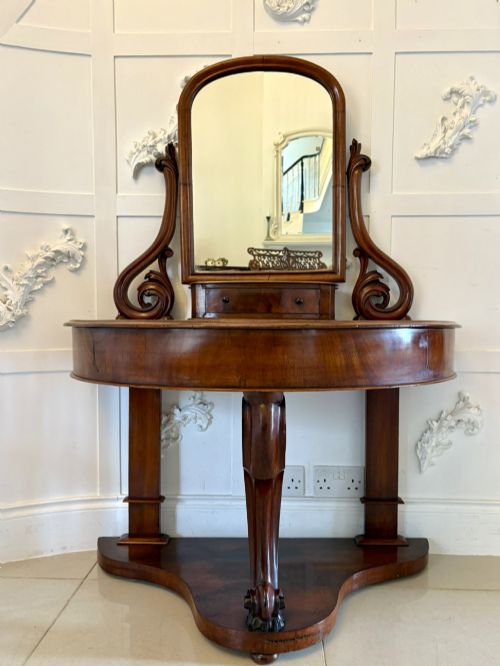
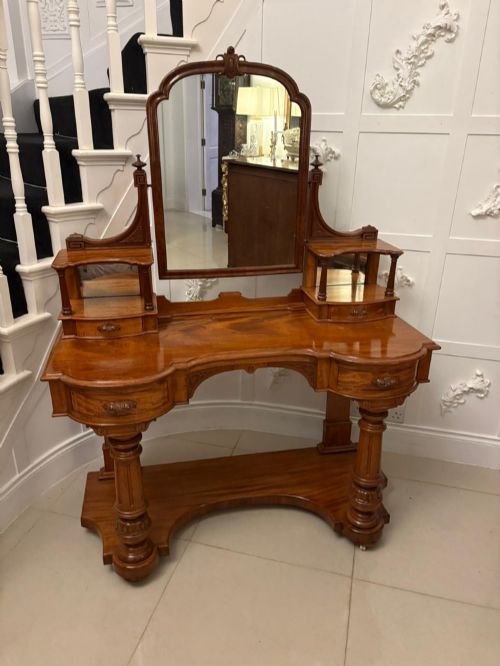
The selection spans simpler forms like the duchess dressing table alongside grander pedestal designs and inlaid variations. Makers utilised durable timber to construct pieces that served both private dressing rooms and formal bedchambers.
Dating primarily from the nineteenth century, these items reflect changing domestic habits where personal grooming and letter-writing occupied dedicated spaces in the home. Surviving examples range from plain functional tables to elaborately carved or marquetry-inlaid creations.
How they were made
Cabinet makers relied heavily on solid mahogany and flame mahogany veneers, often enhanced with contrasting satinwood inlay, brass fittings, and mirror glass. The timber was selected for its rich grain patterns and durability, providing a stable foundation for intricate carving and marquetry.
Structural elements frequently incorporated secondary woods, while drawers utilised precise dovetail joints to ensure longevity. Surfaces were finished to highlight the natural depth of the mahogany, sometimes complemented by leather inserts on writing compartments.
Thomas Rubergall supplied optical mirrors to nineteenth-century clients before they ever sat down to write letters.
What varies in quality
The distinction between standard and exceptional pieces rests upon the precision of the cabinet work, the choice of timber figuring, and the sophistication of decorative details like marquetry and carving. Superior examples exhibit seamless drawer construction and finely cast brass hardware that integrate harmoniously with the mahogany frame.
Design ambition also separates the ordinary from the remarkable, with renowned makers applying meticulous attention to proportion and finish. The integrity of the original mirror glass and the retention of matching chairs further elevate the standing of a piece.
Heal and Son·Edwards and Roberts·Collinson and Lock
The Victorian Mahogany Vanity Desk Glossary
- Duchess dressing table
- A large Victorian dressing table featuring a central mirror supported by smaller drawers or trinket boxes above a main writing surface. This form became a centrepiece of the nineteenth-century bedroom.
- Marquetry
- The art of applying decorative pieces of veneer to a structure to form intricate patterns and pictures. Makers used contrasting timbers like satinwood on mahogany grounds.
- Flame mahogany
- A wood veneer cut from the fork of the mahogany tree, producing a distinctive flickering flame-like pattern. It was favoured for drawer fronts and principal surfaces on high-status furniture.
- Kneehole desk
- A writing table with a recessed central space for the legs, flanked by pedestals containing drawers. This layout provides structured storage while maintaining a formal silhouette.
- Washstand
- A wooden piece designed to hold a basin and jug for morning ablutions, occasionally sharing the bedroom suite aesthetic with dressing tables. They utilise similar mahogany construction and drawer configurations.
Victorian Mahogany Vanity Desk: Frequently Asked Questions
What is a duchess dressing table?
A duchess dressing table is a substantial nineteenth-century bedroom piece characterised by a large central mirror flanked or surmounted by small trinket drawers. It offers both a surface for grooming and compartments for personal items.
These tables often sit on large platform bases with cabriole or turned supports, representing the heavier proportions favoured in later Victorian interiors.
How do I care for mahogany furniture?
Mahogany requires minimal intervention beyond dusting with a soft, dry cloth and avoiding direct sunlight to protect the rich timber tone. Keeping the wood away from extreme temperature shifts prevents the veneer from lifting.
Occasional application of appropriate wax polish maintains the lustre of the grain without building up heavy residues on the antique surface.
Are writing and dressing tables different?
Writing tables focus primarily on a flat, often leather-lined surface for correspondence, whereas dressing tables incorporate mirrors and compartments for cosmetics. Many nineteenth-century examples combine both functions into a single piece of furniture.
Makers built these hybrid forms to accommodate the space constraints and multi-purpose requirements of period bedchambers.
How do I identify a Victorian piece?
Victorian furniture is identified through specific period characteristics such as mahogany construction, heavy proportions, and stylistic revivals like Gothic or Sheraton influences. Drawer joints and hardware styles also offer reliable clues to the manufacturing date.
Cabinet makers during this era utilised mechanical advancements while maintaining traditional hand-crafting methods for high-quality items.