
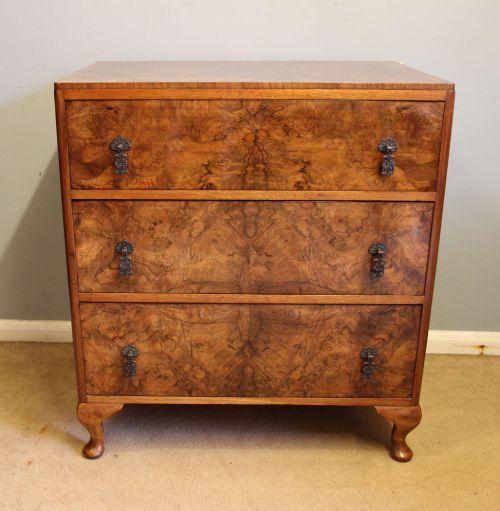
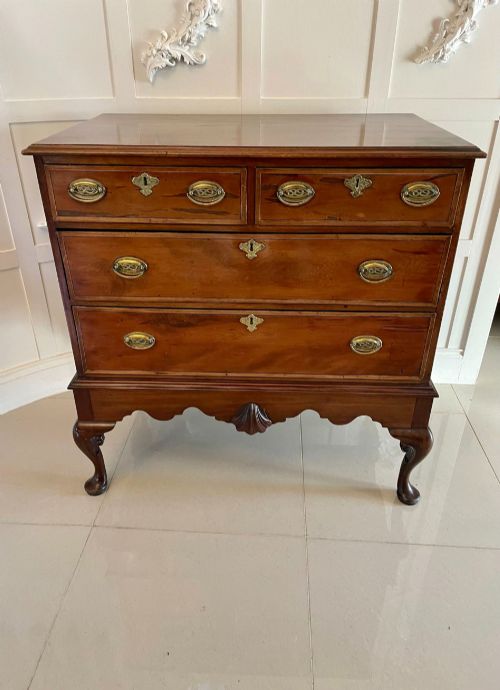
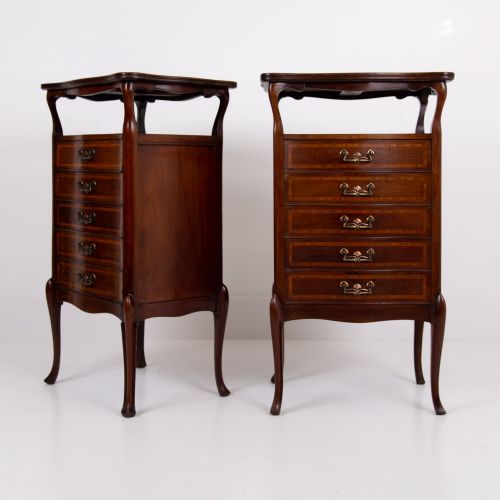
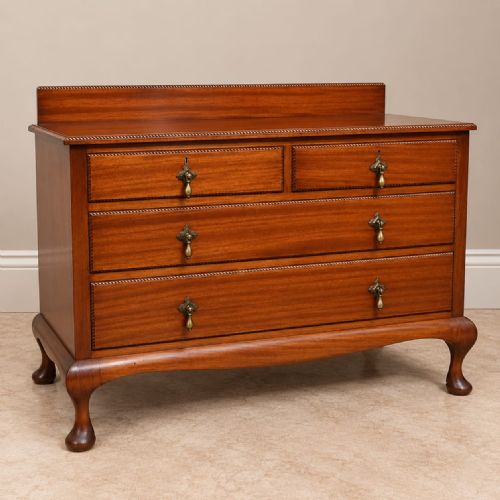
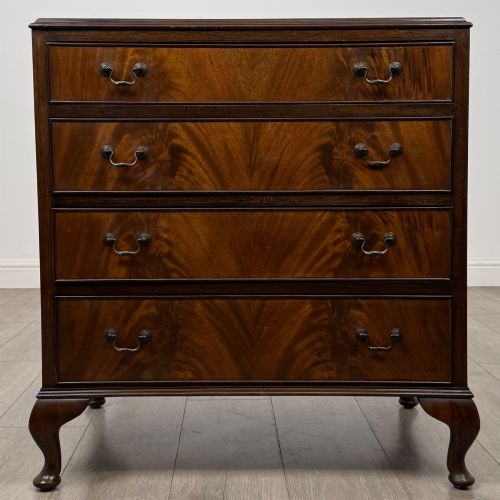
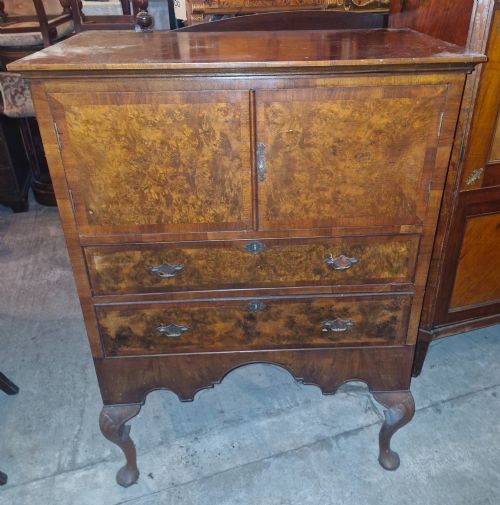
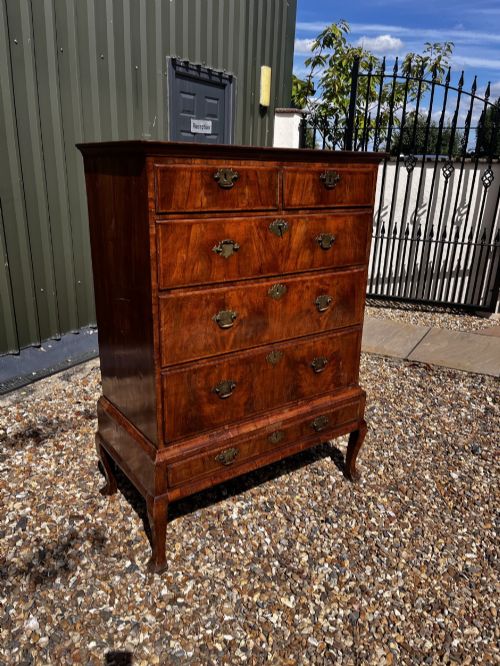
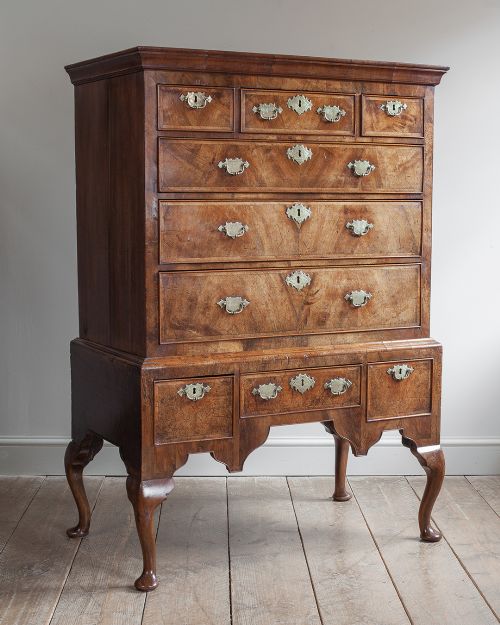
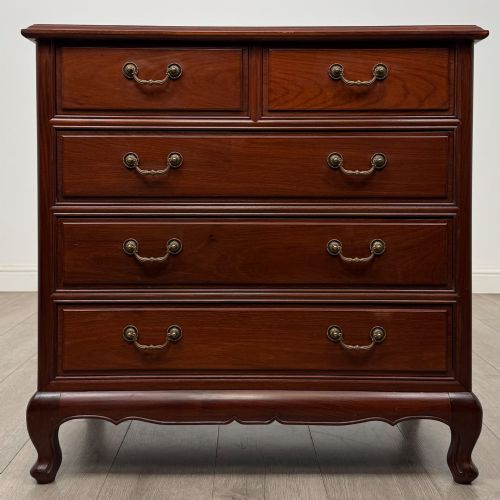
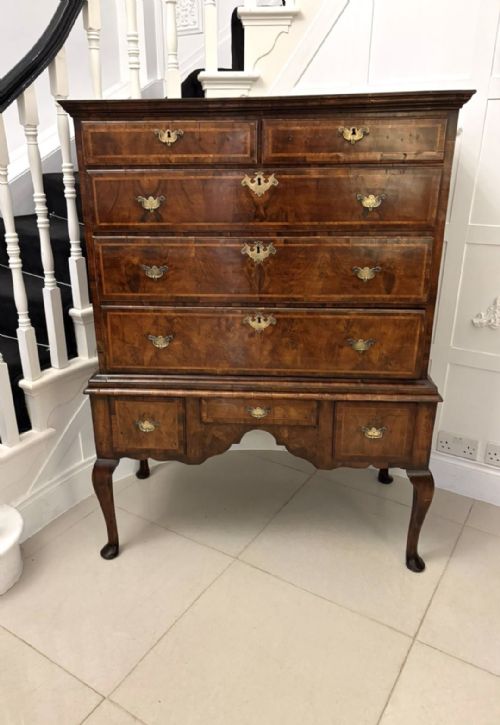
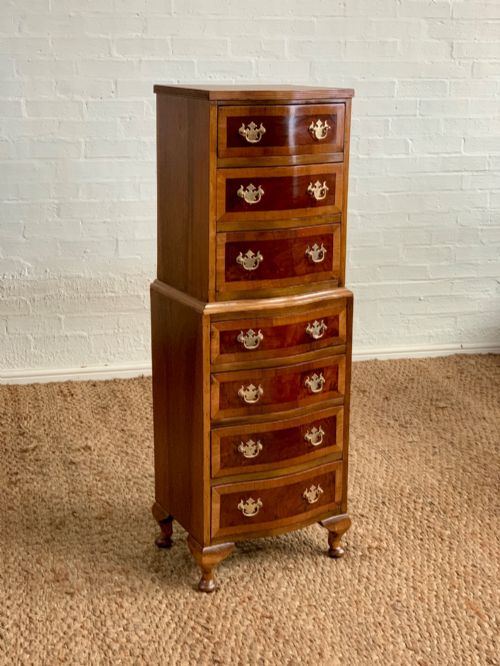
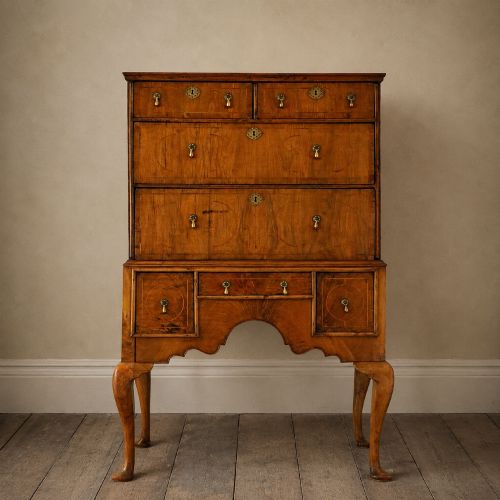
Cabriole Leg Tallboy
A cabriole leg tallboy brings together vertical storage and graceful, curved supports, offering a distinct combination of height and refined woodwork for a traditional interior.
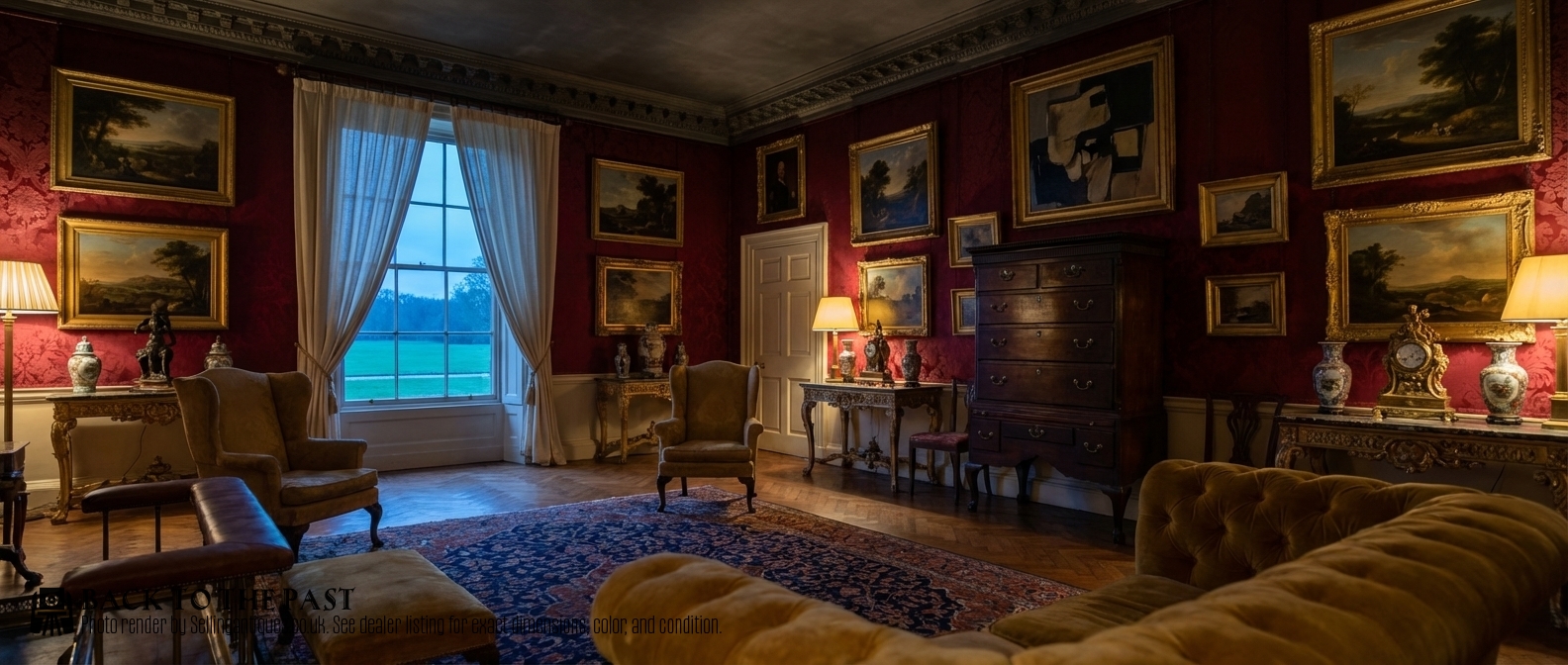
Cabriole Leg Tallboy
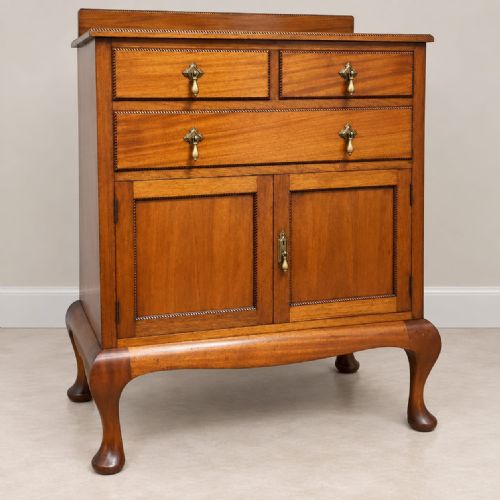
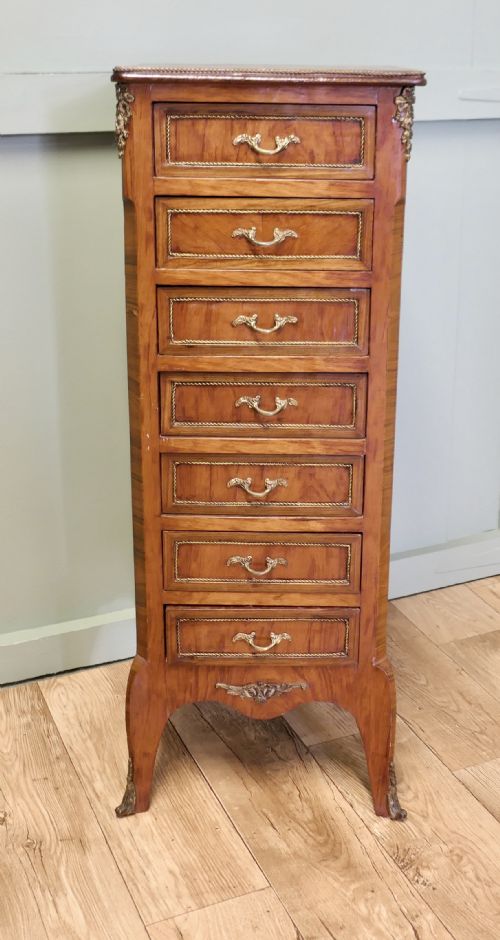
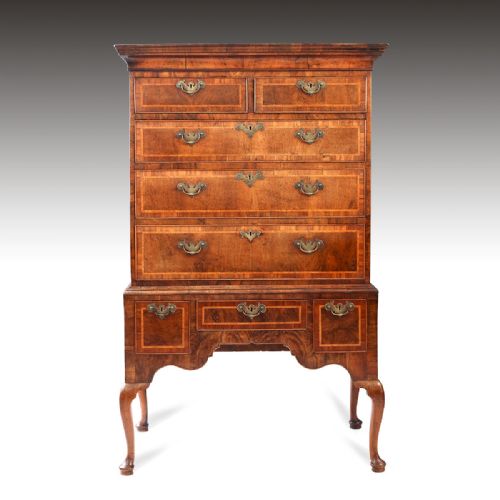
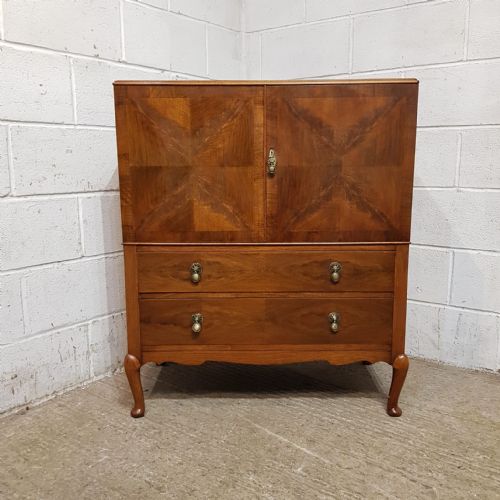
When you search for a cabriole leg tallboy, you encounter elevated case furniture designed to maximise drawer space while resting on curved, slender supports. The pieces on this page span several centuries, including eighteenth-century originals alongside later revival interpretations.
You are most likely to meet walnut and mahogany examples, often configured as a chest on stand or a tall chest of drawers. These items range from compact twentieth-century revival pieces to substantial eighteenth-century designs originating from Georgian workshops.
Materials and construction
Cabinetmakers constructed these pieces using solid timbers such as mahogany, oak, and walnut, frequently applying highly figured walnut veneers and crossbanding to the primary surfaces. The structural framework relies on traditional joinery methods to support the stacked drawer tiers and the distinct curved legs.
Metal hardware such as brass handles and backplates complement the woodwork, while occasional pieces incorporate ormolu mounts. The combination of dense hardwood bodies and delicate curved supports required careful balancing of weight distribution.
Cabriole Leg Tallboy Retail Price Guide 2026
Typical asking prices for cabriole leg tallboy among the pieces listed under this phrase on Sellingantiques today, from the lower quarter to the upper quarter. They describe what is for sale here now, not the wider market.
Listings feature pieces spanning from the seventeenth century through to 1930, encompassing both Georgian originals and Queen Anne revival styles in walnut and mahogany.
Assessing quality and execution
The distinction between standard examples and the finest items rests upon the choice of timber and the precision of the veneer work. Figured walnut or richly grained mahogany displays a depth of grain that elevates the visual impact of the piece.
Execution is further judged by the fluidity of the curves in the legs and the symmetry of the drawer arrangements. Superior pieces maintain crisp detailing in their crossbanding and proportions that harmonise the upper chest with its supporting base.
The Cabriole Leg Tallboy Glossary
- Cabriole leg
- A furniture support that curves outward at the knee and tapers inward toward the ankle, ending in a pad or foot. This form derives from classical motifs and defines many eighteenth-century designs.
- Tallboy
- A tall chest of drawers, often built in two sections comprising an upper chest resting on a lower base or stand. It provides extensive vertical storage without occupying a large floor area.
- Crossbanding
- A narrow strip of veneer laid perpendicularly to the main grain of the furniture surface, creating a decorative border. It frames drawer fronts and tabletops on quality case pieces.
- Chest on stand
- A form where a primary drawer chest sits elevated upon an open framework with legs. This design lifts the storage compartments higher off the floor.
- Veneer
- A thin layer of figured wood applied over a secondary timber core to present a decorative exterior. It allows cabinetmakers to utilise striking grain patterns efficiently.
Cabriole Leg Tallboy: Frequently Asked Questions
What is a cabriole leg tallboy?
A cabriole leg tallboy is a tall chest of drawers that stands on curved, sweeping supports rather than a standard flat base or straight legs. This form combines vertical storage capacity with a lighter visual appearance.
Such pieces typically feature multiple drawers arranged in stacked tiers, making them practical for organising clothing and textiles while adding architectural interest to a room.
How do I date an older tallboy?
Dating these pieces involves examining the secondary timbers, construction methods of the drawer linings, and the style of the brass hardware. Hand-cut dovetails and native woods often indicate earlier periods of manufacture.
Stylistic shifts between walnut-dominant eighteenth-century pieces and later mahogany revivals from the twentieth century also provide clear chronological markers for identification.
Where should I place a tallboy?
These tall storage units suit bedrooms, dressing rooms, or hallways where vertical wall space is available but floor area is restricted. Their elevated legs prevent them from appearing overly heavy in smaller spaces.
Ensuring adequate clearance for opening drawers and maintaining balance on uneven flooring helps integrate the piece safely into your interior layout.
Are these pieces made of solid wood?
Many examples combine solid structural frames with decorative veneers applied to secondary woods like oak or pine. Walnut veneer was particularly popular for creating highly figured exterior surfaces.
Solid mahogany and oak versions also appear across various periods, particularly in regional or utilitarian furniture forms where figured veneers were less common.