


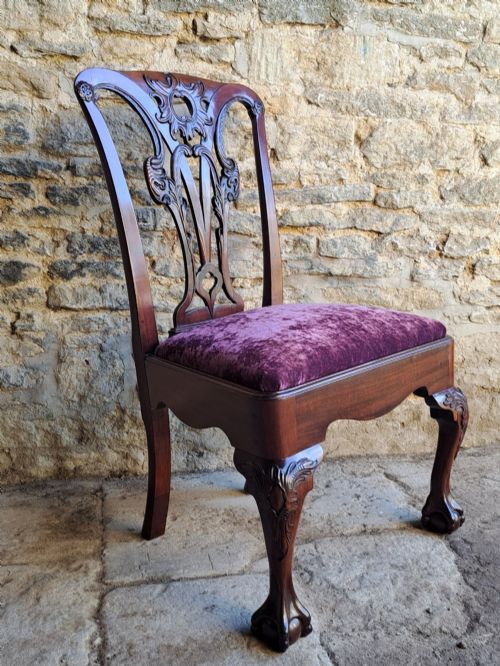
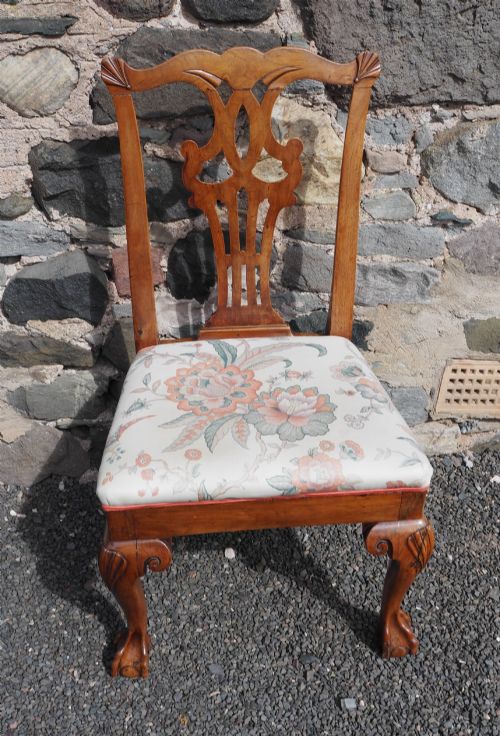
Cabriole Leg Accent Chair
A cabriole leg accent chair brings curved, rhythmic woodwork and period character to a room, offering both seating and ornamental presence.
Cabriole Leg Accent Chair
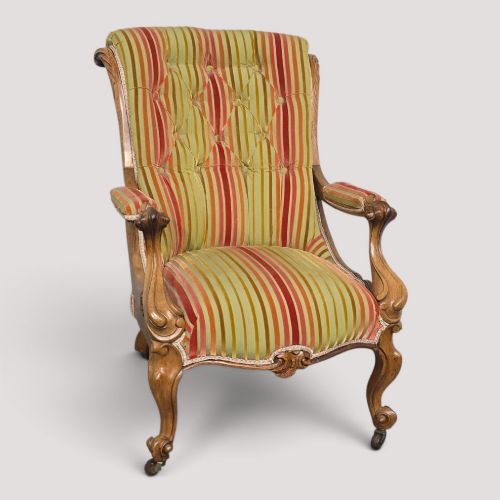
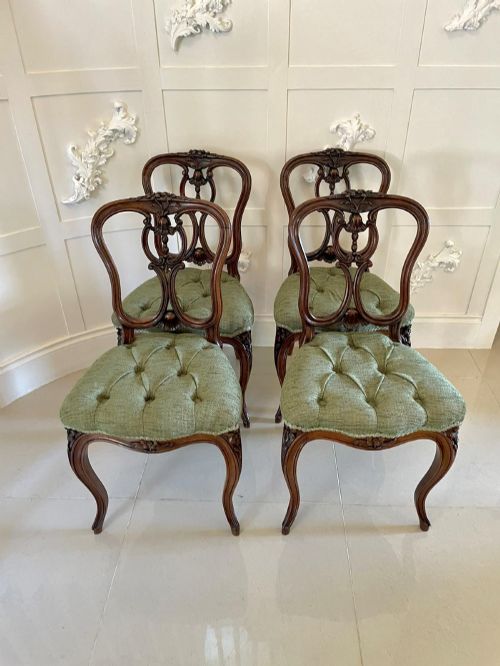
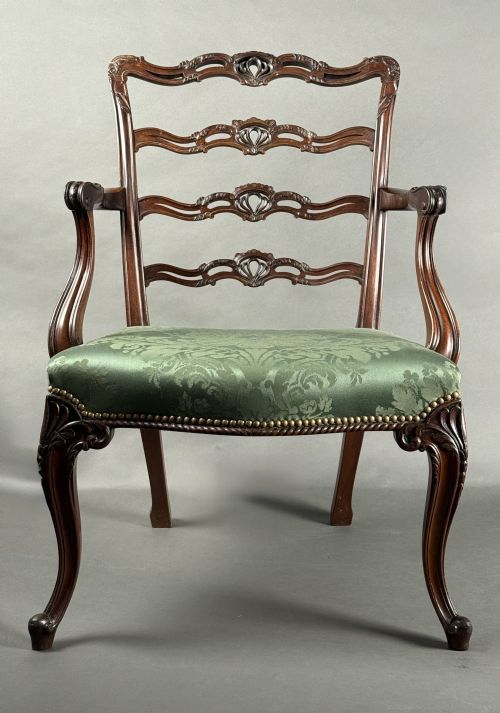
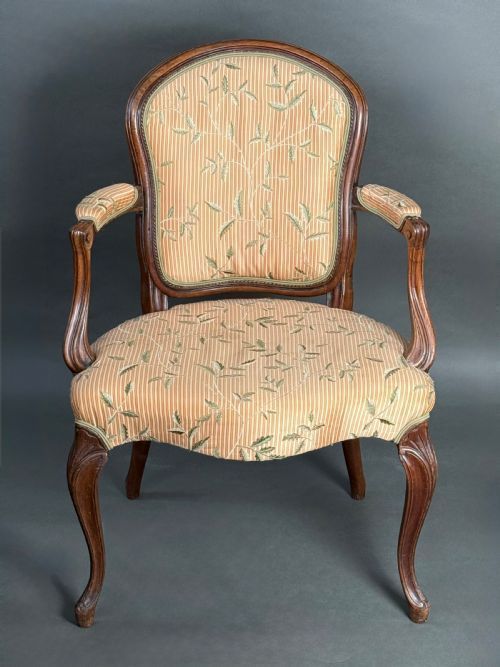
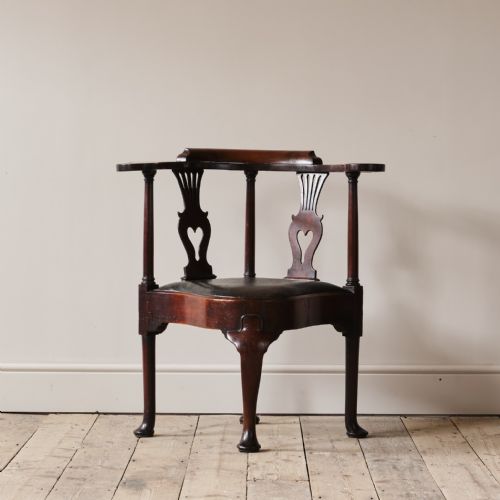
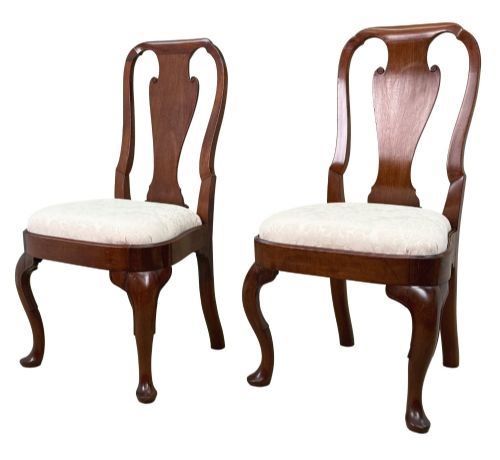
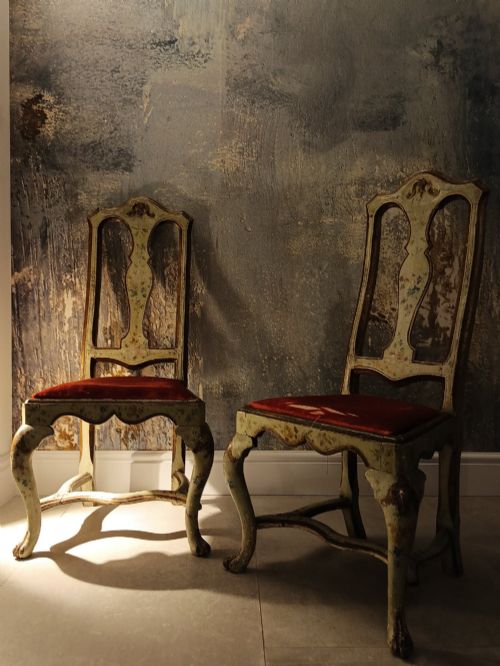
A cabriole leg accent chair spans multiple centuries of seating design, appearing in forms such as side chairs, armchairs, nursing chairs, and occasional chairs. These pieces trace lineages from eighteenth century Queen Anne and George II periods through nineteenth century Victorian revivals and into early twentieth century interpretations.
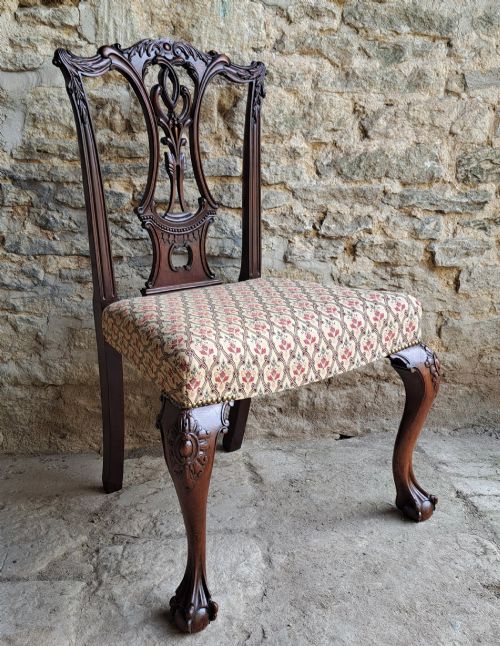
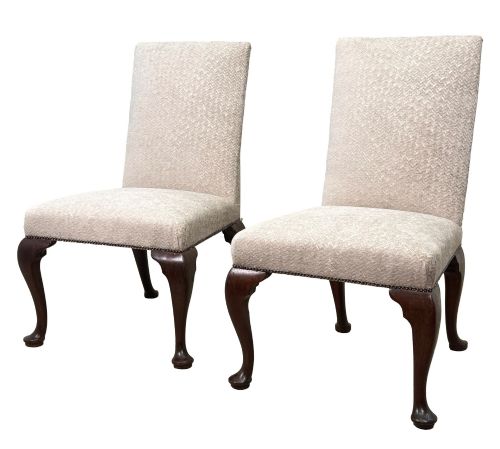
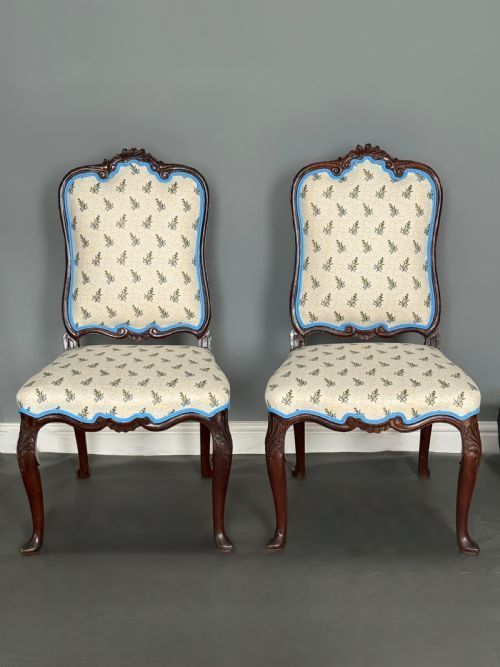
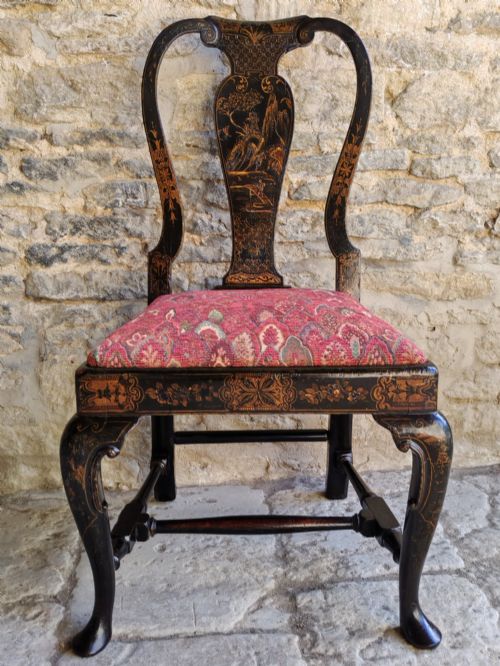
The profile relies on the signature curved leg, which sweeps outward at the knee and tapers inward toward the foot, often finishing in a pad, claw and ball, or scroll. You will encounter versions dressed in rich hardwoods like walnut and mahogany alongside softer rosewood, kingwood, and padauk examples.
Makers across England, Scotland, Ireland, France, Italy, and the Netherlands adopted this serpentine framework for domestic interiors. Surviving pieces range from formal library and salon seating to intimate bedroom and vanity chairs.
How they were made
Cabinetmakers constructed the foundational frames using dense timbers such as walnut and mahogany, selecting grain patterns to follow the compound curves of the cabriole leg without compromising structural integrity. Joinery relied on mortise and tenon joints, often reinforced with corner blocks to withstand the outward thrust of the legs.
Carving was executed directly into the solid wood of the knees, crest rails, and arm terminals, utilising hand chisels to create shell, scroll, or foliate motifs. Surface finishes were built up using traditional polish or wax applications to highlight the natural figure of the timber.
Upholstery techniques varied by period, employing traditional stuffing materials secured over webbing or cane panels, then finished with textiles ranging from antique silk and velvet to modern cotton calico and decorative fabric.
Some nineteenth century nursing chairs sit remarkably low to the ground, designed specifically for tending hearth fires without scorching one's petticoats.
What varies in quality
The distinction between standard and superior pieces rests in the fluidity and confidence of the carved woodwork, particularly along the knee and ankle of the cabriole leg. Master carvers achieved crisp, deep relief that integrates harmoniously with the structural curves, whereas lesser work appears stiff or mechanically produced.
Timber selection and grain continuity dictate overall elegance, with top tier examples displaying matched veneers or choice solid cuts that respect the directional stress of the frame. The crispness of the joinery and the retention of original upholstery foundations further separate everyday utility pieces from collector grade examples.
Charles Tozer·Colefax and Fowler
The Cabriole Leg Accent Chair Glossary
- Cabriole leg
- A furniture leg that bends outward at the knee and tapers inward toward the foot in a graceful double curve. This shape imitates the natural leap of an animal and draws on ancient Chinese design traditions.
- Drop in seat
- A removable wooden frame upholstered separately and dropped into a recess in the chair rail. It allows for easier reupholstery and access to the interior framework.
- Spoonback
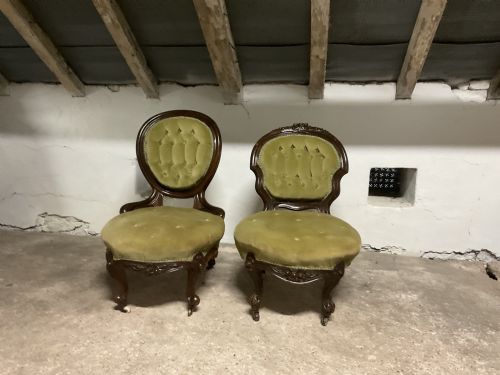
- An upholstered chair back shaped with a concave oval contour that resembles the bowl of a spoon. This form became particularly popular during the Victorian era for parlor and nursing chairs.
- Ormolu
- Gilded bronze mounts applied to furniture for decorative enrichment. Often found on French pieces, these cast metal ornaments accentuate the corners and legs.
- Pad foot
- A simple rounded foot at the base of a cabriole leg where the timber swells slightly before resting on the floor. It provides a clean termination to the curved profile without elaborate carving.
Cabriole Leg Accent Chair: Frequently Asked Questions
Where were these chairs used historically?
These seating forms served multiple domestic functions across parlours, libraries, bedrooms, and dining rooms. Salon and side chairs provided formal seating, while lower nursing chairs accommodated specific domestic tasks.
Library armchairs and wing chairs offered comfort and warmth near firesides, adapting the cabriole shape to heavier, upholstered frames.
How do I care for antique wood and upholstery?
Maintain wooden frames by applying traditional wax polish sparingly to nourish the timber and protect the historic surface finish. Avoid placing pieces in direct sunlight or near heat sources to prevent wood splitting.
Protect delicate textiles such as silk or velvet by vacuuming gently with a soft brush attachment and addressing spills through professional upholstery cleaning.
How can I tell eighteenth century from Victorian pieces?
Eighteenth century examples often utilise solid walnut or mahogany with restrained, hand carved cabriole legs and traditional drop in seats. The proportions tend to prioritize architectural clarity and structural lightness.
Victorian interpretations frequently employ heavier rosewood or walnut, featuring exuberant spoonback padding, buttoning, and deep tufted upholstery influenced by revivalist aesthetics.