


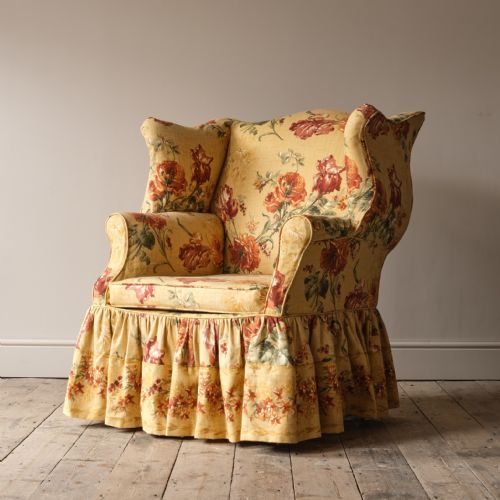
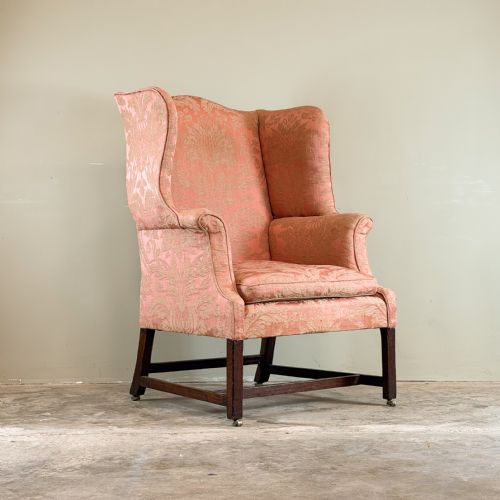
Traditional Upholstered Fireside Chair
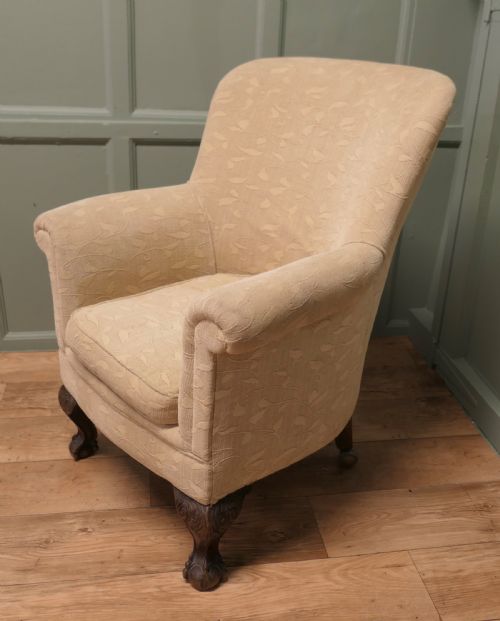
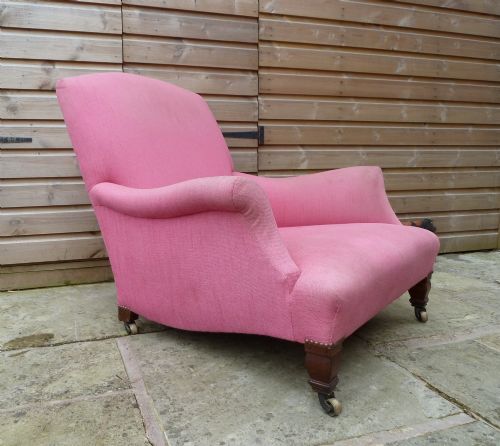
A traditional upholstered fireside chair provides deep-seated comfort, standing in mahogany, walnut, and oak with fabric, velvet, and hessian.
Traditional Upholstered Fireside Chair
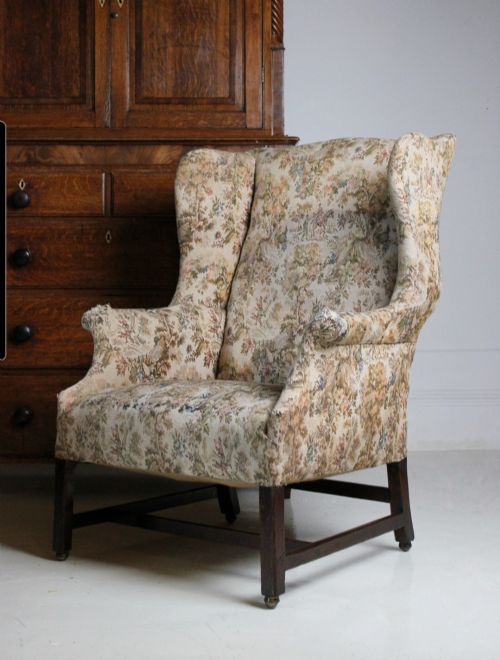
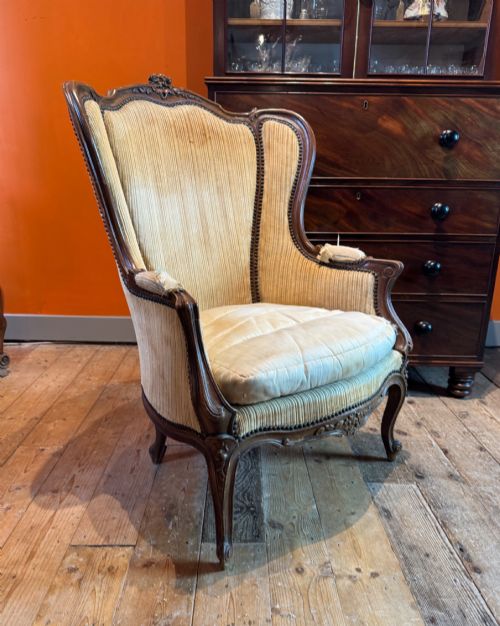
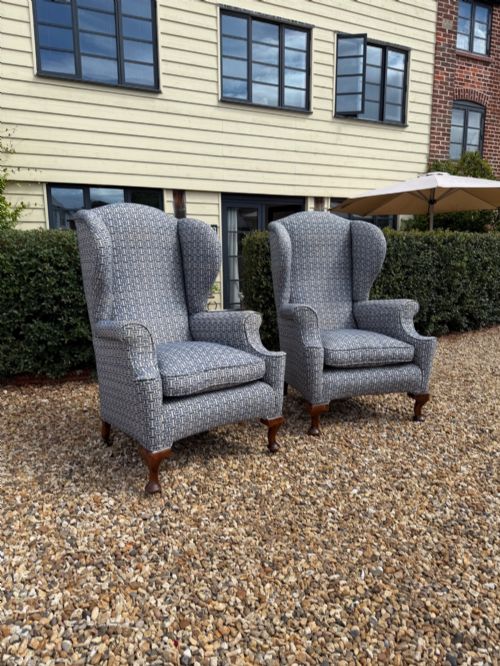
When searching for a traditional upholstered fireside chair, buyers encounter winged forms, library armchairs, and low-slung bedroom chairs dating from the 18th century through to the 1930s. These pieces originate across English country houses and French chateaux, taking the shape of deep-seated armchairs and wingbacks designed to keep draughts away from the user.
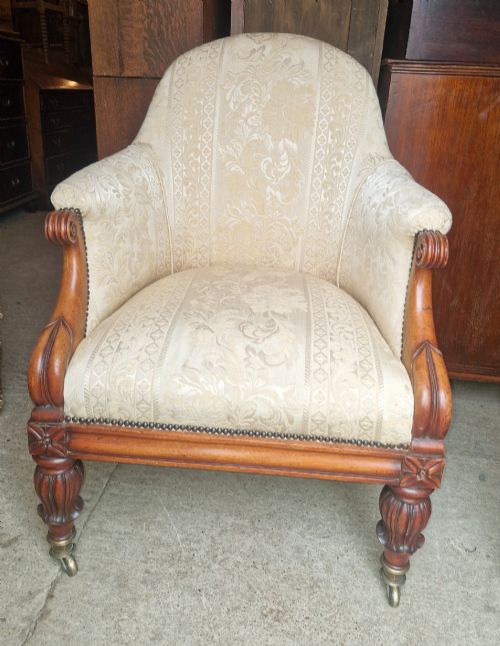
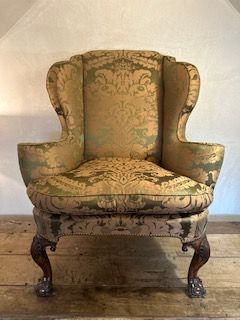
The most common versions met on this page span the Victorian and Georgian periods, alongside 19th-century interpretations built in the Queen Anne and Louis XV styles. Makers and workshops constructed these seating forms using mahogany, walnut, and various hardwoods, pairing exposed wooden frames with fully upholstered sprung seats and buttoned backs.
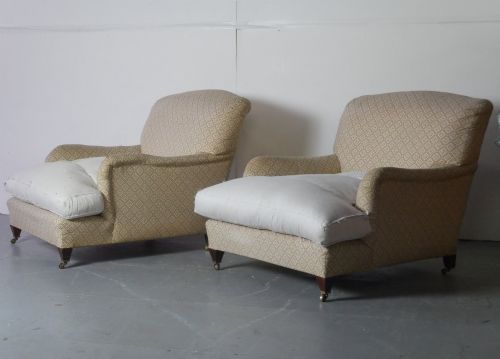
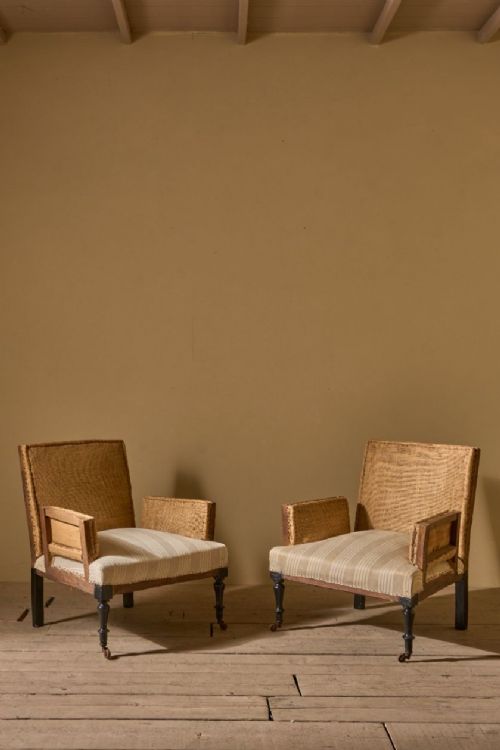
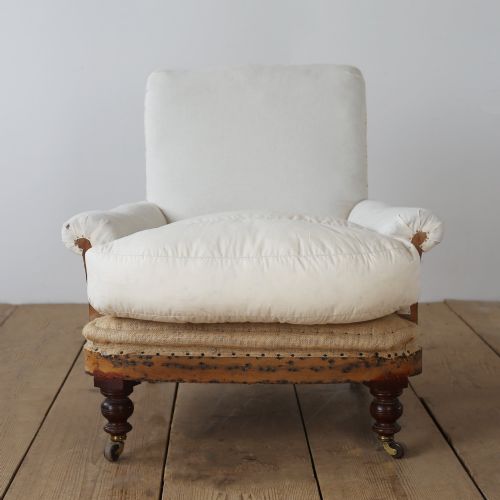
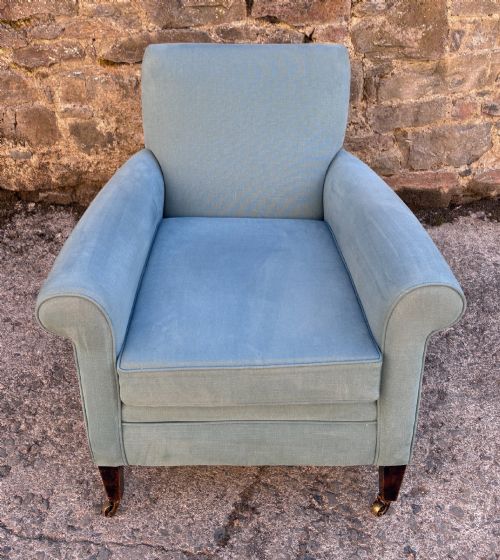
Armchairs and slipper chairs dominate the selection, appearing singly or in matched pairs covered in modern plaids, traditional velvets, or under-upholstered in calico and hessian. Buyers select these seating options to anchor a hearth or reading corner with historical presence and functional upholstery.
How they were made
Makers constructed the structural frames of these chairs using solid timbers such as mahogany, walnut, oak, and general hardwoods, often leaving legs and arms visible while concealing internal pine or beech framework. Joinery relied on traditional mortise and tenon joints to withstand the heavy outward pressure exerted by internal steel coil or tension springs.
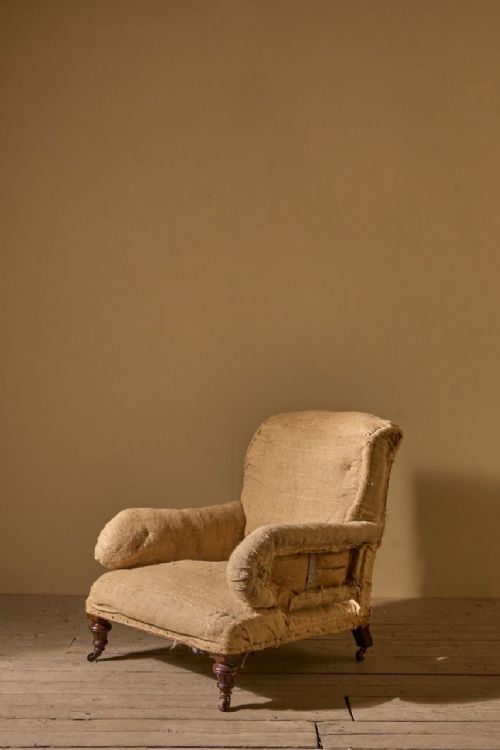
Upholsterers layered natural stuffing materials like horsehair, wool, and feathers over webbing and burlap hessian foundations before applying top covers of silk velvet, wool plaid, or plain calico. Brass castors, studwork, and turned wooden feet finished the lower extremities, while carved mahogany or walnut supported the armrests and wing structures.
Listings feature periods spanning from the 18th-century Georgian era through Victorian decades up to 1930s Edwardian and modern revival styles.
What varies in quality
The integrity of the internal hardwood frame and the survival of original timber components set the baseline for quality among these chairs. Pieces retaining their original carved mahogany or walnut show superior cabinetmaking compared to later replacements or heavily restored supports.
The sophistication of the upholstery build, from the density of feather and down fillings to the precise tension of internal coil springs, determines the structural resilience of the seat. Chairs retaining maker stamps on their brass castors or frame rails exhibit the higher tier of workshop production.
Howard and Sons·SF Cullen·Shoolbred·Gillows·Woodstock
The Traditional Upholstered Fireside Chair Glossary
- Wingback
- An armchair featuring protective side panels designed to shield the occupant from fireplace draughts. These upholstered wings extend downward from the upper backrest to join the armrests.
- Calico
- A plain-woven unbleached cotton textile frequently used as the primary under-upholstery layer on antique seating. Many period chairs appear covered solely in this base material.
- Hessian
- A coarse woven fabric manufactured from jute fibres utilised as a foundational scrim beneath stuffing materials. It provides durable support for internal horsehair and coil springs.
- Bergere
- An enclosed upholstered armchair with wooden framing originating in France. These seats typically incorporate exposed carved woodwork in Louis XV or chateau styles.
- Button back
- An upholstery technique where depressions are formed across the backrest by pulling twine through deep padding to secure buttons. This method creates a diamond-tufted surface pattern.
Traditional Upholstered Fireside Chair: Frequently Asked Questions
What is a wingback armchair?
A wingback armchair is a seating form characterised by extended side panels attached to the backrest. These wings historically trapped heat from the hearth and protected the sitter from cold draughts.
Such chairs appear across Georgian and Victorian periods, often supported on mahogany or walnut legs with brass castors.
How do I identify a Victorian armchair?
Victorian armchairs display heavier proportions and often utilise dark hardwoods like mahogany or oak. They frequently feature button-backed upholstery, velvet coverings, and turned wooden legs.
Makers from this era also adopted earlier styles, producing pieces influenced by Queen Anne and Louis XV designs.
What are calico and hessian?
Calico and hessian are foundational textiles used in traditional upholstery builds. Hessian serves as a strong woven base to hold internal stuffing, while calico provides an intermediate fabric layer.
Some listings offer chairs newly upholstered purely in calico, allowing buyers to apply their own decorative top fabric.
Where were these chairs used?
These seating forms served primarily in drawing rooms, libraries, and bedrooms of English country houses and French chateaux. Their deep seats and upholstered frames provided comfort near fireplaces and reading areas.
Today, buyers place them in living rooms and studies to function as fireside or reading chairs.
How do I spot a Howard and Sons chair?
Howard and Sons chairs typically feature low-slung profiles, deep feather-filled cushions, and exposed turned walnut legs fitted with branded brass castors. Their frames exhibit robust joinery characteristic of late 19th-century London workshops.
Similar pieces are often described in the Howard style by subsequent makers.