

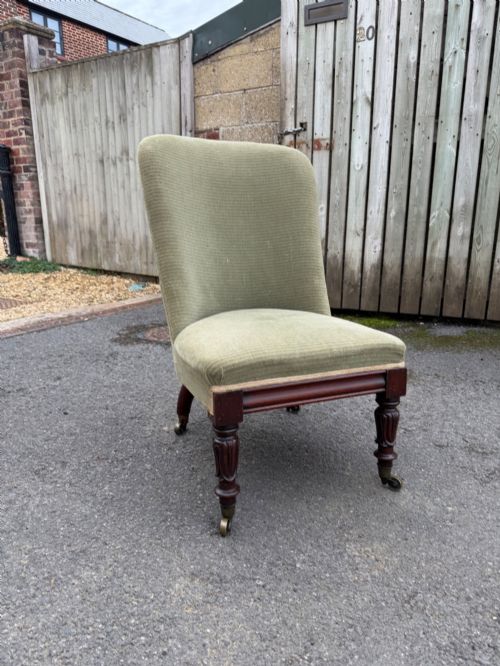


Brass Castor Bedroom Chair
A brass castor bedroom chair brings effortless mobility and period charm to an interior, offering compact seating rooted in nineteenth-century craftsmanship.
Brass Castor Bedroom Chair
A brass castor bedroom chair takes many forms on this page, appearing as nursing chairs, slipper chairs, occasional armchairs, and side chairs. These pieces span the Georgian, Regency, Victorian, and Edwardian eras, reflecting the changing domestic fashions of the nineteenth and early twentieth centuries.
The Victorian period dominates the selections, often presenting button-backed upholstery and low profiles designed for bedroom comfort. Buyers encounter various seating types, from prayer chairs to corner chairs, all unified by their compact proportions and mobility.
Origins range from English workshops to French Napoleon III designs, incorporating diverse stylistic revivals such as Gothic and Rococo. Each piece serves as a functional seat intended for intimate spaces rather than grand reception rooms.
Character and Craft
Quality reveals itself in the crispness of the timber carving and the architectural integrity of the frame. Superior examples display balanced proportions, original brass hardware, and tightly jointed members that withstand regular use.
The standard of upholstery and the retention of period textiles also separate ordinary pieces from exceptional ones. Finer chairs retain their original maker stamps or labels, confirming attribution to esteemed cabinet makers.
The listings span the Georgian, Regency, Victorian, and Edwardian periods, utilising timbers such as mahogany, walnut, rosewood, and beech.
Harrods London·Hindley And Sons·Miles And Edwards·Howard And Sons·Gillows
The Brass Castor Bedroom Chair Glossary
- Castor
- A small wheel mounted on a swivel assembly attached to the base of a furniture leg. This mechanism allows the chair to roll smoothly across floors.
- Nursing chair
- A low-seated armchair designed in the nineteenth century for comfort while tending to infants. These chairs often feature low backs and padded seats.
- Slipper chair
- An upholstered chair with a low seat and no arms, originally created for dressing rooms and bedrooms. They allow ease of movement when putting on shoes.
- Button back
- An upholstery style where depressions are formed in the padding by pulling buttons deep into the stuffing. This technique secures the interior materials and creates a textured pattern.
- Prayer chair
- A low chair featuring a high, narrow back designed to support the user while kneeling in devotion. These pieces often appear in Victorian domestic settings.
Brass Castor Bedroom Chair: Frequently Asked Questions
How do I use a bedroom chair today?
These compact chairs fit easily into corners, dressing rooms, or studies where extra seating is needed without crowding the space. Their mobility allows you to reposition them effortlessly for reading or conversation.
They also serve as striking decorative accents when paired with modern furniture. Placing one by a fireplace or a bedroom window highlights its historical silhouette.
Are these chairs comfortable for daily sitting?
Many of these pieces feature sprung seats and padded backs designed for comfort in private chambers. Their lower heights make them particularly relaxing for lounging.
Upholstery condition varies, so some vintage pieces benefit from professional reupholstery to ensure optimal support. The generous padding typical of Victorian designs often provides surprising ergonomic ease.
How do I date a Victorian bedroom chair?
Examining the timber, structural joinery, and upholstery techniques helps determine the approximate age of a piece. Victorian examples often display deep buttoning and rich mahogany or walnut frames. Caster designs and maker stamps also offer clear clues to the manufacturing decade. Comparing the stylistic motifs, such as Gothic or Rococo revivals, narrows the production period.
Can I mix these chairs with modern decor?
Historic seating adds texture and warmth to contemporary interiors by contrasting clean modern lines with traditional craftsmanship. Placing an antique occasional chair in a minimalist room creates an intentional focal point.
Selecting vibrant or textured fabrics helps bridge the gap between old and new design aesthetics. The modest scale of these chairs ensures they integrate smoothly into various room layouts.