

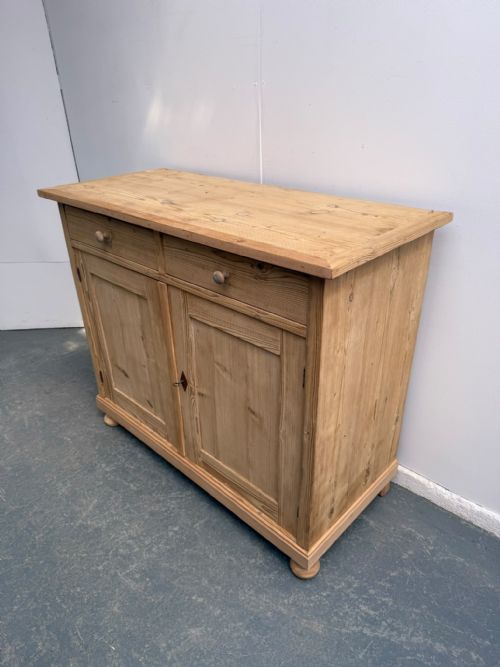
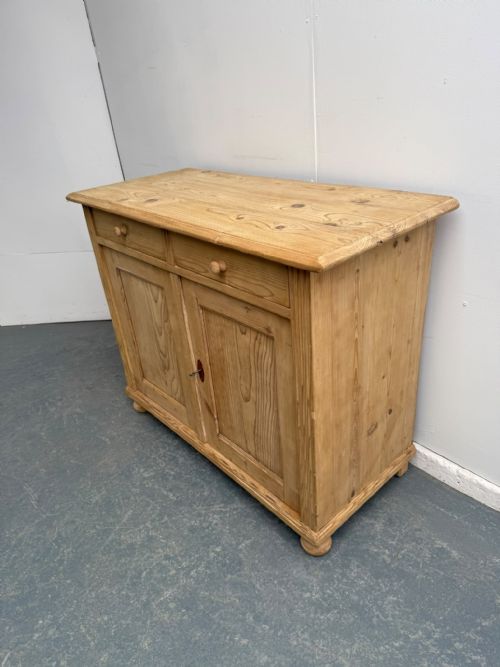
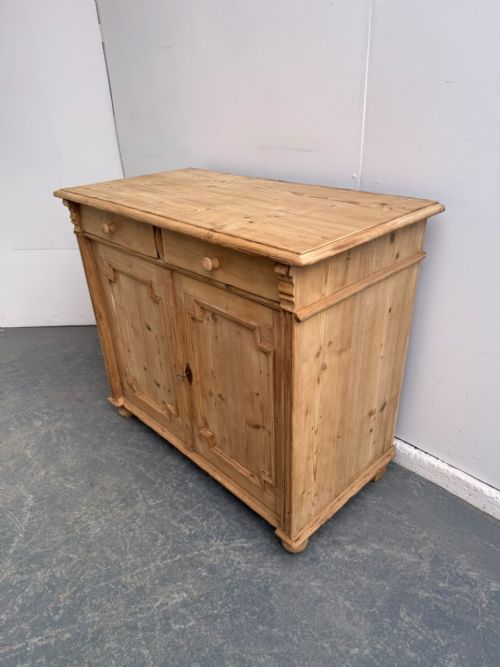
Cabinet with Drawers Base
A cabinet with drawers base combines surface display or workspace with practical under-storage, offering substantial utility and traditional craft for domestic interiors.
Cabinet with Drawers Base
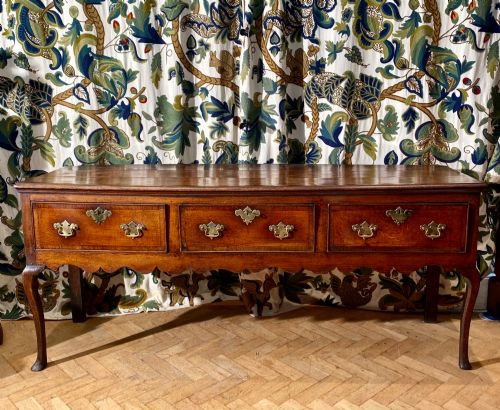
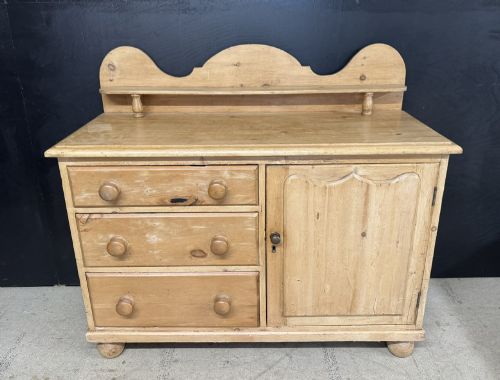
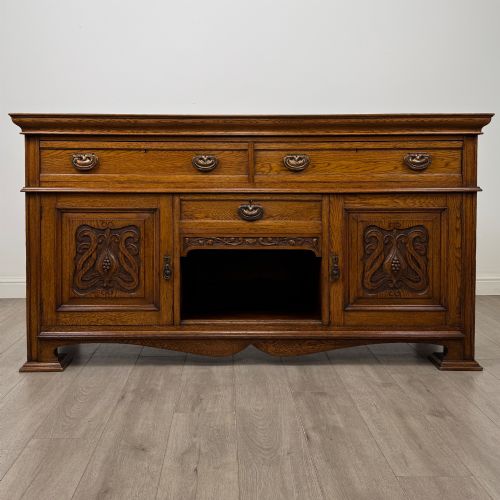
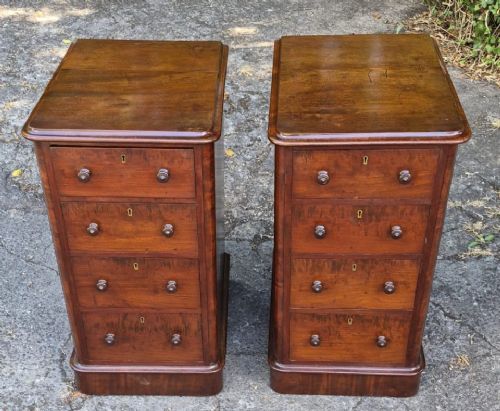
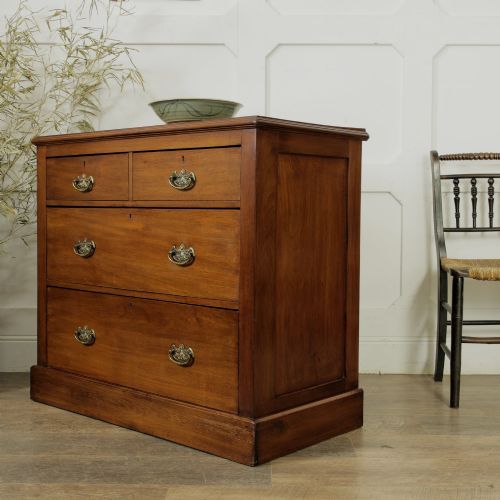
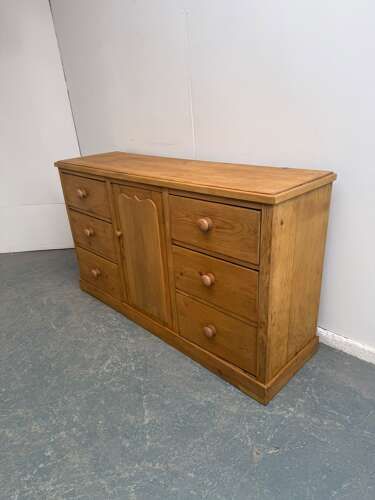
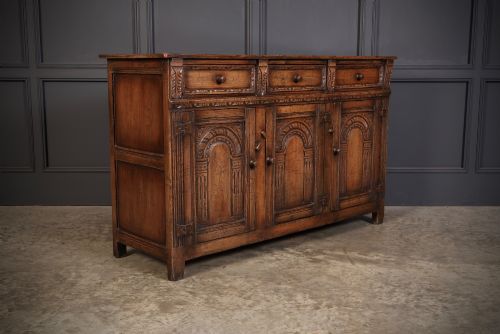
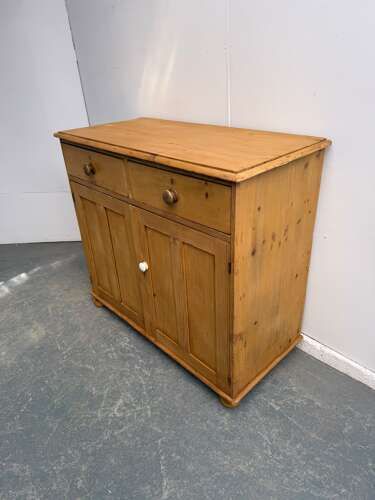
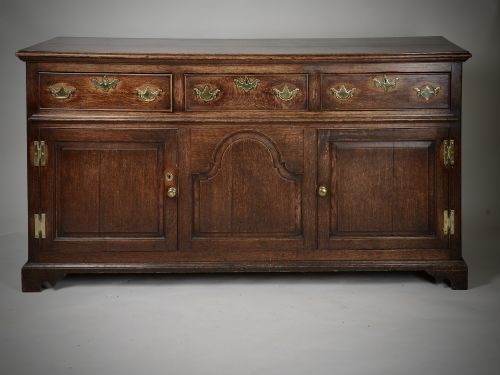
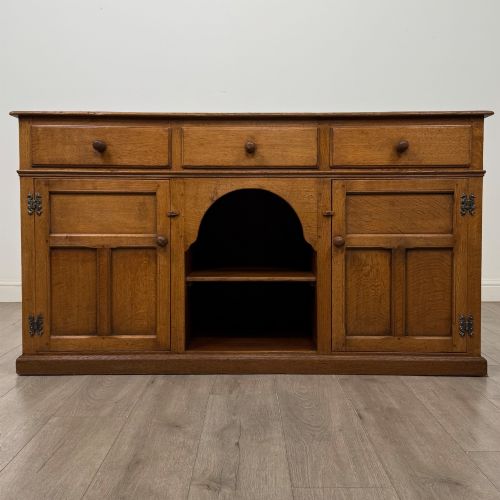
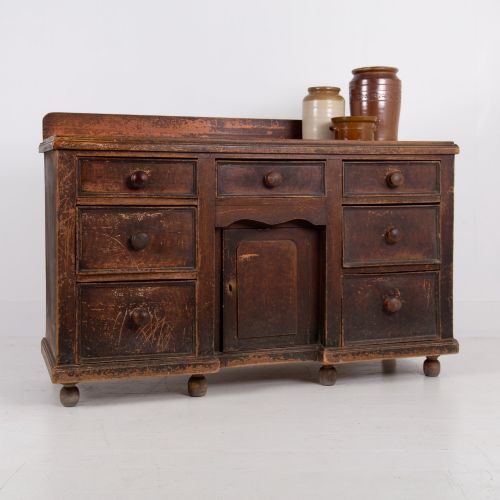
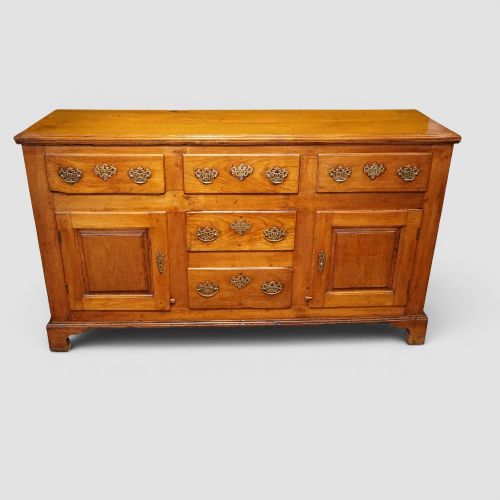
A cabinet with drawers base typically takes the form of a kitchen dresser base, sideboard, chiffonier, or side cabinet designed to hold household goods and provisions. These pieces provide a sturdy surface top paired with functional lower drawers and cupboards.
The most common examples met here are pine kitchen dresser bases and oak sideboards dating from the Georgian, Victorian, and Edwardian periods. Buyers encounter both rustic country pieces in softwood and formal reception room furniture in hardwood.
Forms range from compact two-door cupboards to wide Lancashire dresser bases and specialised shop display units. Each version reflects the specific domestic or commercial storage needs of its original era.
What varies in quality
Quality separates through the selection of timber and the sophistication of the joinery, distinguishing utilitarian workshop output from formal parlor furniture. Superior examples display careful timber matching, refined crossbanding, and well-executed inlaid details.
The structural integrity of drawers and doors dictates the standard of a piece, with tight joints and original hardware indicating high-grade construction. Simpler country items rely on sturdy pine boards and straightforward utility rather than decorative flourishes.
The inventory records pine, oak, mahogany, and birch materials spanning the Georgian, Victorian, Edwardian, and 1930s periods.
Short & Mason·E. Pollard & Co. Ltd.·Singer
The Cabinet with Drawers Base Glossary
- Dresser base
- A low wooden storage unit featuring a flat top surface above rows of drawers and cupboards, historically used in kitchens for food preparation and tableware storage.
- Chiffonier
- A compact low sideboard or cupboard developed in the nineteenth century, often fitted with small drawers and enclosed lower shelving for practical storage.
- Crossbanding
- A decorative border technique where thin strips of veneer are laid across the grain of the primary wood to frame drawer fronts or cabinet doors.
- Barograph
- A meteorological instrument housed in a wooden case that records barometric pressure continuously onto paper charts, frequently incorporating a specialised storage drawer.
- Bombe
- A convex, swelling contour shape found on the lower sections of continental display cabinets, requiring advanced woodworking skill to shape accurately.
Cabinet with Drawers Base: Frequently Asked Questions
What is a cabinet with drawers base?
A cabinet with drawers base is a sturdy storage furniture item featuring a flat top surface combined with functional drawers and lower cupboards. These pieces include kitchen dressers, sideboards, and chiffoniers.
They originated to serve utilitarian and display purposes in kitchens, halls, and dining rooms across past centuries.
How were these cabinets used originally?
These units served primarily for storing kitchen provisions, tableware, linens, and household goods while providing a surface for food preparation or serving. Specialised versions held shop stock or meteorological instruments.
Their robust construction allowed them to withstand heavy daily domestic or commercial use over generations.
Where do pine and oak versions fit best?
Pine versions, especially those with waxed or painted finishes, suit country kitchens, utility spaces, and informal dining areas. Oak and mahogany editions integrate well into traditional dining rooms and hallways.
Their neutral timber tones and practical proportions allow them to function as sideboards or serving stations in modern homes.
How can I tell Victorian pieces from Georgian ones?
Georgian pieces often feature formal mahogany timbers, refined crossbanding, and restrained proportions typical of eighteenth-century design. Victorian and Edwardian examples frequently utilise pine, oak, or walnut with heavier mouldings and varied local vernacular styles.
Examining the internal drawer construction, handles, and wood species helps determine the manufacturing period.