


Amboyna Glazed Display Cabinet
An amboyna glazed display cabinet brings rich exotic timber and transparent frontage together to display treasured possessions in the Victorian interior.
Amboyna Glazed Display Cabinet
An amboyna glazed display cabinet encompasses sophisticated nineteenth-century forms including credenzas, pier cabinets, side cabinets, and breakfront bookcases. These pieces emerge predominantly from the Victorian era and the Aesthetic Movement, spanning years from around eighteen-fifty to eighteen-eighty.
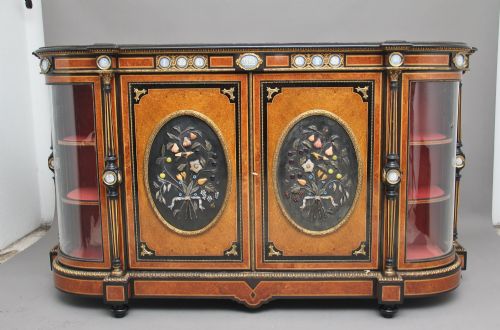
The most likely version to encounter on this page is a Victorian ebonised and amboyna inlaid cabinet or credenza, often featuring glazed doors and fine brass or ormolu mounts. Makers utilised contrasting timbers to create striking visual depth within formal reception rooms.
How they were made
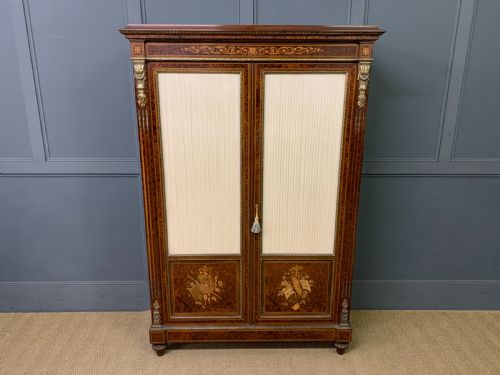
Cabinets rely upon amboyna veneer and burr walnut applied over solid supportive carcasses, paired frequently with ebonised wood to accentuate the golden grain of the primary exotic timber. Artisans integrated brass details, ormolu mounts, and pietra dura inlays to enrich the structural framework.
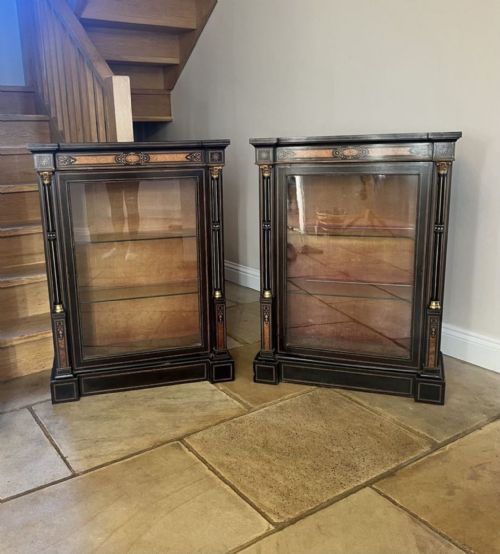
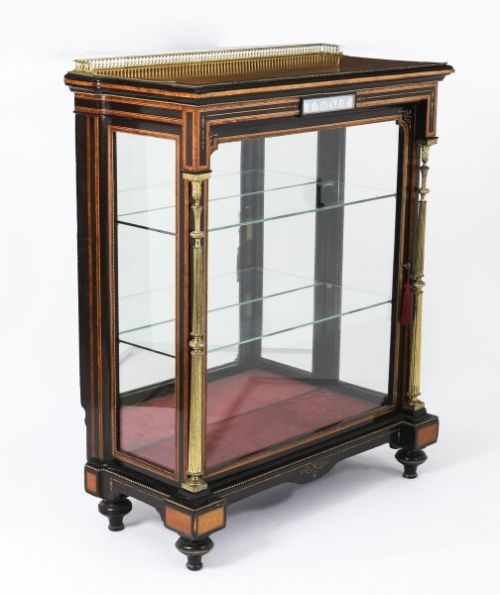
Glass panels are fitted securely within glazed doors designed to protect delicate collections while maintaining complete visibility from the exterior. Inlay work in contrasting woods and gold finishes reflects the meticulous craftsmanship characteristic of nineteenth-century workshops.
Listings feature nineteenth-century Victorian forms including credenzas, pier cabinets, and breakfront bookcases in amboyna, ebonised wood, and burr walnut.
What varies in quality
Quality rests in the selection and matching of the amboyna veneer, where richer, denser burr patterns command greater attention than plainer timber surfaces. The integration of secondary woods like burr walnut and the precision of ebonised framing set finer examples apart.
The refinement of brass mounts, ormolu detailing, and inlaid work distinguishes standard production from exceptional cabinet work. Furthermore, the structural ambition of three-door breakfront forms or large pier cabinets indicates higher tier manufacture.
The Amboyna Glazed Display Cabinet Glossary
- Ebonised
- Wood treated with a dark stain or finish to imitate expensive ebony. This technique created sharp, dramatic contrasts against pale or figured veneers.
- Credenza
- A low dining or reception room cabinet used for display and storage, often featuring glazed central doors flanked by curved side cupboards. Victorian examples frequently combine amboyna with ormolu mounts.
- Ormolu
- Gilt bronze ornamentation applied to furniture and decorative objects. It added metallic brilliance and sculptural detail to nineteenth-century display pieces.
- Pietra Dura
- An artistic technique involving the inlay of cut and fitted polished coloured stones to form images or geometric patterns. It appears on select high-status nineteenth-century cabinets.
- Pier Cabinet
- A narrow display cabinet designed to fit the wall space between windows. These pieces typically feature a single glazed door and intricate wood inlays.
Amboyna Glazed Display Cabinet: Frequently Asked Questions
What is an amboyna glazed display cabinet?
An amboyna glazed display cabinet is a nineteenth-century Victorian furniture piece featuring exotic amboyna wood veneer and glass doors designed for showing porcelain and ornaments.
These cabinets range from compact pier cabinets to large breakfront bookcases and credenzas.
How do I date a Victorian cabinet?
Dating relies on stylistic clues such as Aesthetic Movement ebonisation, specific inlay patterns, and construction methods recorded around eighteen-fifty to eighteen-eighty.
Cabinet forms shifted from classical revival credenzas towards lighter, gold-inlaid aesthetic designs by the late nineteenth century.
Where should I place a credenza?
A credenza suits principal reception rooms, dining spaces, or long hallways where its low profile and glazed display front can be appreciated.
These pieces function effectively as focal points against substantial walls while providing interior storage.
How do I care for amboyna veneer?
Preserving amboyna veneer requires stable indoor humidity levels away from direct sunlight to protect the fragile exotic timber and polish.
Gentle dusting with a dry cloth maintains the surface without risking moisture damage to the delicate grain.