


Victorian Amboyna Bookcase
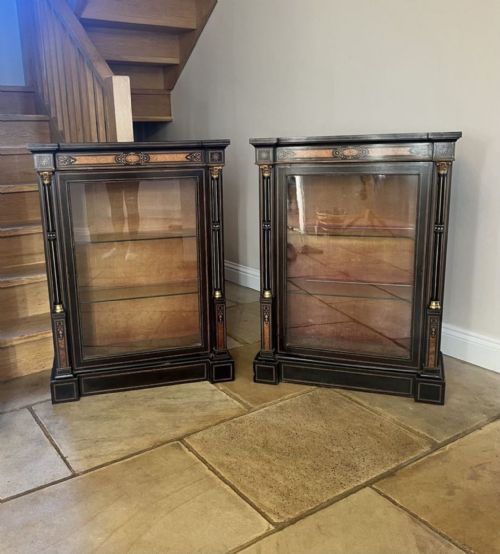
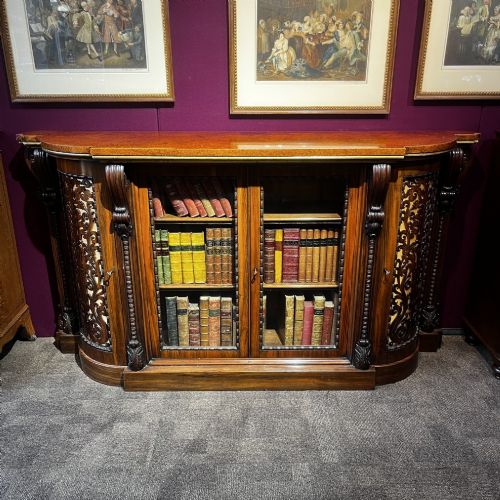
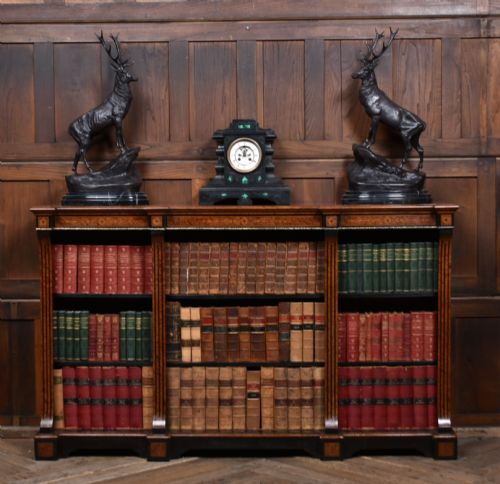
A Victorian amboyna bookcase brings rich exotic timber and precise brass or gold leaf inlay into a room.
Victorian Amboyna Bookcase
When you search for a Victorian amboyna bookcase, you encounter sophisticated nineteenth-century display furniture designed for refined Victorian interiors. These pieces frequently combine open shelving with enclosed cabinets, creating versatile storage for books and decorative objects alike.
The versions most commonly met on this page span the mid to late nineteenth century, including pieces reflecting the Aesthetic Movement. They typically pair striking amboyna veneer with contrasting ebonised wood or further decorative timber varieties.
Forms range from breakfront bookcases and credenzas to etageres and open bookcases. Each format showcases the distinctive speckled grain of amboyna as a primary decorative surface.
Materials and Construction
Maker's workshops built these pieces using solid timber carcases faced with carefully chosen amboyna veneer. Craftsmen applied this figured wood alongside ebonised wood, burr walnut, goncalo alves, or coromandel to create striking colour contrast.
Inlay work played a central role, incorporating brass and gold leaf to accent doors, friezes, and panels. Glass panels were fitted into glazed doors and display sections, whilst brass hardware completed the structural assembly.
Cabinetmakers prized amboyna so dearly they sometimes used tiny offcuts just to line the interior keyhole escutcheons.
Assessing Quality and Execution
Quality in these bookcases rests on the selection and matching of the amboyna veneer and secondary timbers. Superior pieces display harmonious grain patterns across expansive surfaces rather than disjointed patches.
The finesse of the inlay work and the crispness of the ebonised detailing distinguish finer examples from standard production. Cabinetmakers who achieved seamless joins between contrasting woods and metals produced the most enduringly impressive results.
Lamb of Manchester
The Victorian Amboyna Bookcase Glossary
- Amboyna
- A highly prized exotic wood known for its dense, speckled, and swirling grain pattern. It was typically used as a veneer on high-end nineteenth-century cabinet work.
- Ebonised Wood
- Timber treated with a dark stain or finish to imitate ebony. This technique provided a sharp, dark contrast to lighter veneers like amboyna.
- Breakfront
- A cabinet design where the central section projects forward from the flanking wings. This architectural arrangement adds depth and visual rhythm to larger bookcases.
- Aesthetic Movement
- A late nineteenth-century design style emphasising visual beauty over narrative content. Pieces from this movement often utilise ebonised finishes and gilt highlights.
Victorian Amboyna Bookcase: Frequently Asked Questions
How do I care for amboyna veneer?
Keep these pieces away from direct sunlight and sudden temperature shifts to protect the delicate veneer and finish. Dust gently with a dry, soft cloth and avoid chemical polishes.
Maintaining stable indoor humidity prevents the wood and underlying structure from expanding or contracting excessively. Proper environmental care preserves the integrity of the brass inlay and gold leaf details.
Where were these bookcases placed?
Victorian households positioned these refined cabinets in principal reception rooms, libraries, and parlours. They served to display prized volumes alongside ceramics and decorative objects.
Their decorative backs and finished sides often allowed them to stand free within a room rather than sitting strictly flush against a wall.
What defines the Aesthetic Movement style?
Aesthetic Movement pieces from the late nineteenth century favour clean structural lines and flattened decorative motifs. They rely heavily on ebonised wood surfaces contrasted with gilt and exotic veneers.
This design philosophy turned away from heavy historical revivalism in favour of pure visual harmony and craftsmanship.
How do I distinguish mid-Victorian from later pieces?
Mid-Victorian examples often incorporate rich contrasting woods like goncalo alves and burr walnut alongside amboyna. Their proportions tend to reflect earlier classical revival influences.
Later Victorian pieces from around eighteen-eighty frequently adopt the sharper rectilinear geometry and ebonised contrasts characteristic of the Aesthetic Movement.