
Button Backed Couch
Button backed couch seating brings deep upholstery and sprung comfort to a room, offering nineteenth-century presence and enduring repose.
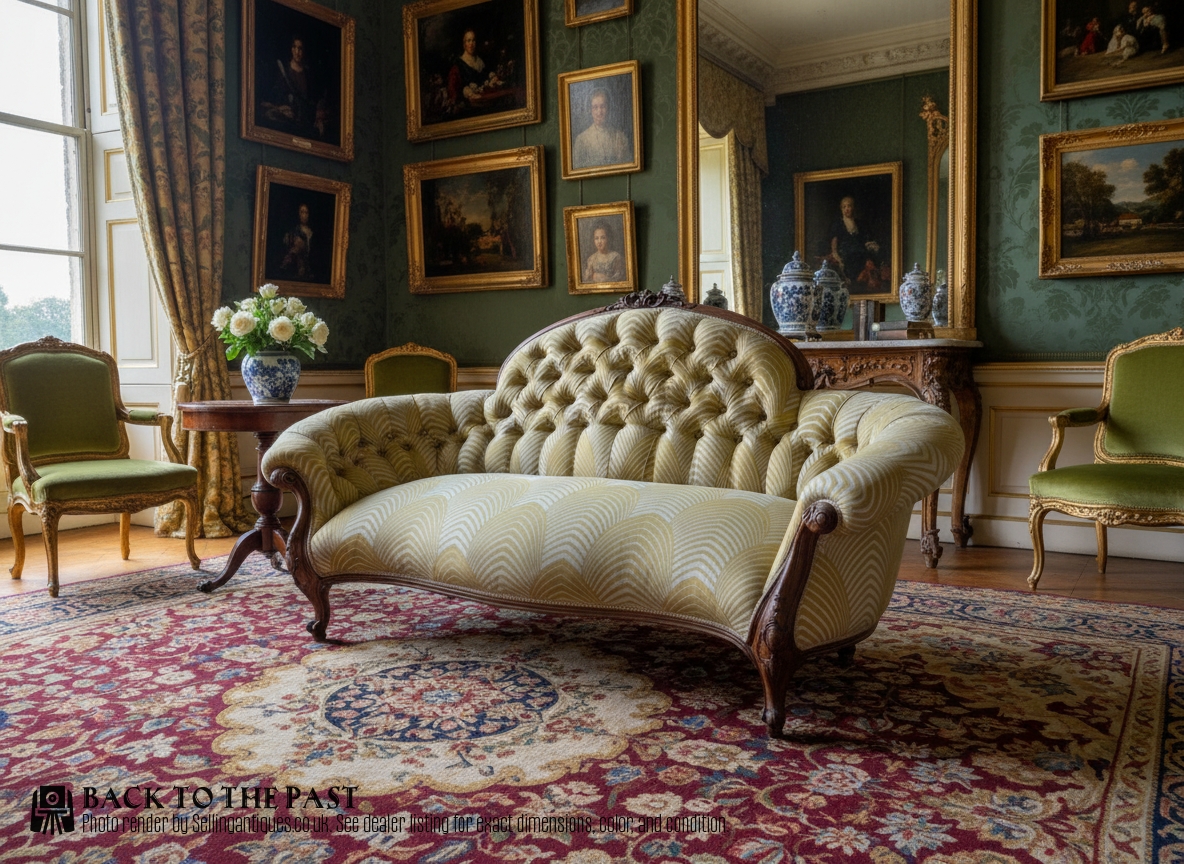
Button Backed Couch
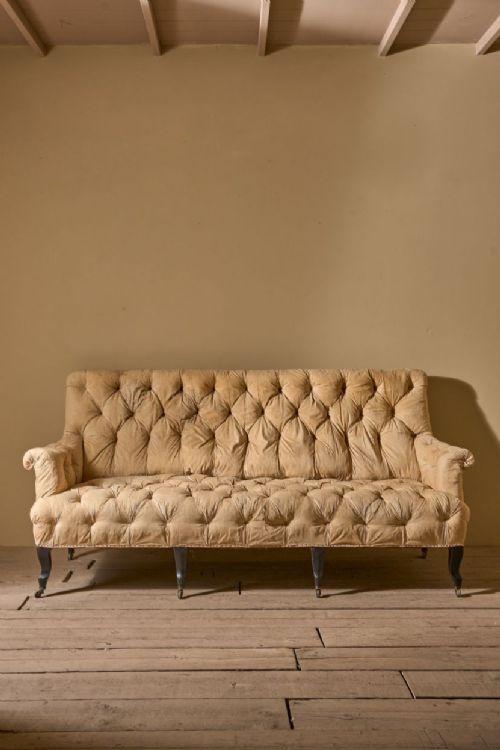
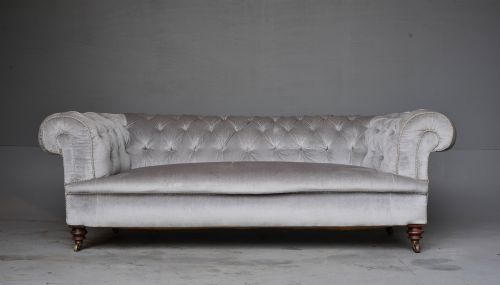
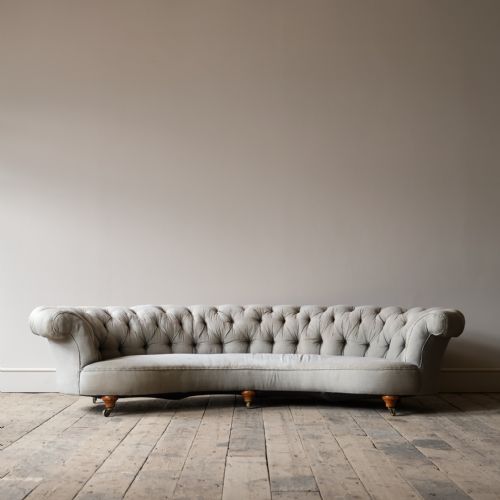
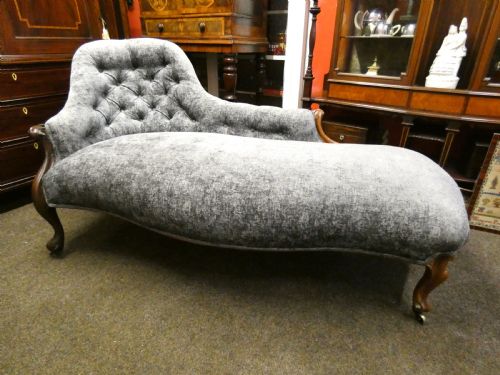
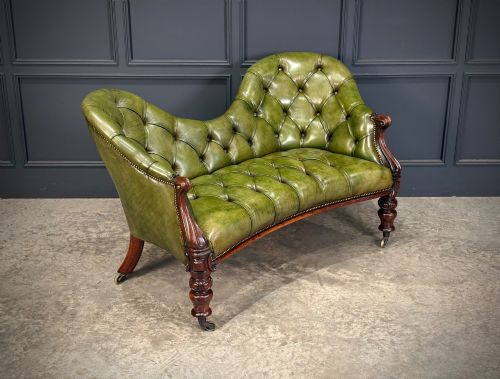
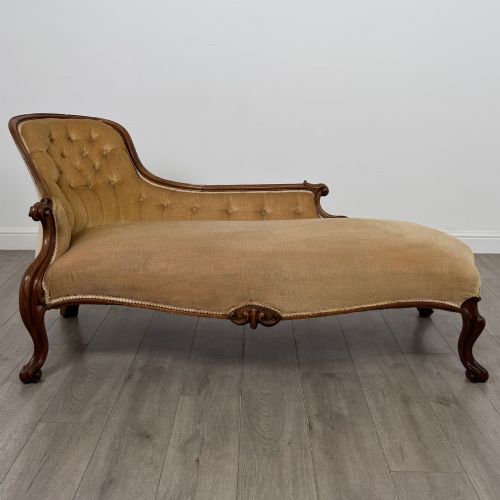
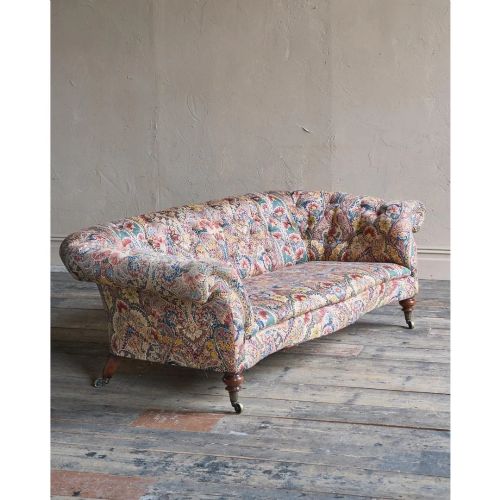
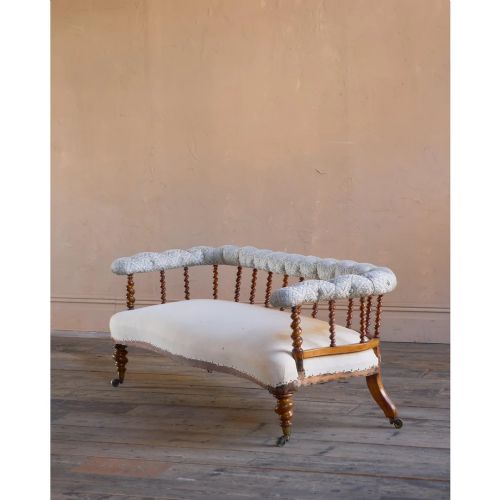
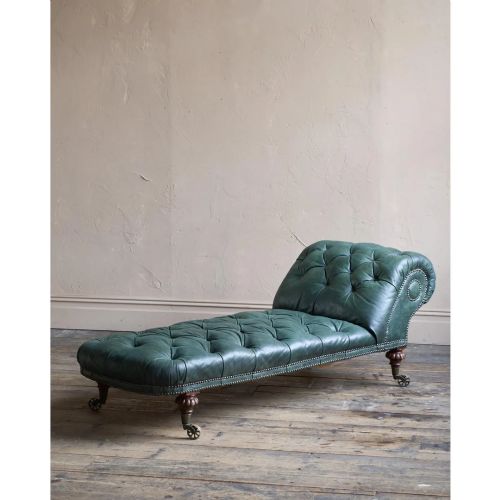
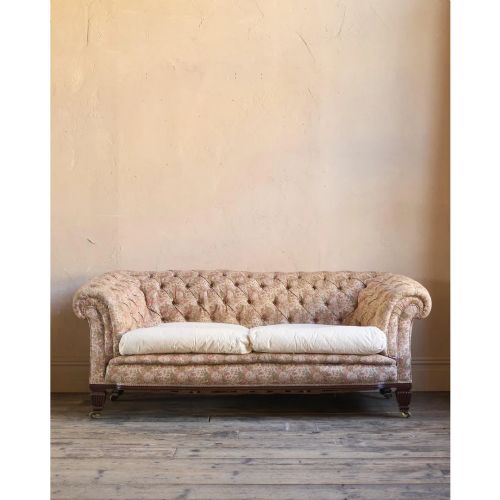
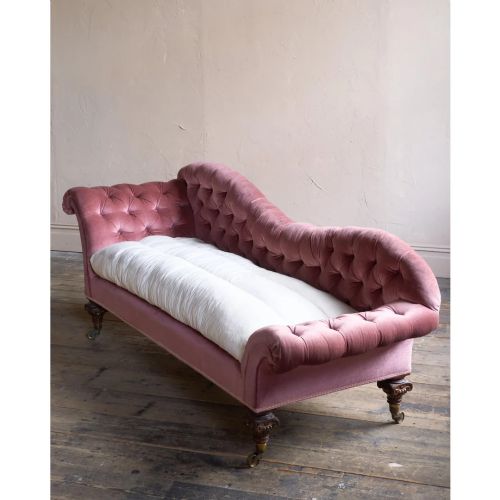
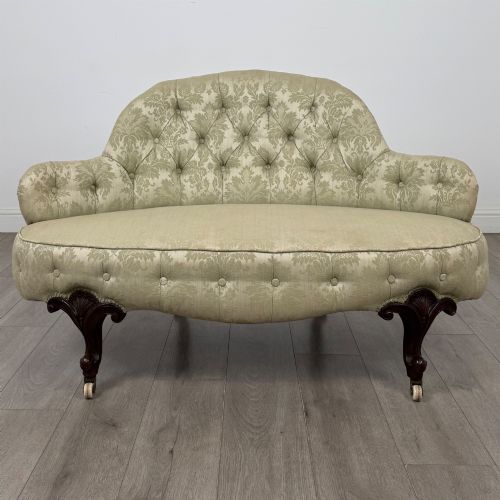
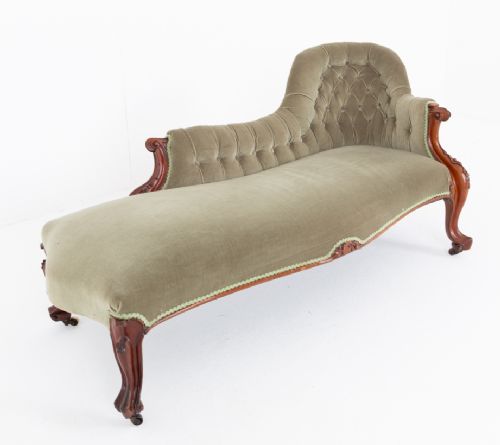
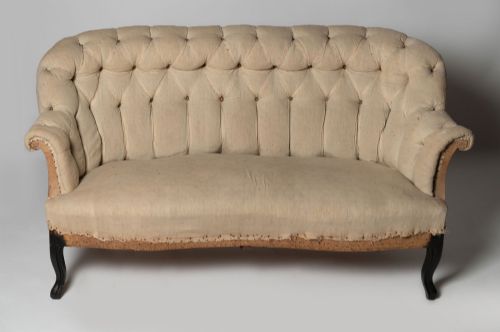
A button backed couch encompasses nineteenth-century Chesterfields, salon sofas, and chaise longues originating from Victorian workshops and French makers. Buyers searching this phrase encounter deep-buttoned upholstery across timber frames, ranging from compact daybeds to large multi-seater settees.
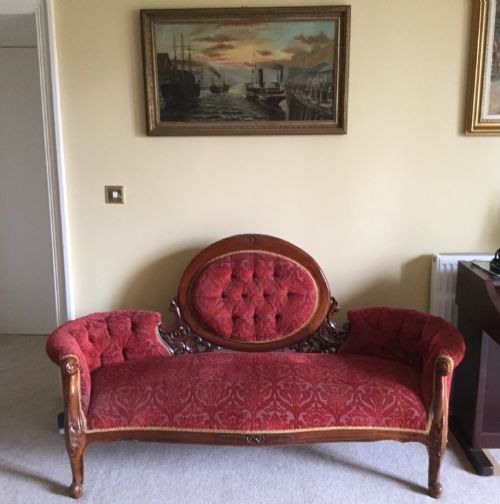
The Victorian period dominates the selections, alongside Napoleon III and Edwardian pieces, showing diverse forms like double spoon-back settees and kidney-shaped daybeds. Mahogany, walnut, and rosewood frame constructions provide the structural backbone for these upholstered seats.
Makers such as Howard and Sons, C. Hindley and Sons, and Holland and Sons appear among the nineteenth-century listings, alongside French styles and 1930s deep-seated iterations. These seating pieces function primarily as statement drawing-room furniture or library centrepieces.
Materials and construction methods
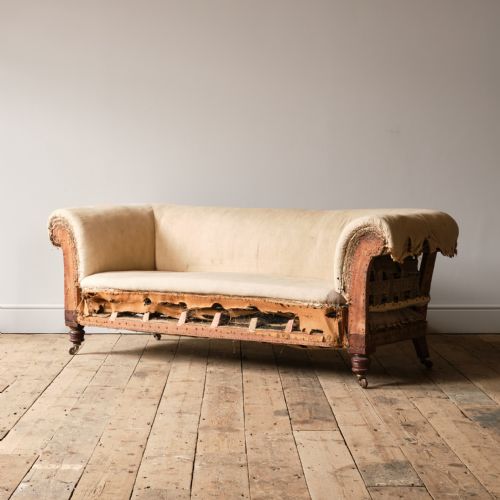
Frames rely on hardwoods like mahogany, walnut, and rosewood, carved or turned into legs, arm supports, and structural rails. Joinery involves traditional pegging and framing to support heavy sprung bases.
Upholstery defines the category, combining deep buttoning with horsehair stuffing, coil springs, and coverings of leather, velvet, brocade, or raw hide. Brass castors frequently finish the feet of Victorian and Edwardian examples.
Some nineteenth-century chaises feature ionic column legs, proving that architecture really does follow you to the nap.
Factors of quality and construction
The integrity of the internal wooden frame and the precision of the deep buttoning determine the baseline quality of each piece. Superior examples retain original frame timber without structural compromise.
Upholstery standard varies from period-appropriate leather and brocade to later replacement fabrics requiring renewal. The quality of the original cabinet work on exposed rosewood, walnut, or mahogany sections sets finer maker-attributed pieces apart.
Howard and Sons·C. Hindley and Sons·Holland and Sons
The Button Backed Couch Glossary
- Chaise Longue
- An upholstered long chair for reclining, often featuring a single raised backrest or headrest at one end. Originating in French design, it became popular in Victorian drawing rooms.
- Settee
- A medium-sized upholstered seat with a back and arms, designed for two or more people. It sits between an armchair and a full sofa in scale.
- Buttoning
- An upholstery technique where twine is pulled through padding and secured with buttons to create a diamond pattern. This method keeps the internal stuffing evenly distributed.
- Spoon-back
- A padded chair or sofa back shaped like the bowl of a spoon, popular in mid-nineteenth-century seating. It contours to support the human spine.
Button Backed Couch: Frequently Asked Questions
What is a button backed couch?
A button backed couch is a nineteenth-century or early twentieth-century upholstered seat featuring deep tufted buttoning across the backrest. These pieces encompass Chesterfields, salon settees, and chaise longues.
They utilise materials like leather, velvet, and mahogany, providing formal seating and reclining options for period interiors.
How do I identify a Victorian sofa?
Victorian sofas show distinctive timber frames in mahogany, walnut, or rosewood, often featuring carved details and ceramic or brass castors. Their silhouettes range from curved spoon-backs to large leather Chesterbells.
Examining the construction methods and wood turning helps distinguish mid-nineteenth-century pieces from later Edwardian or 1930s revivals.
What is the difference between a settee and a chaise longue?
A settee provides a symmetrical upholstered seat with a backrest and two arms designed for multiple people to sit upright. A chaise longue is an asymmetrical daybed intended for reclining, featuring a backrest at one end only.
Both forms appear frequently in nineteenth-century drawing rooms with buttoned upholstery.
How do I care for leather upholstery?
Leather-upholstered couches require cleaning with appropriate conditioners to maintain the hide's flexibility and prevent cracking over time. Keeping the leather away from direct heat sources preserves the material.
Raw leather examples that require hand dyeing need specialist attention before regular use.
Are these sofas suitable for modern homes?
These historical seating pieces anchor contemporary living rooms, studies, and hallways as statement furniture. Their deep seating and sprung bases offer functional comfort alongside period character.
Many listings provide options for reupholstering to match specific interior colour schemes.