




Burr Walnut Trinket Box
A burr walnut trinket box brings the remarkable grain of the timber to a desk, holding small treasures with understated elegance.
Burr Walnut Trinket Box
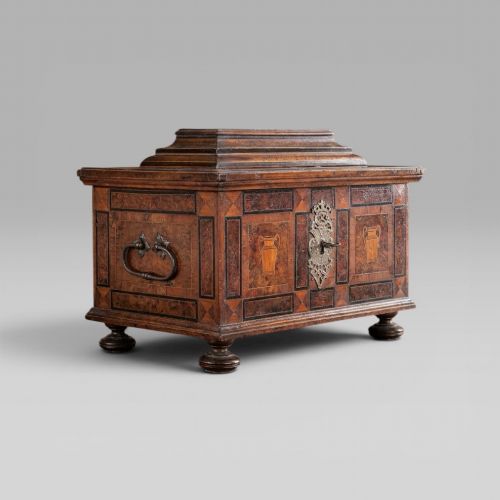
A burr walnut trinket box is a small lidded receptacle designed for keeping precious items, jewellery, or personal effects safely contained on a surface. These pieces appear primarily in Victorian forms alongside Georgian and seventeenth-century examples, reflecting centuries of cabinet-making skill.
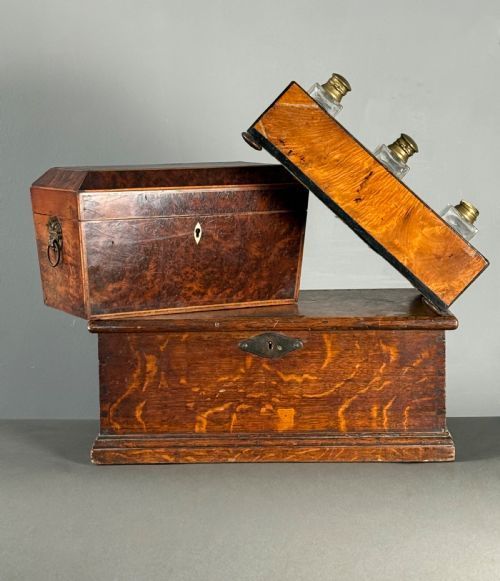
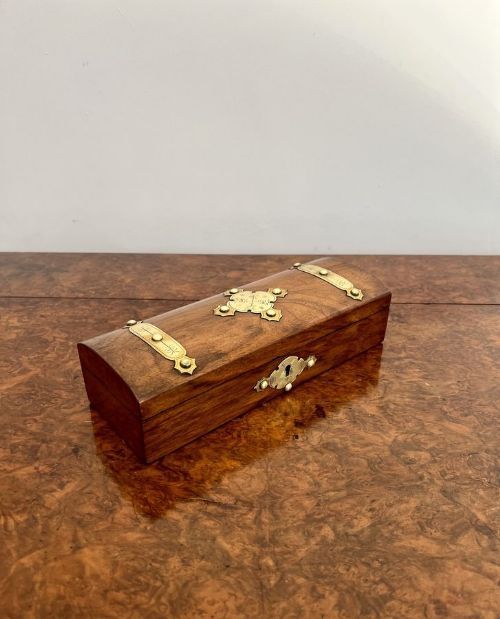
The versions met most frequently on this page date from the nineteenth century, often taking the form of dressing boxes, jewellery caskets, or glove boxes shaped with domed or rectangular profiles. Makers utilised the characteristic swirling patterns of burr walnut timber to catch the eye, sometimes enhancing the exterior with brass banding or inlay.
Beyond the standard desktop forms, the selection encompasses specialised receptacles such as tea caddies and snuff boxes. Each variation demonstrates how versatile the timber proved in the hands of period artisans shaping utilitarian objects into decorative works of art.
How they were made
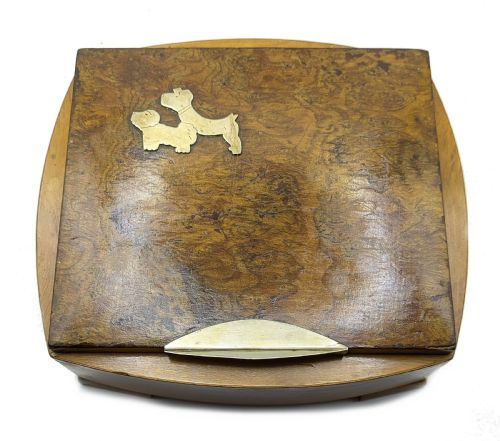
Craftsmen built the core structure from solid woods or secondary timbers, applying thin slices of burr walnut veneer to the exterior surfaces to display the intricate grain patterns. This technique allowed workshops to maximise the visually striking growth excrescences of the walnut tree across the box lids and sides.
Listings feature burr walnut alongside brass, glass, mother of pearl, boxwood, and marquetry inlay across various periods.
What varies in quality
The visual density and complexity of the burr walnut grain set superior examples apart from plainer specimens, with tightly swirled figures commanding greater attention. The precision of the joinery and the harmonious alignment of the veneer across the opening lid reveal the underlying mastery of the maker.
Fittings such as original brass escutcheons, robust hinges, and intact interior linings elevate a piece. The presence of detailed Tunbridge ware or marquetry inlay further distinguishes finer commissions from standard utilitarian boxes.
Trussell Brighton·Parkins and Grotto
The Burr Walnut Trinket Box Glossary
- Burr walnut
- A wood harvested from the abnormal growth of a walnut tree where the grain grows in a deformed, swirling pattern. This produces highly decorative figures prized for cabinet furniture and small boxes.
- Tunbridge ware
- A type of decorative woodwork produced in Kent featuring intricate geometric mosaics made from many tiny pieces of naturally coloured woods. These mosaics were applied as banding or panels to nineteenth-century boxes.
- Marquetry inlay
- An art form where thin veneers of various woods are fitted into a design on a structural background. Artisans used this technique to create pictorial or geometric patterns on box lids.
- Tea caddy
- A container designed originally to store dry tea leaves securely before tea became inexpensive. These vessels often included internal compartments and locking lids.
- Escutcheon
- A flat plate of brass or other metal surrounding a keyhole to protect the surrounding wood from wear. They are often shaped decoratively on period boxes.
Burr Walnut Trinket Box: Frequently Asked Questions
What is a burr walnut trinket box used for?
These boxes served historically to contain valuable small items, rings, pins, and personal keepsakes on dressing tables or writing desks.
Today, they function well in modern interiors for holding contemporary jewellery, cuff links, or desktop accessories while displaying the natural grain of the wood.
How do I date a burr walnut box?
Dating relies on examining the construction methods, interior fittings, and secondary woods used within the carcass. Victorian examples often incorporate brass banding and velvet-lined trays, whereas earlier Georgian pieces display simpler, cleaner lines and distinct cabinet-making techniques.
Lock types, hinge styles, and overall proportions also offer reliable clues to whether a box originates from the seventeenth, eighteenth, or nineteenth century.
Are these boxes made of solid burr walnut?
Cabinet makers rarely constructed entire boxes from solid burr walnut due to the scarcity and unstable nature of burr wood. Instead, they applied thin veneers of burr walnut over a stable core of solid walnut or secondary timber.
This technique prevented warping while presenting the dramatic, swirling grain patterns across the exterior surfaces.
How do I care for antique burr walnut?
Preserving the finish requires keeping the box away from direct sunlight and maintaining a stable indoor humidity to prevent the wood or veneer from drying out. Gentle dusting with a dry, soft cloth is sufficient for routine maintenance.
Occasional applications of appropriate wax polish help nourish the old timber and maintain the soft lustre of the polished surface.