


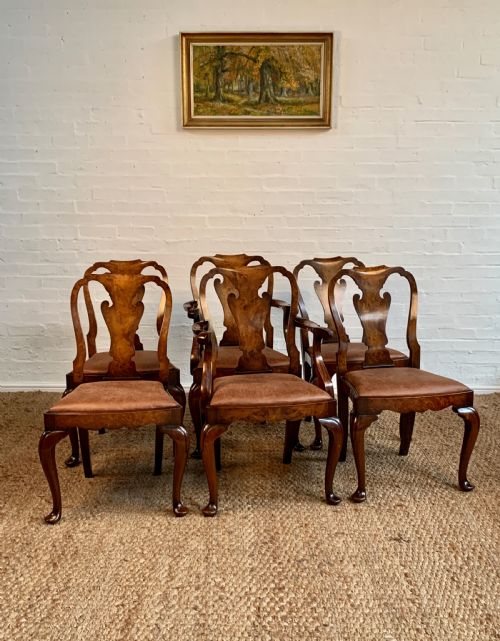


Burr Walnut Seat
When searching for a burr walnut seat, collectors encounter notable chairs, stools, and benches finished in patterned veneer that anchor period interiors with distinct character.
Burr Walnut Seat
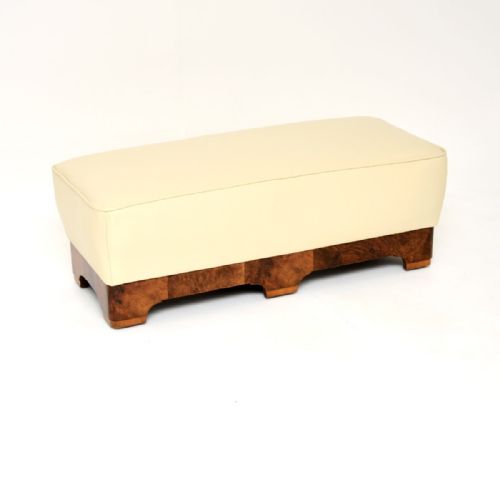
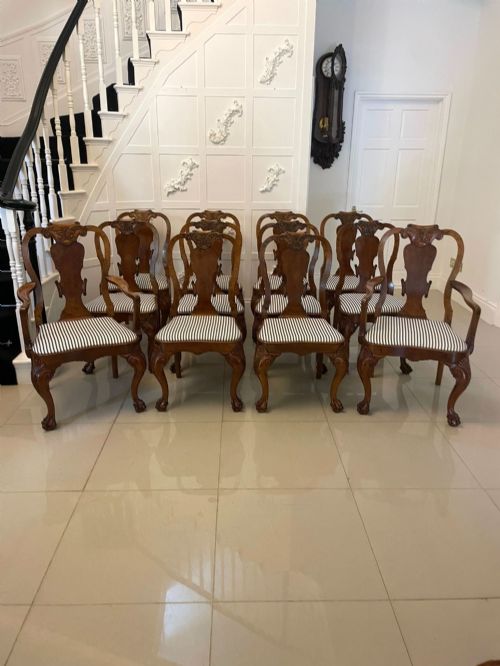
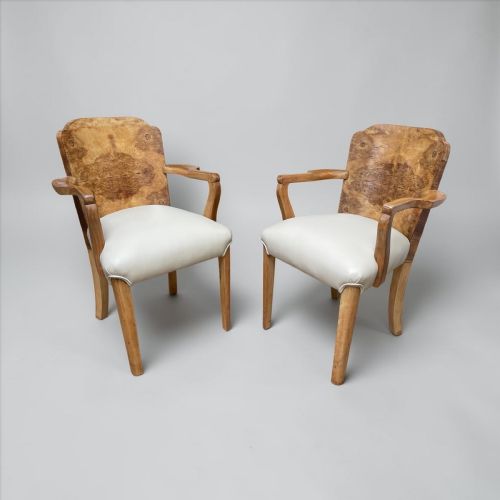
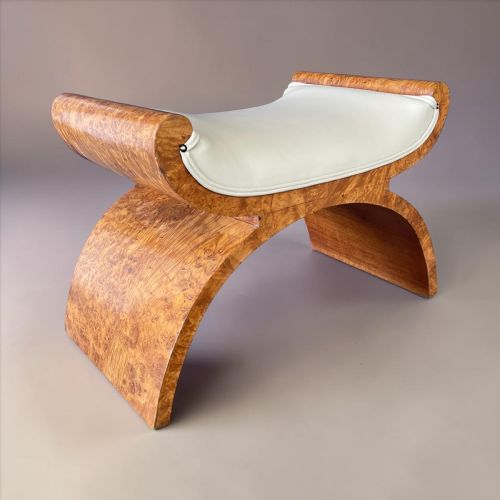
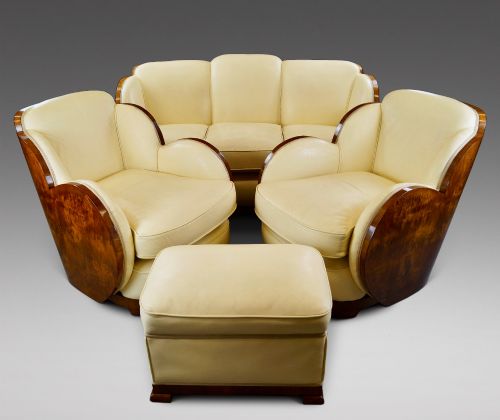
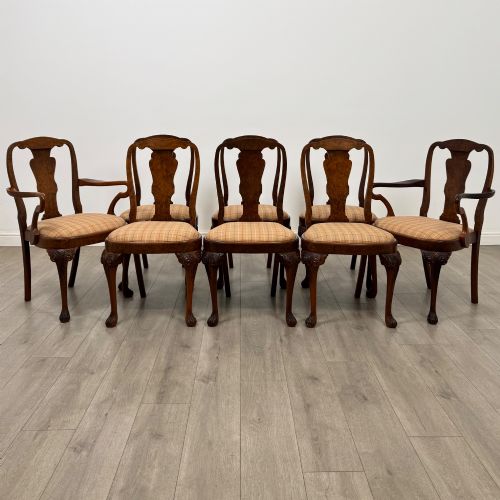
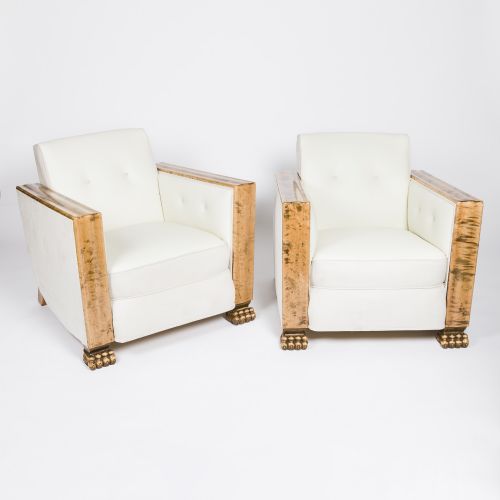
A burr walnut seat encompasses dining chairs, armchairs, stools, and window seats produced across the Victorian, Edwardian, and Art Deco periods. These forms range from Queen Anne revival styles featuring curved cabriole legs to streamlined twentieth-century club chairs and cloud suites.
Buyers frequently encounter nineteenth-century dining chairs alongside twentieth-century lounge seating and stools. The selection bridges formal revival dining sets and relaxed occasional furniture upholstered in leather or textile fabrics.
How they were made
Cabinetmakers constructed these frames using solid timber foundations overlaid with finely figured burr walnut veneer sliced from tree growths. This demanding veneer work required precise matching of grain patterns across curved surfaces and seat backs.
Upholstery completed the construction, utilising traditional webbing, springs, and stuffing covered in leather or woven textile. Frames often incorporated carved details, particularly on Victorian and Queen Anne style examples.
Certain nursery chairs whisper tales of tiny Victorians rocking beside tall ancestors.
What varies in quality
Quality rests upon the density and symmetry of the burr walnut figuring across the primary surfaces. Superior examples display complex, unbroken swirling patterns that demonstrate deliberate book-matching by the maker.
Frame integrity and the preservation of original carving or upholstery detailing differentiate standard production from exceptional workshop output. Makers such as Harry and Lou Epstein or Charles Tozer brought distinct design execution to their frames.
Charles Tozer·Harry and Lou Epstein·Hille
The Burr Walnut Seat Glossary
- Burr Walnut
- A figured wood veneer derived from the abnormal growth knots of walnut trees. The resulting timber yields intricate, swirling patterns highly prized for decorative furniture surfaces.
- Cabriole Leg
- A furniture leg that curves outward at the knee and tapers inward toward the foot, echoing animal limbs. This form frequently appears on Queen Anne style and Victorian seats.
- Cloud Suite
- A twentieth-century Art Deco seating arrangement characterised by rounded, padded upholstered contours. These sets typically include a sofa and matching armchairs.
- Window Seat
- A long, bench-like seat designed to fit beneath a window recess. Nineteenth-century examples often incorporate upholstered box storage or decorative turned supports.
Burr Walnut Seat: Frequently Asked Questions
What periods do these seats come from?
The available pieces span the Victorian era, the Edwardian period, and the twentieth century, with strong representation from the Art Deco nineteen-thirties.
Craftsmen across these eras adapted earlier historical motifs, such as Queen Anne revival designs, alongside modern stream-lined movements.
How do I identify a Queen Anne style seat?
Queen Anne style chairs typically feature characteristic curved cabriole legs and solid splat backs. These elements reference eighteenth-century forms but often date to later revival periods.
Carved knees and pad or claw feet frequently accompany these distinct silhouette traits.
What materials are used in the upholstery?
Original and replacement coverings include smooth leather, patterned textiles, and various upholstery fabrics. These materials are fitted over traditional sprung or padded seat foundations.
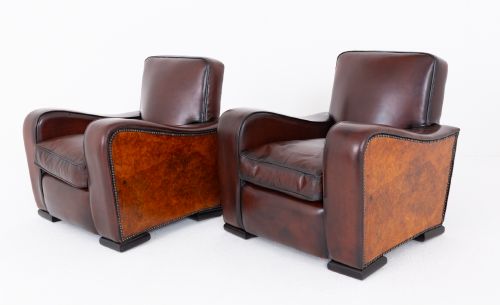
Many twentieth-century club chairs pair burr walnut frames with deep leather cushions.
Are these pieces suitable for daily dining?
Dining chairs and sets built from solid timbers and sturdy veneers serve everyday domestic use when structurally sound. Many nineteenth and twentieth-century sets remain functional for regular seating.
Proper weight distribution and careful handling preserve the delicate veneer surfaces during daily routines.