
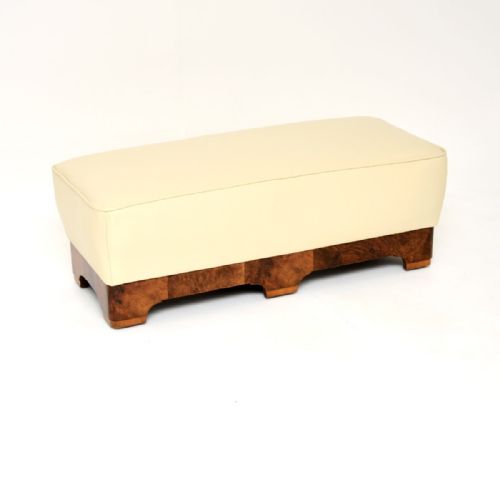
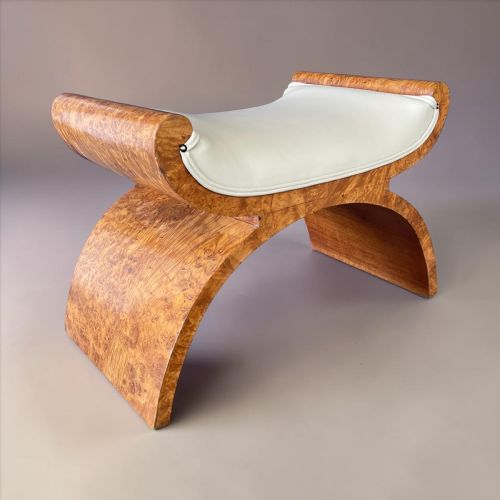
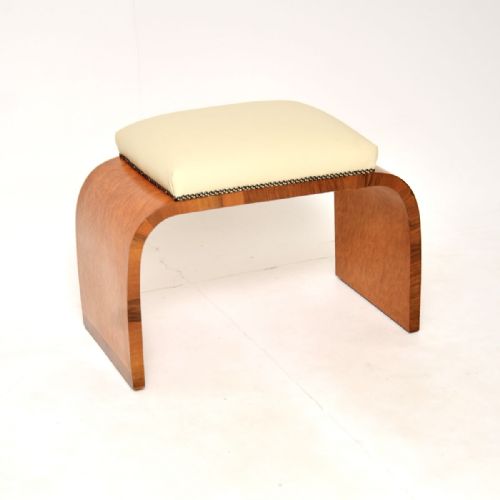


Art Deco Dressing Bench
An art deco dressing bench offers functional seating with geometric flair, bringing the distinctive style of the nineteen thirties straight to your bedroom.
Art Deco Dressing Bench
When you search for an art deco dressing bench, you encounter seating designed for the nineteen thirties vanity or dressing table. These pieces take the form of stools, ottomans, and piano stools intended to sit neatly beneath a mirror.
The versions you meet most frequently on this page originate from England and date specifically from nineteen thirty. They combine compact proportions with the characteristic clean lines of the period.
Makers designed these items as both dressing table stools and multi-purpose seats, occasionally incorporating internal storage beneath the top.
How they were made
Cabinet makers utilised richly figured timbers such as burr walnut, birds eye maple, and plain walnut for the frames, frequently pairing them with contrasting sycamore. These woods were selected for their striking grain patterns rather than uniform appearance.
Upholstery formed an integral part of the construction, relying on durable leather, plush velvet, and patterned fabric top covers. Metal accents occasionally appeared to complement the exposed woodwork.
Materials span burr walnut, birds eye maple, leather, velvet, and sycamore.
What varies in quality
The primary distinction across these pieces lies in the choice and handling of veneer. Workshops that selected heavily figured burr walnut or birds eye maple achieved a much stronger visual impact than those using plain timber.
Harry and Lou Epstein
The Art Deco Dressing Bench Glossary
- Burr Walnut
- A highly decorative wood harvested from the wart-like growths on walnut trees. It creates intricate, swirling patterns across the top of a stool.
- Birds Eye Maple
- A figured timber showing small, swirling dots that resemble tiny eyes. Makers prized this material for light-toned nineteen thirties furniture.
- Sycamore
- A pale hardwood utilised for secondary framing and contrast details. Its light colour balanced darker veneers.
- Ottoman
- A low, upholstered seat without a back, frequently utilised at the dressing table or foot of a bed. Versions from this era often featured internal storage.
- Dressing Table Stool
- A compact seat designed specifically to tuck beneath a vanity. These items match the height and style of period dressing tables.
Art Deco Dressing Bench: Frequently Asked Questions
What is an art deco dressing bench used for?
These pieces serve primarily as seating before a vanity or dressing table, offering a comfortable perch while applying makeup or styling hair.
Certain designs also function as piano stools or compact ottomans, occasionally providing hidden storage beneath the upholstered top.
How do I date an art deco dressing bench?
Authentic pieces from this category typically date to around nineteen thirty, reflecting the height of the period's design movement.
Examine the timbers, hardware, and construction methods to confirm the piece belongs to this specific decade rather than later revivals.
What materials are common on these benches?
Makers relied heavily on decorative wood veneers such as burr walnut and birds eye maple, alongside standard walnut and sycamore.
Upholstery materials typically include leather, velvet, and patterned fabric, sometimes complemented by subtle metal details.
How do I style one in a modern home?
An art deco dressing bench works naturally as a vanity seat, but its compact footprint allows it to sit easily in a hallway or living room.
The striking wood grains and geometric forms provide a strong focal point against neutral modern decor.