
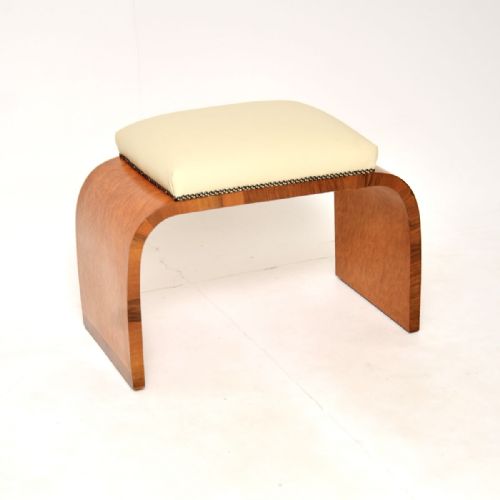


Art Deco Dressing Seat
An art deco dressing seat brings geometric elegance to a bedroom, combining functional seating with the distinctive style of the interwar years.
Art Deco Dressing Seat
An art deco dressing seat provides a low, compact chair or stool designed specifically for use at a dressing table or vanity. These pieces emerge primarily from the nineteen twenties and nineteen thirties, capturing the streamlined aesthetic of the period.
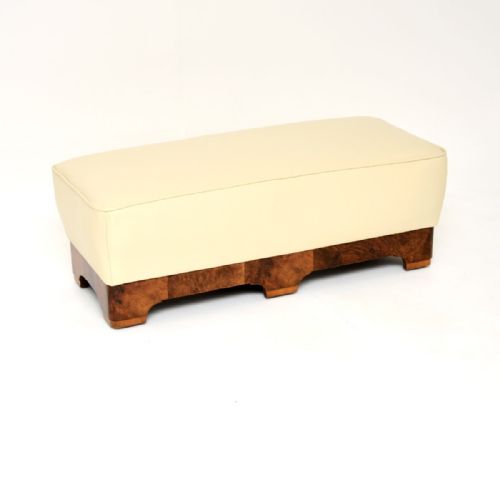
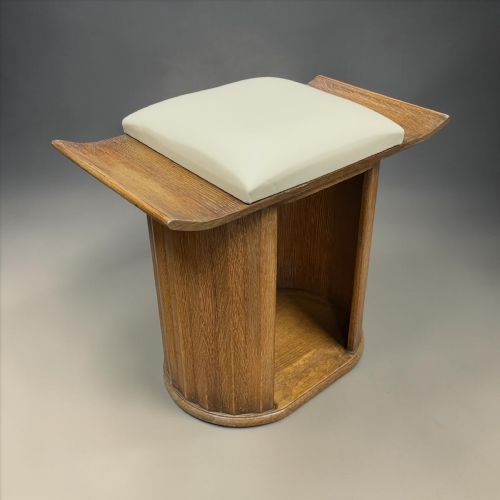
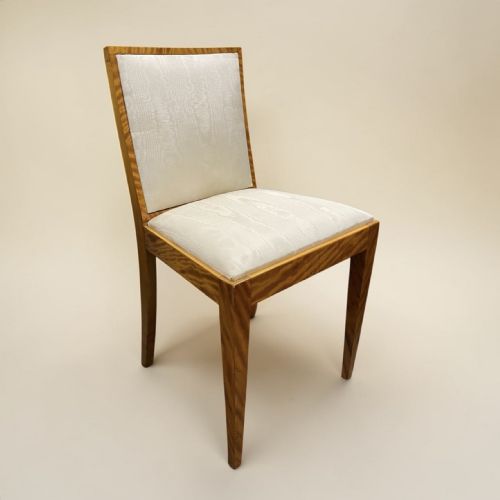
The selections on this page encompass various forms including dedicated dressing stools, bedroom chairs, and stools featuring integrated storage. Originating chiefly from English workshops, these items serve both practical seating needs and decorative roles within a bedroom scheme.
Makers utilise distinctive geometric silhouettes, ranging from drum shapes to rectangular profiles. Alongside purpose-built vanity seating, buyers encounter related items such as side chairs and piano stools that share the same period vocabulary.
Materials and construction
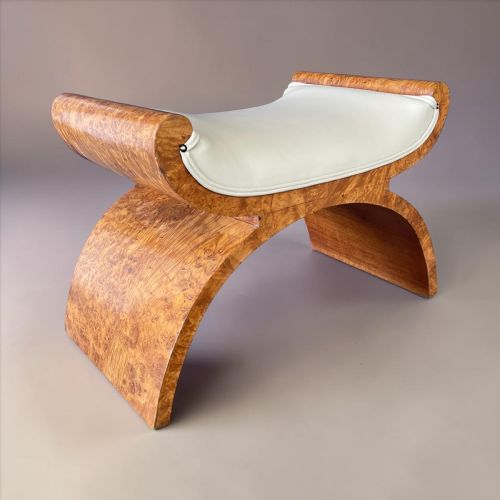
Cabinet makers of the era employed striking hardwoods such as burr walnut, birds eye maple, sycamore, figured walnut, and oak to construct the frames. These timber surfaces showcase prominent grain patterns characteristic of interwar furniture design.
Upholstery forms an essential component of the construction, utilising materials like leather, velvet, and various fabric covers. Metal elements occasionally appear alongside the woodwork, while storage variants incorporate internal compartments within drum or rectangular bodies.
Current listings feature items predominantly from the 1930 period, constructed in walnut, oak, leather, and velvet.
Distinguishing quality in these seats
The standard of an art deco dressing seat depends significantly on the choice of surface timber and veneer work, where figured walnut and birds eye maple command attention for their visual depth. Finer examples display deliberate coordination between the timber frame and the chosen upholstery.
Attribution to documented makers elevates a piece, as does structural complexity such as built-in storage or bespoke geometric forms. The integrity of the original wood finish and the precision of the joinery further separate standard production items from distinguished workshop outputs.
Harry and Lou Epstein·Bath Cabinet Makers·Hille·B. North and Son
The Art Deco Dressing Seat Glossary
- Burr Walnut
- A timber harvested from the warted growths of walnut trees, producing swirling, highly decorative grain patterns. Furniture makers prize this wood for prominent exterior surfaces.
- Birds Eye Maple
- A figure in maple timber that resembles tiny, swirling eyes breaking the surface of the wood. This decorative material defines select interwar pieces.
- Sycamore
- A light-coloured hardwood utilised in English cabinet making for clean, pale surfaces. It provides a subtle contrast to darker walnut framing.
- Drum Shaped
- A circular furniture form with enclosed sides, often featuring internal storage accessed via a removable top. This typology appears frequently among vanity seating.
Art Deco Dressing Seat: Frequently Asked Questions
What is an art deco dressing seat used for?
These seats provide low, comfortable seating positioned in front of a dressing table or vanity for grooming routines. Their compact dimensions allow them to tuck neatly beneath furniture when not in use.
Beyond bedrooms, they function well as occasional seating or piano stools in living spaces. Variants equipped with internal storage also serve to conceal small items out of sight.
How do I identify a period piece?
Authentic pieces from the era typically date from the nineteen twenties and nineteen thirties, displaying characteristic geometric lines and modernist proportions. Examination of the timber types, such as burr walnut or birds eye maple, helps confirm the period palette.
Construction methods and fasteners consistent with interwar cabinet making provide further verification. Signatures or stamps from documented firms offer definitive proof of origin.
Are these seats suitable for daily use?
The sturdy hardwood frames and solid joinery built by period cabinet makers ensure these seats remain durable for everyday sitting. Modern replacement upholstery often enhances the comfort of the cushioning.
Care should be taken to protect polished wood surfaces from excessive moisture and direct sunlight. Regular dusting preserves the condition of the timber grain.
What styles accompany these seats?
These seats complement interwar interior schemes, pairing naturally with matching dressing tables and bedroom suites from the same decades. Their geometric forms also bridge the gap into contemporary minimalist spaces.
They sit comfortably alongside other seating types sharing the clean lines of the period. The variety of wood finishes allows them to coordinate with diverse colour palettes.