




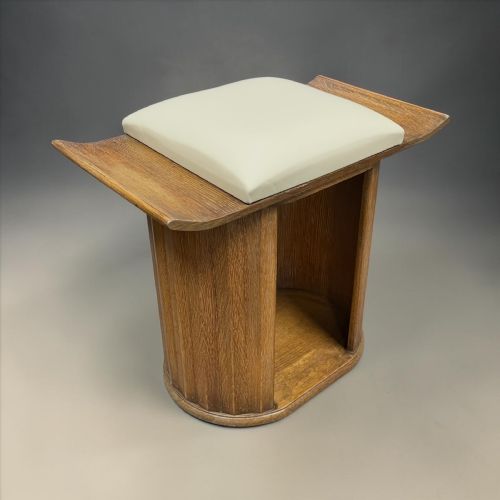


Art Deco Footstool
These art deco footstool pieces combine period craftsmanship with practical seating, giving interiors a distinct vintage character.
Art Deco Footstool
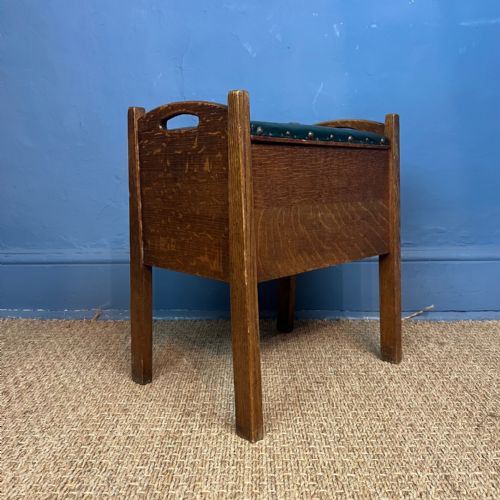
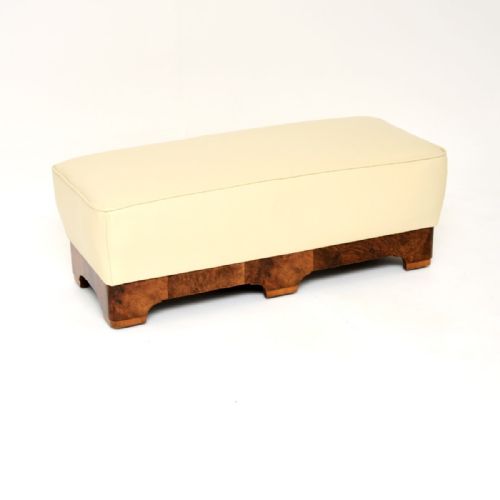
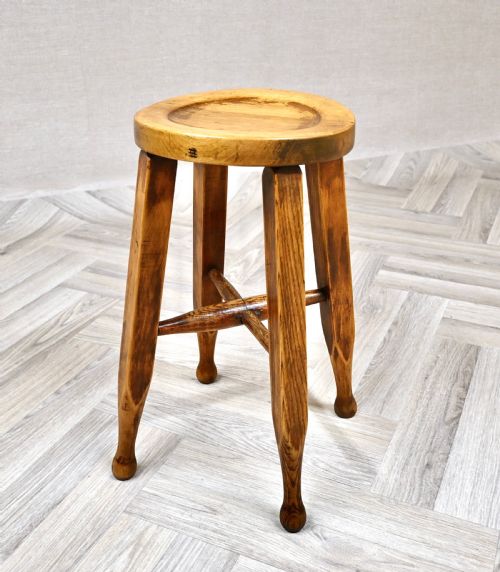
An art deco footstool serves as a functional seating option or low rest, appearing in forms such as dressing stools, piano stools with storage, and ottomans. These items date primarily from the 1920 and 1930 periods, reflecting the characteristic design sensibilities of those decades.
Buyers encountering this selection will find English pieces originating from the interwar years. The forms range from simple foundational designs to fitted storage variations tailored for specific domestic uses.
How they were made
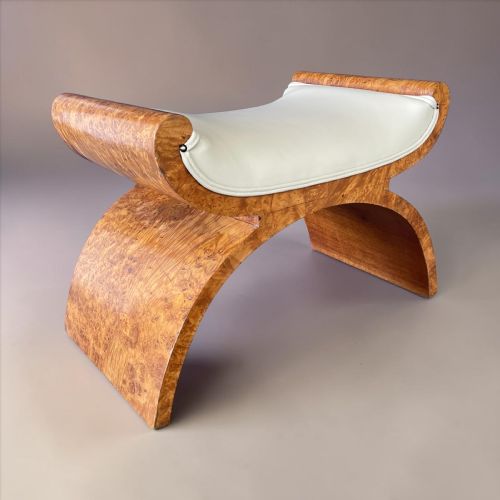
Makers constructed these pieces using timber frames, incorporating woods such as burr walnut, oak, birds eye maple, and standard walnut. Surfaces often feature polished veneers that highlight the natural grain patterns of the timber.
Upholstery elements typically utilise leather or woven fabric fixed to the frames. Metal components occasionally appear in the construction and detailing of the structure.
Art Deco Footstool Retail Price Guide 2026
Typical asking prices for art deco footstool among the pieces listed under this phrase on Sellingantiques today, from the lower quarter to the upper quarter. They describe what is for sale here now, not the wider market.
Some piano stools hide a secret compartment under the seat, perfect for stashing away your modern television remotes.
What varies in quality
The choice of surface wood significantly differentiates examples, with highly figured timbers like burr walnut and birds eye maple marking out more ambitious pieces. Simple timber frames sit at the other end of the range.
Integrated functionality, such as internal storage compartments found in dressing and piano stools, adds complexity to the construction. Pieces attributed to specific known workshops carry distinct artisan execution compared to standard workshop output.
Harry and Lou Epstein
The Art Deco Footstool Glossary
- Art Deco
- A design style emerging in the early twentieth century characterised by sleek lines and geometric forms. Pieces from this era often utilise striking wood veneers and contrasting materials.
- Burr Walnut
- A timber obtained from walnut tree growths that produces intricate and swirling grain patterns. It is frequently employed as a decorative veneer on high-end furniture.
- Birds Eye Maple
- A figured timber displaying small circular patterns resembling little eyes across the wood grain. This material was selected for decorative surfaces in twentieth-century cabinetmaking.
- Piano Stool
- A low seat originally designed for use at a keyboard, often incorporating a hinged lid for sheet music storage. Many examples double as dressing table seating.
Art Deco Footstool: Frequently Asked Questions
What are art deco footstool pieces used for?
These items function primarily as low seating, dressing table seats, or footrests in domestic spaces.
Certain variations also include built-in storage for small items like sheet music or bedroom accessories.
How do I date an art deco footstool?
Most examples originate from the 1920 and 1930 periods, aligning with the height of the design movement.
Construction methods, timber choices, and stylistic markers help narrow down the decade of production.
What materials do these stools use?
Frames are built from timbers such as oak, walnut, burr walnut, and birds eye maple.
Upholstery typically consists of leather or woven fabric stretched over the padded top.
Where were these stools made?
The available pieces originate from English workshops and makers active during the interwar period.
Local craftsmanship defined the construction techniques and timber selection used in their creation.