


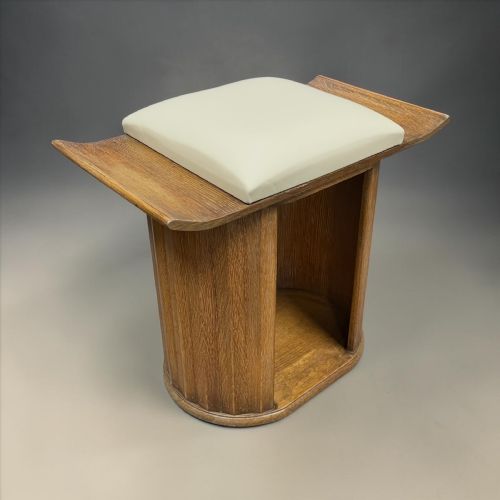


Art Deco Ottoman
These art deco ottoman pieces bring striking geometric form and rich woods into a room, offering practical storage alongside signature period style.
Art Deco Ottoman
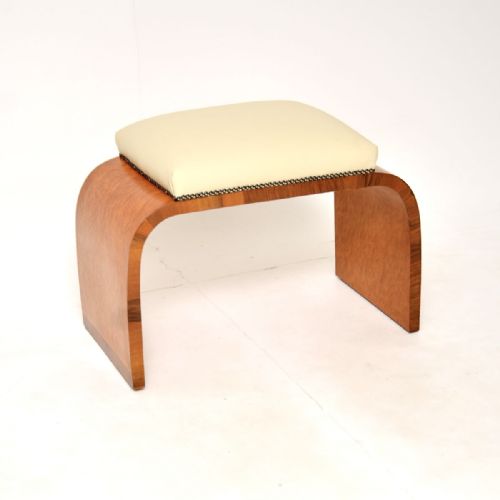
An art deco ottoman combines the low seating function of a stool with internal storage, often taking the form of blanket chests, trunks, or daybeds. These pieces date from the 1930 period and reflect the design priorities of the era through clean lines and functional compartments. Buyers most frequently meet stools and dressing stools on this page, alongside occasional blanket chests and piano stools.
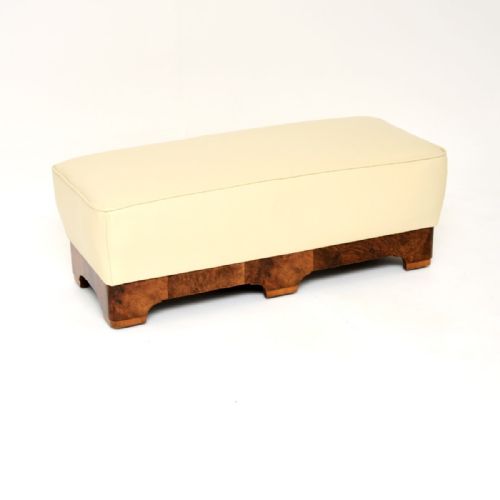
Forms vary from drum-shaped oak dressing stools to rectangular burr walnut trunks and dressing stools with storage. Many examples double as piano stools or compact daybeds with bolster ends, designed to maximise utility in urban spaces. English workshops produced the majority of these pieces, pairing practical lidded compartments with upholstered tops.
How they were made
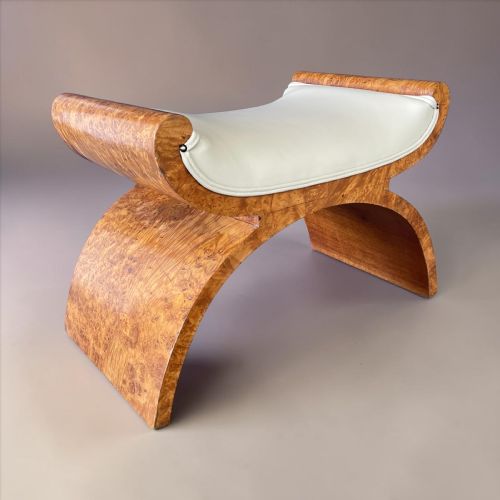
Cabinet makers utilised solid woods such as oak and walnut alongside decorative veneers like burr walnut, birds eye maple, and coromandel. These figured veneers were applied to curved and flat surfaces to create striking grain patterns that defined the exterior of the trunk or stool. Wood veneer work required precise cutting and matching to maintain symmetry across cylindrical drum shapes and rectangular chests.
Upholstery completed the design, combining leather or fabric seat pads with the wooden framework. Metal elements occasionally appeared in hinges, handles, and structural accents, while interior storage compartments remained lined in plain wood or fabric.
Art Deco Ottoman Retail Price Guide 2026
Typical asking prices for art deco ottoman among the pieces listed under this phrase on Sellingantiques today, from the lower quarter to the upper quarter. They describe what is for sale here now, not the wider market.
What varies in quality
The choice of surface timber dictates much of the visual distinction across the range, with figured burr walnut and birds eye maple sitting above plain oak. Grain selection and book-matching on curved drum bodies require advanced woodworking skill, separating standard production from exceptional cabinet work.
Maker attribution also influences standing, as documented pieces associated with prominent workshops command higher regard among collectors. The integration of storage mechanisms, such as well-fitted lids and sturdy internal compartments, further separates robust daily-use items from lighter vanity seating.
Harry and Lou Epstein
The Art Deco Ottoman Glossary
- Burr walnut
- A prized timber harvested from walnut tree growths, showing swirling, knotted grain patterns. Makers applied this wood as a veneer to create decorative focal points on furniture surfaces.
- Birds Eye Maple
- A decorative hardwood showing small, circular eye formations in the grain. This light-coloured timber was favoured by 1930 cabinet makers for striking visual contrast.
- Coromandel
- A dense, dark-brown exotic timber featuring dramatic black streaks. It appears as an accent wood on select modernist coffers and blanket chests.
- Bolster
- A cylindrical pillow or cushion placed at the end of a daybed or ottoman. These additions provided ergonomic support while reinforcing the horizontal lines characteristic of the period.
Art Deco Ottoman: Frequently Asked Questions
What is an art deco ottoman?
An art deco ottoman is a 1930 seating piece featuring internal storage space beneath a lidded or upholstered top. These items range from compact drum-shaped dressing stools to long blanket chests and daybeds.
Craftsmen built them using solid woods and decorative veneers, combining daily practicality with the geometric aesthetics of the era.
How do I use an art deco ottoman at home?
These pieces fit well at the foot of a bed, beside a piano, or beneath a dressing table. The internal compartment provides discreet storage for blankets, linens, or personal items while serving as a functional seat.
Their distinct wood grains and rounded forms also allow them to act as standalone decorative accents in a hallway or living room.
How can I tell a 1930 ottoman from other periods?
Pieces from this era rely on clean geometric silhouettes, cylindrical drum shapes, and sleek wood veneers rather than carved ornamentation or cabriole legs. The presence of burr walnut, birds eye maple, and specific hardware points directly to the modernist design movement of the 1930s.
Proportions are typically compact, reflecting the changing interior spaces of mid-twentieth-century homes.
Are these ottomans comfortable for seating?
Most examples function primarily as dressing stools or occasional seats, featuring firm upholstered pads in leather or fabric. While they offer stable seating for short durations, their primary design focus balances utility, storage, and visual form.
Daybed variants with bolster ends provide a more extended resting surface.